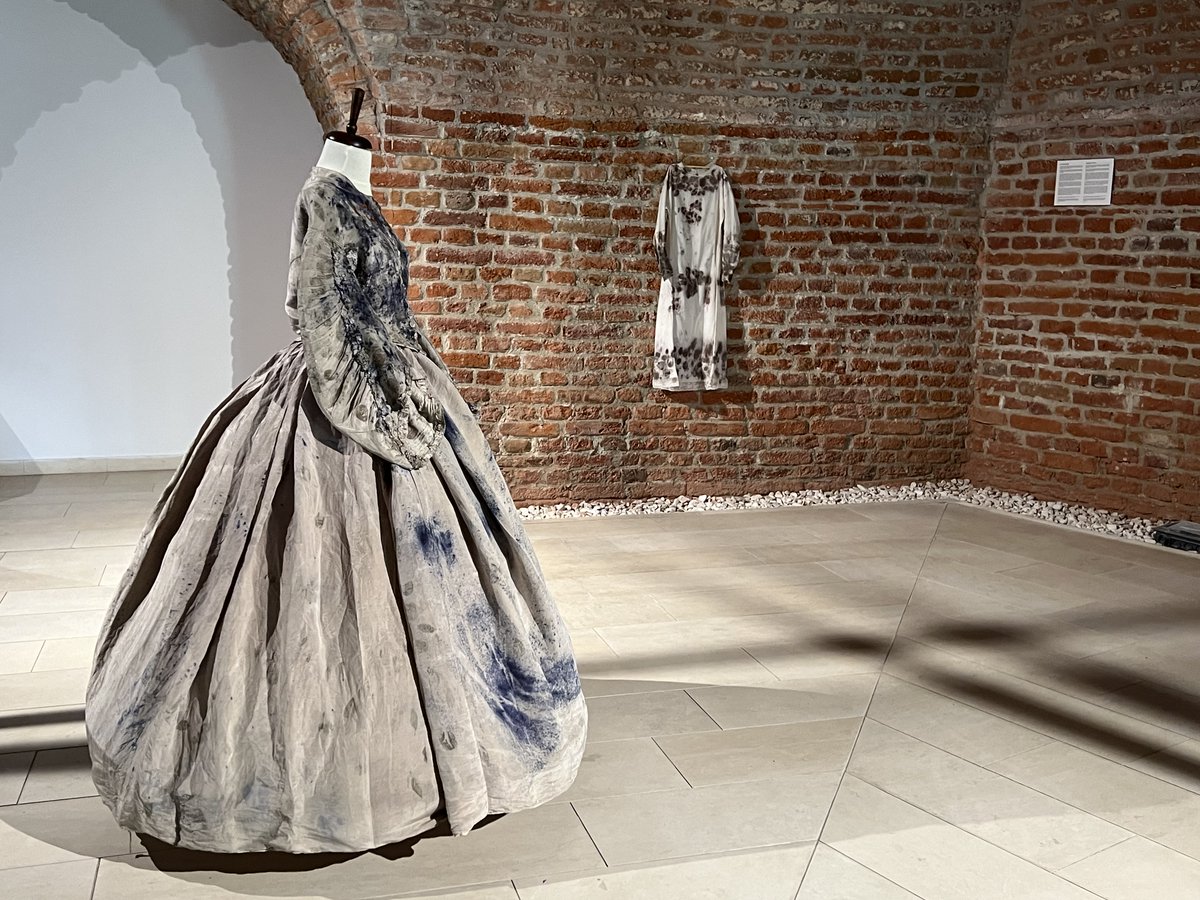
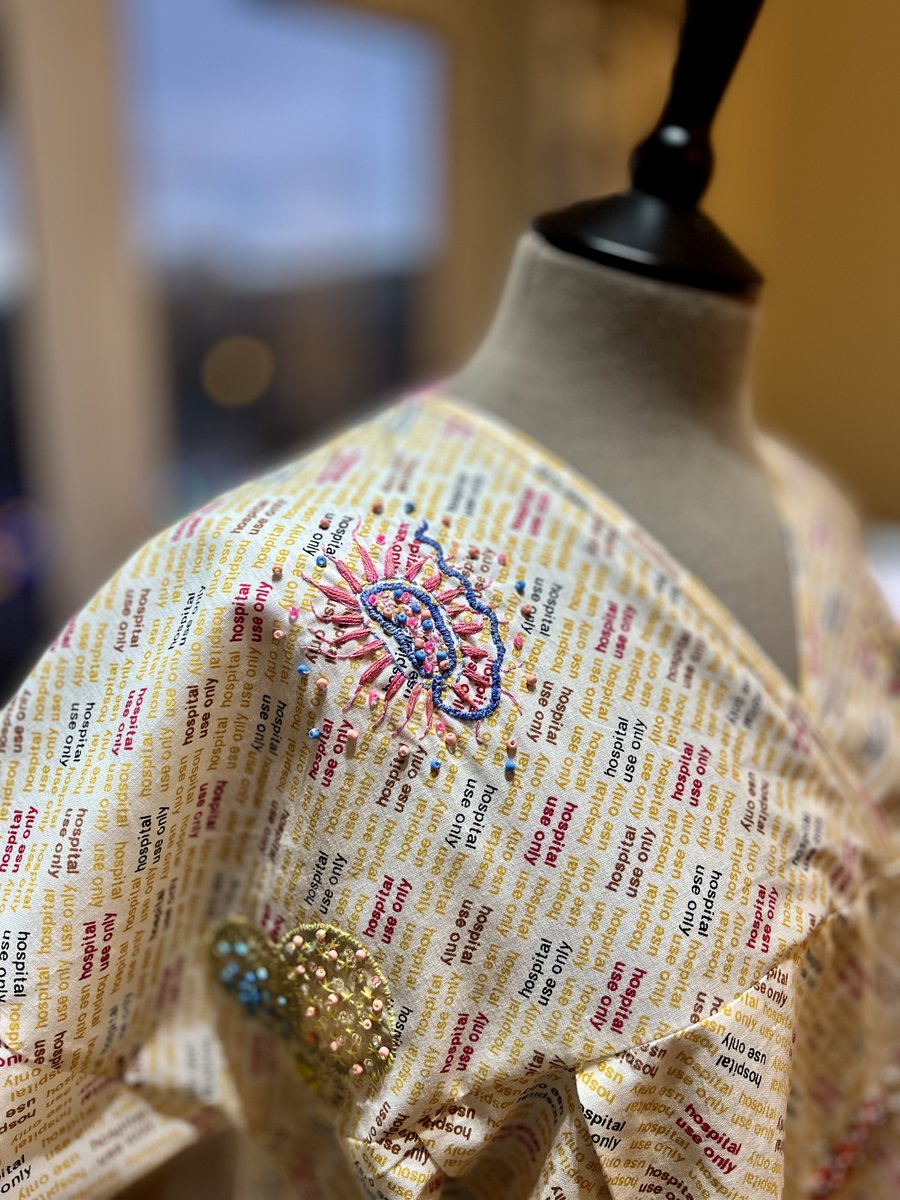
Cambridge Creation Lab is an online academy reconceiving how artistic practices may be viewed and undertaken through entangled modalities of disciplines.
What a time to be alive! We are entering the era of machines that discover and build. Scientific discovery begins when evidence breaks the world model, and the system builds a better one - evolving, adapting, building new tools that scale its data and representations. That was the core argument of my keynote “Superintelligence for Scientific Discovery: Multi-Agent Swarms and Large Reasoning Models” at the @BerkeleyRDI Agentic AI Summit 2026. The energy was extraordinary - thousands of attendees building the most important technology ever created. Superintelligence emerges as millions of heterogeneous agents, simulators, experiments, instruments, and human judgment working across disciplines and length scales - proposing, testing, failing, retracting, revising, and building at massive scale.
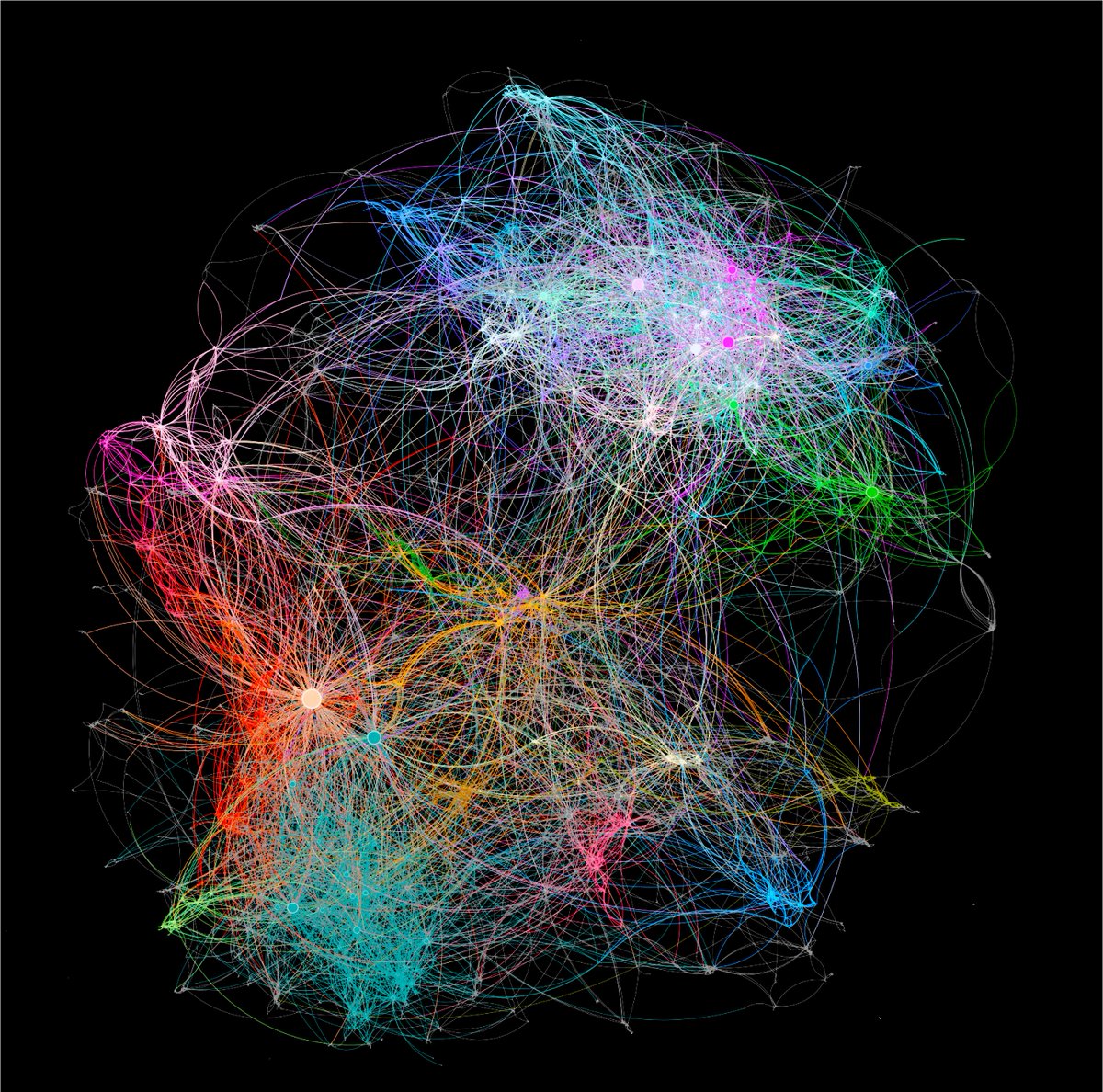
The pieces of a new era for intelligence came into focus: models that improve continuously; agents that reason and act over extremely long horizons; world models connecting simulation with physical reality; AI scientists integrating theory, computation, and experiment; and open infrastructures where agents share evidence, failures, and discoveries. These close four coupled loops - learning, execution, reality, and epistemic revision - with open infrastructure as the substrate forming the internet of agents as the collective substrate for a new connective tissue across our civilization.
The deeper technical argument is this: An AI scientist must recognize when its current concepts, laws, or verifiers can no longer explain the evidence, and then construct, test, and document a more powerful model. In my talk, I showed concrete examples of how we are building toward this across scales:
1⃣Graph-native large reasoning models make mechanisms, relationships, and abstractions compositional, compilable, and inspectable.
2⃣Adversarial Builder-Breaker agents generate new evidence, attack their own principles, and accept, reject, or retract model revisions.
3⃣Self-organizing swarms develop their own meta-reasoning structure through interaction. ScienceClaw × Infinite (arXiv:2603.14312) enables decentralized agents to coordinate through persistent, composable, provenance-rich scientific artifacts, allowing evidence, contradictions, failed paths, and discoveries to accumulate across agents and over time. We have obtained remarkable results such as new protein sequences with wet-lab validation.
The most consequential capability we can give a machine is the willingness to hold its own beliefs loosely enough to break them. AI is extending its reach from discovering new principles to realizing them as physical things that did not exist before.
Thank you to @BerkeleyRDI@dawnsongtweets for organizing this event and to everyone whose questions, ideas, and conversations made this such an extraordinary gathering.
How does an embryo reliably "compute" its form - "cell by cell" - using only local interactions and mechanics, yet produce a precise global body plan? I’m excited to share our Nature Methods paper "MultiCell: geometric learning in multicellular development", presenting #AIxBiology research led by @HaiqianYang and the result of a great collaboration with Ming Guo, George Roy, Tomer Stern, Anh Nguyen and Dapeng Bi.
A long-standing challenge in developmental biology is to predict how thousands of cells collectively self-organize as tissues fold, divide, and rearrange. In MultiCell, we represent a developing embryo as a dual graph that unifies two complementary views of tissue mechanics with single-cell resolution: cells as moving points (granular) and cells as a connected foam (junction network). This lets the model learn dynamics from both geometry and cell–cell connectivity.
On whole-embryo 4D light-sheet movies of Drosophila gastrulation (~5,000 cells), our model predicts key cell behaviors and the timing of events, including junction loss, rearrangements, and divisions with high accuracy, at single-cell resolution. Beyond prediction, the same representation supports robust time alignment across embryos and offers interpretable activation maps that highlight the morphogenetic "drivers" of development. The broader goal is a foundation for cell-by-cell forecasting in more complex tissues, and eventually for detecting subtle dynamical signatures of disease.
Kudos to the team for this inspiring collaboration with brilliant researchers to push the boundary of AI for biology!
Citation: Yang, H., Roy, G., Nguyen, A.Q., Buehler, M.J., et al. MultiCell: geometric learning in multicellular development. Nature Methods (2025), DOI: 10.1038/s41592-025-02983-x
Code/data links are in the manuscript.
A Harvard student says, “You admitted these students because they have straight A’s, and now they’re getting a lot of A’s, and it’s, like, ‘This is a problem.’ And I’m thinking, how on earth is that a problem?”
Another “thinks Harvard students should expect to be held to higher standards. But, he added that ‘learning should be inquisitive and not unnecessarily stressful or demanding.’”
The history of science is the history of its tools: first the human brain, then instruments to extend our senses, then data and systematic observation. Computers arrived almost one hundred years ago - first as machines we had to program to amplify our calculations. Now we stand at a new threshold: computers that program themselves, originate ideas and models, and which become creative partners in the act of discovery.
I recently co-chaired (with Kristina Kareh, Senior Editor at Nature) the @Materials_MRS - @Nature workshop on Scientific Generative AI for Materials Science. What stood out is how fast AI is shifting from being a computational accelerator to becoming a creative partner in science and reconfiguring the entire research workflow.
We had a stunning line-up of thought leaders and visionaries! We heard @MicheleCeriotti and @CecClementi show how surrogates and coarse-grained models open new scales of simulation; @wellingmax and Xiaoying Zhuang demonstrate how Bayesian and physics-informed approaches make predictions more trustworthy; @simonbatzner (@GoogleDeepMind) highlight stability-aware discovery with GNoME; Chi Chen (@Microsoft Research) describe the convergence of AI, HPC, and quantum computing; and Cate Brinson, Daniela Rus/Tsun-Hsuan Wang (@MIT_CSAIL), and Rose Cersonsky expand AI into data extraction, embodied intelligence and chemical intentionality.
My takeaway: AI in materials science is moving from analysis to creativity, intentionality, and collective intelligence - and we’re on the verge of deploying tools that vastly extend the scientist’s reach and open up discovery in ways we could not achieve before. Science as invention, not just prediction, and AI extends human creativity as a transformative new tool! In that future, our models will not be static artifacts but living systems themselves - continually learning, adapting, and co-evolving with us.
Blessing Ishola and Corrisa Heyes wrote a great summary of the workshop, link in comment.
Spider silk is nature’s composite: steel-strong yet elastic. But its gigantic, repetitive proteins have kept full-strength synthetic fibers out of reach. Enter our SilkomeGPT-driven multi-agent framework that combines language models with physics reasoning, in research led by my graduate student @IrisWeiLu. We trained a language model on ~1,000 real spidroins, generated thousands of novel sequences to explore diverse mechanical features, folded them virtually, then yanked each atom-by-atom in steered molecular dynamics. We generated thousands of force curves that pinpoint which glycine coils give stretch and which β-sheet blocks lock in strength. Along the way, we uncovered a hidden rule: toughness tracks with adaptability. The number of secondary structure transitions - shifts between helix, sheet, and coil during pulling - is highly predictive of molecular toughness (R = 0.77). Proteins that reshape themselves under strain absorb more energy. We also found that protein length alone predicts toughness with R = 0.93, offering a simple lever for energy absorption. But at the fiber scale, mechanics diverge - revealing that hierarchical assembly, not sequence alone, governs real-world strength. We now have a quantitative map from sequence to mechanics, a GPS for designing tougher, more resilient and greener fibers. Applications include custom biomedical materials, parachute lines, biodegradable sutures, even soft exoskeleton cables or soft robotics actuators - all tuned in silico before a single bioreactor run.
Link to open-access paper in reply...
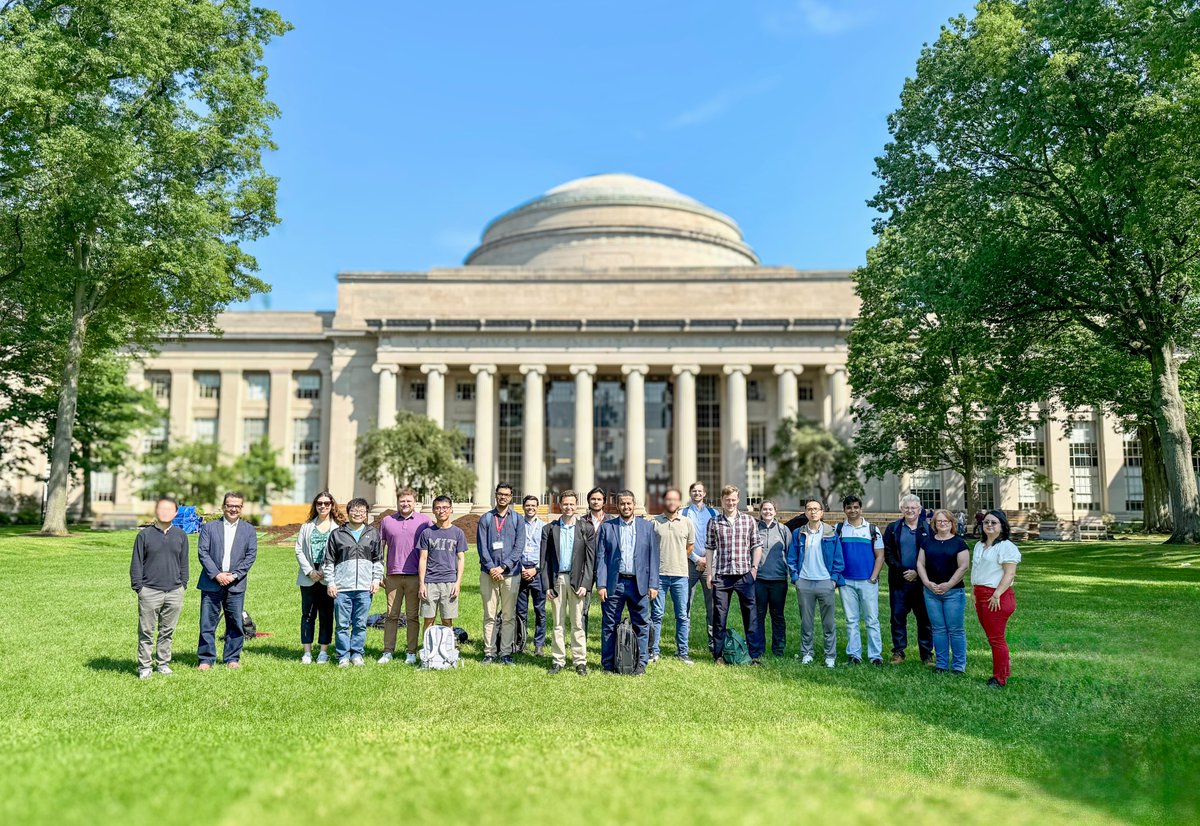
Reflecting on a week of discovery and learning at #MIT: The 2025 Predictive Multiscale Materials Design Short Course @MITProfessional
Last week, we had an exciting and intellectually vibrant time at the Predictive Multiscale Materials Design (PMMD) Short Course at MIT. It was a pleasure to welcome a highly talented cohort of participants from across industry, government and R&D labs from all around the world for an intense week-long engagement with the frontiers of materiomic design, analysis and manufacturing.
We explored the frontiers of hierarchical materials, molecular modeling, machine learning, additive manufacturing, and generative AI - ranging from bioinspired surface design to language models for materiomics, and from multiscale simulations to multi-agent protein discovery and topological design. Lectures were combined with hands-on computational labs, participant-led presentations, group design challenges, and facility tours across MIT.
The energy and engagement in every session, from discussions on spider silk mechanics to 3D-printed architected materials, protein engineering, earthquake modeling, and AI-generated molecules and composites, highlighted the potential of cross-disciplinary thinking and collaborative exploration.
A few course highlights:
1️⃣ Live demonstrations of materials simulation and generative design
2️⃣ Interactive group projects on hierarchical materials optimization
3️⃣ In-class exercises (molecular dynamics, LLMs, hierarchical topology optimization)
4️⃣ Tours of advanced fabrication and testing facilities
5️⃣ Deep dives into neural networks, machine learning force fields, and category theory for material representation
A huge thank you to all participants for your contributions, questions, and creativity! I look forward to staying in touch and to future collaborations across this growing community of multiscale material designers and the exciting potential of materiomics to impact many real-world challenges.
@MIT@mit_ilp
Deep stuff! We uncovered a startling link between #entropy—a bedrock concept in #physics—and how #AI can keep discovering new ideas without stagnating. In an era where reasoning models can reflect on problems for days at a time (rather than generating quick, single-step solutions), our study shows how semantic entropy (the spread of meanings) and structural entropy (how evenly its links between concepts generated by the AI are distributed) together hold the secret to ongoing exploration. Specifically, we measured structural entropy using Von Neumann graph entropy (applied to the adjacency Laplacian), while semantic entropy came from a similarity-based embedding deep language embedding matrix. The key insight? Although semantic entropy consistently outpaces structural entropy, they remain in a near-critical balance—fueling "surprising edges" that introduce relationships between distant concepts. This mirrors physical systems on the brink of a phase transition, where a little bit of "disorder" keeps the process dynamic yet avoids chaos. The result is an AI that doesn’t just keep pace with known solutions but actively creates new pathways of thought over extended “thinking” sessions.
As reasoning models become ever more capable—undertaking extended, multi-day "thought processes"—understanding fundamental principles is crucial. By weaving these insights into reinforcement learning strategies, we can reward models not just for correctness, but for venturing into novel conceptual ground. This opens the door to AI systems that actively cultivate new insights, rather than settling into narrow patterns or endlessly rehashing the same knowledge.
Going Deeper
When physicists describe entropy, they refer to the measure of "disorder" in a system: the number of ways particles can rearrange without altering the system’s energy. Yet entropy transcends molecules and heat. In this research, it emerges as the engine that drives AI reasoning models to keep generating fresh ideas over extended periods. By analyzing agentic graph reasoning, we computed Structural Entropy (using Von Neumann graph entropy of the normalized Laplacian) to measure how evenly a knowledge graph’s connections spread out. In parallel, we assessed Semantic Entropy, built from a semantic adjacency matrix of cosine similarities between node embeddings. Remarkably, semantic entropy persistently outran its structural counterpart, indicating that the AI remains open to far-reaching conceptual links while sustaining a stable fraction of "surprising edges."
This dynamic reflects self-organized criticality—a state where systems hover between rigid order and random chaos. Much like a sand pile teetering on the edge of collapse, the AI preserves enough organizational structure to remain coherent, yet stays flexible enough to generate unexpected leaps in meaning. The fraction of "surprising edges" remains stable, offering evidence that the model naturally integrates new, distant ideas without toppling into confusion. Ultimately, this deep linkage between physics and AI may become a cornerstone for how we build machines that never stop learning, tapping into the same principle that governs how atoms move in a gas—entropy as the driving force behind endless possibility.
Are we all sponges? In new research in @NatureComms we find that ancient sea sponges contain the same types of collagen (I & III) as mammals, pushing the origin of these crucial proteins deeper into evolutionary history, highlighting our shared molecular heritage with some of Earth's earliest animals.
A brilliant idea isn’t a fact—until it is. Many groundbreaking discoveries seem obvious only in hindsight, once they unify a web of seemingly isolated facts into a general principle. Before we connected the dots between evolution, genetics & material science, silk was just a thread, proteins were just biological molecules, and genes were just codes. But once we saw their relationships, we unlocked deep truths about how nature builds materials at every scale.
What If AI Could Think in Relationships Instead of Just Memorizing?
Most AI today doesn’t work this way. It merely predicts the next token, unaware of whether its own output is meaningful, correct, or groundbreaking.
They:
❌ Lack true reasoning—they do not verify if their responses make sense.
❌ Canot correct themselves—once they generate something, they have no mechanism to reflect and refine their own ideas.
❌ Do not connect ideas deeply—they retrieve, not discover.
💡 SciAgents does something different. Rather than treating knowledge as isolated facts, it builds a massive relational graph, connecting every concept and idea to others. Then, a team of AI agents—much like a group of researchers—explores this graph, not just by taking the shortest path between ideas, but by wandering through unexpected links.
How SciAgents Reasons over Graphs
▶️Instead of taking the shortest path between two ideas (which can be too direct & limiting), SciAgents samples diverse paths through a powerful algorithm that explores ever-growing sets of diverse waypoints. This allows it to natively explore broader, richer relationships—leading to unexpected discoveries.
▶️For example, to explore the connection between silk and energy efficiency, SciAgents didn’t just look at direct links. It uncovered intermediate concepts like biocompatibility, multifunctionality, and structural coloration, revealing new ways to design bioinspired materials that human researchers might have overlooked.
Why does this matter for building better AI for science and beyond?
1⃣Generalization is the key to intelligence. Memorization alone won’t get AI to true reasoning—but structuring knowledge in a relational way can.
2⃣SciAgents goes beyond predicting words. It constructs ideas by mapping biological blueprints—from genes encoding proteins to evolutionarily refined materials like silk—and extrapolates new designs for synthetic biology and materials science.
3⃣It refines its own outputs. Rather than passively generating text, SciAgents’ multi-agent system debates, critiques, and improves hypotheses, making its discoveries deeper and more reliable.
🌍 Graph-based reasoning plus multi-agent collaboration is not just a better way for AI to think—it’s likely on a critical path towards AGI. The ability to form deep, structured insights from sparse information is what separates mere computation from true intelligence.
A. Ghafarollahi, M.J. Buehler, SciAgents: Automating Scientific Discovery Through Bioinspired Multi-Agent Intelligent Graph Reasoning, Adv. Materials, DOI: 10.1002/adma.202413523, 2025
@DoorDash@WCKitchen@t_xu Please check your email. What is happening with Doordash is beyond terrible. Please take actions. This should not be taken lightly.
This project studies and analyzes principles and techniques of conservation, incorporating blockchain technologies for the upkeep of artwork origins, accurate documentation of the artist, and the artist's objectives.
#annadumitriu#techniquesofconservation#BlockchainTechnology
Imagine being able to predict how a large number of cells will move and interact, not by observing them over time, but from a single static snapshot. It sounds like peering into a crystal ball, doesn't it? This is exactly what our team has achieved in our latest research, combining the fields of biology, artificial intelligence & graph theory, to unravel the complexities of cellular behavior, to unravel how dynamical behavior emerges from simple interactions. Multicellular dynamics is an important field as it underlies key processes in biology, from embryogenesis to tumor invasion.
In a study published in @PhysRevX, led by graduate student Haiqian Yang in collaboration with Ming Guo, Monilola A. Olayioye, and others in an interdisciplinary team, we tackled the challenging problem of predicting collective cell migratory dynamics using Principal Neighborhood Aggregation (PNA) Graph Neural Networks (GNNs). PNAs enhance predictive power by aggregating diverse statistical information from each cell's neighborhood, capturing complex interactions beyond simple averages. Leveraging principles from graph theory, our model treats cells as nodes and their connections as edges, enabling a sophisticated analysis of cellular behavior that accounts for both individual properties and the broader network structure.
Technical Deep Dive: PNA Graph Neural Networks and Cellular Dynamics
Collective cell migration is fundamental to processes like embryonic development, wound healing, and cancer metastasis. Traditionally, predicting how cells will move has been incredibly challenging due to the complex interplay of biochemical signals, physical forces, and cell-to-cell interactions. It's like trying to predict traffic patterns by looking at a snapshot of parked cars without considering the drivers, road conditions, or traffic laws.
Cell Jamming and Unjamming: Cells can exist in states of "jamming," where they are densely packed and movement is restricted, or "unjamming," where they have more freedom to move. These states are influenced not just by cell density but also by cell shape, polarity, and the forces they exert on each other.
▶️ Why Traditional Models Fall Short: Traditional models often simplify cells into basic units with limited interactions, failing to capture the nuanced behaviors that arise from complex cellular interactions. They might categorize systems into "jammed" or "unjammed," but real biological systems exist on a spectrum.
💡Enter PNA Graph Neural Networks: GNNs are designed to operate on graph structures where cells are nodes and their interactions are edges. The PNA variant enhances this by aggregating information from a cell's neighborhood using multiple statistical functions—not just averages, but also maximums, minimums, and standard deviations, and other features. This approach captures the heterogeneity and non-linear interactions inherent in biological systems.
✅ By incorporating geometric features of cells—like area and perimeter—and their spatial relationships, the PNA GNN can model both individual cell properties and the complex interactions with their neighbors. This multi-scale consideration is crucial because cell behavior is influenced by both local interactions and larger-scale tissue structures.
Key Insights: Overcoming Traditional Modeling Challenges
One of the remarkable findings from our work is that static cell configurations contain critical information about future motion. By effectively capturing the "rules" of cellular migration encoded in their spatial configurations, the PNA GNN identifies subtle differences and patterns that simpler models might miss.
Why PNA GNNs Excel:
▶️ Capturing Heterogeneity: Cells differ in size, shape, and behavior even within the same tissue. PNA GNNs account for this variability by using multiple aggregators to capture different aspects of a cell's neighborhood.
▶️ Modeling Non-Linear Interactions: Cell behavior isn't a simple sum of influences; it's often non-linear. PNA GNNs are well-suited to model these complex interactions.
▶️ Multi-Scale Consideration: They capture local interactions and larger patterns in the tissue, which is crucial for processes like tissue development.
Our model demonstrated a high correlation between predicted and actual cell dynamics in both experimental and synthetic datasets. Ablation studies further confirmed that both geometric features and spatial interactions are critical for accurate predictions.
Why It Matters: Broad Applications and Future Directions
The potential applications of this approach are extensive:
▶️ Medicine: Predicting how cancer cells migrate could inform treatment strategies to prevent metastasis.
▶️ Tissue Engineering: Understanding how stem cells self-organize can improve regenerative medicine.
Drug Development: Predicting cellular responses to new compounds can streamline the discovery process.
▶️ By integrating detailed cell properties and their interactions, we can simulate biological processes with unprecedented accuracy. This knowledge could drive innovations in therapeutic interventions and personalized treatments, providing new tools for predicting biological behaviors in ways that were previously out of reach.
We're excited to continue exploring how GNNs and other data-driven methods can advance our understanding of multicellular dynamics, bridging the gap between experimental observation and predictive modeling.
Audio: Generated using PDF2Audio @LAMM_MIT based on the @PhysRevX paper
@MITMechE@MIT_CEE@Uni_Stuttgart
Reference to paper and codes/data in reply.
Last Monday I ran a DIY microbiology workshop embedding textiles to capture traces of the bacteria with students visiting from @Princeton University. Today I was able to look at the results and peel off the textiles for pasteurisation tomorrow. These are some of my favourites
Now out in @NatureComms (lead: @Xu_Xinming)! How do conversations shape how (and what) people guess about the unknown past and future (e.g., in other people's lives)?
Paper/code/data: https://t.co/rUYJCi4O85