🤔People report themselves as less open, extraverted, & neurotic on social media than offline.
🎭But they see typical person as *more* open, extraverted, & neurotic on social media than offline.
Link to my paper in-press at European Journal of Personality: https://t.co/nuNBvVAmgL
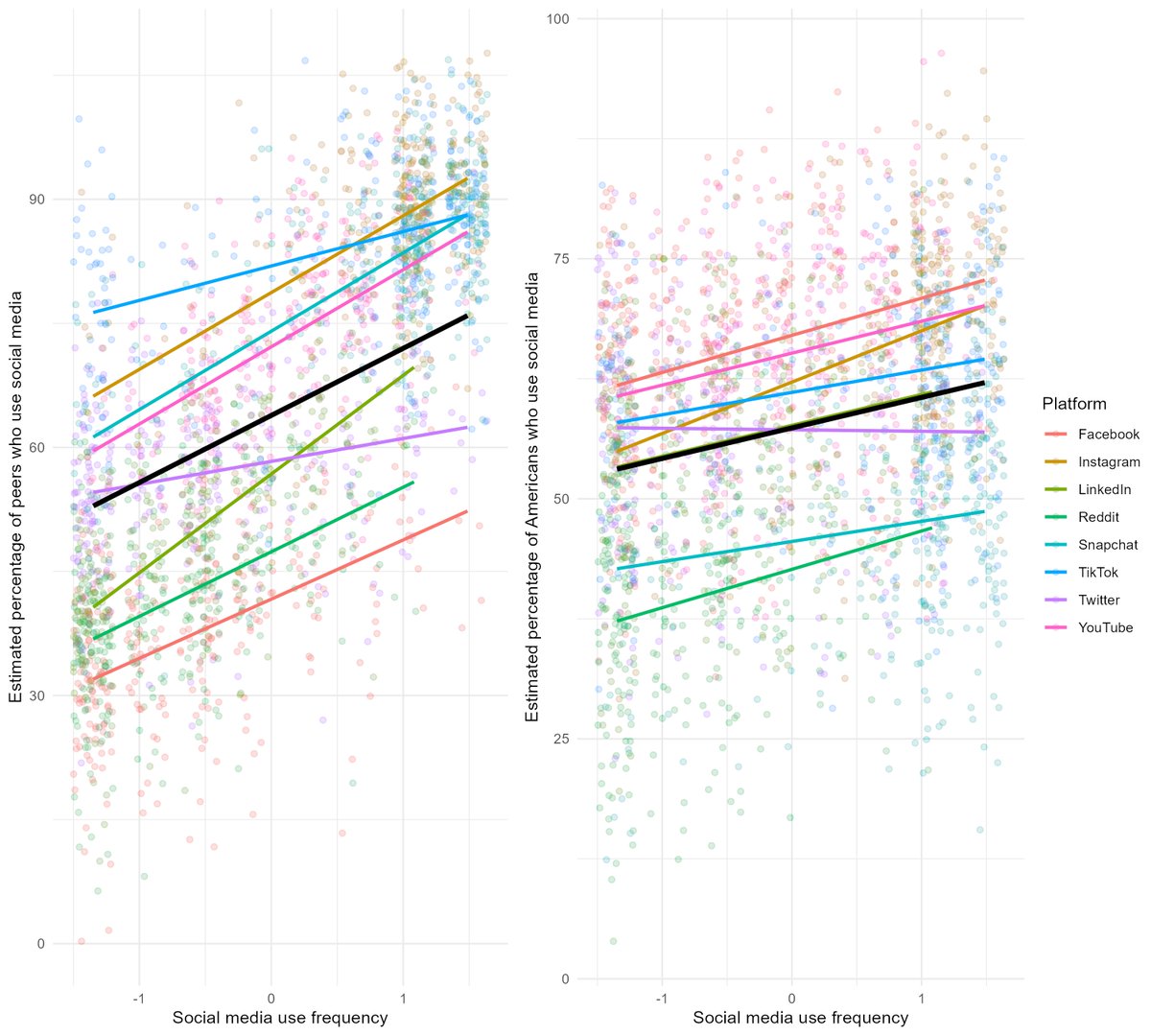
We compared >700 participants’ perceptions with nationally representative Pew reports regarding 8 social media platforms. Platform frequency was positively linked to overestimating others' use, and people were generally inaccurate. Check out paper in TMB: https://t.co/xR7xiiSTX7
Do you research or teach media psychology?
Emerson College is hiring an Affiliated (Part-time) Faculty member to teach Media Psychology in the Department of Marketing Communication — based in Boston.
#psychology#academicjobs#highered#marketing#communication
apply below👇
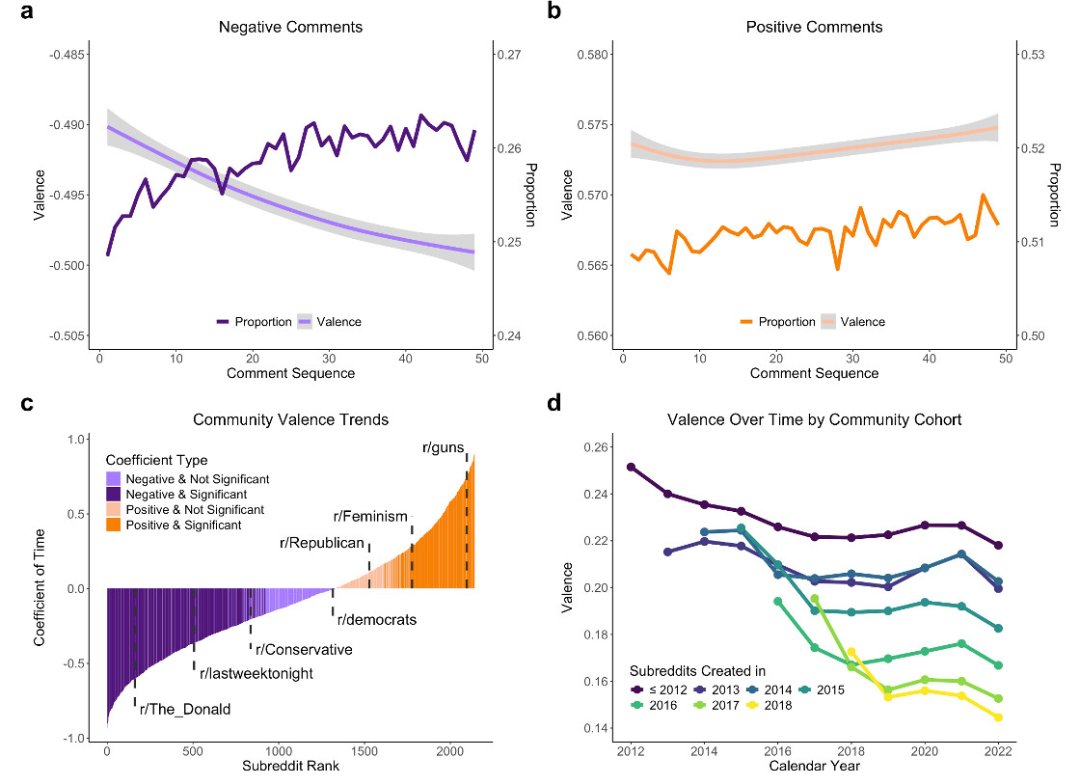
New preprint ✨ led by Hongkai Mao & team: In observational and experimental studies we find that *differentiation* helps explain how social media discourse descends into negativity over time.
🔥🔥🔥 It is with great excitement that I share our new paper
A consensus statement on potential negative impacts of smartphone and social media use on adolescent mental health
🧵 below
🚨New Preprint (wish it were less timely)🚨
We map everyday behavioral patterns of authoritarians using smartphone data, providing an updated portrait of authoritarianism in the digital age. w/ @timokoch_, Clemens Stachl, Ramona Schoedel, @Da_Racek etc
https://t.co/16riDM2v5K
I found an asymmetry in how people perceive themselves vs others on social media. The findings suggest that misperceptions derived from social media may extend beyond morality/politics toward how we view persons. Presenting data blitz @ Authenticity Precon @SPSPnews#spsp2025
Bad weather causes people to use social media more.
Evidence in new psych science paper by @keltonminor@Estebanmoro Nick Obradovich, including evidence within individuals overtime.
https://t.co/Nw7E0ulG1W
Two new commentaries out!
The first is in American Psychologist, where we provide a brief workflow for LLM-assisted hypothesis generation. (w/ Alejandro Hermida Carillo and @ClemensStachl)
https://t.co/5PBntPTfzv
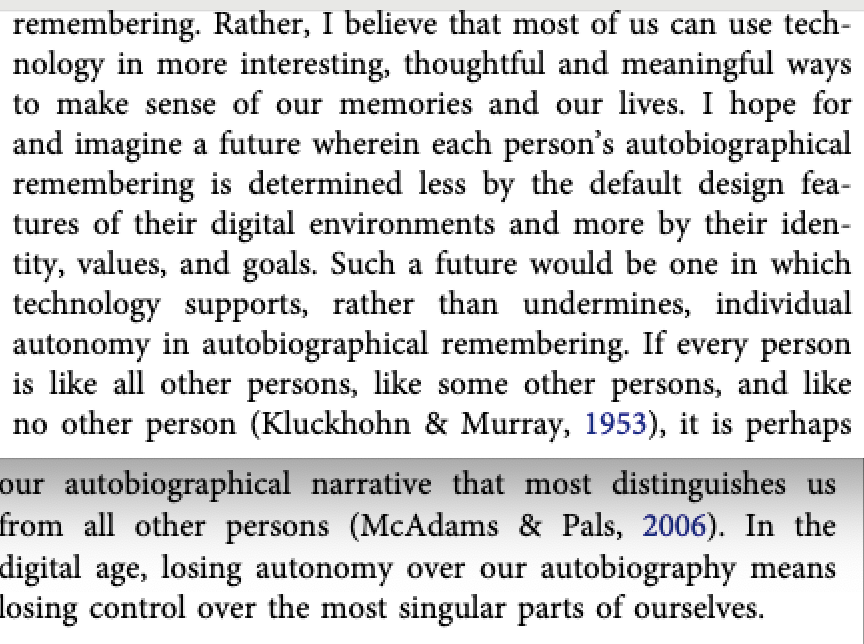
The second is in Psychological Inquiry, where I use one of my favorite recent books, Alphabetical Diaries by Sheila Heti, to reflect on autobiographical memory in the digital age.
https://t.co/XCrCFR3Eq5
Evidence that norms can prompt self-decriptions of social media as addicting, which predict negative outcomes. Yet, very few people are actually addicted. Work by @aanixel@ProfWendyWood at @psych_of_tech conference, Boston
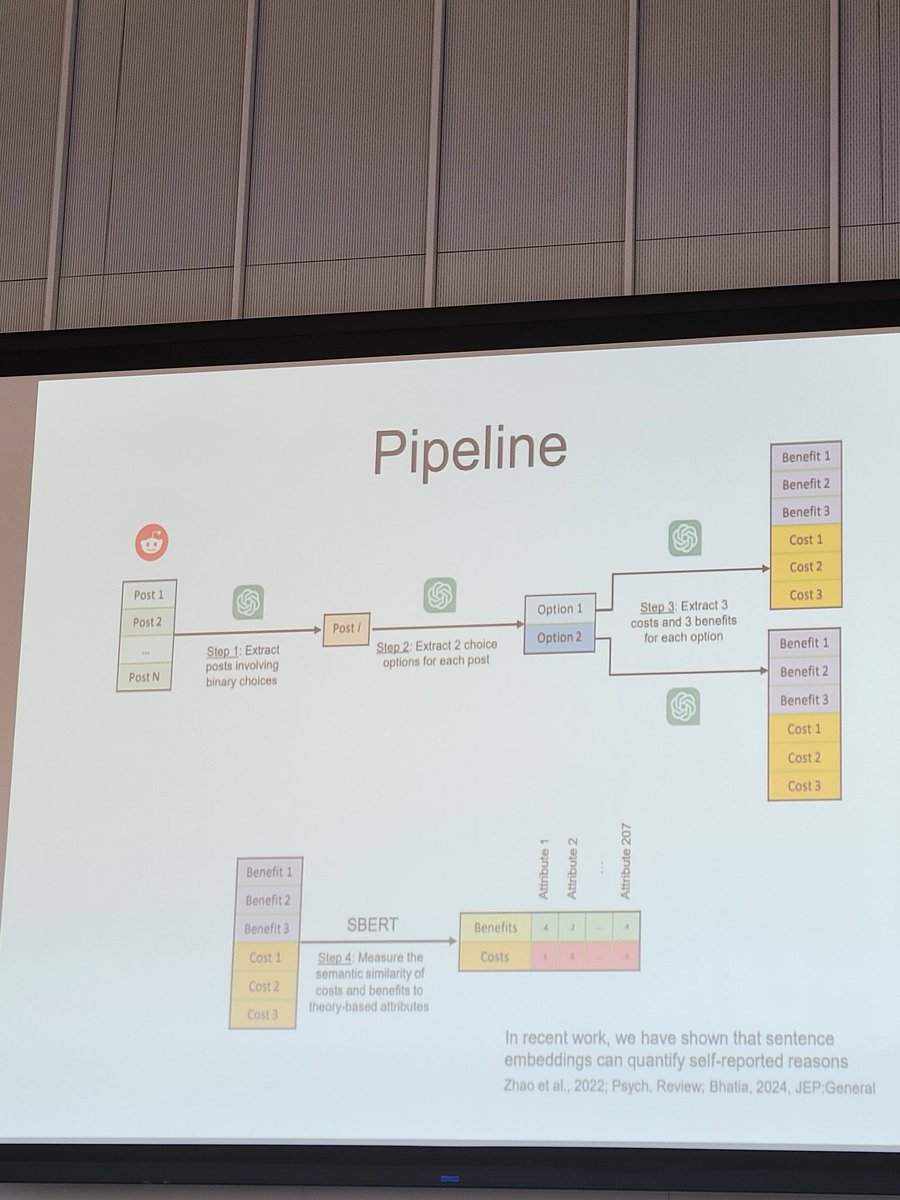
Life involves difficult choices (e.g., to stay in an unhappy marriage). New work by Sudeep Bhatia @SimonvBaal @LukaszWalasek uses large language models to structure binary choices on social media (e.g., reddit advice). @psych_of_tech conference, Boston.
Often leaders/countries look to income to see how people are doing. New work by @JonasP_Schoene suggests social media language is a stronger predictor of life satisfaction than income. @psych_of_tech conference, Boston