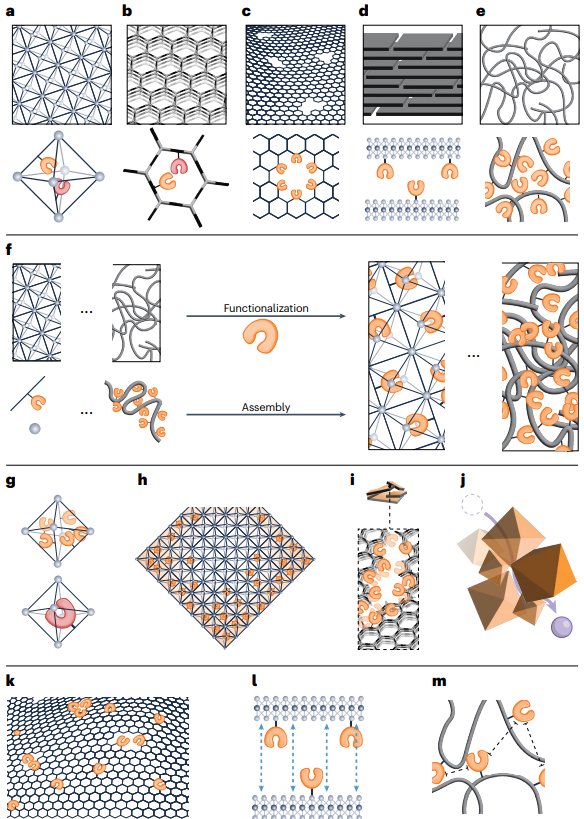
Happy to share our Perspective article in @NatureWaterJnl!
Insights from biological ion channels tell us that specific binding sites are needed for precise ion separations, but how should these chemistries be selected and implemented in membrane design?
https://t.co/PKsFexDNuu
@NatureWaterJnl (6/6) As material fabrication techniques advance toward greater precision, membrane science will continue to advance toward peak separation performance: the ability to filter solutes based on their unique electronic fingerprints.
@NatureWaterJnl (5/6) We outline synthetic methods to incorporate and pattern ion-specific binding sites into prevalent nanostructured materials such as COFs, MOFs, 2D materials, and polymers.
@NatureWaterJnl (4/6) The pharmaceutical industry is adept at predicting selective chemical interactions because drug efficacy largely depends on selective binding with proteins. We suggest adapting methods from drug discovery to the identification of ion-specific binding sites for membranes.
@NatureWaterJnl (3/6) Optimizing ion-binding site interactions for fast and selective transport in membrane nanopores involves navigating trade-offs between ion partitioning and diffusion. Moderate binding affinities and closely spaced sites are needed for facilitated transport.
@NatureWaterJnl (2/6) Separating near-identical solutes, like Co2+ and Ni2+, requires identifying ion-specific features beyond size and charge. We provide examples where orbital geometry, polarizability, vdW forces, hydrogen bonding, and solvent interactions enable ion-selective interactions.
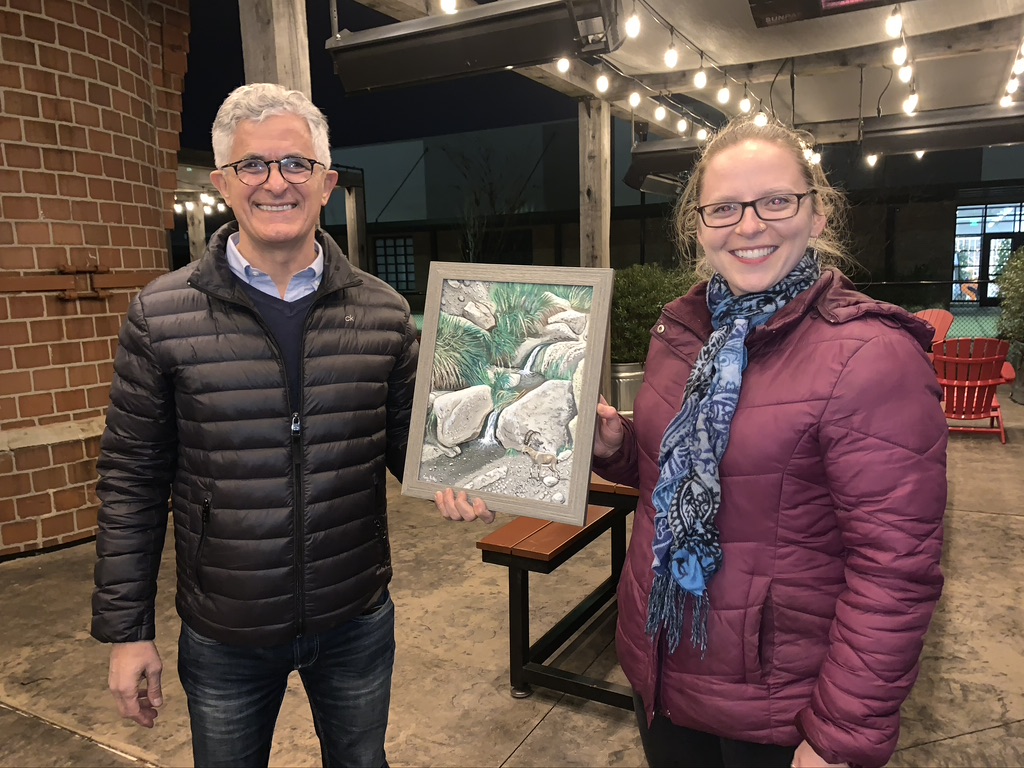
Congrats to @CassPorterCEE on completing a successful PhD defense, and best of luck in your upcoming faculty position at @AuburnU@AuburnEngineers
Your artistic skills are as good as your scientific prowess. Your painting of Ein Gedi, Israel, is beautiful
@YaleEnvEng @YaleSEAS
Excited to share our recent @EnvSciTech article "Salt and Water Transport in Reverse Osmosis Membranes: Beyond the Solution-Diffusion Model". Work done at @TheElimelechLab in collaboration with @Wetsus and @WUR@YaleEnvEng@CENT_EFRC
Open access: https://t.co/ZH1Wb4JnRY
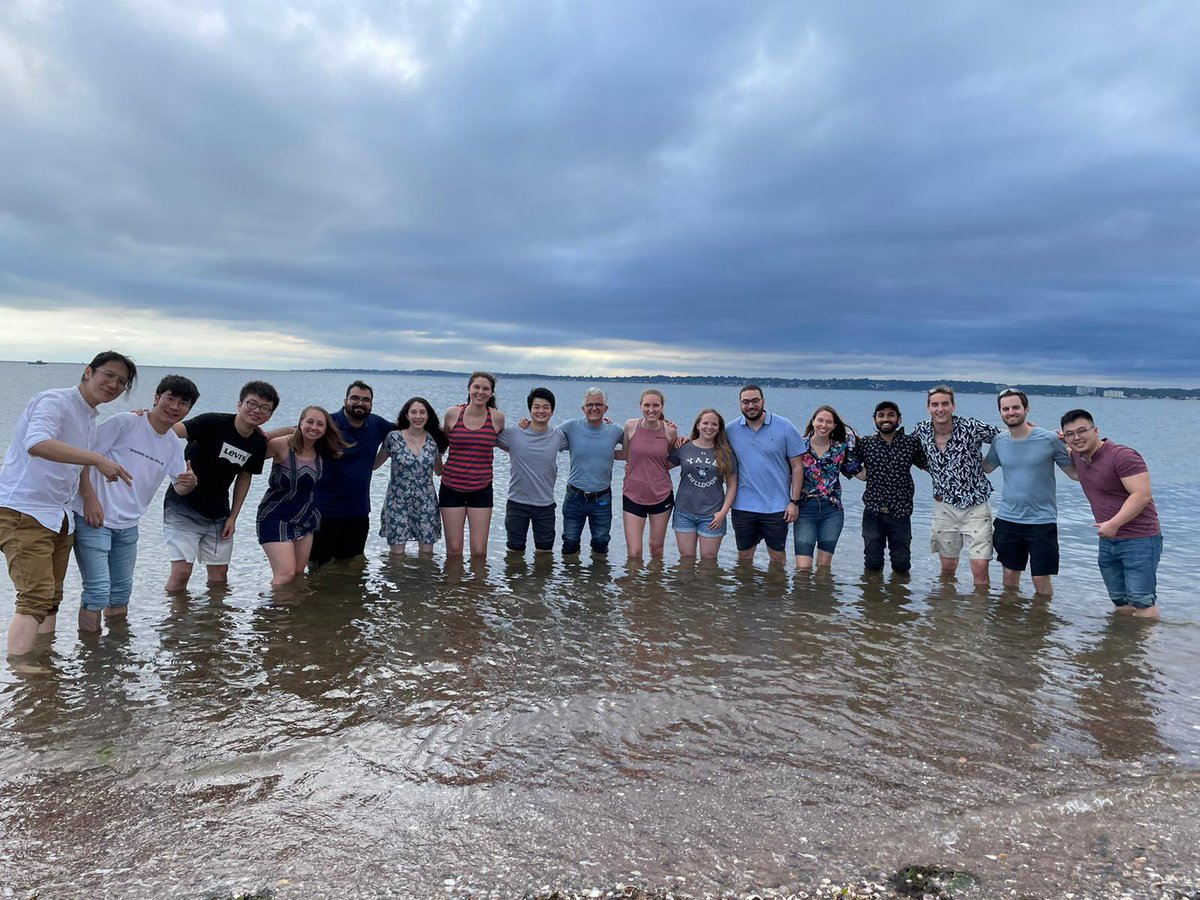
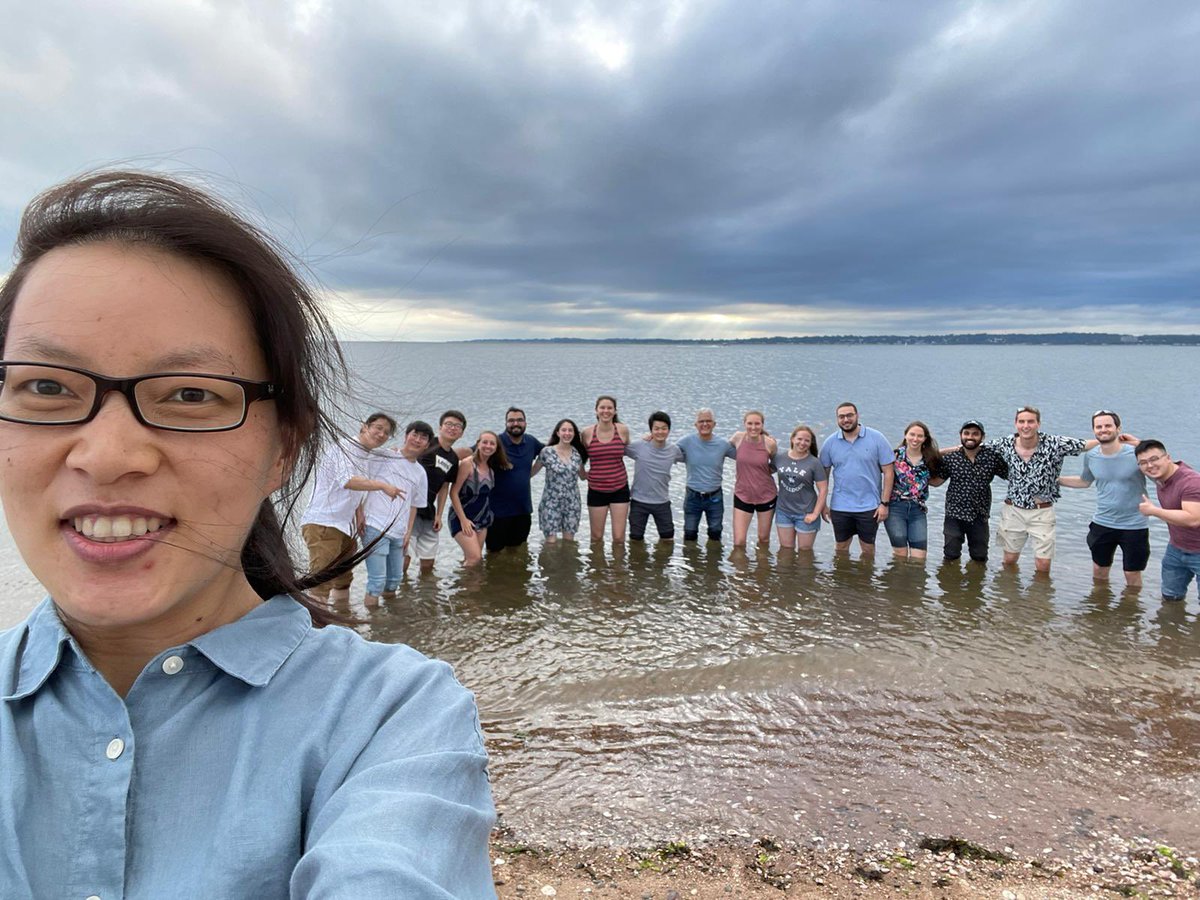
Another summer fun activity of our group before the beginning of the fall semester. This time at the beautiful Lighthouse Point Park in the @cityofnewhaven@YaleEnvEng
Are you teaching a college course related to water purification?
Do you need to add new material to your syllabus?
Using the article we just published, you can teach your students to derive the energy consumption of desalination.
We even included lecture slides!
Our article in @ACSPublications Journal of Chemical Education on a course module "Derivation of the Theoretical Minimum Energy of Separation of Desalination Processes." Complete lecture slides are included in the SI. @ACSDivCHED
Open access article:
https://t.co/1z0Tq3mw8H