🎗️ Pediatric oncology has transformed what it means to survive childhood cancer. Now, the challenge is to transform what comes after survival.
The September issue of CancerWorld asks what progress should look like when survival alone is no longer enough.
🌍 Building cancer care capacity where children still struggle to reach treatment.
🔬 Reducing the long-term consequences of life-saving therapies.
❤️ Protecting childhood, family life and the future beyond cancer.
From Cyprus, Mozambique and Tanzania to new research, survivorship and patient perspectives, new issue brings together the science, systems and stories shaping the next chapter of pediatric oncology.
Because the goal is not only to help children survive cancer, but to protect the life they still have ahead of them.
📖 Explore the new issue here: https://t.co/cHt8axDtYT
@oncodaily | @DrLoizos | @AsiaSiop | @ServierPharma | @Servier | @DanaBryson11 | @IntChildCancer | @WChildCancer | @vickyyyf | @CesaltinaLoren |
@AORTIC_AFRICA
Cancer research is advancing rapidly. But are the next generation of oncologists getting the opportunities they need to drive that progress?
Across Europe, access to mentorship, research and international collaboration remains unequal, often shaped more by geography and personal connections than by talent.
🌍 YOGI (Young Oncologists in GI) aims to change that.
Launched by eight young oncologists from six European countries, this new initiative is building a community to connect early-career specialists, share expertise and create opportunities for collaborative research.
Annalice Gandini explains why investing in young oncologists is not simply about career development, but about strengthening the future of gastrointestinal cancer care.
💡 “The future of gastrointestinal oncology will not be shaped by individual institutions or individual researchers alone, but by communities that are willing to learn from one another and work together.”
📖 Read the full article here: https://t.co/QO0SyLEHL0
@oncodaily | @OncoDailyGI | @AnnaliceGandini
🧠 We can map a tumour's DNA. But can we read the room?
Modern oncology has become extraordinarily precise in understanding cancer. Yet the human beings on both sides of the consultation remain far more complex.
Two nervous systems. Two personal histories. One room.
In CancerWorld, Dr Aleksandra Filipović challenges us to look beyond the tumour and reconsider the role of trauma, language, emotional regulation and human connection in cancer care.
💙 “Treatment is something we do. Medicine is also something that happens between us.”
What if the next frontier of personalised oncology is not only understanding the disease better, but understanding each other?
📖 Read the full article here: https://t.co/awhBxhVLj9
@oncodaily
⚽ They came to play football. But for some, simply being there was already a victory.
More than 200 young people affected by cancer. Sixteen teams. Two days of football near Milan.
But the Winners Cup was about far more than goals and trophies.
💙 About friendship, belonging and feeling understood without having to explain. About simply enjoying being young, beyond hospital rooms and treatments.
One former participant, Matteo Davide, who has since passed away, captured it beautifully: “For me, having been there already means having won everything.”
🏆 This year, Genoa's Real Camalli lifted the trophy. Former patients even defeated their doctors on the football field.
But the greatest victory was something no scoreboard could capture.
In this article Dr Marine Marachlian explores what the Winners Cup reveals about a question oncology cannot afford to overlook:
Are we doing enough to help young people not only survive cancer, but truly live?
📖 Read the full article here: https://t.co/LYtulCM9uq
@oncodaily
💙 The scan showed stable disease. But what mattered most to the patient was something no scan could measure.
“Doctor, can I have two extra weeks before my next chemotherapy? My son is getting married. I want to be in shape for his wedding.”
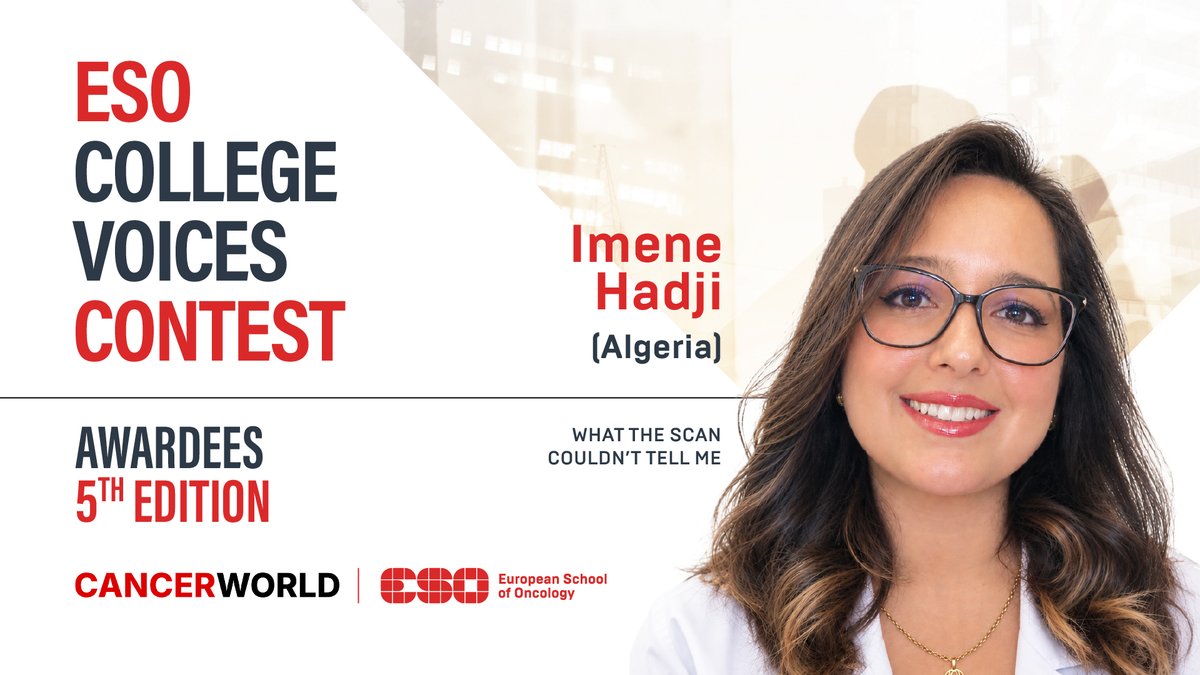
For Dr Imène Hadji, an oncologist in Algeria, this question became a powerful reminder of what patient-centred care truly means.
🩺 Behind every diagnosis is a person with hopes, priorities and moments worth protecting.
In her article Dr Hadji reflects on how listening, empathy and seemingly small clinical decisions can make an extraordinary difference.
🏆 “What the Scan Couldn't Tell Me,” is one of the two winning entries of the ESO College Voices Contest 2026, a collaboration between the European School of Oncology and CancerWorld.
Because treating cancer is about more than controlling disease. It is also about protecting the life patients are fighting to live.
📖 Read the full article here: https://t.co/wWEhjp9k0m
@oncodaily | @ESOncology
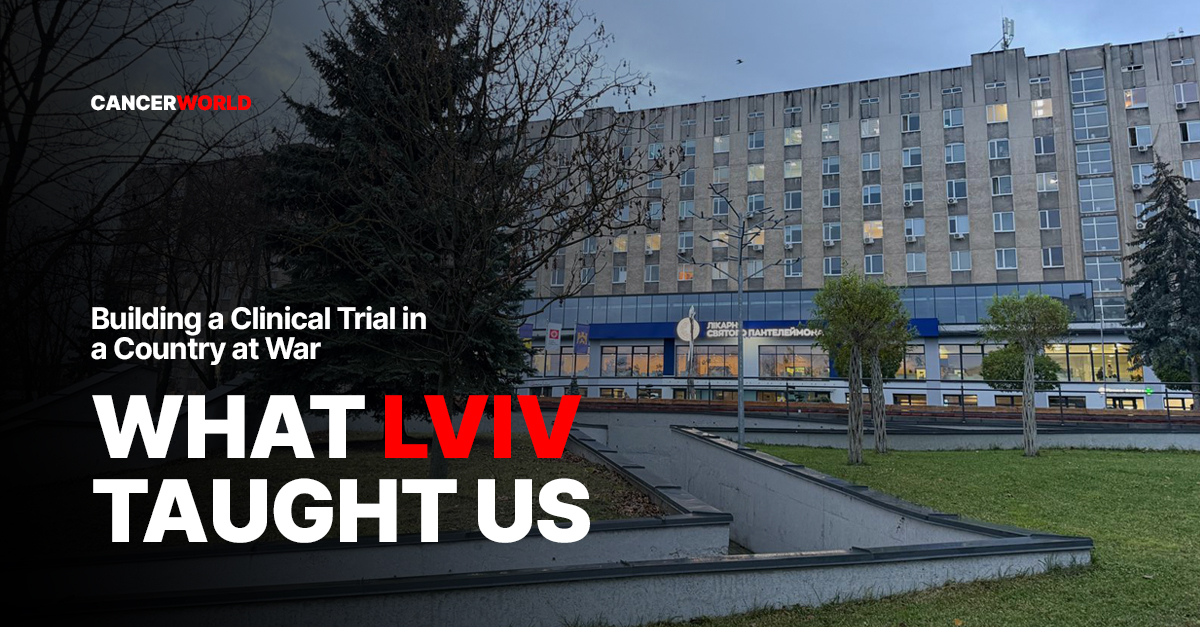
🇺🇦 In Lviv, where hospitals care for patients with devastating injuries and life-threatening infections, clinicians are demonstrating that scientific excellence does not have to wait for peace.
🔬 At First Lviv Territorial Medical Union, a randomized Phase 2 trial is investigating an experimental cell therapy for acute respiratory distress syndrome (ARDS), one of critical care's most challenging conditions.
This is more than a story about a clinical trial. It is about resilience, scientific ambition and the determination to build lasting research capacity in the midst of war.
In CancerWorld, Thiago Favano shares what he discovered in Lviv—and why the experience profoundly changed his understanding of what is possible under extraordinary circumstances.
💙💛 They came to advance research. They left with a lesson in courage, commitment and humanity.
📖 Read “Building a Clinical Trial in a Country at War: What Lviv Taught Us” here: https://t.co/uU0TUpSaQO
@oncodaily | @ThiagoFavano
🔬 89% of highly accomplished women scientists faced gender-related barriers—even after reaching the highest levels of medical research.
A study of 82 leading Italian women scientists reveals a striking reality:
▪️ 89% encountered gender-related obstacles.
▪️ 57% reported difficulties accessing leadership positions.
▪️ Nearly three-quarters experienced burnout.
Their success did not mean the barriers had disappeared. It meant they had succeeded despite them.
In CancerWorld, Prof. Adriana Albini, Editor-in-Chief, examines what these findings reveal about scientific leadership, institutional culture and the changes needed to achieve genuine equality.
💡 The next generation of women scientists should not have to be exceptional simply to overcome the system.
📖 Read “When Success Is Not Enough: Why Women Still Face Barriers at the Top of Medical Research” here: https://t.co/wm5YPTvZK8
@oncodaily | @adrianaalbini1
⏳ Cancer does not wait. Yet too many patients are still waiting for progress to reach them.
For Antonella Cardone, CEO of Cancer Patients Europe, this urgency is deeply personal.
Her journey has taken her from advocating for patients to caring for loved ones with cancer and experiencing the vulnerabilities of being a patient herself. Each perspective has reinforced a fundamental truth:
“Every patient is unique. So, there is no standard patient, no standard decisions.”
In this interview, Cardone confronts one of Europe's greatest cancer care challenges: scientific innovation is advancing faster than patients' access to it.
From unequal access to treatment to the need for genuine patient involvement, her message is clear: “Time is of essence.”
💡 Because for patients, delayed progress is not just a policy failure. It is time taken from their lives.
📖 Read the full interview by Knarik Arakelyan here: https://t.co/OoH0xOhT1p
@oncodaily | @CancerPatientsE
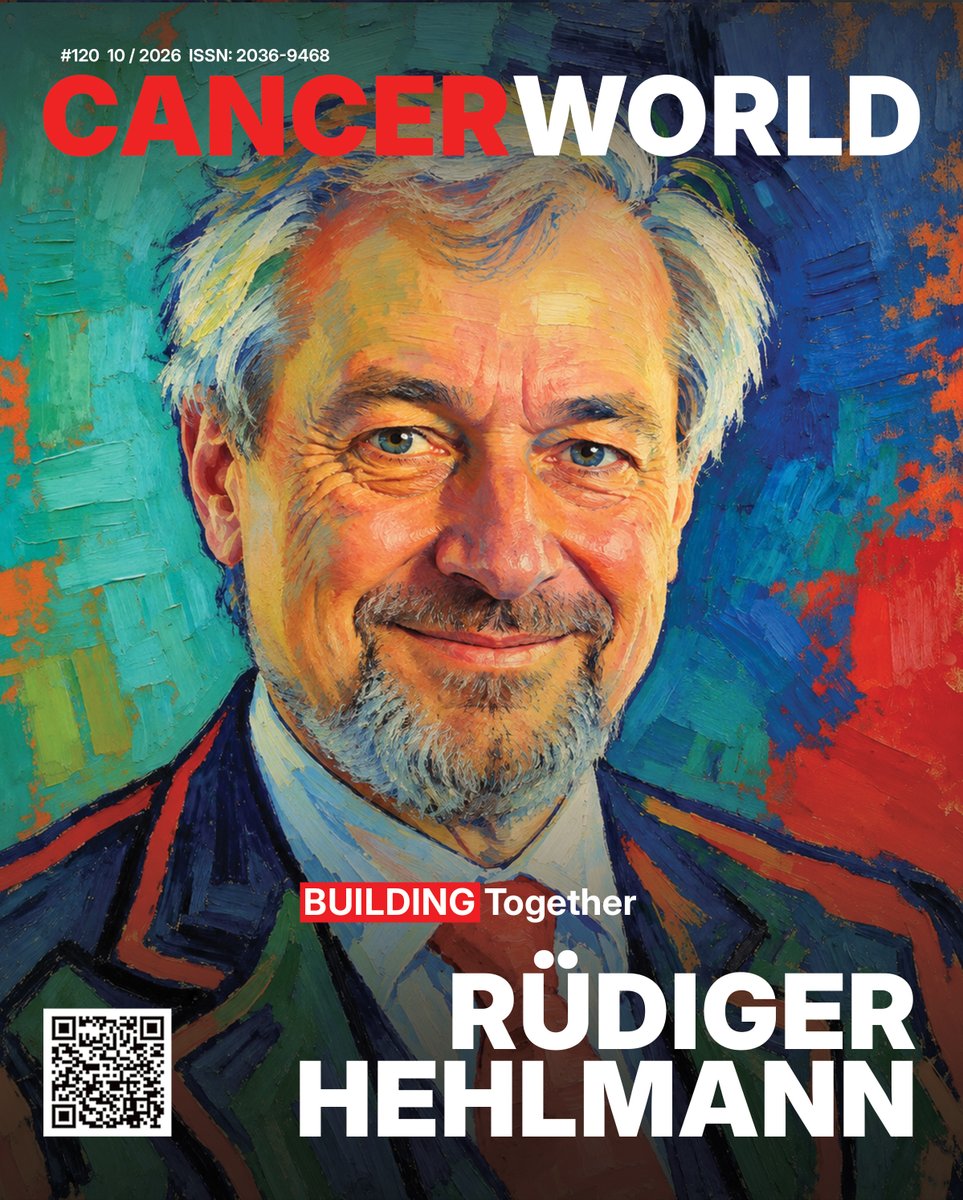
🧬 When nobody wanted to lead research on chronic myeloid leukemia, Rüdiger Hehlmann stepped forward: “Well, I’ll try.”
At the time, CML was a devastating diagnosis, with most patients dying within a few years. Today, those diagnosed early can often expect a near-normal life expectancy.
🤝 Professor Rüdiger Hehlmann helped drive this transformation and establish the European LeukemiaNet (ELN), advancing international collaboration and treatment standards.
“I realized that by cooperation you make advances much faster.”
In this interview, Gevorg Tamamyan explores the scientific vision, persistence and independence behind Hehlmann's remarkable career.
💡 His legacy is not only in the progress he helped achieve, but in the global scientific community he helped build.
🔗 Read the full interview here: https://t.co/w6ZJPKSJtj
@oncodaily | @cmlnet
After 44 years, leadership changes. The mission must endure and evolve.
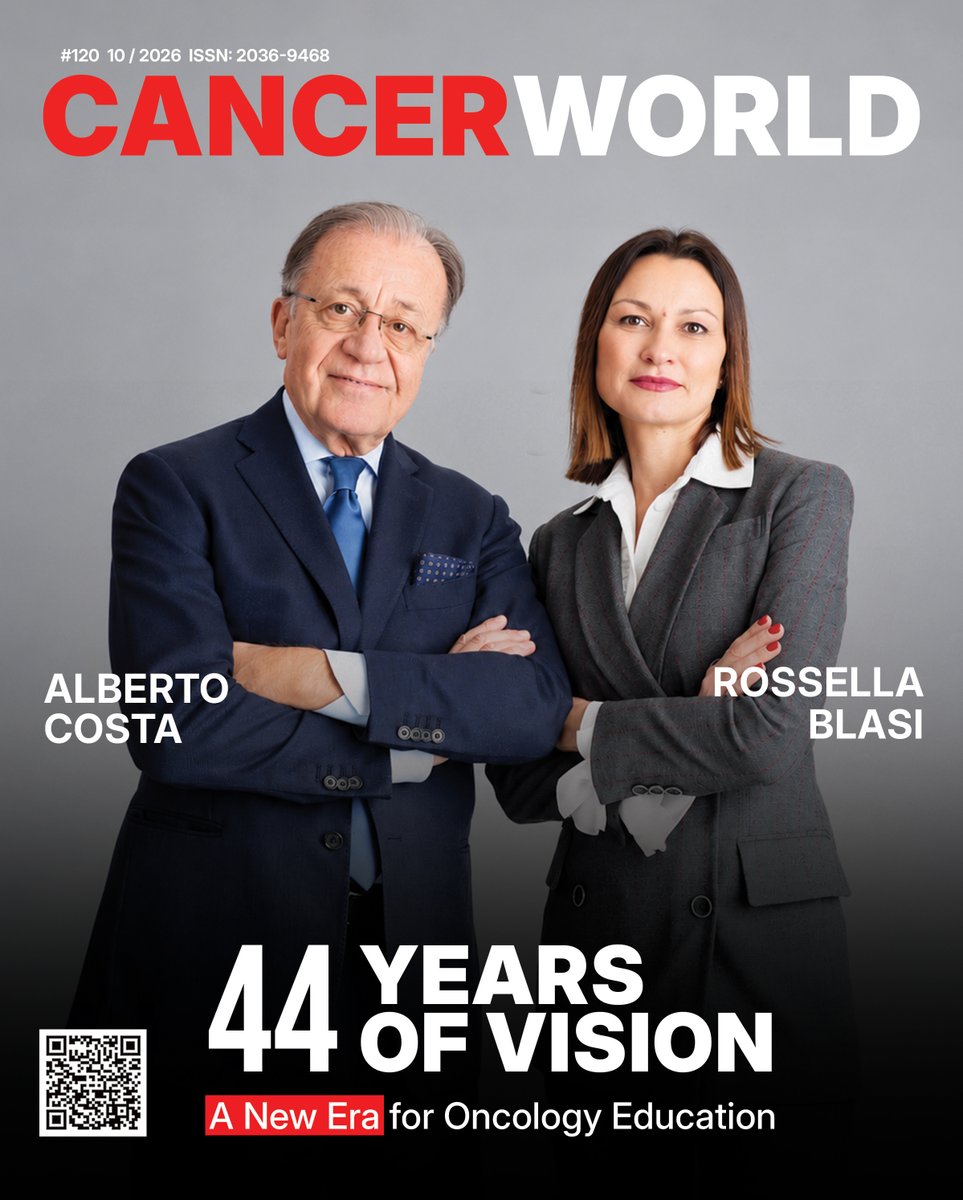
For more than four decades, Alberto Costa helped transform Umberto Veronesi's vision into the European School of Oncology (ESO), connecting generations of cancer professionals through education, mentorship and international collaboration.
Now, Rossella Blasi takes the helm, inheriting not only an extraordinary legacy but also the responsibility to shape what comes next.
🔬 In an exclusive CancerWorld cover story, both leaders reflect on the past, present and future of ESO and on a challenge that remains as urgent as ever:
How can oncology education keep pace with scientific breakthroughs while ensuring that knowledge reaches professionals and patients across borders?
Their perspectives reveal something fundamental about leadership: building an institution is an achievement. Ensuring that it continues to grow, adapt and serve future generations is a legacy.
🌍 As ESO enters its next chapter, the mission that inspired its creation in 1982 remains essential: turning knowledge into better cancer care.
📖 Read “44 Years of Vision. A New Era for Oncology Education” by Knarik Arakelyan, PhD here: https://t.co/Mbxn3Z7FzP
@oncodaily | @ESOncology
🎗️ For one father, progress means making it to his son's wedding. For a young cancer survivor, it means getting childhood back.
For scientists, progress may mean a breakthrough. For patients, it means a chance to live the moments that matter most.
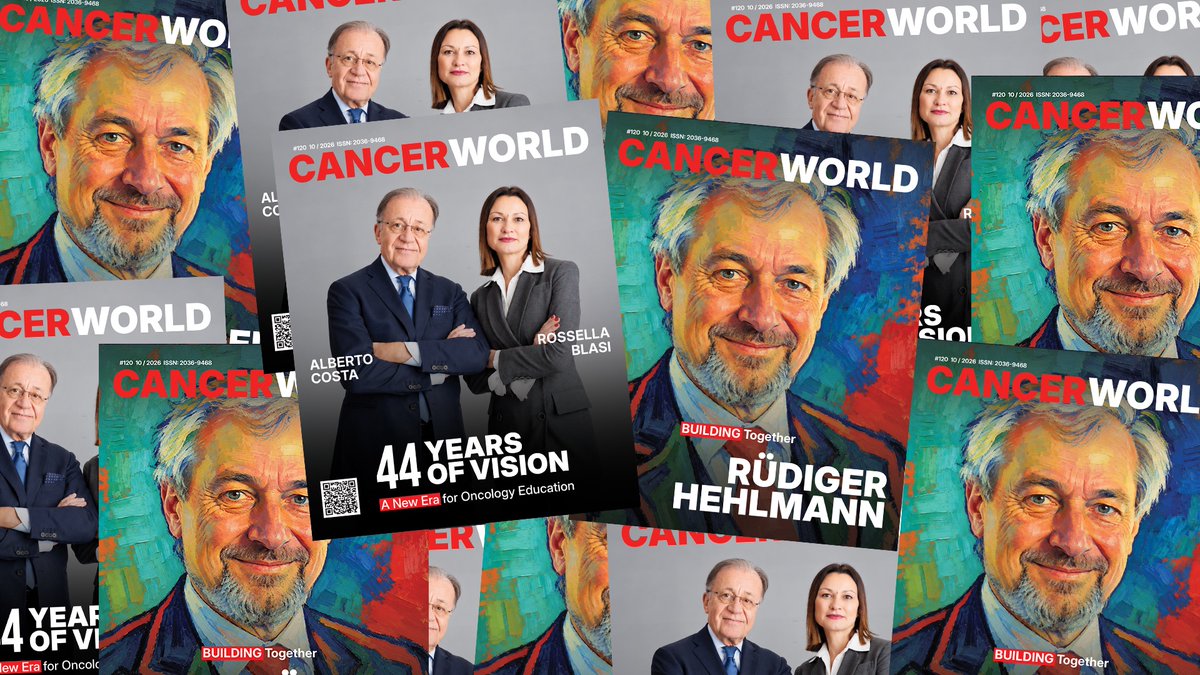
🔬 CancerWorld #120 (October 2026) asks: What does progress in oncology really mean—and who gets to benefit from it?
From Rüdiger Hehlmann's pioneering work with the European LeukemiaNet to the leadership transition from Alberto Costa to Rossella Blasi at the European School of Oncology, our cover stories explore how science, collaboration and leadership shape the future of cancer care.
🌍 But this issue goes further—confronting inequalities, celebrating young researchers, exploring the challenges facing oncologists and giving voice to the human experiences behind every diagnosis.
Because a breakthrough is only part of the story. What matters is the life it makes possible.
Discover CancerWorld #120—where scientific ambition meets human purpose.
The ultimate measure of oncology is not how far science advances. It is how much of life that progress gives back.
📖 Read the full issue here: https://t.co/oyb9xnMBH6
@oncodaily | @ESOncology | @CancerPatientsE | @AnnaliceGandini | @vickyyyf
🎗️ She survived two childhood cancers. Then, at 12, she was told to simply “go be normal.”
After spending eight years of her childhood in hospitals, Brett Wilson looked at her mother and asked:
“What does that mean? I’ve been in a hospital for eight years.”
Years later, Brett created the Walking Miracles Family Foundation to give children, survivors and families what she and her mother never had: guidance, resources and support for life after cancer.
Because surviving cancer and knowing how to live after cancer are not the same thing.
She was told to “go be normal.”
Instead, she built what had been missing all along.
📖 Read the story by Knarik Arakelyan, PhD here: https://t.co/cFpasUqLYj
@oncodaily
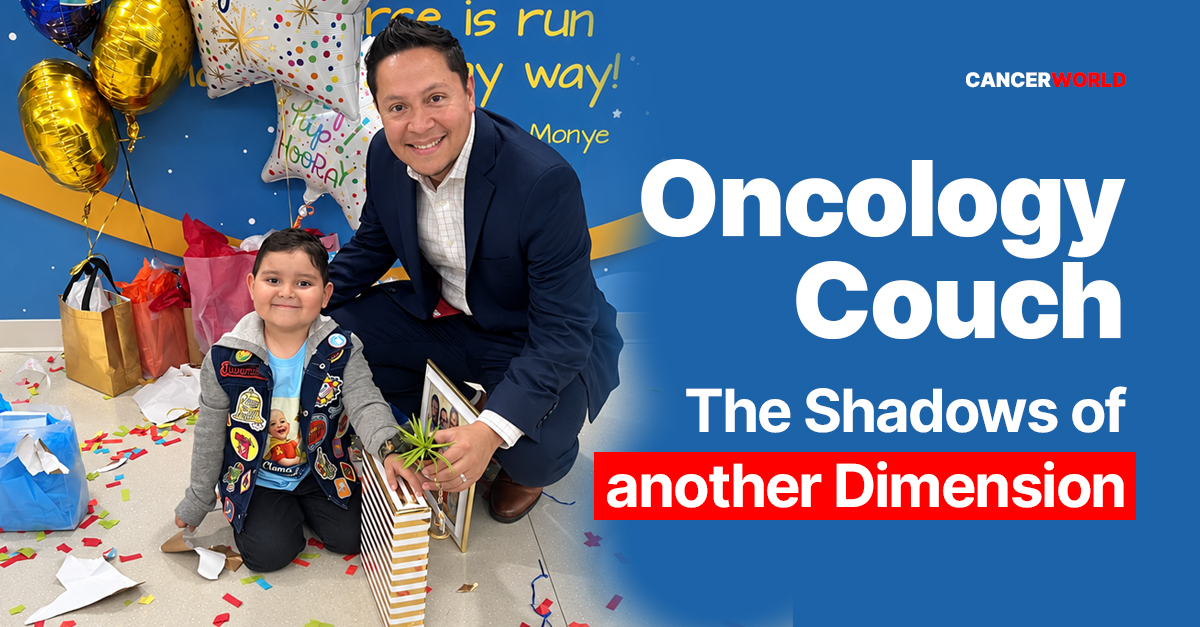
🎗️ The child wants to go to the playroom. The parent wants to know if their child will live. And the oncologist has to hold both worlds at once.
In the latest Oncology Couch, Aleksandra Filipović, MD, PhD, speaks with pediatric hematologist-oncologist Dr Jorge Ricardo Galvez Silva about childhood cancer, hope, uncertainty—and the limits of what medicine can explain.
Why can similar disease and similar treatment sometimes lead to very different outcomes?
Jorge calls the unknown variable “D”—not an alternative to science, but a reminder that medicine may not yet be able to measure everything that matters.
💭 What do you think medicine still doesn’t know how to measure?
📖 Read the article here: https://t.co/DnMp84bBJH
And join a conversation that may leave you with more questions than answers. Perhaps that is exactly where discovery begins.
@oncodaily
🎗️ In Tanzania, childhood cancer survival has risen from less than 10% to more than 50%. But for too many children, the chance to survive still comes too late.
Over two decades, childhood cancer care has been transformed—from scarce medicines and limited resources to a growing network of 22 hospitals, specialist training and care led by Tanzanian teams.
But one number has refused to move.
In 2005, 30% of children arrived with disease requiring palliative care. In 2025, it was still 30%.
Behind that number are children reaching care when cure is no longer possible.
The next chapter is not only about better treatment. It is about reaching every child while there is still a chance to save them.
📖 Read the powerful story by Victoria Forster, PhD, in CancerWorld, featuring Dr Trish Scanlan and the Tanzanian teams driving this transformation: https://t.co/Jbru6cPQA9
@oncodaily | @vickyyyf |
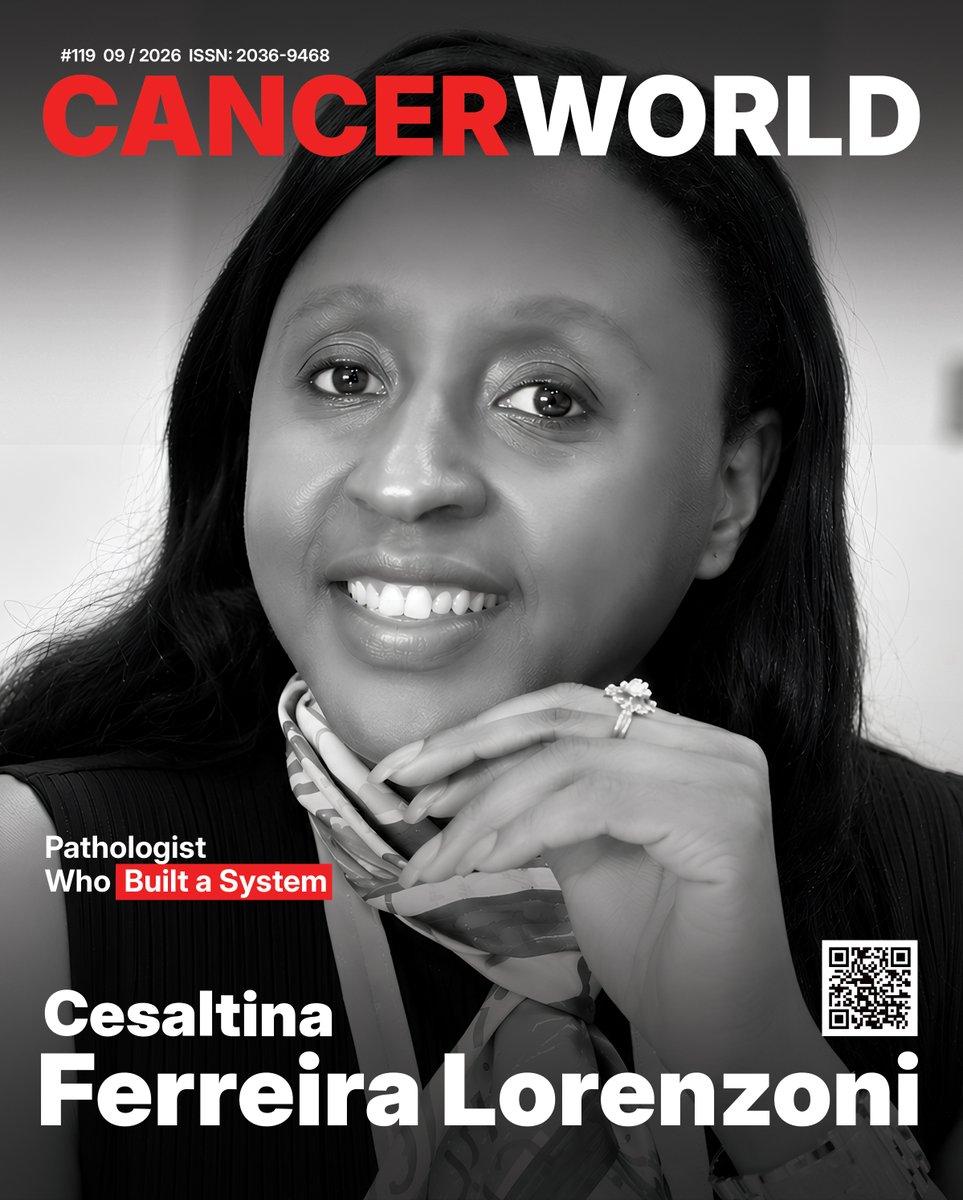
🌍 When Cesaltina Ferreira Lorenzoni chose pathology, Mozambique had only three Mozambican pathologists. Cancer data were scarce, and much of the country’s cancer burden remained invisible.
She helped change that—building cancer registries, strengthening pathology and turning data into evidence that could shape policy. Today, as the first AORTIC President from a Portuguese-speaking African country, her ambition reaches further: an Africa that does not simply follow global cancer priorities, but helps define them.
💬 “We need to move from research being done in Africa to research being led by Africa.”
From the microscope in Maputo to cancer leadership across the continent, her story is about making cancer visible—and making African voices impossible to overlook.
📖 Read the cover story by Gevorg Tamamyan here: https://t.co/0xx3pDwu6Q
@oncodaily | @GevTamamyan | @CesaltinaLoren | @AORTIC_AFRICA
🎗️ Once, Cyprus needed the world’s help to build pediatric oncology. Today, it is giving that help back.
When Prof. Loizos Loizou returned home more than three decades ago, childhood cancer care was fragmented—without a dedicated system, registry or sufficient specialized expertise. He helped build much of it from the ground up.
Today, Cyprus has a modern pediatric oncology service—and Prof. Loizou is turning that experience outward, supporting countries with medicines, training and expertise while helping them build capacity of their own.
💬 “We received help from many countries. Now we try to help the way we received.”
From receiving help to giving it back, his story is a reminder that progress in global oncology can travel in both directions.
📖 Read the cover story by Gevorg Tamamyan in CancerWorld: https://t.co/kjnI6oDZcT
@oncodaily | @GevTamamyan | @DrLoizos
@WHO has launched a new 2026–2030 strategy to improve access to childhood cancer medicines.
With ~90% of children with cancer living in LMICs, the goal is clear: stronger supply, better access, and more sustainable financing.
Awareness must be matched by access.
https://t.co/sTv1PUL81X
Girls across Sierra Leone began using a sentence as protection:
“I am Fatima’s child.”
https://t.co/40eeR7okxv
There are interviews you do.
There are interviews you remember.
And then there are interviews that change something inside you.
Today, sitting across from Her Excellency Fatima Maada Bio, First Lady of Sierra Leone, I had one of those.
@Ladyfatimabio@FirstLadyBio
🔬 What if one of the biggest innovations in cancer research is not only what we discover, but how we do science?
Ten years ago, the Parker Institute for Cancer Immunotherapy (PICI) was built around that idea: bringing discovery, collaboration, translation, and patient impact closer together.
In a special CancerWorld issue marking 10 years of PICI, scientists, leaders, entrepreneurs, and patients reflect on a decade of progress and what comes next for cancer immunotherapy.
🎗️ Because breakthroughs matter most when they change what is possible for patients.
📖 Explore the PICI 10th anniversary special issue here: https://t.co/HbVSLdNFVD
🌍 And continue the conversation at Immunõ 2026: Global Virtual Congress on Immuno-Oncology, presented by OncoDaily in partnership with PICI, September 24–30.
👉Register here: https://t.co/MNniu7ZNFR
@oncodaily | @parkerici | @sparker | @kickassscience1 | @sabahoney | @DispatchBio | @DanaFarber |
#CancerWorld #PICI10 #Immuno2026 #CancerImmunotherapy #ImmunoOncology #CancerResearch #Innovation #PatientImpact