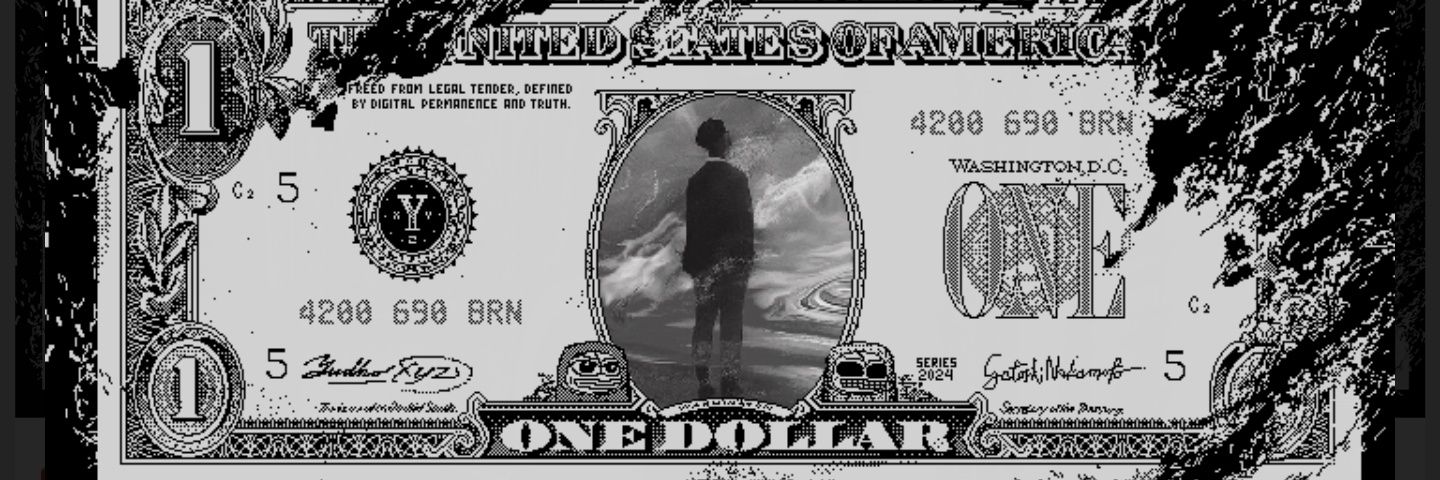
I’m beyond proud to own such a beautiful piece of art! Never imagined I’d find artwork that touches me as deeply as @YUDHO_XYZ’s. From the first glance, I felt a connection like never before. You’re truly one of the greatest artists of our time.
✈️ @WMGregoryG, Head of Aerial Platforms at World Mobile, breaks down where terrestrial towers work best.
Dense cities. High user density.
But beyond urban centres, the model gets harder to sustain. Power, security, fibre, terrain, maintenance and cost all start to add up.
World Mobile Stratospheric adds another layer to the connectivity stack.
Towers still matter. AirNodes still matter. Stratospheric expands what the network can reach.
🎙️ From the World Mobile Stratospheric Special AMA: Richard Deakin, CEO of WMS, explains why global connectivity is not a physics problem. It is an economics problem.
One aircraft. Up to 450 towers’ worth of coverage. Around 90% less cost per GB.
This is how the model evolves. 📡✈️
Explore the new World Mobile Stratospheric website: https://t.co/09bppc89c4
I’m not hoping anything. I did my due diligence.
Of course, anything can fall apart…wars, natural disasters, a major recession… risk is never completely off the table. But internet access is a basic need in virtually any scenario.
Anyway, here’s some context for you:
The first AirNode sales took place in February 2024. That means this part of the model has already been running for over 2 years, not just as a theory on paper.
@WorldMobileTeam ecosystem also keeps expanding through DePIN, RWA and revenue generating activities that create returns across the whole chain, from users to operators to owners, all within a well thought out sharing economy.
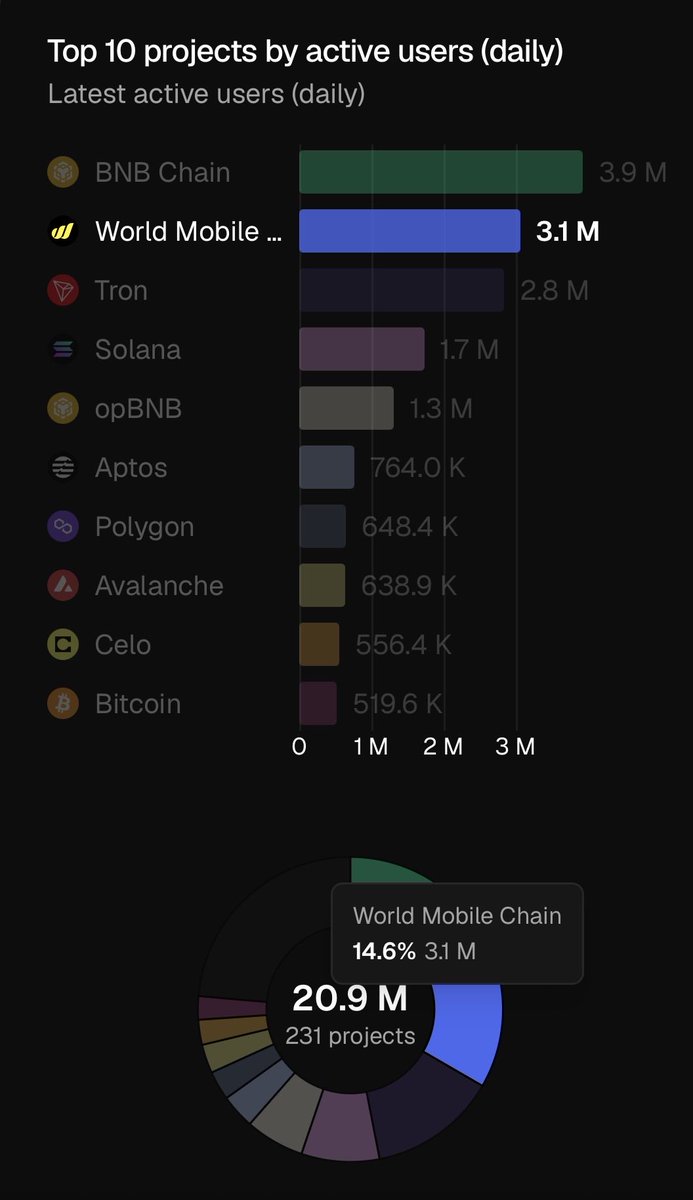
DAU numbers have also continued to grow steadily over time.
Even better, the people behind the project, leaded by @MrTelecoms had already achieved significant success in their careers across multiple sectors long before this. They identified an opportunity to give back and chose to do it through this model. They don’t need the money, they aren’t here for fame, hype, or momentum, and they continue building regardless of market conditions. They haven’t taken a cent from their stake in the project despite being well beyond the relevant timeframes to do so. They have a clear vision and mission, and that is what continues to drive them, and me.
I’m not saying this is the crypto Holy Grail, or that it is the most outstanding traditional business model ever created. The beauty in it is the mix, a cooperation between the best of both worlds wrapped in a sharing economy that solves people’s basic connectivity needs and beyond.
What I am saying is that the discomfort these numbers seem to create in you comes from the lack of information. This is a fact: World Mobile is a company with a structured model that has already proven itself to a meaningful extent.
Yes, risk is still part of the equation, as it is with any investment, especially in the crypto space.
But considering this is a hybrid crypto project, it is possibly one of the best places to be right now if what you are looking for is a relatively stable return over time.
World Mobile is launching a local retail connectivity strategy for North America.
The focus: eSIM activation in trusted neighborhood stores.
First major partner: https://t.co/4tsW6Un6vN, New York City.
Mobile EPOS. Travel eSIMs. Local retail access.
Simple, reliable connectivity, built for when you need it.
Jingle is live in Pakistan.
On 26 June 2026, it shifts gears.
This is where Minutes Network's carrier-grade telecommunications infrastructure meets Jingle's endpoint-driven model at scale.
The infrastructure is in place.
The route is live.
The partnerships are established.
Now comes scale.
Pakistan is one of the highest-value international voice corridors globally, and a share of that volume will terminate via jingle on the Minutes Network ecosystem. This expansion is designed to continuously onboard new Jingle users, increase network utilisation, strengthen traffic flows, and expand the value generated across the platform.
How will you see it?
On the Explorer.
More Jingle users.
More Jingle endpoints.
More Jingle calls.
More network activity.
We'll provide regular updates and recurring AMAs as the rollout progresses.
Hyperscale is in motion.
I've begun a comprehensive governance review of over 11,000 DAOs and a decade of literature in and out of our space to study executive function, roadmap, and strategy setting. The goal will be to propose some ideas to add new features to Cardano's governance via the constitution and new technology that will resolve much of the conflict we are facing.
I'm considering if it is prudent at this point to become a Drep and to host a new mini-convention to get it done in time for the 2027 process. More on this later. #CardanoUnityAndClarity
AI cannot change the world if the world cannot reach it.
We are building an airborne connectivity layer for the next era of digital infrastructure, designed to extend the network above our AirNodes and below the satellites in orbit.
For AirNode Operators, it means they can deploy anywhere, connect anyone.
For $WMTX, it means more network, more usage.
For EarthNodes, it means more data and services to run.
The future needs a new layer of connectivity and that layer is World Mobile Stratospheric
In 2013 I bought Bitcoin.
Made a quick buck. Walked away.
I had conviction in the idea : money nobody could freeze, print more of, or take.. but not enough patience for the timeline.
I've been making up for this past decade.
Today I want to connect some dots most people are still missing.
3M daily active users now tracked on @tokenterminal for @WorldMobileTeam!
Back in Feb 2026 alone, $WMTX on @base pulled in $1.49M revenue. For comparison, 7 of the biggest DePIN projects on @solana together generated $2.4M in the same period. @wmchain by itself is already doing over half of that number.
What stands out most is the valuation gap. Projects like @helium@rendernetwork@Hivemapper@UpRockCom@NATIXNetwork@XNET_Mobile and @GEODNET sit at a combined $1.22B market cap, while $WMTX is still around $60M.
Around 4.7% of the valuation while producing comparable revenue numbers. Real adoption is already here.
$WMTX : Review📜
What if instead of paying a trillion-dollar corporation for mobile service, you could own a piece of the network, run a node from your home, and earn crypto while connecting your community to the internet?
Meet World Mobile - the world's first decentralized mobile network operator, replacing the legacy telecom monopoly with community-owned infrastructure powered by blockchain.
13,685+ nodes, 1.6 million daily paying users, 600TB of data processed daily, live phone plans in the US and 60+ countries. Not a whitepaper. A working telco.
Let's explore how World Mobile is decentralizing the trillion-dollar telecom industry. 👇
⚪ World Mobile at a Glance
World Mobile Token (WMTX) is the native utility token of the World Mobile Chain, a blockchain-based decentralized mobile network. The token incentivizes network participants, including node operators and users, to contribute to the network's operation and expansion.
The $WMTX token powers staking, node operations, governance, service payments, and the programmatic buyback mechanism that converts real telecom revenue into token demand.
As of May 2026, $WMTX trades around $0.065 with a market cap of approximately $55M. Total supply is 2 billion WMTX with ~852M in circulation (~43%). ATH was $0.98. The network reports over 1.6 million unique daily paying users and processes 600TB+ of data daily across 13,685+ nodes.
Marketplace Insight: World Mobile isn't competing with other crypto projects. It's competing with AT&T, Vodafone, and MTN. The difference is that World Mobile's network is owned by node operators earning WMTX, not shareholders extracting dividends. With GSMA recognition as the leading voice in blockchain-powered telecom, Vodacom partnership, and live deployments across 3 continents, this is the DePIN project with the most real-world traction.
⚪ Mission
World Mobile's mission is to connect the unconnected. 3 billion people worldwide remain without internet access. Traditional telecom operators won't build infrastructure in underserved regions because the ROI doesn't justify the capex.
World Mobile flips the model: communities build and own their own networks using AirNodes, earning WMTX for providing connectivity. Blockchain handles coordination, payments, and identity.
The result is telecom at 12x lower cost than legacy operators, using only 1/500th of the nodes required by competitors.
🔵 A Brief History
Micky Watkins is the founder and CEO of World Mobile Group, a telecommunications company that utilizes decentralized network infrastructure. His work is focused on expanding global internet connectivity through solutions based on blockchain technology.
Telecoms entrepreneur and futurist, Micky has raised millions in VC and private funding from institutions such as Deutsche Telekom and Carmel Ventures amongst others.
Founder of Yallo, the first VOIP platform of its kind, he has spent the last decade developing solutions that change the way we consume communications.
World Mobile Group was founded in 2018. The project initially launched on the Cardano blockchain, leveraging its PoS security and low fees. The first real-world deployment happened in Zanzibar, Tanzania, where solar-powered WiFi towers brought internet access to rural communities for the first time. During COVID-19, this network proved essential, enabling local fishermen to communicate with traders and sustaining local economic activity.
The project expanded to Mozambique (in partnership with Vodacom and GSMA), Pakistan, and the United States (notably Reno, Nevada). The fastest AirNode sell-out in history happened in just 11 minutes.
In September 2025, WMTX migrated from Cardano to a multi-chain architecture across Base, Ethereum, and BNB Chain, enhancing interoperability and accessibility. The token rebranded from WMT to WMTX. Kraken became the first Tier-1 US exchange to list WMTX, followed by Coinbase.
At MWC25, GSMA recognized World Mobile as the leading voice in blockchain-powered telecom. Every major entity wanting to discuss blockchain and telecom was directed to World Mobile. Multiple exclusive deals were signed during the event.
In June 2026, World Mobile launched Bitcoin Mobile in partnership with Cuentas, a new mobile service combining nationwide 5G, built-in privacy features, and Bitcoin rewards.
🔵 Ecosystem Narrative
World Mobile's ecosystem is a functioning telecom network, not a DeFi protocol or speculative L1. The nodes provide actual mobile service, the users pay real money for phone plans, and the revenue flows back through the token economy.
Key dynamics include:
➛ Three-tier node architecture: AirNodes provide last-mile wireless connectivity, EarthNodes validate transactions and secure the blockchain, AetherNodes interface with legacy telecom operators for roaming and interconnect.
➛ The network processes more than 600 terabytes of data per day, serving over 1.6 million unique users every 24 hours. These are paying customers, not testnet wallets.
➛ Programmatic buyback uses a portion of network revenue to purchase WMTX on the open market, creating a closed-loop economy where increased usage directly supports token demand.
➛ World Mobile Chain (WMC) is a Layer 3 EVM-compatible blockchain purpose-built for telecom, ensuring high throughput and low latency for real-time communication.
➛ Decentralized digital identity provides users with self-governed IDs, enabling access to online banking, microcredit, healthcare, and education, effectively "banking the unbanked."
➛ Solar-powered infrastructure and unlicensed spectrum reduce deployment costs dramatically, making connectivity viable where legacy operators won't build.
➛ EmberNode launched April 2026 as a new node tier expanding community participation in the network.
➛ Stratospheric connectivity via aerostats (in partnership with Altaeros) provides coverage from the sky, demonstrated live at the ITU event in Riyadh with a remote launch across 6,000 miles.
⚪ Token Utilities
$WMTX powers the decentralized telecom economy:
➛ Node Staking - EarthNode operators stake a minimum of 100,000 WMTX to validate transactions and secure the network. Delegators can stake to existing nodes for passive rewards.
➛ Service Payments - Users pay for calls, texts, data, streaming, and internet services. Payments in local currency are converted to WMTX via
programmatic buyback.
➛ Node Operator Rewards - AirNode, EarthNode, and EmberNode operators earn WMTX for providing connectivity and processing transactions.
➛ Premier Staking - Loyalty program offering bill rebates, hardware discounts, VIP event access, and enhanced rewards for locking WMTX.
➛ Governance - Token holders participate in governance decisions affecting network development and resource allocation.
⚪ Key Features
➛ Live Telecom Network - Real phone plans purchasable today. 99% US coverage + 60 countries. 1.6M daily paying users. 600TB data/day. Not a testnet or pilot.
➛ 13,685+ Nodes - Community-operated AirNodes, EarthNodes, and EmberNodes deployed across 3 continents providing real wireless connectivity.
➛ 12x Cheaper Than Legacy Telcos - Uses only 1/500th of the nodes required by competitors. Solar-powered, unlicensed spectrum reduces infrastructure costs dramatically.
➛ Programmatic Buyback - Network revenue automatically purchases WMTX on open market, creating direct link between telecom usage and token demand.
➛ Multi-Chain (Base, Ethereum, BNB, Cardano) - Migrated to EVM ecosystem for broader accessibility. Kraken and Coinbase listed.
➛ GSMA Recognition - Recognized as the leading voice in blockchain-powered telecom at MWC25. Vodacom partnership for deployments.
➛ Bitcoin Mobile (June 2026) - New mobile service in partnership with Cuentas combining nationwide 5G, privacy features, and Bitcoin rewards.
➛ Stratospheric Connectivity - Aerostat deployments via Altaeros partnership providing coverage from the sky in hard-to-reach regions.
➛ Deutsche Telekom Backed - Raised from Deutsche Telekom and Carmel Ventures, bringing institutional telecom credibility.
🔵 Meet the World Mobile Team
World Mobile is led by one of the most experienced telecom leadership teams in crypto, with combined decades at AT&T, BT, Citigroup, SoftBank, and the inventor of the touchscreen and eSIM.
▶️ Core Members:
➛ Micky Watkins [ @MrTelecoms ] - CEO | Telecoms entrepreneur and futurist. Raised millions from Deutsche Telekom and Carmel Ventures. Founder of Yallo, the first VOIP platform of its kind. 20+ years developing telecom solutions and business models.
➛ Alan Omnet [ @aomnet ] - COO | 20+ years as a telecom entrepreneur. Co-founded and exited multiple businesses including a global telecom carrier growing to £40M+ annual revenue. Managed branded telecom services for 100+ companies including American Express, Hertz, and Virgin.
➛ Charles Barnett - CBO | Accomplished entrepreneur who expanded his family telecom business across several continents, surpassing $100M in revenue. Co-founded World Mobile to advance the mission of transforming global connectivity.
➛ Emmanuel Gratch - CIO | Former Investment Banker at Citigroup focusing on Telecoms, Media and Technology across EMEA. Advised on 15+ M&A deals and IPOs totaling cumulative enterprise value of over $10B. Masters from ESCP Europe Business School, MSc from Tongji University Shanghai.
➛ James Tagg [ @jamestagg ] - Chief Architect | One of the inventors of the touchscreen. Founded Truphone, the world's first global mobile network. Made the first VoIP call on a cell phone and developed the eSIM. Launched MVNO operations in UK, USA, Netherlands, Poland, Spain, Hong Kong, Australia, Germany. Built a travel SIM roaming in 200+ countries.
➛ Andrew Soper [ @andrew_s_wm ] - Chief Country Operations Officer | Over a decade operating renewable energy and telecom projects in East Africa. Megawatts of battery and solar deployed. Delivered distributed energy solutions to the Elon Musk-funded XPrize for global learning.
➛ Magnus Kelly - VP Country Operations | 40+ years telecom experience. Deep understanding of cellular, data, and voice technologies globally. Previously worked at AT&T, BT, National Grid. Made successful bid at Ofcom's first spectrum auction.
▶️ Adviser:
➛ Manoj Kohli - Adviser | Former Country Head of SoftBank and Vision Fund India, supporting $15B+ in investments across 25+ AI-focused companies. Former executive chairman of SB Energy. Led Bharti Airtel as MD and CEO to become the third largest telco in the world.
🔵 Ratings
➛ Use Case: ★★★★✦ (4.5/5) - World Mobile is the most tangible DePIN project in crypto. This isn't theoretical infrastructure or testnet demonstrations. It's a live telecom network with real phone plans, 1.6M daily paying users, 13,685+ nodes, and 600TB of data processed daily. The sharing economy model makes connectivity viable where legacy operators refuse to build, addressing a $100B+ market gap. GSMA recognition, Vodacom partnership, and Deutsche Telekom backing validate the approach at the highest industry levels.
Bitcoin Mobile launch extends into the US 5G market. The 0.5 deduction is because the project is still small relative to legacy telecom giants, the US market is fiercely competitive, and scaling from 1.6M to 100M users requires massive capital and operational expansion.
➛ Tokenomics: ★★★ (3/5) - The programmatic buyback mechanism is genuinely clever: real telecom revenue purchases WMTX on the open market, creating organic demand tied to usage. Fixed supply of 2B WMTX is known. Premier Staking and EarthNode staking (100K minimum) lock meaningful supply.
However, only 43% is circulating with 57% still locked across Foundation (18%), co-founders (17.75%), partnerships (7.85%), advisors (5.9%), and other allocations. Token is down 93% from ATH ($0.98 to $0.065). The insider allocation is heavy, and ongoing unlocks create persistent sell pressure.
The buyback mechanism needs significantly more network revenue to meaningfully offset the dilution from future unlocks.
➛ Audits: ★★★★ (4/5) - World Mobile holds a 4.4 star rating on CertiK, validating the project's security posture. The network has been operational since its Zanzibar pilot without a major security breach affecting user funds or connectivity. The codebase is open-source, audited, and peer-reviewed.
The multi-chain migration (Base, Ethereum, BNB) was executed without incident. World Mobile Chain is a purpose-built L3 with telecom-specific security requirements. The 1-point deduction reflects the relative newness of the WMTX multi-chain architecture and the complexity of securing both blockchain infrastructure and live telecom operations simultaneously across 13,685+ nodes on 3 continents.
➛ Community: ★★★★ (4/5) - World Mobile has one of the most mission-driven communities in crypto. Node operators aren't just staking tokens, they're literally providing internet access to communities that had none. The fastest AirNode sell-out in history (11 minutes) proves genuine demand for network participation. EmberNode public sale expanding community participation further.
The community spans crypto enthusiasts, telecom operators, and social impact advocates. Active across Discord, Telegram, X, and Reddit. The Cardano community provided strong early support and remains engaged post-migration. The deduction is that mainstream awareness remains low despite the real-world traction, trading volume is thin relative to market cap, and the community is more holder-focused than developer-focused.
🔵 Conclusion
World Mobile is the rarest thing in crypto: a project where the token thesis is backed by actual revenue from actual customers paying for actual phone service. While most DePIN projects are still deploying testnet hardware and projecting future demand, World Mobile has 1.6 million daily paying users, 13,685 nodes across three continents, and 600 terabytes of data flowing through its network every single day.
The team isn't from crypto. They're from telecom. Micky Watkins spent 20 years building carriers. Alan Omnet scaled a global carrier to £40M+ revenue. Charles Barnett built $100M+ in telecom revenue. Emmanuel Gratch advised on $10B+ in TMT deals at Citigroup. James Tagg literally invented the touchscreen and the eSIM. Manoj Kohli ran Bharti Airtel (third largest telco in the world) and led SoftBank's $15B Vision Fund in India.
This isn't a team that pivoted into telecom from DeFi. They pivoted into blockchain from telecom because they understood the industry was broken from the inside.
Here's the math that matters: 3 billion people have no internet. Legacy operators won't serve them because the economics don't work under the traditional model.
World Mobile's sharing economy model makes it 12x cheaper using 1/500th of the nodes. GSMA recognizes them as the leading voice in blockchain telecom. Vodacom and Deutsche Telekom are partners, not skeptics. And 1.6 million people are already paying for the service every single day.
The token is priced like a speculative micro-cap. The product is operating like a functioning telecom company. That disconnect is either the opportunity or the risk, depending on which side of the trade you're on.
POV: when you're a tech veteran, a visionary, an angel investor (@mikeahorton CEO of @GEODNET) and you hear about World Mobile Stratospheric (WMS) for the first time...
You lock in! 👀
I said it before and will say it again:
"WMS will be THE most significant product in the history of World Mobile and the Direct-to-Cell sector"
Below is the full @Onchainmedia stream with the awesome line up: @mikeahorton@ZolKilla@MrTelecoms
The ticker is $WMTx
Total number of DAUs keeps dropping.
@WorldMobileTeam keeps building and @wmchain keeps growing.
Nearly 15% of all daily active users.
The Philippines is about to start rolling out and USA top-down initiatives are in full swing.
One quarter of all crypto daily active users on @wmchain is just around the corner.
$WMTx summer 🔥📈👑
Jingle in Pakistan - The Final Countdown
Every carrier in the world has the same problem. They pay too much to terminate calls.
International voice traffic passes through layers of middlemen - each one taking a cut, each one adding cost. The telecommunications market is worth over $250 billion, and the routing chain hasn't fundamentally changed in decades. By the time a call reaches its destination, the margin has been carved up and handed out to everyone except the company that originated it.
Jingle changes that. Completely.
What Jingle Actually Does
Jingle delivers calls directly to the final leg - over data. No third-party carrier on the last mile. No legacy interconnect fees at the point of termination. The call arrives from the originating carrier, passes through Minutes Network's infrastructure, and lands on the recipient's device via the Jingle-enabled endpoint.
That means Minutes Network sets its own price. Not a negotiated rate with a terminating carrier. Not a blended cost squeezed through intermediaries. Our price. Because we own the delivery.
For carriers, this is not an incremental improvement. This is a structural shift in how termination economics work.
Pakistan - Final Launch Stage
Pakistan is already live with production traffic under our LDI license - carrier minutes flowing through our infrastructure every day. Traffic volumes have grown more than 10x in recent months. We hit a record-breaking 500,000+ minutes in a single day to Pakistan.
Jingle is already terminating calls to Pakistan. Right now, it handles a select portion of traffic alongside our standard termination routes. But this is about to change dramatically.
Hundreds of device types have been tested across Pakistan over months of development and field work. Compatibility, call quality, network behaviour, battery optimisation, verification flows - all refined across real-world conditions. The Jingle campaign is now in the final launch stage.
We hold a 20-year LDI license in Pakistan. We are targeting 20% of the country's total international voice traffic. As Jingle endpoints come online, every call that lands on a Jingle-compatible device is a call where we capture close to 100% of the termination revenue.
The Hybrid Model
We are carrying live production traffic through traditional carrier-grade infrastructure. Jingle layers on top, converting off-net users to on-net, dramatically increasing margins on traffic already flowing.
The Revenue Turbine optimises every call. Jingle captures the final leg. Together, they turn a standard wholesale operation into something no other carrier can match on cost.
Pakistan is the proof of concept at scale. And it is working.
What's Next
Additional countries are being prepared under the same model. 10+ new Tier-1 and Tier-2 carrier interconnections added in the past 90 days. Applications of various sizes are at different stages of Jingle integration across multiple markets - but Pakistan is where it all converges.
Every carrier needs lower cost routing - it's one of their core profit drivers. Jingle gives Minutes Network the ability to deliver that at a cost structure nobody else can touch, because nobody else owns the last mile the way we do.
Pakistan is live. Scale is next.
Follow the rollout as new markets come online.




![0xchainink's tweet photo. $WMTX : Review📜
What if instead of paying a trillion-dollar corporation for mobile service, you could own a piece of the network, run a node from your home, and earn crypto while connecting your community to the internet?
Meet World Mobile - the world's first decentralized mobile network operator, replacing the legacy telecom monopoly with community-owned infrastructure powered by blockchain.
13,685+ nodes, 1.6 million daily paying users, 600TB of data processed daily, live phone plans in the US and 60+ countries. Not a whitepaper. A working telco.
Let's explore how World Mobile is decentralizing the trillion-dollar telecom industry. 👇
⚪ World Mobile at a Glance
World Mobile Token (WMTX) is the native utility token of the World Mobile Chain, a blockchain-based decentralized mobile network. The token incentivizes network participants, including node operators and users, to contribute to the network's operation and expansion.
The $WMTX token powers staking, node operations, governance, service payments, and the programmatic buyback mechanism that converts real telecom revenue into token demand.
As of May 2026, $WMTX trades around $0.065 with a market cap of approximately $55M. Total supply is 2 billion WMTX with ~852M in circulation (~43%). ATH was $0.98. The network reports over 1.6 million unique daily paying users and processes 600TB+ of data daily across 13,685+ nodes.
Marketplace Insight: World Mobile isn't competing with other crypto projects. It's competing with AT&T, Vodafone, and MTN. The difference is that World Mobile's network is owned by node operators earning WMTX, not shareholders extracting dividends. With GSMA recognition as the leading voice in blockchain-powered telecom, Vodacom partnership, and live deployments across 3 continents, this is the DePIN project with the most real-world traction.
⚪ Mission
World Mobile's mission is to connect the unconnected. 3 billion people worldwide remain without internet access. Traditional telecom operators won't build infrastructure in underserved regions because the ROI doesn't justify the capex.
World Mobile flips the model: communities build and own their own networks using AirNodes, earning WMTX for providing connectivity. Blockchain handles coordination, payments, and identity.
The result is telecom at 12x lower cost than legacy operators, using only 1/500th of the nodes required by competitors.
🔵 A Brief History
Micky Watkins is the founder and CEO of World Mobile Group, a telecommunications company that utilizes decentralized network infrastructure. His work is focused on expanding global internet connectivity through solutions based on blockchain technology.
Telecoms entrepreneur and futurist, Micky has raised millions in VC and private funding from institutions such as Deutsche Telekom and Carmel Ventures amongst others.
Founder of Yallo, the first VOIP platform of its kind, he has spent the last decade developing solutions that change the way we consume communications.
World Mobile Group was founded in 2018. The project initially launched on the Cardano blockchain, leveraging its PoS security and low fees. The first real-world deployment happened in Zanzibar, Tanzania, where solar-powered WiFi towers brought internet access to rural communities for the first time. During COVID-19, this network proved essential, enabling local fishermen to communicate with traders and sustaining local economic activity.
The project expanded to Mozambique (in partnership with Vodacom and GSMA), Pakistan, and the United States (notably Reno, Nevada). The fastest AirNode sell-out in history happened in just 11 minutes.
In September 2025, WMTX migrated from Cardano to a multi-chain architecture across Base, Ethereum, and BNB Chain, enhancing interoperability and accessibility. The token rebranded from WMT to WMTX. Kraken became the first Tier-1 US exchange to list WMTX, followed by Coinbase.
At MWC25, GSMA recognized World Mobile as the leading voice in blockchain-powered telecom. Every major entity wanting to discuss blockchain and telecom was directed to World Mobile. Multiple exclusive deals were signed during the event.
In June 2026, World Mobile launched Bitcoin Mobile in partnership with Cuentas, a new mobile service combining nationwide 5G, built-in privacy features, and Bitcoin rewards.
🔵 Ecosystem Narrative
World Mobile's ecosystem is a functioning telecom network, not a DeFi protocol or speculative L1. The nodes provide actual mobile service, the users pay real money for phone plans, and the revenue flows back through the token economy.
Key dynamics include:
➛ Three-tier node architecture: AirNodes provide last-mile wireless connectivity, EarthNodes validate transactions and secure the blockchain, AetherNodes interface with legacy telecom operators for roaming and interconnect.
➛ The network processes more than 600 terabytes of data per day, serving over 1.6 million unique users every 24 hours. These are paying customers, not testnet wallets.
➛ Programmatic buyback uses a portion of network revenue to purchase WMTX on the open market, creating a closed-loop economy where increased usage directly supports token demand.
➛ World Mobile Chain (WMC) is a Layer 3 EVM-compatible blockchain purpose-built for telecom, ensuring high throughput and low latency for real-time communication.
➛ Decentralized digital identity provides users with self-governed IDs, enabling access to online banking, microcredit, healthcare, and education, effectively "banking the unbanked."
➛ Solar-powered infrastructure and unlicensed spectrum reduce deployment costs dramatically, making connectivity viable where legacy operators won't build.
➛ EmberNode launched April 2026 as a new node tier expanding community participation in the network.
➛ Stratospheric connectivity via aerostats (in partnership with Altaeros) provides coverage from the sky, demonstrated live at the ITU event in Riyadh with a remote launch across 6,000 miles.
⚪ Token Utilities
$WMTX powers the decentralized telecom economy:
➛ Node Staking - EarthNode operators stake a minimum of 100,000 WMTX to validate transactions and secure the network. Delegators can stake to existing nodes for passive rewards.
➛ Service Payments - Users pay for calls, texts, data, streaming, and internet services. Payments in local currency are converted to WMTX via
programmatic buyback.
➛ Node Operator Rewards - AirNode, EarthNode, and EmberNode operators earn WMTX for providing connectivity and processing transactions.
➛ Premier Staking - Loyalty program offering bill rebates, hardware discounts, VIP event access, and enhanced rewards for locking WMTX.
➛ Governance - Token holders participate in governance decisions affecting network development and resource allocation.
⚪ Key Features
➛ Live Telecom Network - Real phone plans purchasable today. 99% US coverage + 60 countries. 1.6M daily paying users. 600TB data/day. Not a testnet or pilot.
➛ 13,685+ Nodes - Community-operated AirNodes, EarthNodes, and EmberNodes deployed across 3 continents providing real wireless connectivity.
➛ 12x Cheaper Than Legacy Telcos - Uses only 1/500th of the nodes required by competitors. Solar-powered, unlicensed spectrum reduces infrastructure costs dramatically.
➛ Programmatic Buyback - Network revenue automatically purchases WMTX on open market, creating direct link between telecom usage and token demand.
➛ Multi-Chain (Base, Ethereum, BNB, Cardano) - Migrated to EVM ecosystem for broader accessibility. Kraken and Coinbase listed.
➛ GSMA Recognition - Recognized as the leading voice in blockchain-powered telecom at MWC25. Vodacom partnership for deployments.
➛ Bitcoin Mobile (June 2026) - New mobile service in partnership with Cuentas combining nationwide 5G, privacy features, and Bitcoin rewards.
➛ Stratospheric Connectivity - Aerostat deployments via Altaeros partnership providing coverage from the sky in hard-to-reach regions.
➛ Deutsche Telekom Backed - Raised from Deutsche Telekom and Carmel Ventures, bringing institutional telecom credibility.
🔵 Meet the World Mobile Team
World Mobile is led by one of the most experienced telecom leadership teams in crypto, with combined decades at AT&T, BT, Citigroup, SoftBank, and the inventor of the touchscreen and eSIM.
▶️ Core Members:
➛ Micky Watkins [ @MrTelecoms ] - CEO | Telecoms entrepreneur and futurist. Raised millions from Deutsche Telekom and Carmel Ventures. Founder of Yallo, the first VOIP platform of its kind. 20+ years developing telecom solutions and business models.
➛ Alan Omnet [ @aomnet ] - COO | 20+ years as a telecom entrepreneur. Co-founded and exited multiple businesses including a global telecom carrier growing to £40M+ annual revenue. Managed branded telecom services for 100+ companies including American Express, Hertz, and Virgin.
➛ Charles Barnett - CBO | Accomplished entrepreneur who expanded his family telecom business across several continents, surpassing $100M in revenue. Co-founded World Mobile to advance the mission of transforming global connectivity.
➛ Emmanuel Gratch - CIO | Former Investment Banker at Citigroup focusing on Telecoms, Media and Technology across EMEA. Advised on 15+ M&A deals and IPOs totaling cumulative enterprise value of over $10B. Masters from ESCP Europe Business School, MSc from Tongji University Shanghai.
➛ James Tagg [ @jamestagg ] - Chief Architect | One of the inventors of the touchscreen. Founded Truphone, the world's first global mobile network. Made the first VoIP call on a cell phone and developed the eSIM. Launched MVNO operations in UK, USA, Netherlands, Poland, Spain, Hong Kong, Australia, Germany. Built a travel SIM roaming in 200+ countries.
➛ Andrew Soper [ @andrew_s_wm ] - Chief Country Operations Officer | Over a decade operating renewable energy and telecom projects in East Africa. Megawatts of battery and solar deployed. Delivered distributed energy solutions to the Elon Musk-funded XPrize for global learning.
➛ Magnus Kelly - VP Country Operations | 40+ years telecom experience. Deep understanding of cellular, data, and voice technologies globally. Previously worked at AT&T, BT, National Grid. Made successful bid at Ofcom's first spectrum auction.
▶️ Adviser:
➛ Manoj Kohli - Adviser | Former Country Head of SoftBank and Vision Fund India, supporting $15B+ in investments across 25+ AI-focused companies. Former executive chairman of SB Energy. Led Bharti Airtel as MD and CEO to become the third largest telco in the world.
🔵 Ratings
➛ Use Case: ★★★★✦ (4.5/5) - World Mobile is the most tangible DePIN project in crypto. This isn't theoretical infrastructure or testnet demonstrations. It's a live telecom network with real phone plans, 1.6M daily paying users, 13,685+ nodes, and 600TB of data processed daily. The sharing economy model makes connectivity viable where legacy operators refuse to build, addressing a $100B+ market gap. GSMA recognition, Vodacom partnership, and Deutsche Telekom backing validate the approach at the highest industry levels.
Bitcoin Mobile launch extends into the US 5G market. The 0.5 deduction is because the project is still small relative to legacy telecom giants, the US market is fiercely competitive, and scaling from 1.6M to 100M users requires massive capital and operational expansion.
➛ Tokenomics: ★★★ (3/5) - The programmatic buyback mechanism is genuinely clever: real telecom revenue purchases WMTX on the open market, creating organic demand tied to usage. Fixed supply of 2B WMTX is known. Premier Staking and EarthNode staking (100K minimum) lock meaningful supply.
However, only 43% is circulating with 57% still locked across Foundation (18%), co-founders (17.75%), partnerships (7.85%), advisors (5.9%), and other allocations. Token is down 93% from ATH ($0.98 to $0.065). The insider allocation is heavy, and ongoing unlocks create persistent sell pressure.
The buyback mechanism needs significantly more network revenue to meaningfully offset the dilution from future unlocks.
➛ Audits: ★★★★ (4/5) - World Mobile holds a 4.4 star rating on CertiK, validating the project's security posture. The network has been operational since its Zanzibar pilot without a major security breach affecting user funds or connectivity. The codebase is open-source, audited, and peer-reviewed.
The multi-chain migration (Base, Ethereum, BNB) was executed without incident. World Mobile Chain is a purpose-built L3 with telecom-specific security requirements. The 1-point deduction reflects the relative newness of the WMTX multi-chain architecture and the complexity of securing both blockchain infrastructure and live telecom operations simultaneously across 13,685+ nodes on 3 continents.
➛ Community: ★★★★ (4/5) - World Mobile has one of the most mission-driven communities in crypto. Node operators aren't just staking tokens, they're literally providing internet access to communities that had none. The fastest AirNode sell-out in history (11 minutes) proves genuine demand for network participation. EmberNode public sale expanding community participation further.
The community spans crypto enthusiasts, telecom operators, and social impact advocates. Active across Discord, Telegram, X, and Reddit. The Cardano community provided strong early support and remains engaged post-migration. The deduction is that mainstream awareness remains low despite the real-world traction, trading volume is thin relative to market cap, and the community is more holder-focused than developer-focused.
🔵 Conclusion
World Mobile is the rarest thing in crypto: a project where the token thesis is backed by actual revenue from actual customers paying for actual phone service. While most DePIN projects are still deploying testnet hardware and projecting future demand, World Mobile has 1.6 million daily paying users, 13,685 nodes across three continents, and 600 terabytes of data flowing through its network every single day.
The team isn't from crypto. They're from telecom. Micky Watkins spent 20 years building carriers. Alan Omnet scaled a global carrier to £40M+ revenue. Charles Barnett built $100M+ in telecom revenue. Emmanuel Gratch advised on $10B+ in TMT deals at Citigroup. James Tagg literally invented the touchscreen and the eSIM. Manoj Kohli ran Bharti Airtel (third largest telco in the world) and led SoftBank's $15B Vision Fund in India.
This isn't a team that pivoted into telecom from DeFi. They pivoted into blockchain from telecom because they understood the industry was broken from the inside.
Here's the math that matters: 3 billion people have no internet. Legacy operators won't serve them because the economics don't work under the traditional model.
World Mobile's sharing economy model makes it 12x cheaper using 1/500th of the nodes. GSMA recognizes them as the leading voice in blockchain telecom. Vodacom and Deutsche Telekom are partners, not skeptics. And 1.6 million people are already paying for the service every single day.
The token is priced like a speculative micro-cap. The product is operating like a functioning telecom company. That disconnect is either the opportunity or the risk, depending on which side of the trade you're on.](https://pbs.twimg.com/media/HHz2ymQa0AAauw7.jpg)