This amazing family owned store started a incentive program for kids in the neighborhood that if they bring their report cards in with good grades or if their grades improve they get to pick whatever they want out of the store to eat & drink & that’s what this little boy did. ❤️
This 2-year-old's family couldn't afford his $20,000 electric wheelchair, and their insurance didn't cover it.
So, a high school robotics team built him one for free.
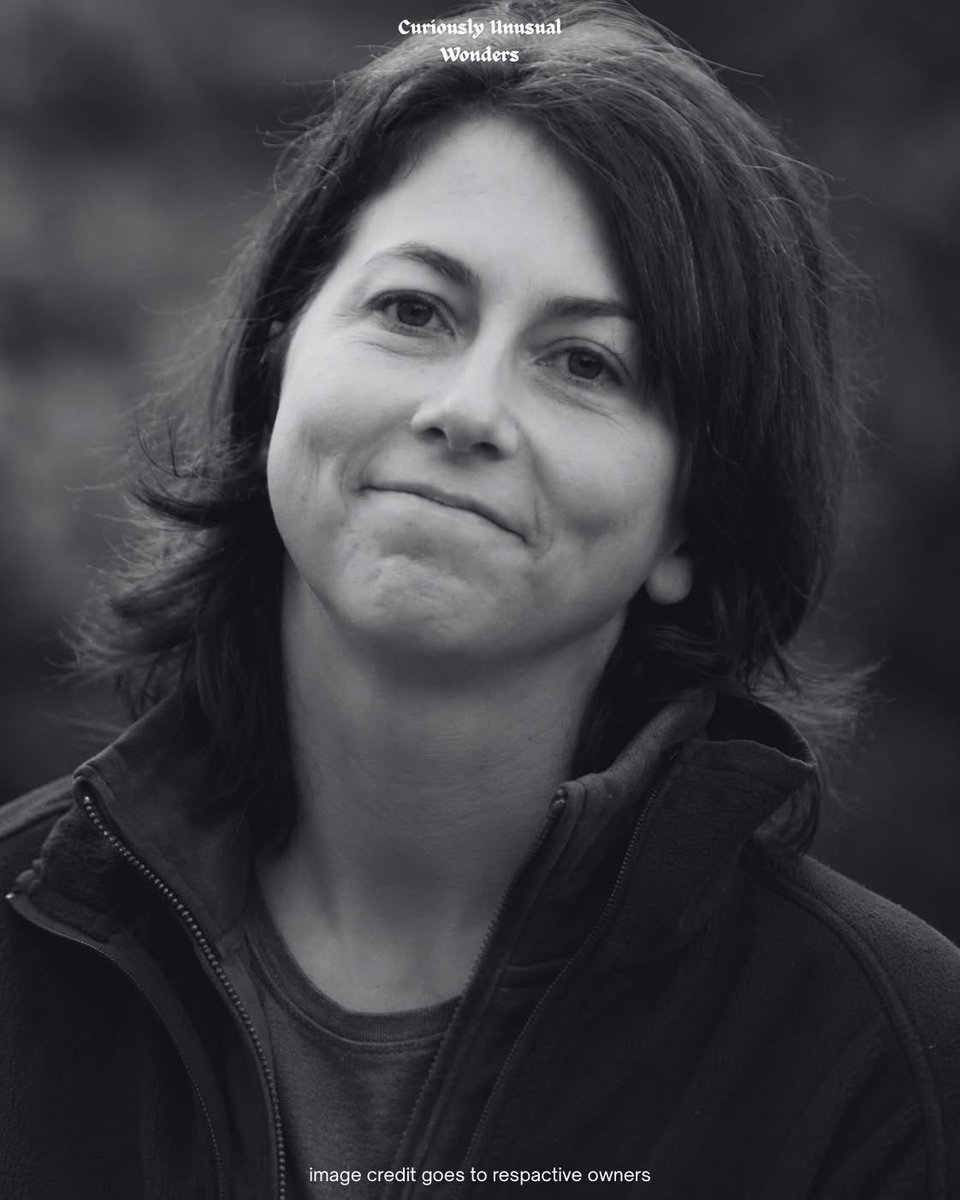
A young woman named MacKenzie Tuttle graduated from Princeton in 1992 with a degree in English. One of her professors was Toni Morrison, who later described her as one of the finest creative writing students she had ever taught.
After graduation, MacKenzie took a job at the New York investment firm D. E. Shaw. There she met a colleague named Jeff Bezos, who had an ambitious idea: selling books on the internet.
She didn’t laugh at the idea.
They married in 1993, and the following year drove across the country to the Seattle area to build what would become Amazon.
In the beginning, there was no global empire.
There was a garage.
MacKenzie handled accounting, wrote business materials, answered customer emails and phone calls, and packed orders alongside Jeff. Like many startups, everyone did whatever needed to be done.
As Amazon grew, MacKenzie stepped away from day-to-day operations to raise their four children while continuing to pursue her own passion for writing.
Her debut novel, The Testing of Luther Albright, won the American Book Award. She later published a second novel and quietly built a respected literary career.
Meanwhile, the story of Amazon became one of the most famous business stories ever told.
Jeff Bezos became one of the world’s most recognizable entrepreneurs.
MacKenzie’s role was rarely part of the public narrative.
She never seemed interested in changing that.
What many people don’t know is that she also knew financial hardship.
Her family filed for bankruptcy while she was still a student, and she has spoken about the kindness of people who helped her through difficult times—acts of generosity she never forgot.
In 2019, after her divorce, MacKenzie Scott received approximately 4% of Amazon’s shares.
Almost immediately, she made a decision that surprised the world.
She signed the Giving Pledge, promising to donate the majority of her wealth during her lifetime.
Then she did something even more unusual.
Instead of building a massive public foundation or attaching her name to buildings, she began giving away billions of dollars through large, unrestricted grants.
Universities.
Food banks.
Housing organizations.
Rural communities.
Women’s health initiatives.
Tribal colleges.
Climate organizations.
Small nonprofits that had never imagined receiving gifts of that size.
Many recipients reportedly thought the phone calls were scams.
They weren’t.
Since 2019, MacKenzie Scott has donated tens of billions of dollars to thousands of organizations, making her one of the most significant philanthropists of the modern era.
Despite giving away enormous sums, her fortune has remained substantial because of Amazon’s continued growth.
The woman who once packed Amazon’s first orders is now helping fund opportunities for millions of people she will probably never meet.
She never asked for buildings in her name.
She never demanded headlines.
Sometimes the greatest legacy isn’t the company you help build.
It’s what you choose to do with the success that follows.
I pray the people who do things like this to others will realize how hurtful it is. I pray that they can come to terms with their fears, insecurities and ignorance and realize we are all God's children and this isn't how we show our dislike for people who are different from us.
.@Timodc: "Being separated from your young child for a night by the government because a cruel, insane person called the police and said you are a monster…is totally unacceptable…It's totally against how things work in a free country and I'm happy Pete spoke out."
Trump: "Millions of American small businesses, including corner stores. What is a corner store? I've never heard that term. I know what a corner store is but I've never heard it described-- a corner store. Who the hell wrote that?"