Registered for tomorrow’s #PestFactsWA webinar? Learn about WA’s climate outlook for 2022, what insect pests to watch out for this season and services the rebranded PestFacts WA (former PestFax) team has to offer. Friday 1 April 8am AWST @GRDCWest https://t.co/qgsJSUHBLP
@BoyesTim Vetch was a host for P. neglectus in glass house trials and we are testing it in a paddock which has Pquasi, Pneg and Rhizoctonia at Calingiri this year so watch this space...
DPIRD researchers Carla Wilkinson, Dominie Wright and Miriam Connor are putting out a request for plant samples from growers and agronomists, needed for national survey of root diseases and pests of pulses and legumes. Find out how you can help. https://t.co/93uCamYDow @GRDCWest
A new era for our plant disease & Soils teams @DPIRD_WA! We are investigating deep soil amelioration to reduce soil borne disease & plant parasitic nematode impacts @ Darkan & Yerecoin sites. Watch this space 😀 @GRDCWest#Nematodes#rhizoctonia#DPIRDSoils#DPIRDRootPathology
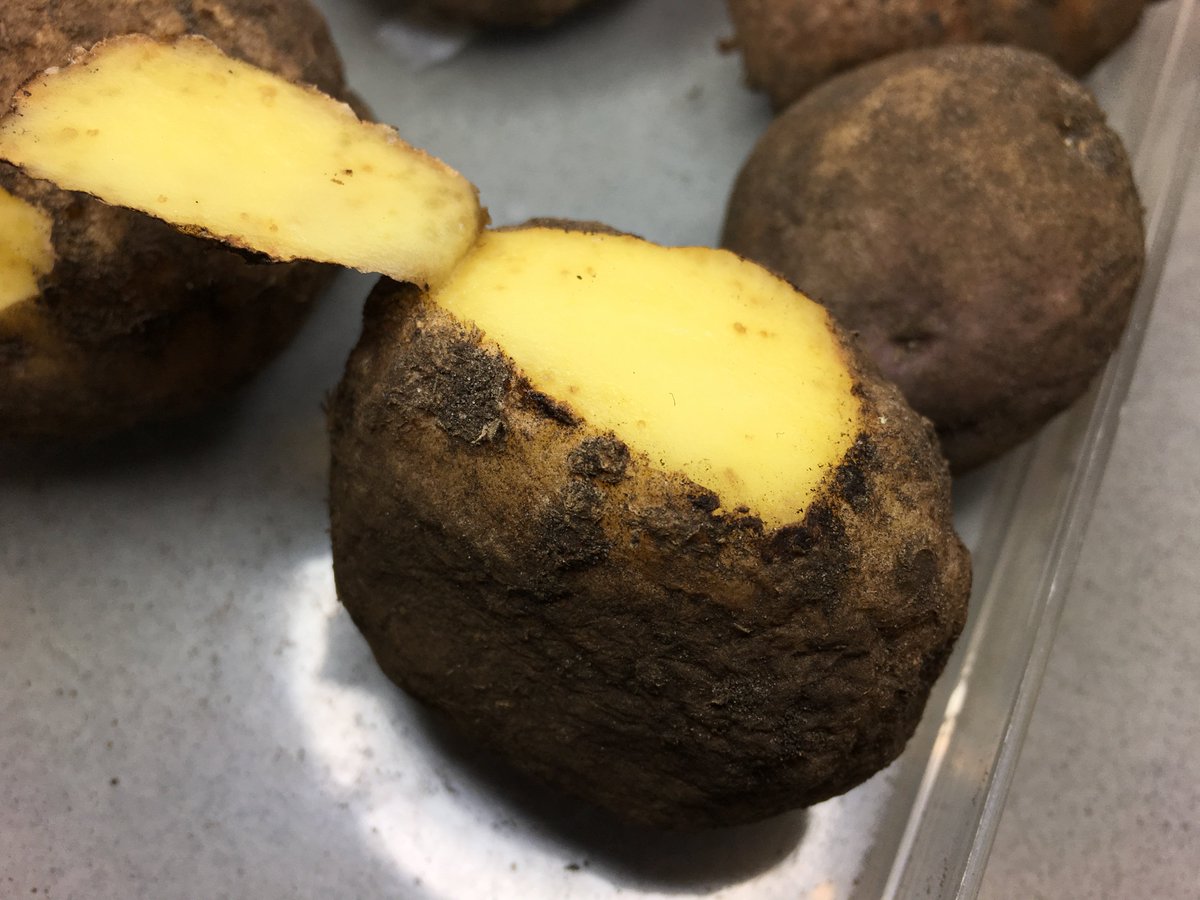
#RootKnotNematode tuber damage symptoms (#RKN - #eelworm). This was caused by #MeloidogyneChitwoodi in the Netherlands. The symptoms are the same as Meloidogyne fallax. Best to keep an eye out. #QuaratinePest. The brown spots indicate the location of mature females.
Potato roots with severe sting nematode infestation exhibiting short, pruned lateral roots. Parts of root system have few laterals others have small mats of proliferation. Compare with healthier potato roots that have long, evenly-spaced lateral roots (photo 2) #UFBugs
63 days after planting in hastings potato nematicide trial with severe sting nematode infestation. Both telone and nimitz treated potatoes have much more vigorous vine growth and row fill than untreated. #UFBugs
Ken Flower from UWA looking at the effect of crop rotations on disease
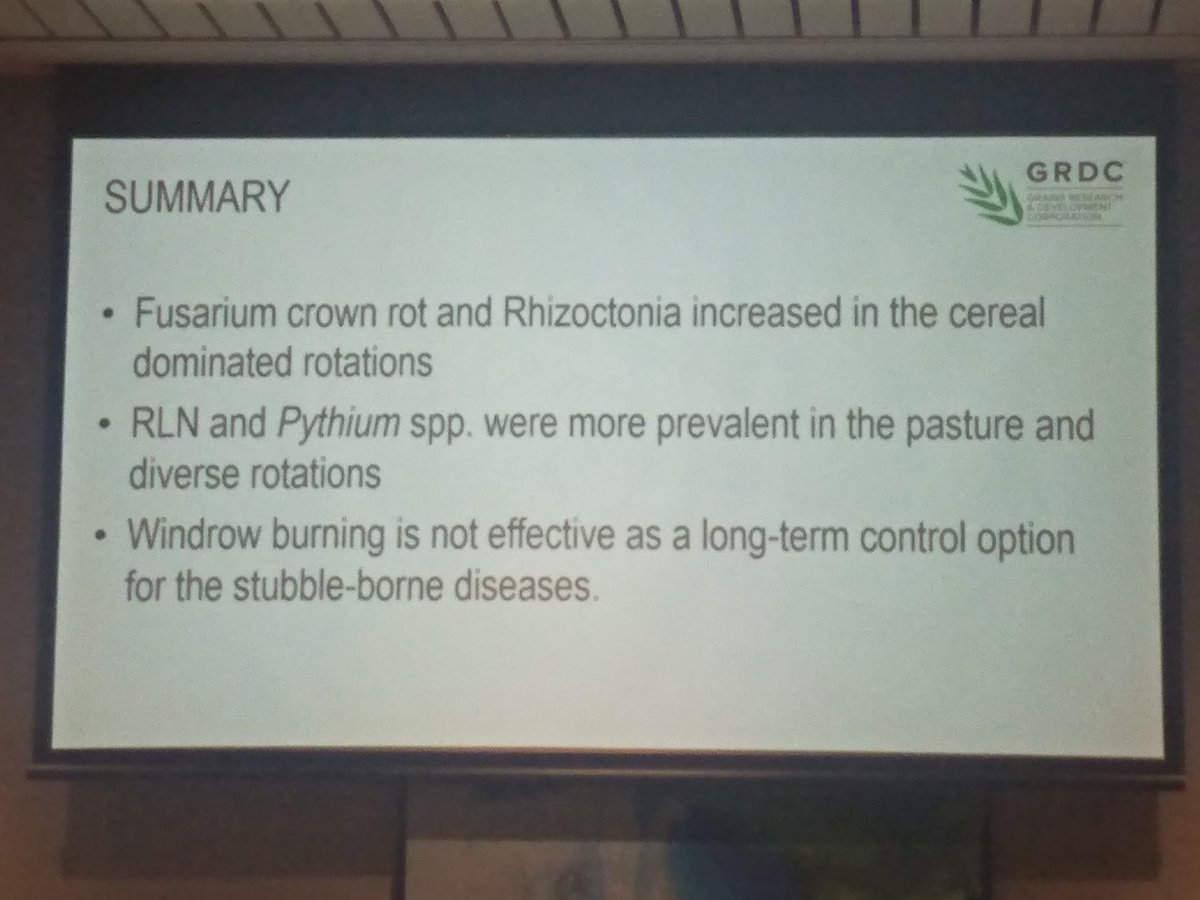
- Window burning had little effect on soilborne diseases in the long term.
- Crown rot and rhizo ⬆ in cereal rotations while RLN and pythium ⬆ prevalence in pasture and diverse rotations
#GRDCUpdates
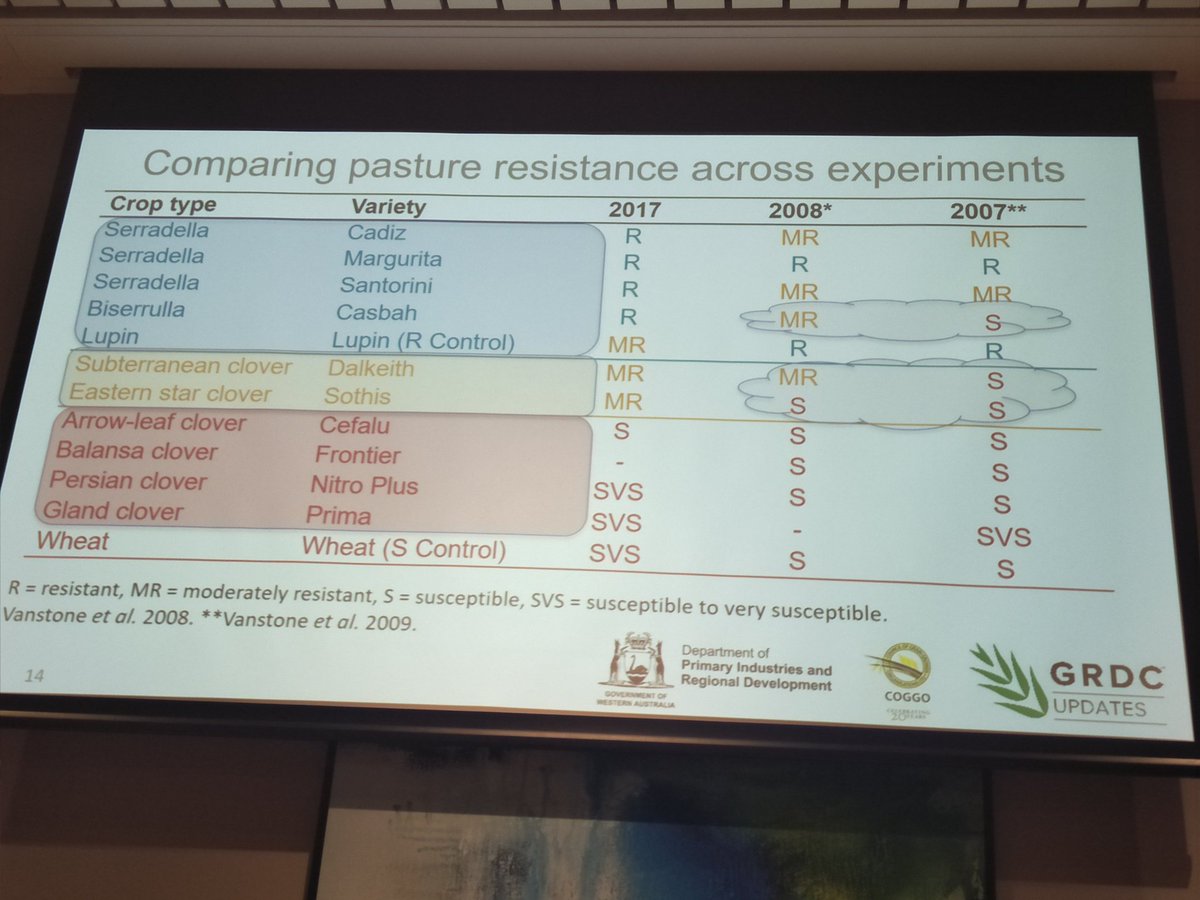
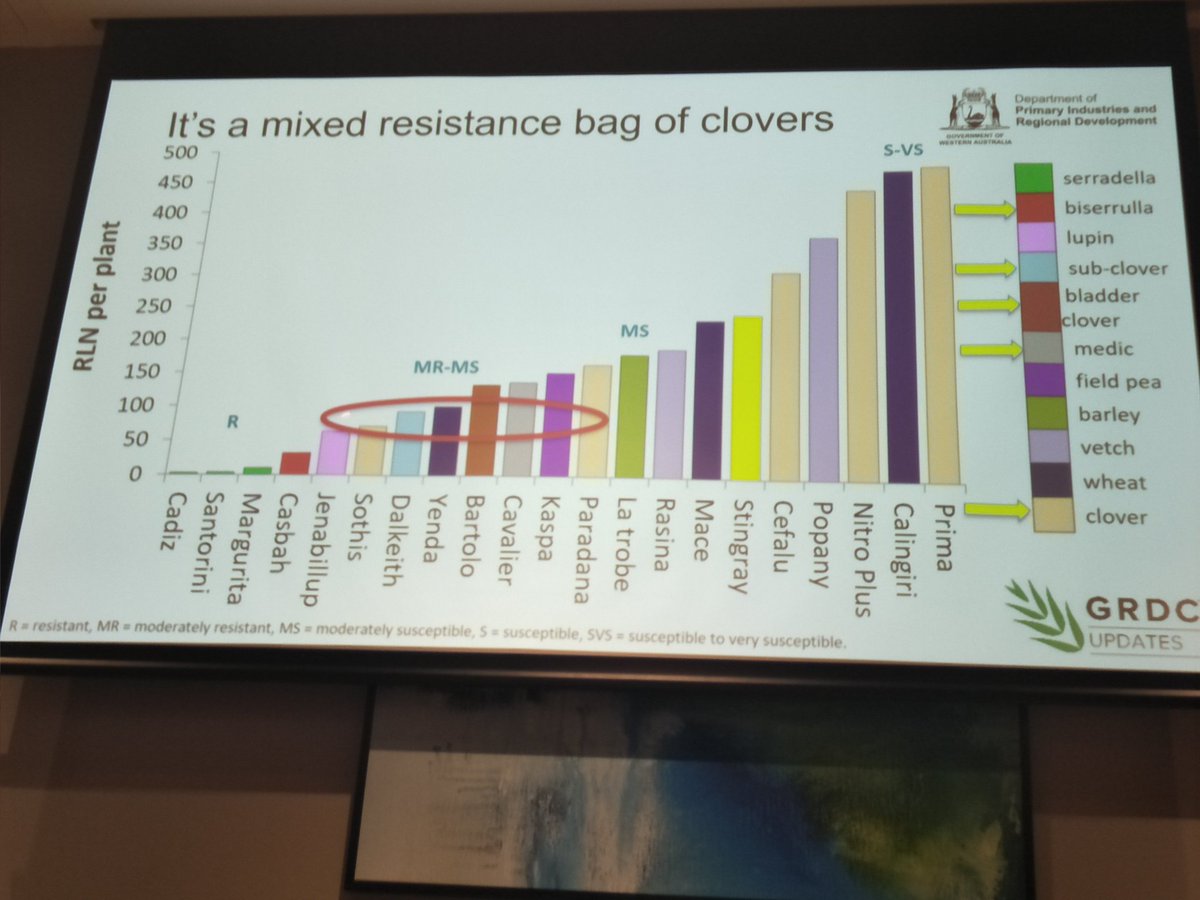
Trial to compare resistance of wheat, barley and triticale varieties to P. neglectus in western region with their resistance in the east. If similar then we can adopt their ratings.
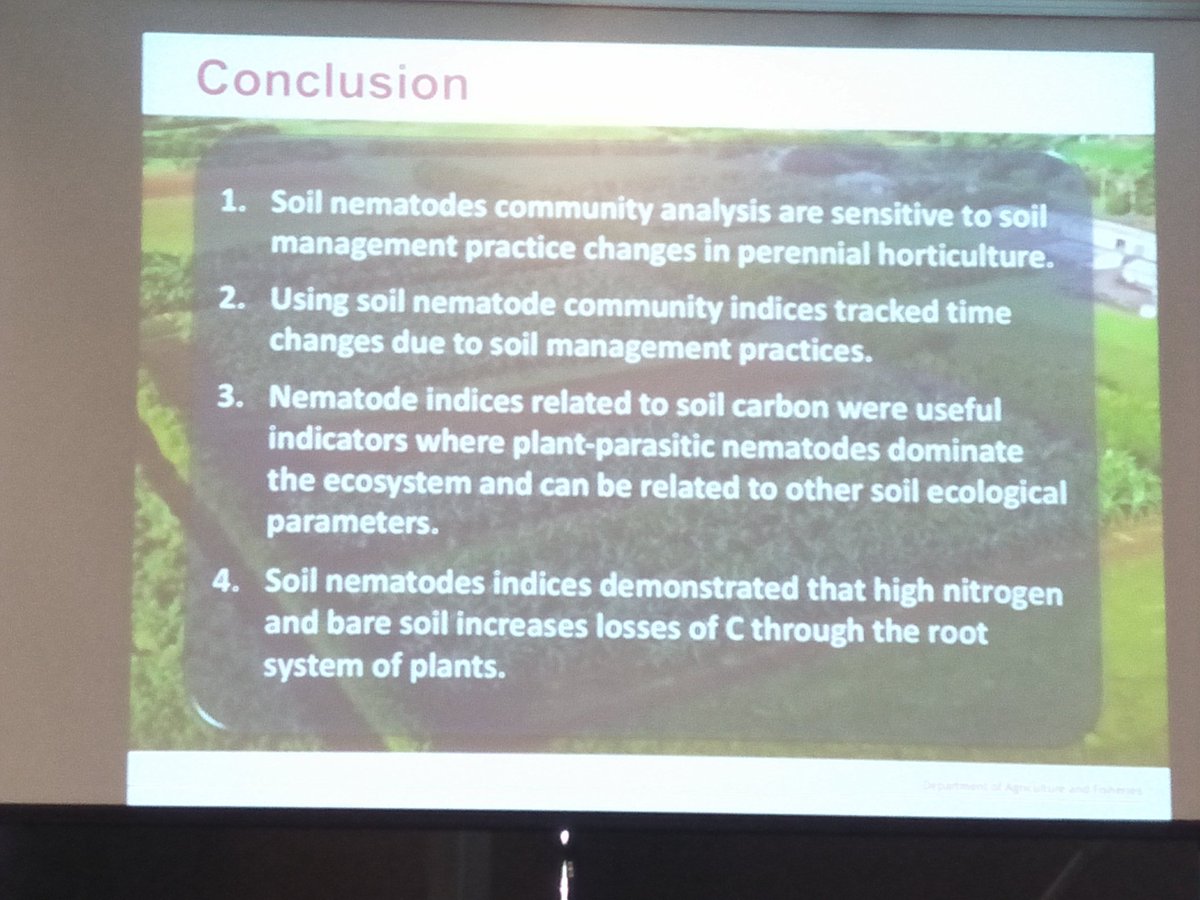
Anthony Pattison discussing the sensitivity of nematode community indices to soil management practices in perennial horticulture.
In banana systems ⬆N = ⬆plant parasitic nematodes in the soil community 🍌
#ASDS2018
Root lesion nematode (P. penetrans) activity is causing patches of chlorotic and stunted plants in canola at Chapman. Read about it in #PestFax@GRDCWest https://t.co/zcuRu7Tn3N
A summit trial through @FaceyGroup. Root lesion nematodes found in initial soil samples – DPIRD providing expert advice & conducting RLN assessments on a number of treatments. https://t.co/29u93gSo5G
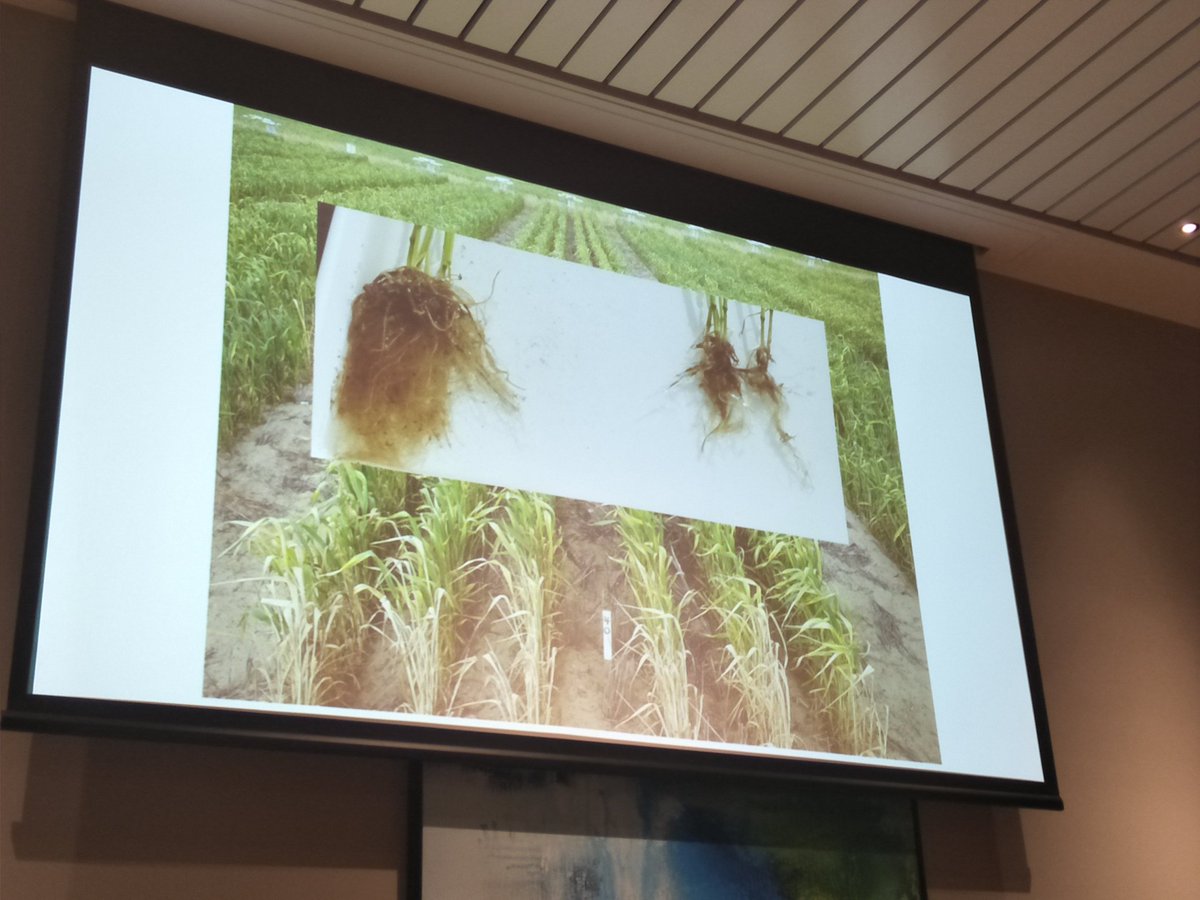
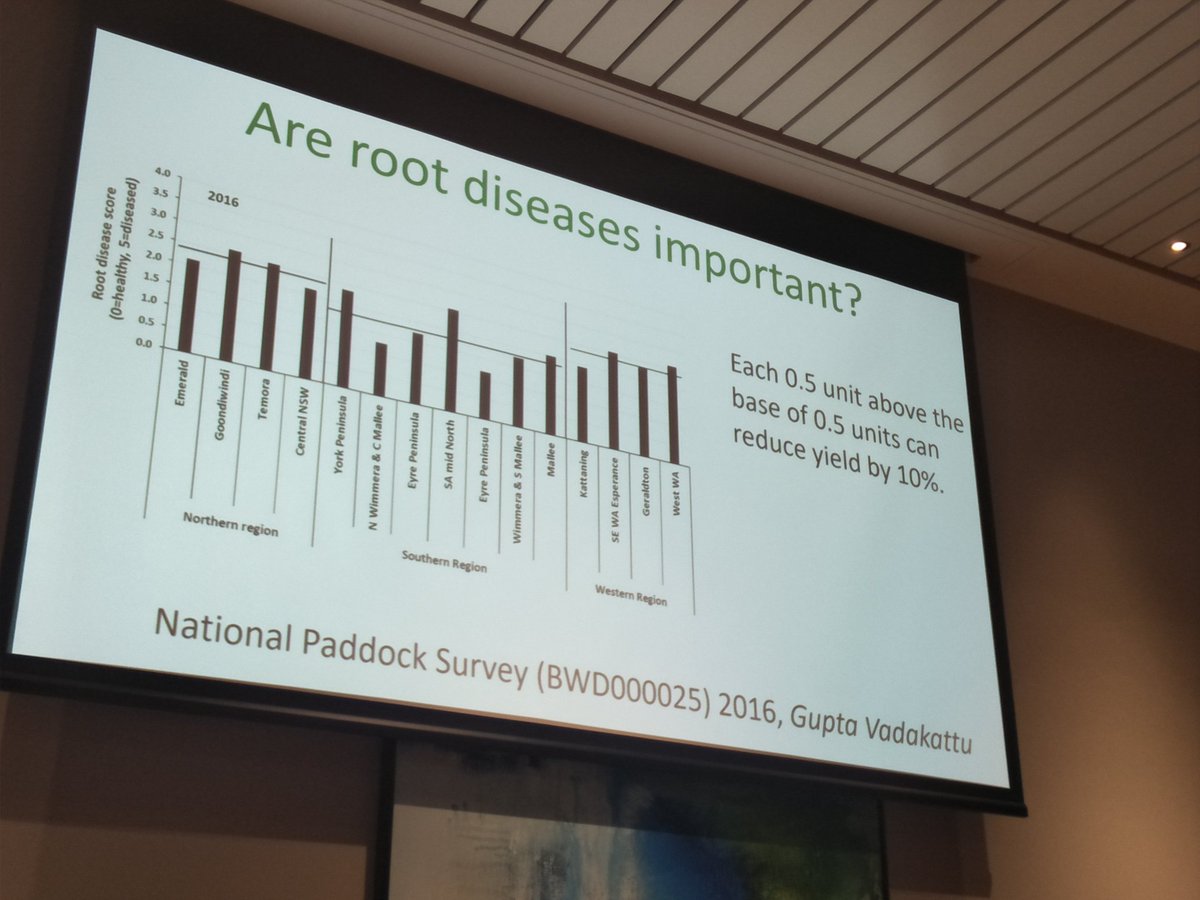
Alan McKay from SARDI showing that root diseases are important & that even though the crop may look good up top, the root systems still may be being attacked by soilborne diseases.
#GRDCUpdates#protectWAcrops
Sean sampling P. penetrans mixed crop trial in Dandaragan. All crops increase P. penetrans but wheat and barley more resistant than canola and lupins #DAF_WA#theGRDC