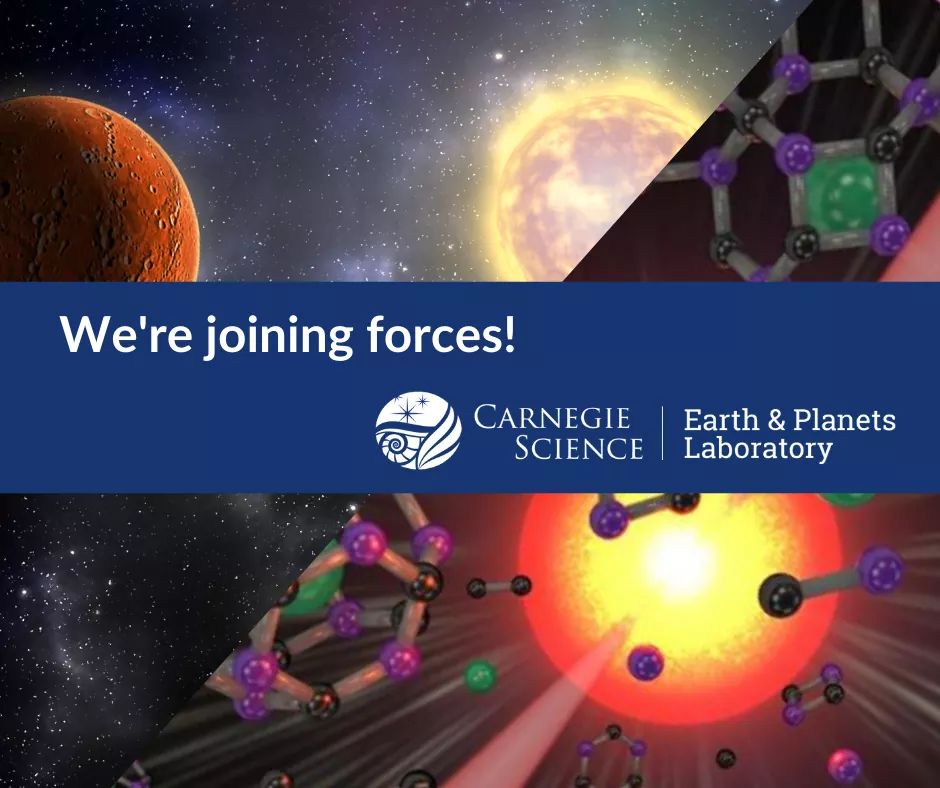
GL and DTM are merging, combining our more than a century of cutting-edge studies of the natural world to allow a broader and more interdisciplinary investigation of the origin and evolution of planets and the materials from which they are made!
https://t.co/jcKKQEKIKd
We’re joining forces! The Geophysical Lab has merged with the Department of Terrestrial Magnetism to create the Earth and Planets Laboratory.
Our social media channels are merging too. Follow @CarnegiePlanets for Geophysical Lab’s updates and events.
Great to have this group at @carnegiescience HQ this week and get updates on their progress from Alan Boss. @CarnegiePlanets & @CarnegieGeoPhys have been leaders in the field of planetary science since its inception.
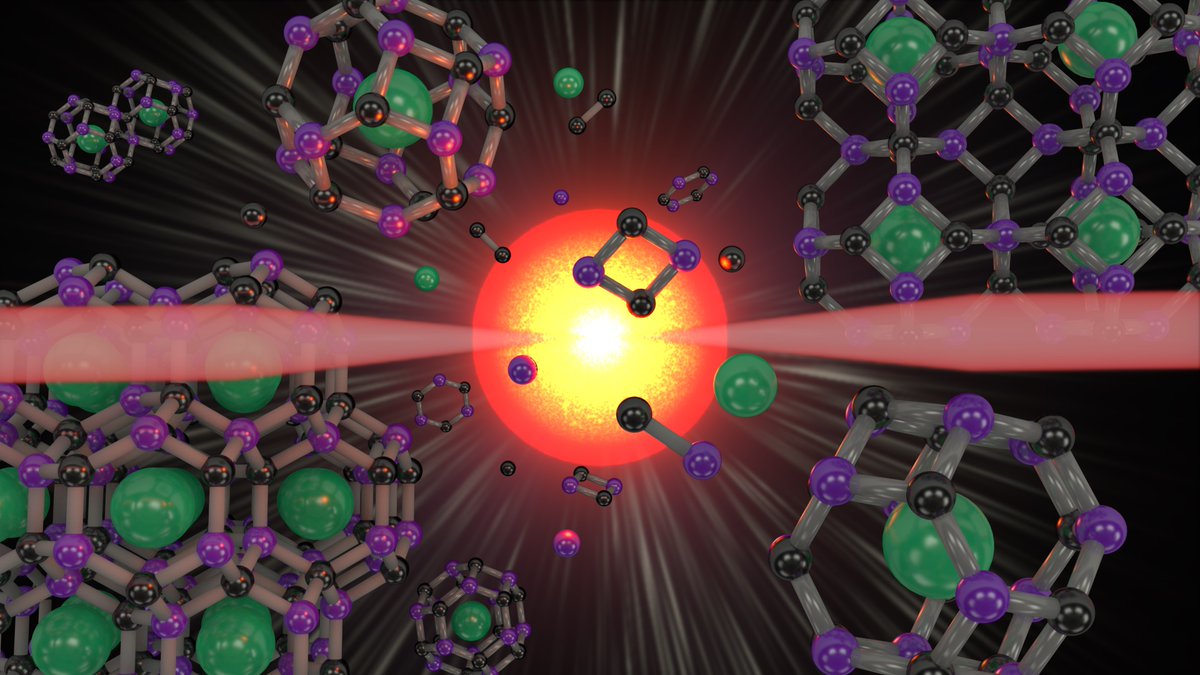
“For anyone who is into—or whose kids are into—Pokémon, this carbon-based clathrate structure is like the #Eevee of materials,” joked lead author Li Zhu. “Depending which element it captures, it has different abilities.”
A long-sought-after class of “superdiamond” carbon-based materials with tunable mechanical and electronic properties was predicted and synthesized by Carnegie’s Li Zhu and Timothy Strobel. https://t.co/CX4ccFLCwJ
What's a superdiamond? Well this new class of carbon clathrates sounds like a good fit for that title. They have robust, diamond-like bonds, but can be tuned from semiconductor to superconductor, depending on the element they host in their latticed cages. https://t.co/6CqYtPpufR
Class of "superdiamond” carbon clathrates w/ tunable mechanical and electronic properties predicted and synthesized at @CarnegieGeoPhys. The clathrate takes on different properties depending on the element captured in its latticed cages. Is it ... Eevee? https://t.co/6CqYtPpufR
We predicted and synthesized an entirely new class of “superdiamond” carbon-boron cages, which can trap different elements and tap into different properties.
https://t.co/8FoousaRd1
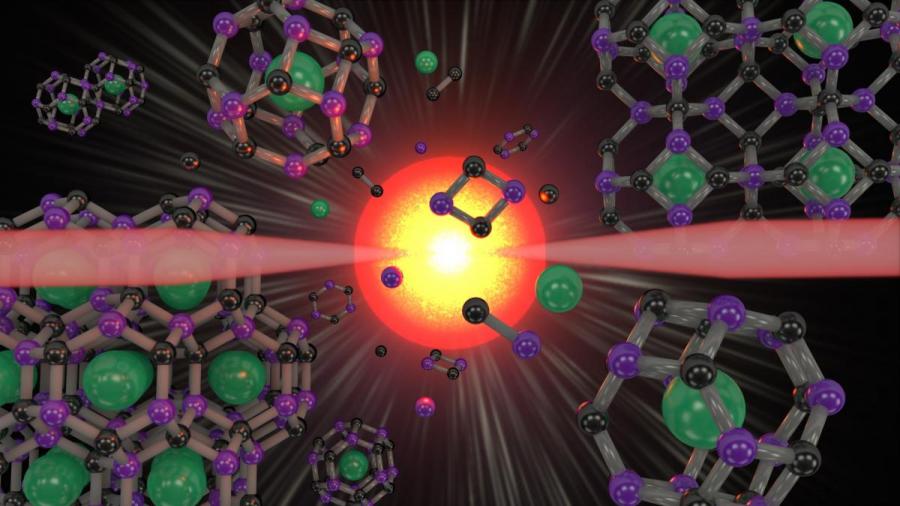
Class of "superdiamond” carbon clathrates w/ tunable mechanical and electronic properties predicted and synthesized at @CarnegieGeoPhys. The clathrate takes on different properties depending on the element captured in its latticed cages. Hmmm ... Eevee? https://t.co/CX4ccFu189
A long-sought-after class of “superdiamond” carbon clathrates with tunable mechanical and electronic properties was predicted and synthesized by Carnegie’s Li Zhu and Timothy Strobel. Their work is published in @ScienceAdvances https://t.co/6CqYtPpufR
I'll never pass up a chance to promote REU's to undergrads (especially #firstgen students) interested in research.
My summer REU @CarnegieGeoPhys ~12yrs ago was the 1st time I experienced what "doing science full time AND getting paid" looked/felt like.
Spoiler: It was AWESOME
January is a time for new beginnings, which is why we're excited that @CarnegiePlanets and @CarnegieGeoPhys are merging into Carnegie Earth and Planets!
https://t.co/sm3JndL7Al
.@CarnegieGeoPhys' Li Zhu and Tim Strobel predicted and synthesized an entirely new class of “superdiamond” carbon-boron cages, which can trap different elements and tap into different properties https://t.co/CX4ccFu189
.@s__morrison is walking us though the mineralogy of Mars as detected by the CheMin instrument on @MarsCuriosity. What can the layering of these minerals teach us about the history of water on the Red Planet? #AGU19
The mineral abundances from @MarsCuriosity's CheMin instrument's 23 drilled rock samples show incredible variability, which tells us about the aqueous conditions that were present in Gale Crater says @s__morrison at #AGU19.
.@s__morrison is walking us though the mineralogy of Mars as detected by the CheMin instrument on @MarsCuriosity. What can the layering of these minerals teach us about the history of water on the Red Planet? #AGU19