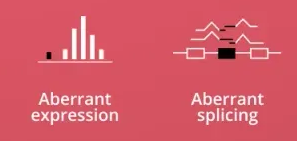
Happy to share that we, at OmicsDiscoveries, have now launched our product, RNAVision, for the analysis of RNA-seq on the field of rare diseases! Contact us for a demo, we’d love to show you what’s possible!
https://t.co/tNypHJJlmr
🌟The Leena Peltonen School of Human Genetics Returns in 2025!
This prestigious summer school unites 20 leaders in human genetics with 20 PhD students.
📅 When? July 27-31, 2025
📍Where? Wellcome Genome Campus, Hinxton, UK
📝Apply by: March 7, 2025
🌐https://t.co/XbvgAqz9bZ
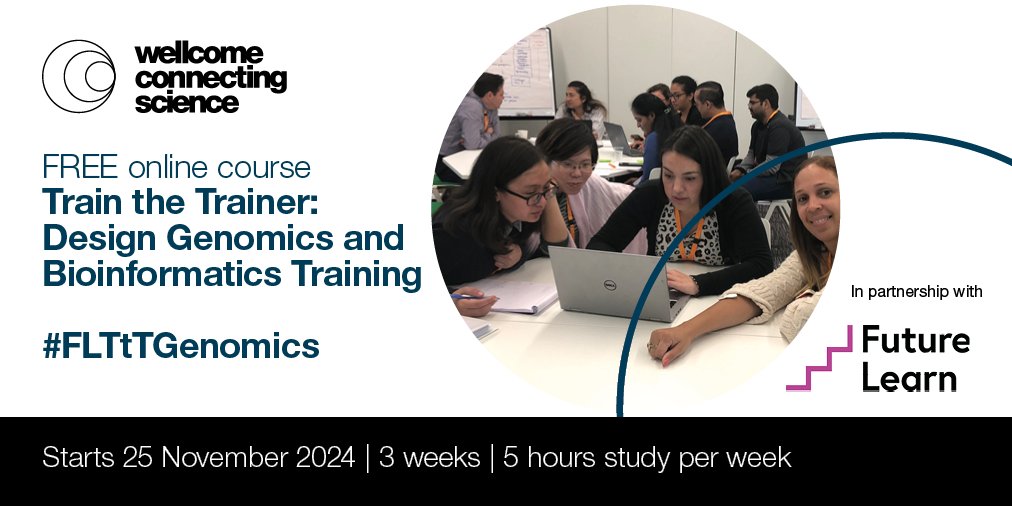
Are you a #genomics or #bioinformatics specialist interested in becoming an educator?🎓
Discover how to plan and design engaging learning content for teaching the processing and analysis of genomic data🧬
🖥️ Free online course: #FLTtTGenomics
📎 Sign up: https://t.co/sQ786fkNOj
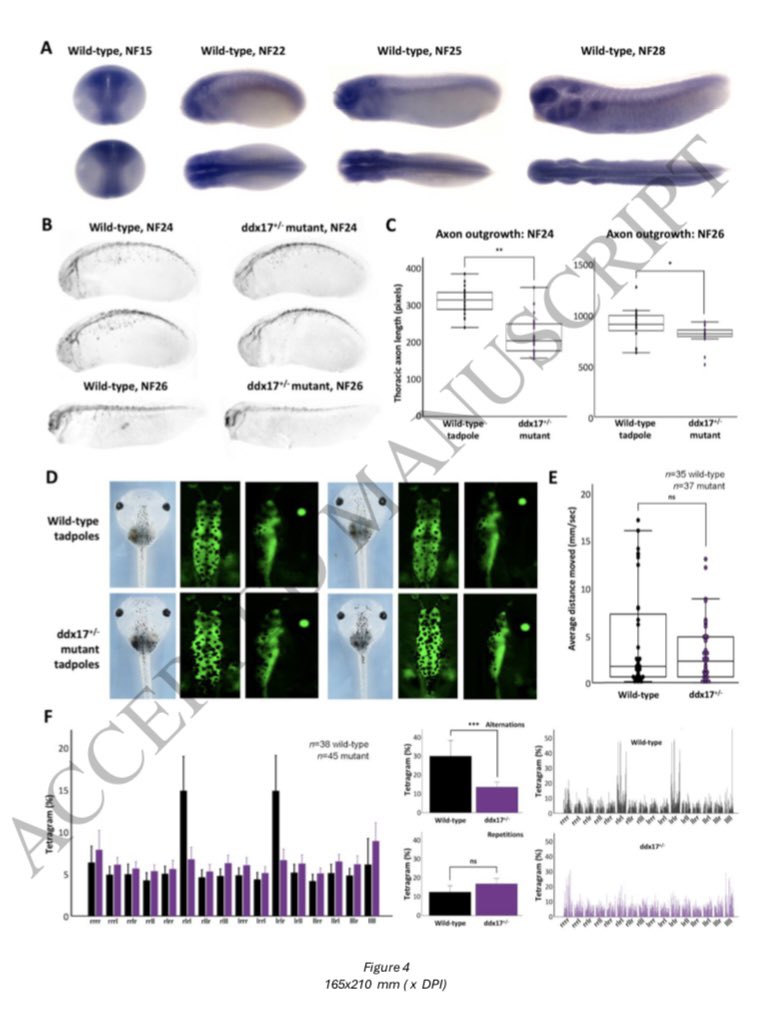
#ASHG24 Eleanor Seaby highlighted Xenopus tropicalis as useful animal model for investigating mechanisms of DDX17-associated neurodevelopmental disease but also of other rare diseases.
Further reading: PMID: 39405200
https://t.co/qHeedHLowI
#xenopus#rarediseases
Many families in the #RareDisease community, like Laura and Dave, are still searching for answers. Recent events like the Wilhelm Foundation’s ‘Undiagnosed Hackathon’ with @Radboudumc show the need for collaboration in rare disease research.
Learn how PacBio is offering new hope: https://t.co/Zbx3zlWaJa
#PacBio #ASHG24
We are hiring a core-funded Group Leader working in Artificial Intelligence!
The position comes with a flexible start-up package:
👩🔬2 postdocs and a technician
🧑🎓2 PhD students
🔬budget for our state-of-the-art core facilities.
Come and join us 👉 https://t.co/xlnBpMjF17
Excited to report our study in @NEJM on the discovery of deletions in a long noncoding RNA gene 🧬 (𝘊𝘏𝘈𝘚𝘌𝘙𝘙) as the cause of a newly defined human neurodevelopmental disorder 🧠. 🧵1/10 https://t.co/a0V99Xqjaw
See our paper in GIM here. If you publish on variants, PLEASE use https://t.co/xJSZNKqRTS, or even better, just submit them to ClinVar before article submission (you can request a 6 month embargo), to both validate your variant naming AND make them findable by all!
Very excited to publish my latest research paper in @Brainjournal: Monoallelic de novo variants in DDX17 cause a neurodevelopmental disorder https://t.co/j82qJmyfvf @FoulkesFdn@unisouthampton@ProfDBaralle @C_Bourgeois_ENS
🚨Job Alert: Are you a bioinformatics geek? familiar with ancient/historical DNA data? Do you want to join Kew Mycology to analyse fungal genomes of very old specimens? check our vacancies! https://t.co/UP9qJhUXZx
https://t.co/Qr4imdqfM4 #fungal#genomics#museomics
We're hiring! Join our team working with cutting-edge genomic technologies. Check out our new long-read sequencing tech position @ UW in Seattle: https://t.co/4h1HgQytT0 #Genomics#UW#PacBio
If you liked #SQANTI, you're gonna love our latest #SQANTI-reads to support raw-long-read QC in multi-sample experiments. Detect outliers, find biases, and assess discovery power in your LRS dataset. Great collaboration with @LaurenMMcIntyr1 team. Preprint https://t.co/yx18Bt2eUm
Cataloging "naturally variable exons" in GTEx
"Using GTEx tissue transcriptomes from 838 individuals, we identified 56,415 exons which are included in mRNAs in some individuals but entirely excluded from others, which we term 'naturally variable exons' (NVEs)."
Fascinating! Note, the authors write that NVEs are different from the "canonical" alternative splicing that most of us are familiar with.
Jacobs et al. bioRxiv
https://t.co/DiF3hTCZK3
📢 New positions @Conesa_Lab . Seeking enthusiastic graduates/postdocs in #ComputationalBiology to join our new @oscars_eu funded project for long-reads driven annotation of #biodiversity genomes. Also incorporating a postdoc to set up our new wet lab. See https://t.co/9XUP4Jyk1g
We looked at blood RNAseq as this is the most easily accessible tissue. While fibroblasts tend to be preferred, we were still able to access at least 70% of VUSs sent in by clinicians. 3/3
Glad to see our paper finally out 🥳
While finding new diagnoses in cases with no prior candidate variants had low yield, RNAseq proved advantageous in finding deep intronic events missed by standard DNA pipelines. 1/3
https://t.co/HI2szq3jle
#rnaseq#splicing#raredisease
Identification of diagnostic candidates in Mendelian disorders using an RNA sequencing-centric approach. Well done @Carolinaj215 new paper for lab. transcriptome finds mutations not found by DNA first pass @DrJennyLord @HtooW https://t.co/Ddzf8EeGmp
We identified events by overlapping variant calls from RNAseq with aberrant splicing events identified by different tools as well as the use of gene panels to narrow down results. RNAseq is noisy, but this work shows the potential of integrating genome and transcriptome data. 2/3