Graduate student in Duke's University Program in Ecology & Evolutionary Anthropology examining hormones and social development— @UGAEcology alumna — She/Her
Ph.D. student Caroline Shearer studies Duke's iconic primates at the @DukeLemurCenter. As a teaching assistant, Shearer guides undergraduate students on how to ask and answer research questions
https://t.co/fRvxQ35jl9
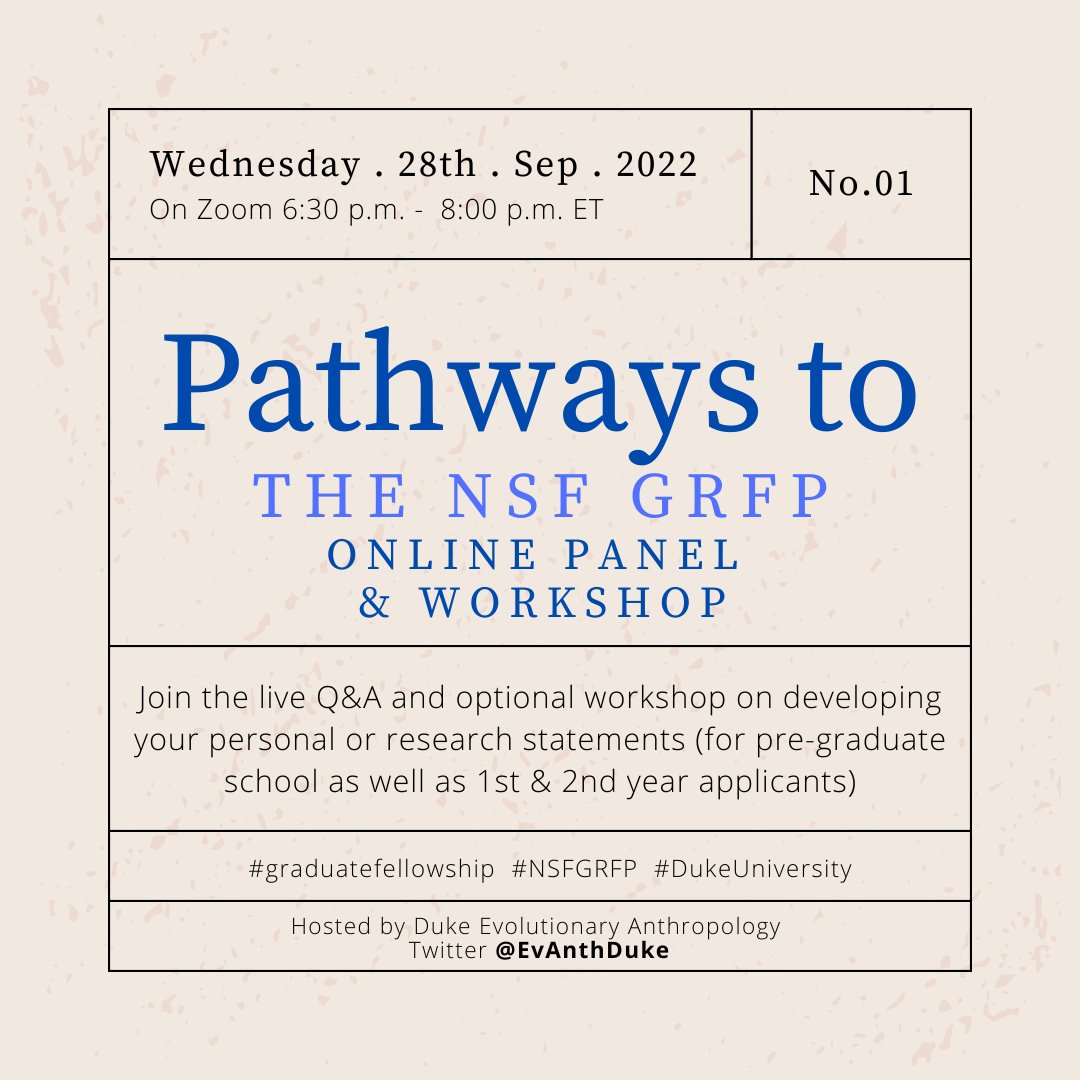
Are you thinking of writing an #NSFGRFP, but don't know how to start? Ask the experts! Join the live Q&A, workshop your personal or research statements, and learn from a range of awardees. Wednesday Sep 28th, 6:30-8 PM on Zoom. More info: https://t.co/DAGhwt3ldo
@DukeBiology
New paper alert! Pushing, bitting, and shoving lead to... cooperation? In meerkats, they do... By Christine Drea and collaborators.
@CarolineSheare, @CharliSDavies and @feldblumjoseph tell the story:
https://t.co/fqe63g3zS7
If you want the #behindthepaper info on the recent @NatureComms paper from the Drea lab involving female #meerkats, androgens and aggression then read our fantastic blog on The Dark Side of Cooperation by @CarolineSheare@FeldblumJoseph and myself 😃
https://t.co/rJceJAYOLo
Check out our awesome new paper on androgenic mechanisms of intrasexual competition in female meerkats in @NatureComms! https://t.co/iOP5Yb0QLz
This paper has been a long time in coming, and included a great group of collaborators, so really happy to see it finally published!
Have the privilege of working with so many amazing collaborators and am lucky to study the grandchildren of the TV show Meerkat Manor! Check out "The Dark Side of Cooperation" here https://t.co/Z2xT2RmAkE #behindthepaper
Pt. 4 of @EvAnthDuke grad student led “Demystifying Grad School” panel series! This new panel will be a Q/A w/ faculty (@susan_alberts, @CharlesNunn3, @HermanPontzer, @jtung5 , Leslie Digby, Steve Churchill,& Doug Boyer) Please share widely!!
@rlmcelreath Thank you so much for your reply. This all makes good sense, and I appreciate your insight. I will look through the example you shared and think about this more. Cheers!
@rlmcelreath On a related note, is there a way to write nested random effect variables (e.g. socialgroup/litter/id; as opposed to crossed) using ulam function? I can code single-grouping variable multilevel models in ulam w/o issue; but haven't found info on nesting. Thx for any direction!