Out now! Our newest paper on how blood stem cells retain their regenerative potential and vitality with age.
Paper link: https://t.co/Bcr76NGm0T
More info and video abstract: https://t.co/TyvGliUHt0
#StemCells#Aging#Hematopoiesis
Summary below:
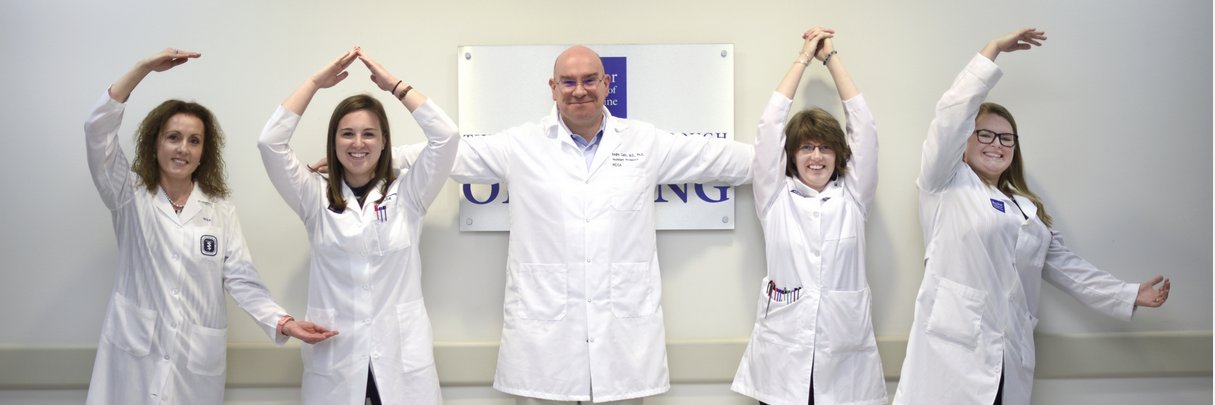
Recruiting faculty to the Dept of Molecular and Cellular Biology at Baylor College of Medicine in Houston, TX! Recruiting broadly in cancer and cell biology. Submit by October 1, 2024, for full review. #cellbio@BCMhouston
https://t.co/4sLzKsOxzD
https://t.co/4Q9xpXvcbI
This weekend saw the first reunion of my MD class @uni_ulm. I could not attend but was luckily kept in the loop by friends and colleagues. Can’t believe the Audimax is still colored in “poison green”.
Out now! Our newest paper on how blood stem cells retain their regenerative potential and vitality with age.
Paper link: https://t.co/Bcr76NGm0T
More info and video abstract: https://t.co/TyvGliUHt0
#StemCells#Aging#Hematopoiesis
Summary below:
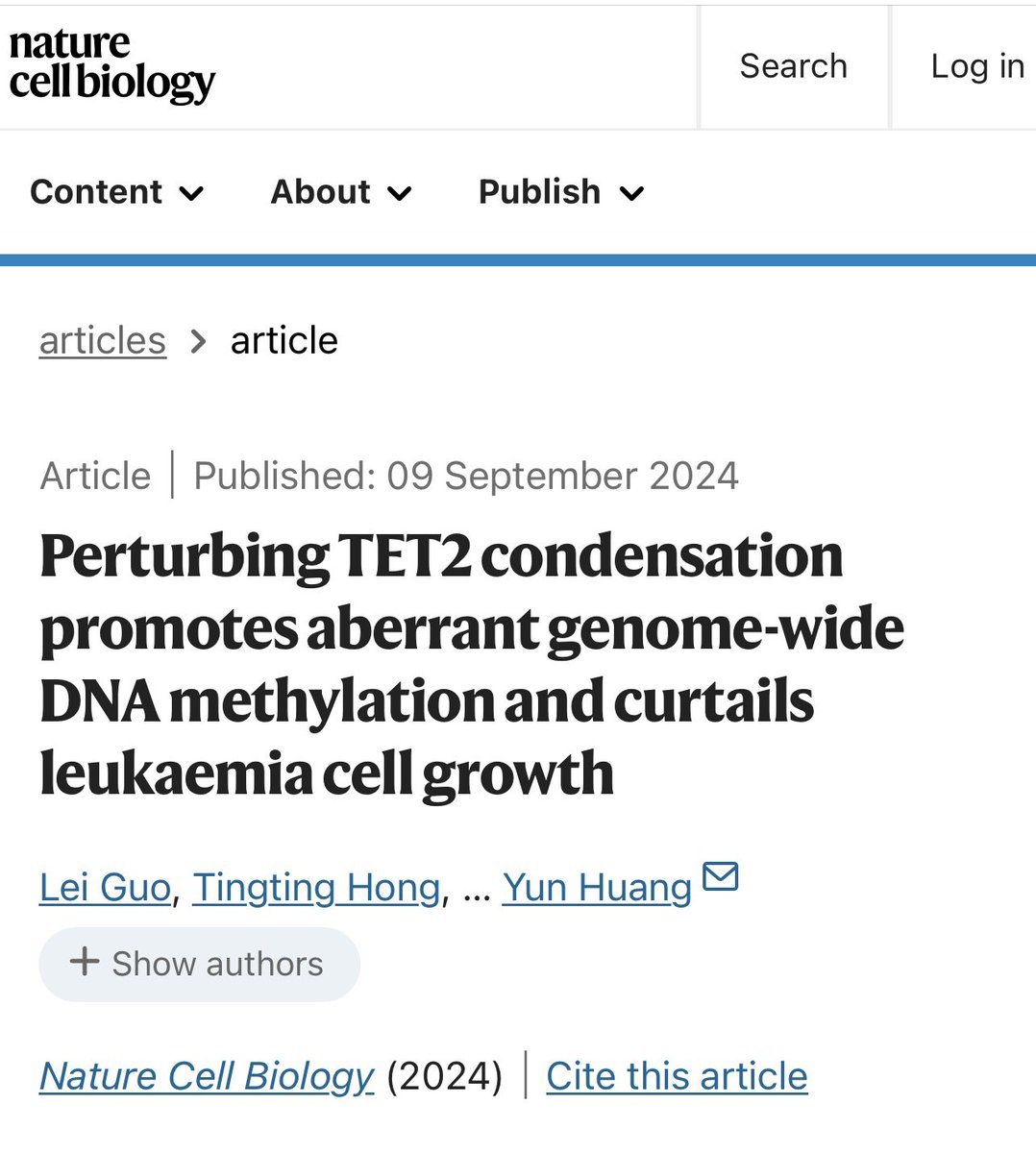
Online today @NatureCellBio “Perturbing TET2 condensation promotes aberrant genome-wide DNA methylation and curtails leukaemia cell growth” Congratulations to Lei, Tingting and team! Thanks @ZhouLaboratory for the collaboration! https://t.co/Y3Blri9qkC
Honored to be named the @ISEHSociety Janet Rowley Award winner. Grateful to my amazing @SignerLab team, brilliant collaborators & generous mentors. Big congrats to this year's other awardees @CSCIColumbia@majetilab@rosslevinemd@TheKingLab - all remarkable scientists & mentors!
1/Excited to share our latest study showing that RNA sequestration in P-bodies sustains myeloid leukemia - now out in @NatureCellBio! https://t.co/3lIKztpOdg. 🧵 below:
We look forward to hosting you in Chicago for #ISEH2024! Taking place at the Sheraton Grand Chicago Riverwalk, we will be steps away from restaurants, theaters, museums and @NavyPier. Take advantage of your stay in addition to the ground-breaking science! https://t.co/E0v4G0XaQ8
I am sad to hear of the passing of Leonard Hayflick, a giant in aging research. One of the most amazing exchanges I’ve ever witnessed at a conference was related to the Hayflick limit. It was one of my first conferences as a PhD student, in beautiful Vancouver, Canada.
Although it was a big gerontology conference, there were many parallel sessions, and I was in a not-very-popular session in a small room, with only a few people attending.
I was sitting in the front row. A Russian scientist was presenting a new theory of aging. Halfway through the talk - which apart one incident I barely remember - someone from the back asked a question. The presenter went on to explain in his Russian accent that his theory was based on the Hatflick limit and that, for reasons I don’t remember, it led to aging of tissues.
A couple of minutes later, the same American voice from behind me interjects again. A bit annoyed, the Russian scientist again brings up the Hayflick limit and repeats his arguments before continuing the talk.
A few minutes later and - you’ve guessed it - yet again the same person from the back interrupts and questions the presenter. You can see the frustration building up in the Russian scientist's face. He stares behind me and in a patronising voice asks: “Excuse me, sir, are you familiar with the Hayflick limit?”
And I just hear a voice from behind me go: “I am Leonard Hayflick!”
RIP Dr Hayflick
On bioRxiv today, we raise serious concerns over a recent @nature paper describing ReDeeM, a new single-cell mitochondrial DNA (mtDNA) sequencing / analysis method. Here are three things that you need to know: 1/n
https://t.co/b5MaEdSUcQ