🏆 What a memorable evening in #NYC at @FastCompany’s 2026 Most Innovative Companies Gala and Summit! We’re honored to have @CellinoBio recognized alongside innovators advancing breakthrough technologies with real-world impact.
Read more about #FCMostInnovative here: https://t.co/CXADKQzVe4
Every milestone that improves scalability and consistency in #regenmed brings us closer to making personalized therapies accessible to more #patients. Learn more about our work on the ARPA-H NEBULA program alongside Polyphron below ⬇️
Personalized medicine has long promised treatments tailored to the individual patient. But making those treatments work reliably, affordably, and across diverse genetic backgrounds remains a major challenge.
That is what ARPA-H’s NEBULA program is working to solve.
A new milestone from @CellinoBio and Polyphron showed they can create patient derived stem cell lines from donors with diverse genetic backgrounds and engineer them into consistent tissue without starting from scratch for every patient.
Every step like this brings personalized regenerative medicine closer to reality for more Americans.
ARPA-H is committed to building a future where medicine works for everyone.
Read more here: https://t.co/je8bYajaVU
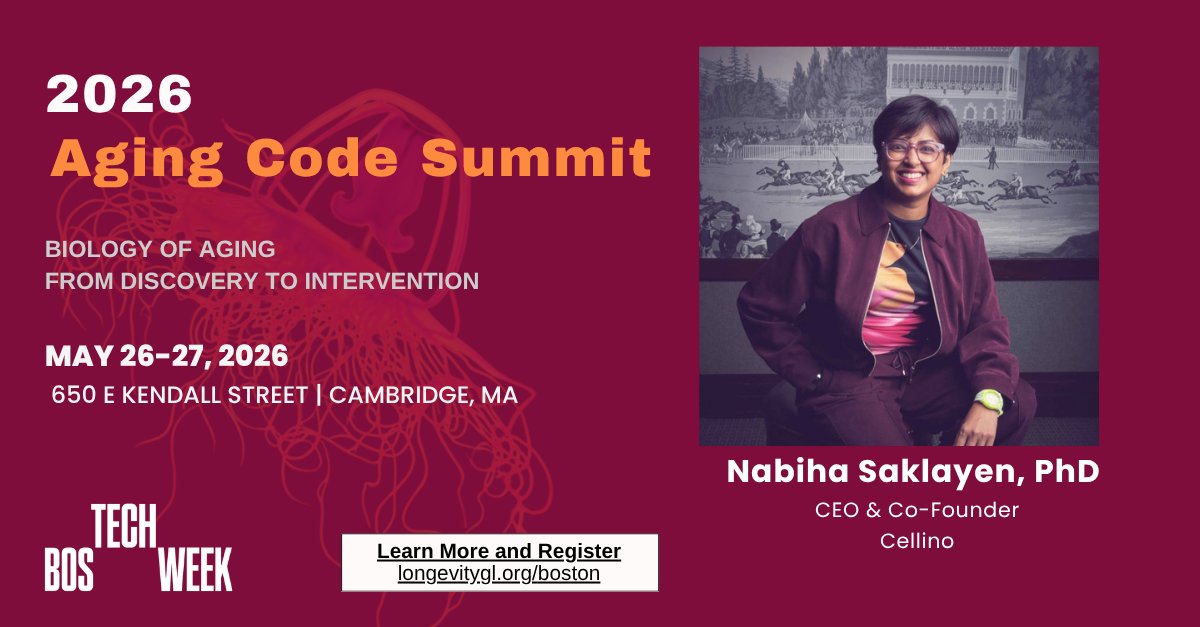
🗓️ Join @nabsicle, our CEO & Co-Founder, at @LongevityGL’s Aging Code Summit during #BOSTechWeek on May 26 at 1:30 PM ET to discuss #AI’s role in #AgingResearch. 👉 Use code CELLINOGUEST50 at https://t.co/e3Hx4YEeZn.
🧬 @CellinoBio is building automated, closed, #AI-driven systems to address one of #biotech’s key challenges: scaling #celltherapy manufacturing. Hear how from our CEO, @nabsicle, on @GalaxyBalanceHQ with host Cory Smith.
🎧 Listen now: https://t.co/KRUFuJ3ceh
While AI is mostly being used for drug discovery, we are limited by how we manufacture it.
In this episode of Galaxy Balance, I sit down with Nabiha Saklayen, CEO of @CellinoBio, to explore one of the biggest bottlenecks in biotech. Manufacturing.
Cell therapies are already here. The science works. But turning them into something that can reach millions of people is still unsolved. Nabiha is building a new paradigm. Closed, automated, AI-driven systems that treat biology more like semiconductors than hand-crafted experiments.
We go deep into iPSCs, variability, automation, and what it actually takes to move from a breakthrough in the lab to a therapy in a patient. We also explore how physics thinking reshapes biology, why autologous therapies may still win long term, and what happens when AI fully enters the lab.
This is a conversation about scale, precision, and the infrastructure required to engineer the future of medicine.
Full episode in the comments.
#Biotech #CellTherapy #SyntheticBiology #AI #Longevity #Bioengineering #GalaxyBalance
📄 A new publication from @theNASEM Forum highlights how #AI is advancing #RegenMed, from improving trial design to scalable manufacturing. Featuring contributions from @nabsicle, our CEO, who serves as a #RegenMedForum Member.
Check out the publication here: https://t.co/Mh6x92uLdg
🧬 Join us next month at #SynBioBeta2026 as our Co-Founder & CEO, @nabsicle, speaks on “Epigenetics and Stem Cells Reprogramming / Evidence Based Longevity” on May 7 at 3:30 PM PDT. We can’t wait to see you in #SanJose!
Register now: https://t.co/I210jtUcu0
When Dr. Nabiha Saklayen (CEO-@CellinoBio) joined us on Episode 13, her core argument was not just that personalized cell therapies were scientifically exciting, but that manufacturing was the real bottleneck. Cellino’s bet was that laser-based, AI-guided cell handling could turn autologous therapies from bespoke lab work into something much closer to an industrial process.
Last week, Cellino posted a meaningful translation update: new results from its collaboration with Polyphron, with four iPSC lines from diverse donors manufactured on its platform. For a company built around making autologous cell therapies actually scalable, this is the kind of milestone that matters.
That is why the post stood out. It is one thing to talk abstractly about regenerative medicine at scale. It is another to show diverse donor lines moving through a foundry-style system designed for reproducibility.
The episode is still a useful listen if you want the original framing for what Cellino was trying to build: not another cell therapy company, but infrastructure for making personalized cell therapies manufacturable.
🎧 Ep 13:
• Apple: https://t.co/RJfDxo0Pw0
• Spotify: https://t.co/xQE4cWFxK3
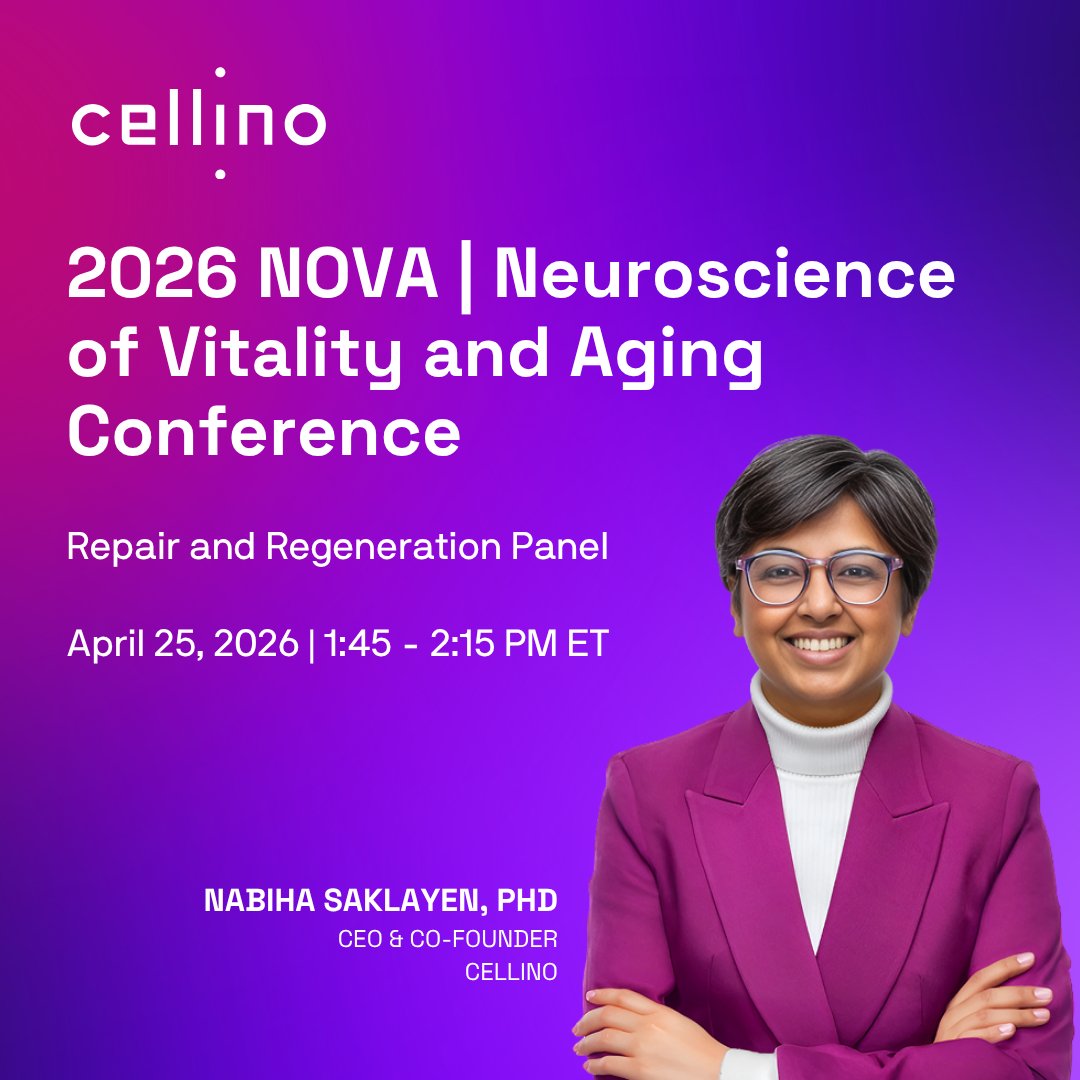
🔬 Headed to the 2026 @nova_aging conference? Our CEO @nabsicle will join the mainstage for the “Repair and Regeneration Panel” on April 25 in #Boston, discussing new approaches to treating age-related #neurologicalconditions.
Register: https://t.co/6mmgY78FHi
Excited to share a closer look at the first results from our collaboration with Polyphron! @CellinoBio manufactured four #iPSC lines from diverse donors and engineered them into structurally equivalent cortical tissue by Polyphron's foundry.
📄 Access the white paper: https://t.co/Kx7GIUF17t
👉 Read the full release: https://t.co/LniIflYVRQ
The foundry is alive!!!
We just released results from our collaboration with Polyphron. Four iPSC lines from diverse donors, manufactured by @CellinoBio, were engineered into structurally equivalent cortical tissue by Polyphron's foundry. Under 90 days from kickoff to data!!
Watching another rockstar team take our cells and run with them is one of the best feelings. Huge congratulations to @FabioZB_I, @thematthewosman, and the Polyphron team. And Catherine Pilsmaker on our team, for leading!
white paper: https://t.co/5yaDU9xREy
Very exciting results from our collaboration with
@CellinoBio!
We manufactured iPSC lines from four genetically diverse donors and engineered them into structurally equivalent cortical tissue, without re-optimizing the platform for each new genotype.
This is the first demonstration we are aware of where a computational optimization layer has been used to transfer morphogenetic perturbation knowledge across iPSC donor lines, rather than relying on protocol standardization or brute-force re-screening.
The core problem: iPSC lines from different patients behave differently. Everyone in the field knows this. The same differentiation protocol applied to four donors produced up to 9x variance in our structural readout. This is one of the reasons patient-specific tissue manufacturing has never scaled.
The standard fix is to run a full optimization screen for every new donor line. That's hundreds of experiments per genotype. It works in a single-patient academic study. It does not work if you're trying to manufacture tissue for a real population or get population scale data from perturbing tissue.
Our approach: learn the structure of inter-donor variability computationally. We mapped perturbation trajectories across data-rich donor lines, then transferred those trajectories to new lines using minimal anchor data from the target genotype.
Result: 19 of 20 top-performing conditions across all four donors matched the alignment values of our fully optimized reference line. The two most molecularly divergent donors converged on the highest alignment. The platform reduced the experimental footprint for new donors by 12x.
Cellino's automated iPSC manufacturing is what makes this possible upstream. If your cell manufacturing process introduces uncontrolled technical variability, you can't distinguish it from biological variability. You need both problems solved simultaneously, and that's what this collaboration demonstrates.
We also ran bulk and single-cell RNA-seq across all four lines. The donors were spread across two major axes of transcriptomic variation: epigenetic repression state and progenitor-to-neuronal commitment bias. These are not similar lines. The platform worked anyway.
We've previously shown the foundry generalizes across tissue contexts (cortical to cardiac). Now we've shown it generalizes across donors within a tissue context. No architectural changes to the platform. The same system handles both axes of variation.
The program took <90 days to spin up and complete.
It was awesome working with @nabsicle & the Cellino team - more to come!
Link to whitepaper in thread.
We’re proud to publish our cross-donor #tissueengineering results with Polyphron, demonstrating reproducible tissue manufacturing across genetically diverse patient #iPSC lines. These results show #geneticdiversity is a programmable variable, not a barrier to scale.
Read the full release 👉 https://t.co/LniIflYVRQ
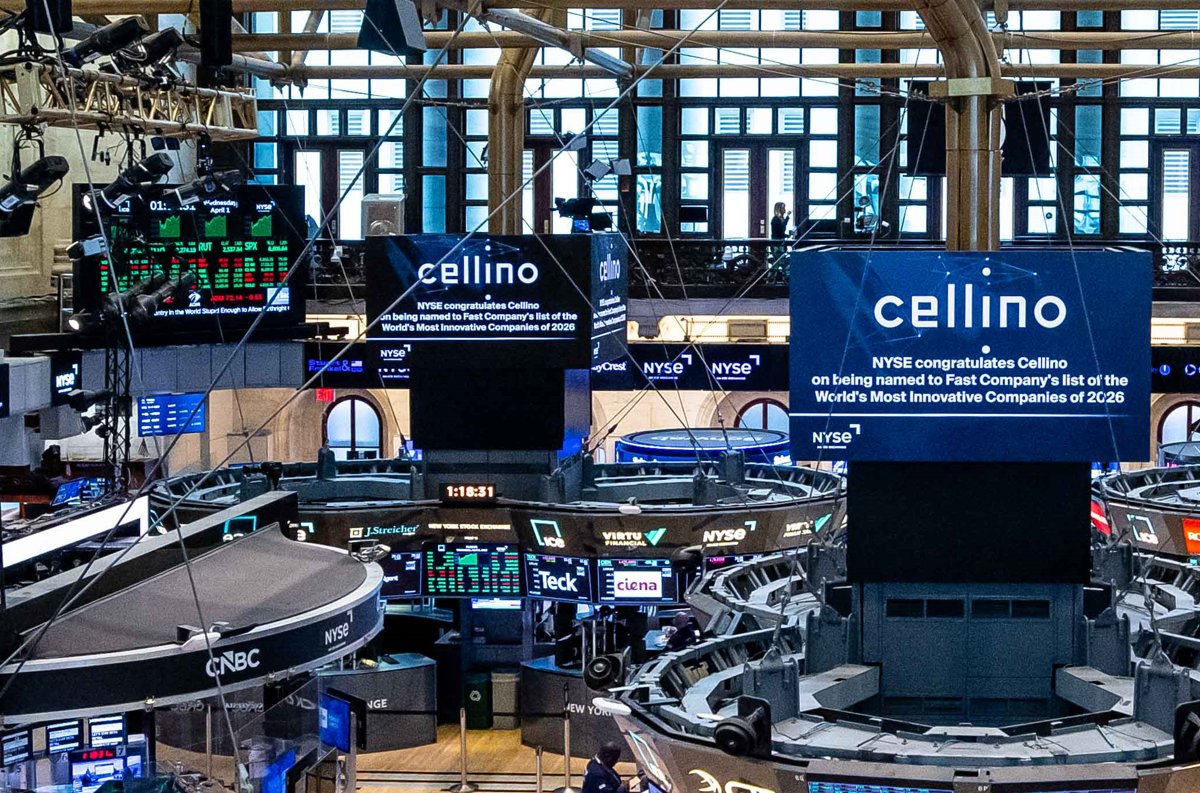
✨ The @NYSE trading floor lit with @CellinoBio this week. We're to be named one of the @FastCompany's World's Most Innovative Companies of 2026, and grateful to @NYSE for celebrating with us!
Read the full release here: https://t.co/oGigQ25zPK
@CellinoBio CEO Nabiha Saklayen discusses the potential of induced pluripotent stem cells (iPSCs) to reverse aging and rejuvenate organs in a recent podcast. The Massachusetts-based company focuses on automating the production of iPSCs to lower costs and accelerate research, addressing a critical bottleneck in regenerative medicine.
https://t.co/joI70ofT9O
Subscribe to our newsletter and get the biggest biotech news straight to your inbox 🧬. https://t.co/dQjW2TchSB
🎉 Excited to be ranked #8 on @FastCompany’s 2026 Most Innovative Companies list in #biotech! By enabling scalable #iPSC production with our closed-loop, #AI-driven platform, we’re tackling one of the toughest challenges in #celltherapy manufacturing: https://t.co/x7rmjoaXA2
@nabsicle We’re incredibly proud to be building @CellinoBio with you. Your vision to serve patients at scale continues to guide our work. Congratulations to everyone! 💜
🎉 @CellinoBio has been named to @FastCompany’s list of the World’s Most Innovative Companies of 2026! A reflection of our team’s relentless passion to unlock broad access to personalized #regenerativemedicine and serve #patients at scale: https://t.co/TNTg1SZP1r
#FCMostInnovative
🏆 What an honor! @CellinoBio has been named one of @FastCompany's Most Innovative Companies of 2026! A meaningful milestone that reflects our team’s work to advance personalized #celltherapies at scale. Read more about #FCMostInnovative here: https://t.co/KpRXBXnHVt
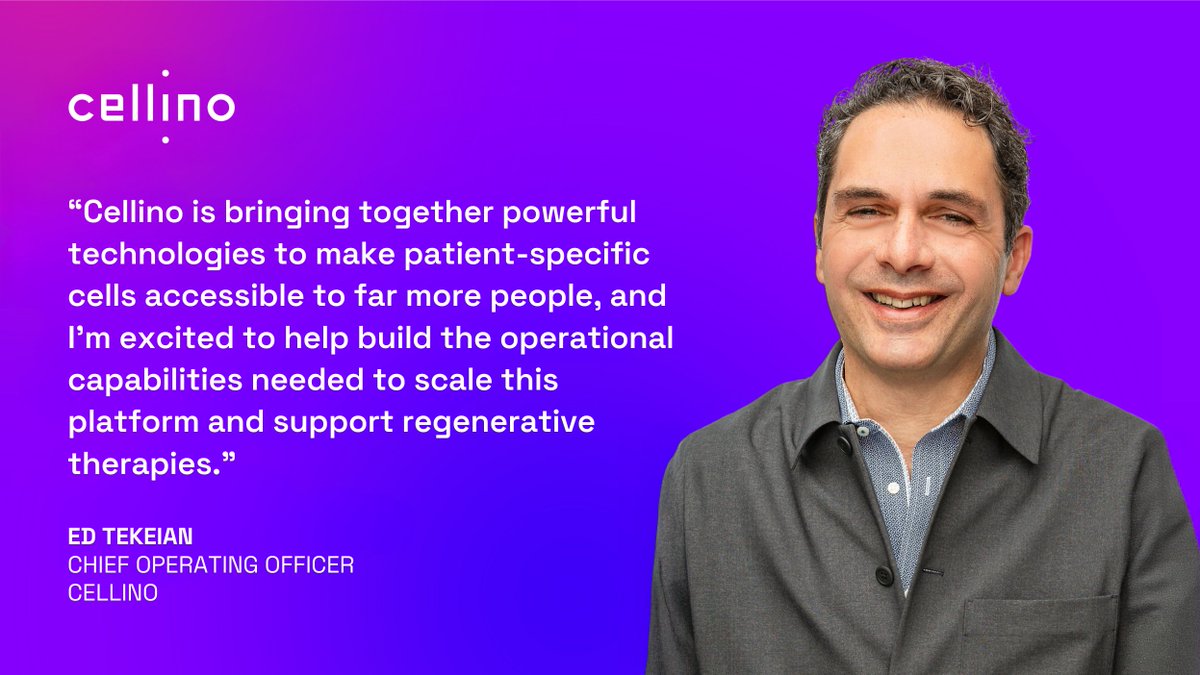
Big news at @CellinoBio! We’re excited to appoint Ed Tekeian as Chief Operating Officer. Ed will oversee engineering, platform development, & manufacturing as we build the scalable infrastructure needed for personalized #regenerativemedicine.
Read the full release: https://t.co/H7wXjPjajn