@rodrigokchia Ainda está pedalando. O BC não pode ser o responsável por parar o movimento e levar a bike ao chão.
Recursos do tesouro não devem ser um bolão. É fluxo mensal sem grandes reservas, mas podem ser uma explicação.
Também não houve corrida de saques.
Sobrevive? Acho que não.
Não entendem ou se fazem surdos ao fato que destroem as instituições que integram (nossas instituições) com as próprias mãos.
Imaginem a desgraça de milhares de juízes Brasil a fora seguindo o exemplo dos seres supremos ou das guildas de Brasília.
*
A decisão do CNJ de afastar por 2 anos a juíza Gabriela Hardt reforça a vingança do sistema contra magistrados que, bem ou mal, ousaram fazer interpretações e tomar decisões no âmbito da Lava Jato diferentes daquelas que a casta da República - não a Constituição - impõe.
Enquanto o STF têm passe-livre para extrapolações (como evidencia o inquérito das fake news, aberto há mais de 7 anos e usado para blindagem de seus integrantes, sem falar nos contratos milionários de suas famílias com empresários interessados em obter boa vontade deles), uma juíza de primeira instância que condenou autoridades poderosas por corrupção e lavagem de dinheiro é punida por validar um acordo sobre o modo (seja bom ou ruim) de gerir recursos recuperados da corrupção sistêmica brasileira, sem ter recebido qualquer centavo do dinheiro.
“A juíza assinou um ato, não criou fundação e desafio que me apontem um ato de movimentação de valores por decisão da juíza. Qual foi o ato que gerou movimentação de valores? Esses valores só foram movimentados por decisão do STF”, disse o subprocurador-geral José Adônis Callou de Araújo Sá, que votou pela rejeição do processo disciplinar, mas foi vencido, claro.
O ato, na verdade, era o pretexto para o recado de que ninguém enfrenta o sistema impunemente. Ainda que poucos, ou poucas, saibam cair de pé.
OPINIÃO ✍️ Raquel Landim: "Corporação enviou caso à Presidência do STF para sortear um relator, em vez de enviar ao responsável pelo caso INSS, mas, por ironia, Mendonça acabou sorteado"
🔗Assine o #Estadão em https://t.co/5nnGJ7z02E para acompanhar as colunas de Raquel Landim
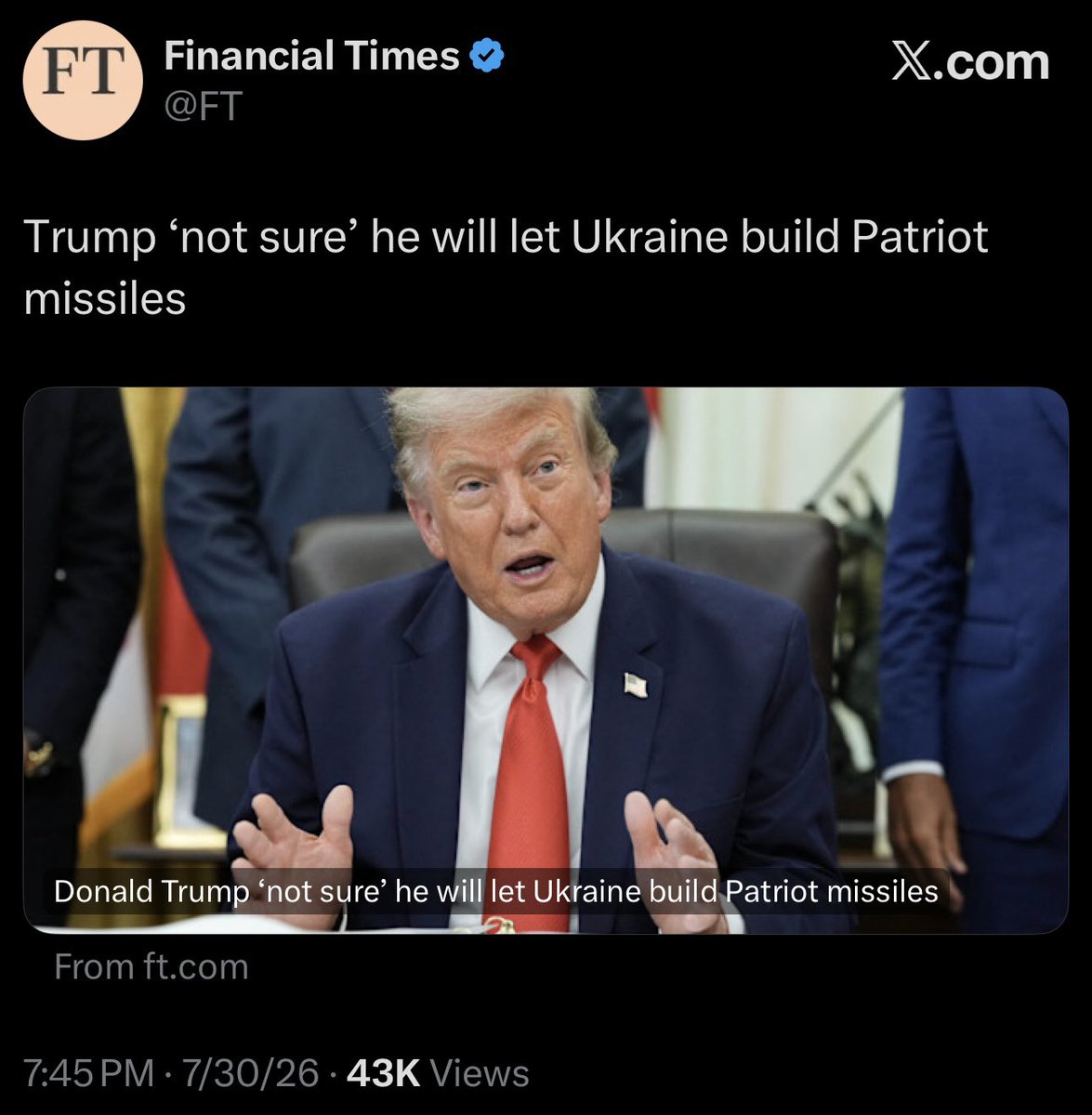
No one can ever believe anything Trump pledges, says or puts in writing. With Trump, a deal is never a deal and nobody can count on the US for anything while he’s president. His word is garbage, agreements mean nothing, and he lies about everything.
@willgomes Mas não tem sido assim, Wilson?
Em 2018 não foi a esquerda que elegeu a direita e em 2022 a dir elegeu a esq?
Sofremos c falta de propostas, c campanhas focadas em demonizar o oponente, vitórias c margem estreita e sufocamento de novas lideranças.
Algo precisa acontecer até a convenção do PL, dia 25, para tirar esse cara do páreo. Do contrário, chegaremos novamente às urnas com uma escolha de Sofia e quem conquistar 1/2 % do eleitorado governará um país cada vez mais dividido.
Vamos cruzar dados e datas:
- Flávio Bolsonaro recebeu R$ 500 mil de diretor de empresa (Contábil Correa) do esquema de Daniel Vorcaro, segundo nota fiscal de 9 de abril de 2025 (sem registro de cancelamento) emitida pelo escritório de advocacia do senador e revelada pelo Metrópoles. O próprio Flávio confirmou o contrato, após a reportagem.
- Naquele mês, por meio de outra empresa usada em seu esquema (o Grupo Entre Investimentos e Participações), Vorcaro fez uma das transferências de US$ 1,66 milhão ao fundo Havengate, do Texas, ligado a Eduardo Bolsonaro, conforme planilha enviada pelo publicitário Thiago Miranda ao dono do Master e revelada pelo Intercept.
- O cronograma previa 14 desembolsos entre janeiro de 2025 e janeiro de 2026, sendo as duas primeiras parcelas de US$ 2 milhões cada. As demais, de US$ 1,66 milhão.
- Quem havia pedido a Vorcaro um total de US$ 24 milhões (na época, cerca de R$ 134 milhões) para alegadamente financiar a produção de “Dark Horse”, sobre a suposta trajetória do pai, Jair Bolsonaro? Ele mesmo: Flávio Bolsonaro, aquele captador que prometeu prestar contas do uso dessa grana no filme, mas não prestou.
- Terá sido uma grande coincidência que, enquanto uma empresa do esquema de Vorcaro mandava dinheiro para um fundo ligado a Eduardo nos EUA, outra empresa do esquema de Vorcaro mandava dinheiro para o escritório de Flávio no Brasil?
The fight against corruption has suffered setbacks in Brazil in recent years. It has also suffered setbacks in the United States.
The Trump administration bears responsibility for weakening the universal enforcement of the Foreign Corruption Practices Act (FCPA)—the landmark legislation that transformed international anti-bribery enforcement. It has also weakened the Corporate Transparency Act by exempting US companies from reporting obligations, increased political interference in oversight institutions, retaliated against law enforcement officials perceived as threatening presidential interests, and raised unprecedented concerns over conflicts of interest stemming from the President’s and his family’s business activities, including relationships with foreign governments.
Transparency International Brazil has likewise documented anti-corruption setbacks under the Lula administration. Key concerns include the political rehabilitation of individuals who confessed to and were convicted of major corruption, their public praise by senior authorities, privileged access to the Presidency, and inclusion in official trade missions abroad. These practices undermine public confidence in government impartiality and equal accountability.
The Trump administration has displayed not merely comparable, but in some respects even more consequential patterns by granting controversial pardons to convicted individuals and cultivating close political relationships with business figures associated with major corruption scandals. One example is Joesley Batista, controlling shareholder of JBS, who admitted participation in one of the largest corruption schemes ever uncovered. Despite this, he recently enjoyed privileged access to both Presidents Lula and Trump while benefiting from major government decisions in both countries—including favorable energy-sector arrangements in Brazil and JBS’s long-awaited listing on the New York Stock Exchange shortly after a US$5 million contribution to President Trump’s inaugural committee.
Responsibility extends well beyond any single administration. The Bolsonaro government, praised by Mr. Trump, dismantled important legal and institutional anti-corruption safeguards, repeatedly interfered with Federal Police leadership, weakened prosecutorial independence, and expanded the so-called “secret budget,” widely criticized for undermining transparency and accountability in public spending. The Lula administration has failed to reverse many setbacks and contributed to others, particularly by normalizing the rehabilitation of confessed corrupt actors, tolerating serious conflicts of interest and corruption scandals involving cabinet members, and remaining largely silent on anti-corruption as a public policy priority.
Brazil’s institutional deterioration also involves the judiciary. Recent years exposed serious concerns about conflicts of interest and grand corruption allegations involving members of the higher courts and their close relatives. Particularly alarming was Justice Dias Toffoli’s decision to invalidate all evidence derived from Odebrecht’s leniency agreement—a body of evidence documenting the largest transnational bribery case in history, spanning at least twelve jurisdictions in Latin America and Africa. His own mention in Odebrecht’s plea agreements further intensified concerns about institutional impartiality and judicial accountability.
Corruption undermines fair international trade. It also violates human rights, fuels environmental destruction, threatens domestic and international security, and weakens democratic institutions.
Therefore, corruption cannot be confronted through selective enforcement, political convenience, unilateralism, or double standards. The only sustainable path is the consistent application of the rule of law, equal accountability regardless of political affiliation, genuinely independent oversight institutions, strong democratic governance, and multilateral cooperation.
Last night Ukraine could not intercept a single Russian ballistic missile. The USA deliberately starving Ukraine of Patriot missiles is now clearly understood by the Russians as American support for their terror bombing. The USA is helping Putin kill Ukrainians.
@hoc111 Exiled Russian opposition activist and businessman Mikhail Khodorkovsky spoke to CBC’s Terence McKenna about declining public support for the war in Ukraine and reports that President Vladimir Putin is growing more paranoid.
https://t.co/8qC8J6Fk98
@VEJA Ao usar um recurso absurdamente publicitário, o sindicato desmerece o elevado padrão técnico de seus filiados.
Os servidores do BC estão divididos quanto à PEC 65, mas o sindicato se recusa a fazer uma segunda consulta mesmo após mudança do texto e de sua base de membros.
Reading Trump's post confirms one thing: he still doesn't understand the Middle East. In this region, destroying some military hardware while leaving the regime, its ideology, its missile program, its proxies, and its terrorist networks intact is like announcing victory over ISIS because you blew up a few pickup trucks. The Islamic regime terrorized the region long before it needed a serious navy or air force. It hit the UAE, Bahrain, Kuwait, Israel, and others with drones, missiles, militias, and proxies. Hezbollah still exists. The networks still exist. The ideology still exists. The regime still exists.
Then you call it a win and potentially hand the same regime hundreds of billions of dollars? That's not "peace through strength." That's paying the arsonist after he burned down the neighbourhood.
Your friends expected leadership. Your enemies expected pressure. Instead, your friends got disappointment, and your enemies got a deal better than they could have dreamed of.
And please stop selling Iran's economic misery as a newly created success story. Iran's economy has been a wreck for decades, and ordinary Iranians have suffered for 47 years. You didn't create that reality you just tried to package it as an achievement.
Caramba!
É triste imaginar que o destinatário da mensagem, a pessoa que "tudo de importante no final cai no colo", não vá ter o mesmo destino que o amigo Vocaro.
Mantenhamos a esperança.
*
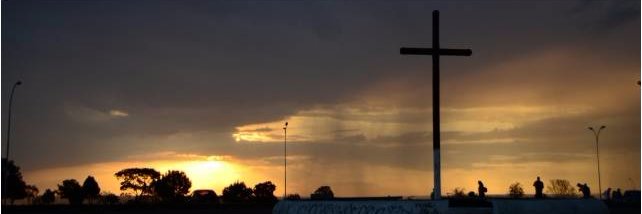
Jordan Peterson made a profound point on Chris Williamson’s podcast.
When God dies, a lot of unexpected things die with Him, including science.
Science isn’t some purely neutral, secular tool. It rests on deeply religious assumptions: that truth exists, that it’s knowable, that pursuing it is good, and that the universe makes sense.
These aren’t scientific claims, they’re metaphysical, rooted in a religious worldview. The universities themselves grew out of monasteries.
Without that deeper foundation, science eventually stops being about truth and becomes just another tool for power, ideology, or convenience. You lose the reason to be honest when the data gets inconvenient.
Do you think science can survive long-term without any belief in objective truth or a higher moral order?