Most people think character is something you're born with. It isn't. It's the residue of five decisions you keep making — usually without noticing.
1. What you pay attention to.
Attention is the raw material of experience. William James said it a century ago: my experience is what I agree to attend to. The phone in your hand isn't stealing your life. It's revealing what you keep choosing to look at.
2. What you tolerate.
The behaviors you don't push back on become the behaviors around you. From your own procrastination to a colleague's interruption — silence reads as consent.
3. What you commit to in writing.
A value you haven't put on the calendar is a preference. Timeboxing your day is how you turn intention into identity. Schedule builders, not to-do list makers.
4. Who you spend time with.
You don't rise to the level of your goals. You fall to the level of the people whose discomfort you've learned to share. Pick carefully.
5. What you do with discomfort.
This is the one underneath the other four. Every distraction, every broken commitment, every avoided conversation traces back to an unwillingness to sit with a feeling. Time management is pain management.
None of these are personality traits. They're decisions. Which means tomorrow you can make different ones.
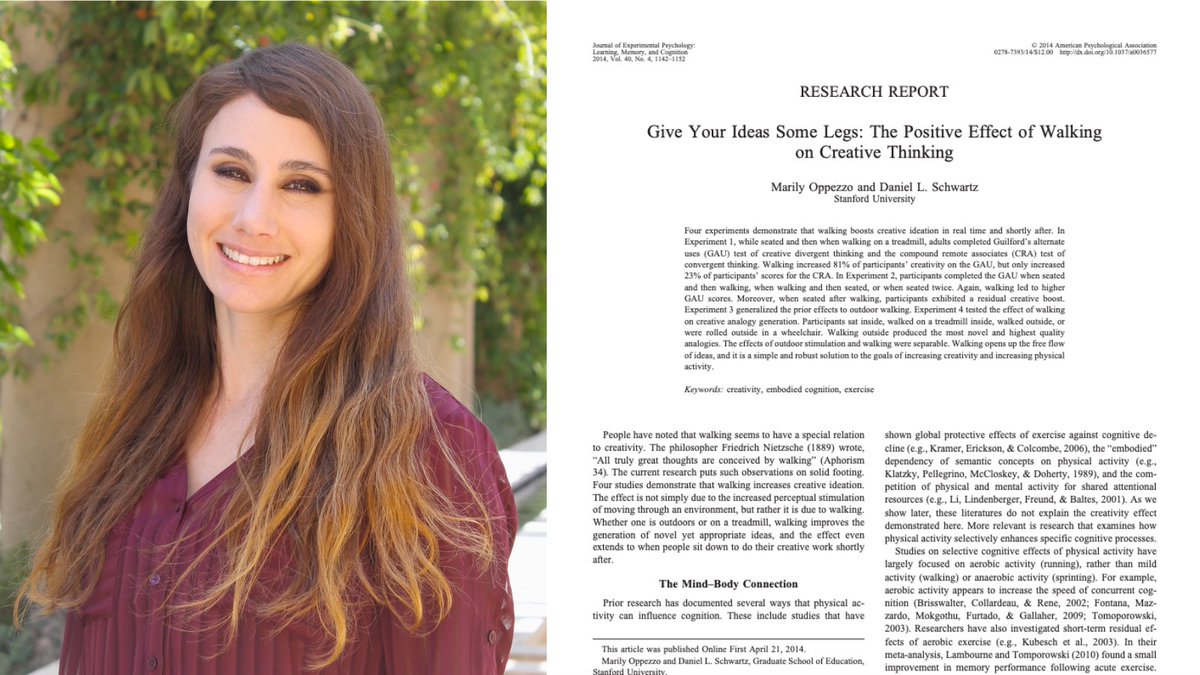
A Stanford psychologist spent 4 years proving that the simple act of walking generates 60% more creative ideas than sitting, and the experiment she designed to kill every alternative explanation is one of the most decisive findings in modern psychology.
Her name is Marily Oppezzo.
She got the idea for the study while walking with her advisor at Stanford to discuss her thesis topic, and the paper she eventually published in the Journal of Experimental Psychology in 2014 is sharp enough that it should have ended the seated meeting on the day it came out.
She ran 4 experiments on 176 people. Same person tested twice. Once sitting, once walking. The creativity tasks were the standard ones psychologists have used for decades to measure how good a brain is at generating novel useful ideas.
The result was almost too clean to publish.
81% of participants in the first experiment produced more creative ideas while walking than while sitting. In the second experiment, 88%. In the third, 100%. Every single person walked into a more creative version of themselves.
On average, people generated 60% more novel useful ideas the moment their legs started moving.
The skeptical question is the obvious one. Maybe it was the fresh air. Maybe it was the scenery passing by. Maybe it was the change of environment doing the work, not the walking itself.
Oppezzo killed every one of those explanations with one experimental decision.
She put people on a treadmill facing a blank wall. No scenery. No fresh air. No environmental change. Just legs moving in place while staring at white drywall. The 60% boost held.
Then she ran the experiment that closed the case completely. She took participants outside in two conditions. Half of them walked through a Stanford courtyard. The other half were pushed through the exact same courtyard in a wheelchair. Same outdoor stimulation. Same scenery passing at the same speed. The only difference was whether the legs were moving.
The walkers produced dramatically more novel high-quality ideas than the wheelchair group. The outdoors did almost nothing on its own. The walking did everything.
This is the part of the study that hit hardest when I read it the first time.
She also tested the opposite kind of thinking. Convergent thinking. The kind where there is one right answer and you have to narrow down to it.
Word puzzles where 3 words share a hidden fourth word that connects them. The seated participants did slightly better on these. Walkers got slightly worse.
Walking is not a general intelligence enhancer. It does one specific thing. It opens up the divergent search inside your brain. The part that generates options. The part that produces unexpected connections. The part that takes a problem and finds five ways into it instead of one.
When you need to converge on the single right answer, sit down. When you need to find the answer in the first place, get up.
The mechanism is now well understood. Walking selectively activates what neuroscientists call the default mode network, the system inside your brain that runs when you are not consciously focused on anything. The DMN is where mind-wandering happens. Where memories cross-reference each other. Where ideas that have been sitting in separate folders inside your head finally bump into each other.
When you sit at a desk and force yourself to concentrate, you suppress the DMN. When you walk at a natural pace, the executive part of your brain gets just busy enough handling the walking that the DMN comes online and starts doing the work that focus was blocking.
The most useful finding in the entire paper is the one almost nobody quotes.
The boost did not turn off the moment people stopped walking. Participants who walked first and then sat back down stayed elevated. Their next round of seated creativity work was still significantly better than people who had been sitting the whole time. The rest lingered for at least several minutes after the legs stopped moving.
You do not need to do creative work while walking. You need to walk before the creative work. The brain holds the state.
The history of this is the part that should haunt anyone who still does meetings in chairs.
Charles Darwin built a gravel loop behind his house in Kent called the Sandwalk and walked it 3 times a day for the rest of his life. The theory of evolution was developed one lap at a time on that path.
Nietzsche walked up to 10 hours a day during the years he wrote his most important books and openly said the work was conceived on his feet.
Beethoven composed for the morning and walked for 5 hours every afternoon with a pencil in his pocket for when something landed.
Kahneman said the best thinking of his Nobel Prize-winning career happened on leisurely walks with Amos Tversky. Steve Jobs refused to take important conversations sitting down. He held them on foot.
Every one of them was using the system Oppezzo would not measure until 2014. They just did not know what to call it.
The question worth sitting with is the one almost nobody asks.
Every meeting you have ever attended sitting around a table was a meeting held at a fraction of the brain power that was actually available to the people in the room. Every brainstorm that got stuck inside a conference room. Every problem you tried to solve at a desk and gave up on. Every idea you could not quite get to.
The intervention is the easiest one in modern science. No supplement. No app. No subscription. No training program. Just a pair of legs and 15 minutes.
The Stanford lab proved it. The philosophers knew it. The neuroscience explains it.
And almost everyone reading this is still trying to think their way out of problems sitting completely still.
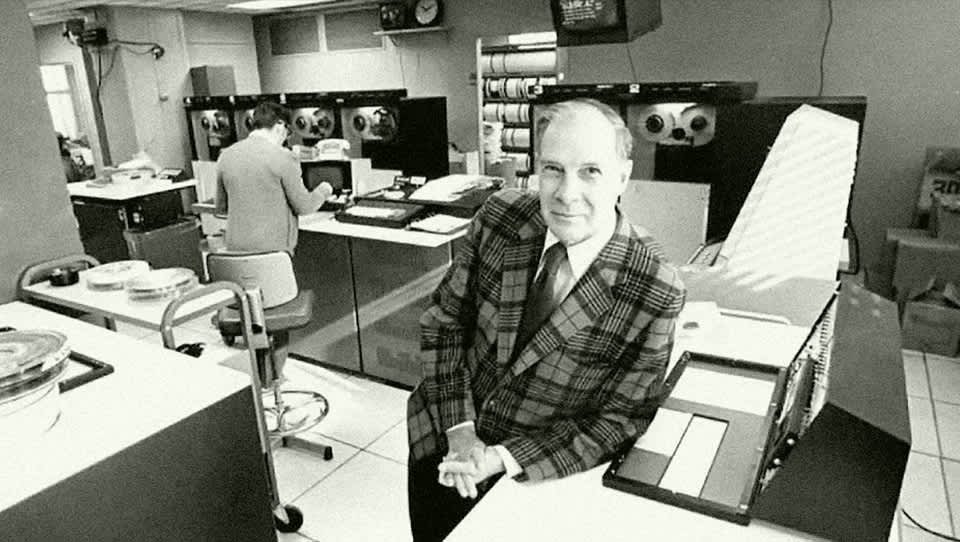
A mathematician who shared an office with Claude Shannon at Bell Labs gave one lecture in 1986 that explains why some people win Nobel Prizes and other equally smart people spend their whole lives doing forgettable work.
His name was Richard Hamming. He won the Turing Award. He invented error-correcting codes that made modern computing possible. And he spent 30 years at Bell Labs sitting in a cafeteria at lunch watching which scientists became legendary and which ones faded into nothing.
In March 1986, he walked into a Bellcore auditorium in front of 200 researchers and told them exactly what he had seen.
Here's the framework that has been quoted by every serious scientist for the last 40 years.
His opening line landed like a punch. He said most scientists he worked with at Bell Labs were just as smart as the Nobel Prize winners. Just as hardworking. Just as credentialed. And yet at the end of a 40-year career, one group had changed entire fields and the other group was forgotten by the time they retired.
He wanted to know what the difference actually was. And he said it wasn't luck. It wasn't IQ. It was a specific set of habits that almost nobody is willing to follow.
The first habit was the one that hurts the most to hear. He said most scientists deliberately avoid the most important problem in their field because the odds of failure are too high. They pick a safe adjacent problem, solve it cleanly, publish it, and move on. And because they never swing at the hard problem, they never hit it. He said if you do not work on an important problem, it is unlikely you will do important work. That is not a motivational line. That is a logical one.
The second habit was about doors. Literal doors. He noticed that the scientists at Bell Labs who kept their office doors closed got more done in the short term because they had no interruptions. But the scientists who kept their doors open got more done over a career. The open-door scientists were interrupted constantly. They also absorbed every new idea passing through the hallway. Ten years in, they were working on problems the closed-door scientists did not even know existed.
The third habit was inversion. When Bell Labs refused to give him the team of programmers he wanted, Hamming sat with the rejection for weeks. Then he flipped the question. Instead of asking for programmers to write the programs, he asked why machines could not write the programs themselves. That single inversion pushed him into the frontier of computer science. He said the pattern repeats everywhere. What looks like a defect, if you flip it correctly, becomes the exact thing that pushes you ahead of everyone else.
The fourth habit was the one that hit me the hardest. He said knowledge and productivity compound like interest. Someone who works 10 percent harder than you does not produce 10 percent more over a career. They produce twice as much. The gap doesn't add. It multiplies. And it compounds silently for years before anyone notices.
He finished the lecture with a line I have never been able to shake.
He said Pasteur's famous quote is right. Luck favors the prepared mind. But he meant it literally. You don't hope for luck. You engineer the conditions where luck can land on you. Open doors. Important problems. Inverted questions. Compounded hours. Those are not traits. Those are choices you make every single day.
The transcript has been sitting on the University of Virginia's computer science website for almost 30 years. The video is free on YouTube. Stripe Press reprinted the full lectures as a book in 2020 and Bret Victor wrote the foreword.
Hamming died in 1998. He gave his final lecture a few weeks before. He was 82.
The lecture that explains why some careers become legendary and others disappear is still free. Most people who could benefit from it will never open it.
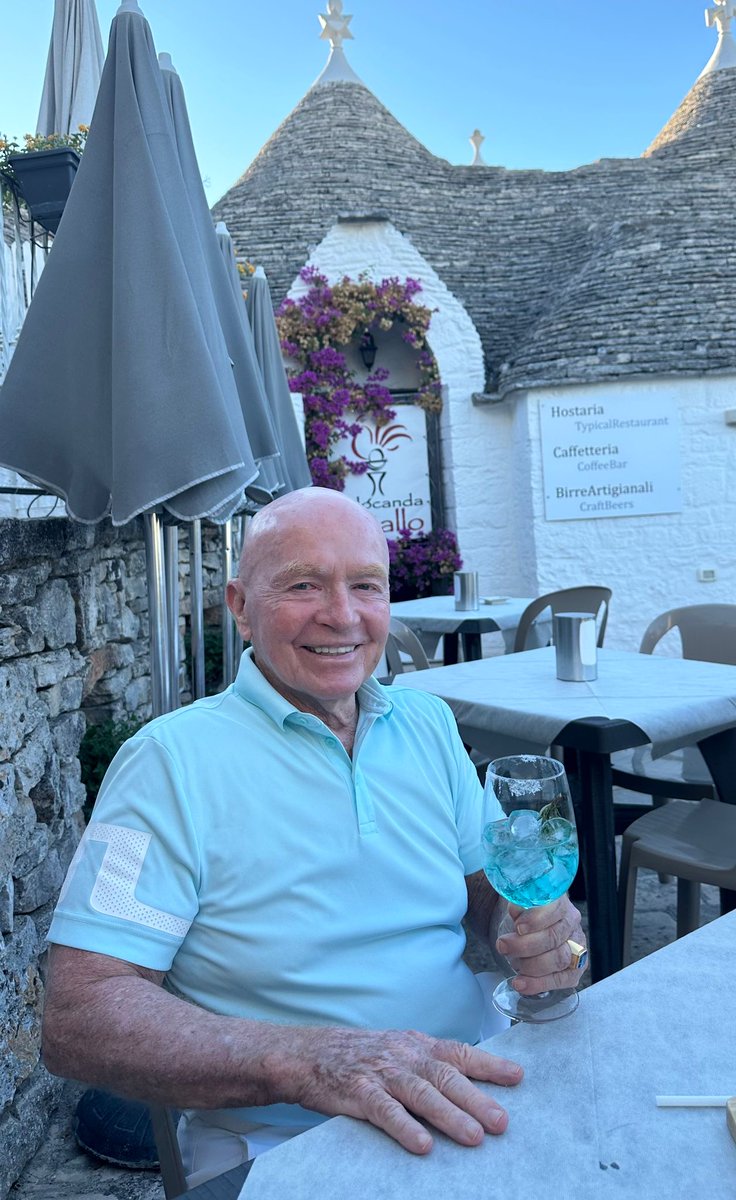
I celebrated my 88th birthday last week and I’m thankful to say that I’m feeling younger, stronger and wiser than ever.
I get asked almost every single day what motivates me to keep working and stay active, and my answer is simple: nothing is impossible if you stop putting limits on yourself.
One must always take calculated risks in life but let me say this: the world belongs to optimists.
When I first became a fund manager in my 50s, many people thought that was too ambitious (or too late, too bold — you name it) because social norms tell us that we shouldn’t have a career change late in life, and that we should retire when we hit a certain age. We, as humans, often limit ourselves to boundaries we set for one another.
But the truth is — life is what you make of it.
Read my latest blogpost:
https://t.co/lZCT0P5YkQ
Excited to be a founding board member & investor at @CylakeAI. Thrilled to be working with this legendary group of leaders & friends again: @nirzuk, @jimgoetz, @MarkatPANW. Welcome @InQTeI and Katie Gray as strategic investors: we are honored to have you join.
cc: @GreylockVC
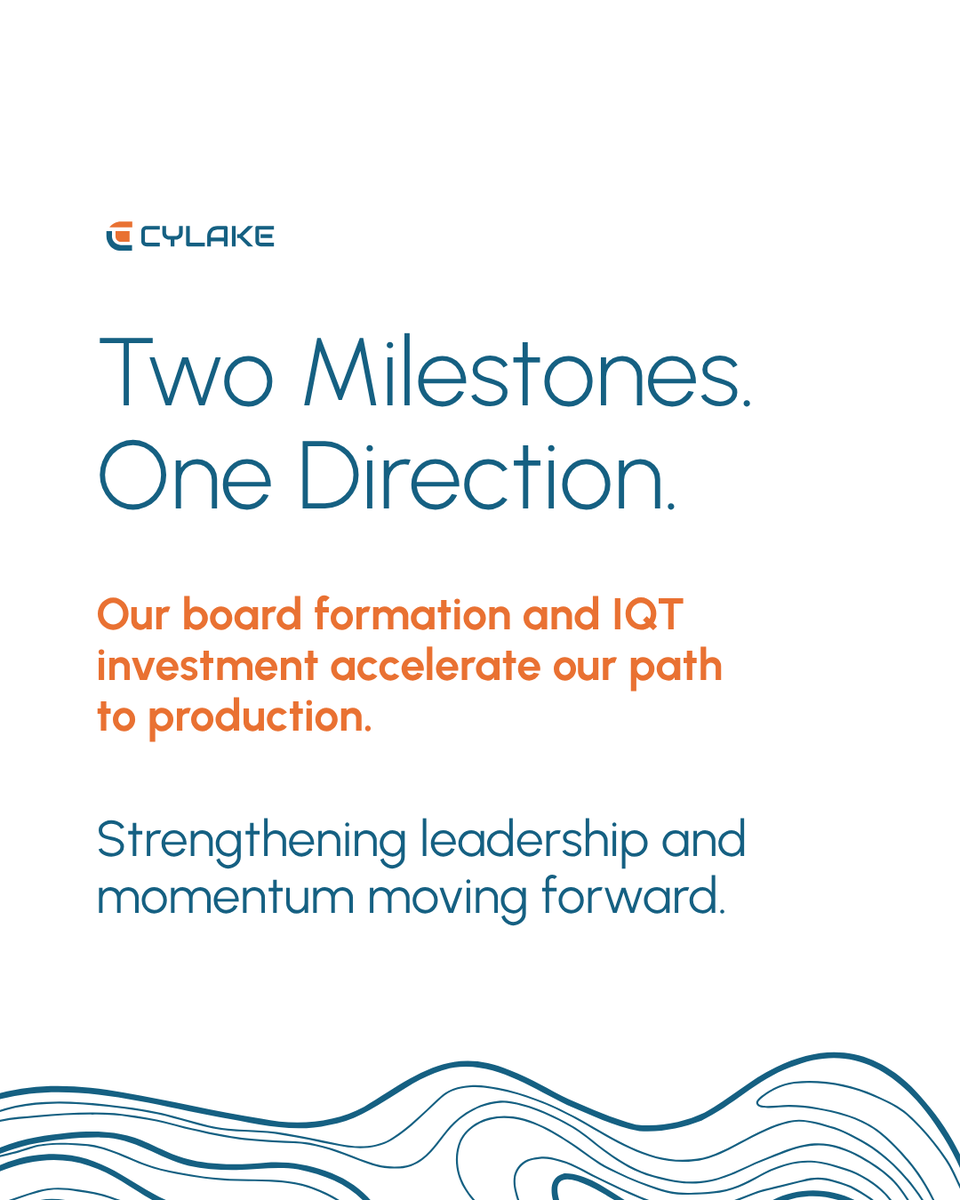
We’ve formed our Board with @chandna, @jimgoetz, @MarkatPANW, and @nirzuk; leaders who helped build one of cybersecurity’s most consequential companies.
We’re also announcing a strategic investment from In-Q-Tel.
We're building a new architecture.
https://t.co/YrTx9M5YxI
My husband @saammotamedi doesn't go long-form on the internet very often. Excited for the world to hear his thoughtful takes on investing, ethos of @GreylockVC, and even standing desks and rice cookers
Greylock is one of the best VC firms at incubations of all time. Palo Alto Networks ($130B), Workday ($57B), and many other great companies were started in their offices.
I asked Saam about why it's so uncommon for VCs to be good at incubations:
Last Uncapped episode of the year, feeling really grateful for what a fun project this has turned out to be.
Closing out the year with one of my best friends @saammotamedi. Although I don't like to admit it to him, he's a remarkable investor and person.
Greylock has been producing amazing returns for sixty years and I tried to stay serious for long enough stretches of time during this episode to hear some of Saam's insights about how it works. Hope you enjoy.
(0:00) Intro
(1:32) Greylock turning 60 this year
(4:11) What’s persisted since 1965
(8:59) Apprenticeship
(11:34) What's durable in venture
(16:29) Greylock’s ethos
(19:33) Incentive misalignments
(24:44) Breadth vs depth in venture
(29:28) Managing the team on inputs
(34:00) Why incubations are so hard
(43:22) Finding alpha
(52:38) Greylock’s approach to portfolio services
(59:18) Assessing wild revenue ramps
(1:08:10) Horizontal vs vertical SaaS
(1:11:34) Friendships and work
(1:16:26) Saam's biological age 😂
The only viable future for AI is non-autoregressive. It's upon this founding principle that we built Logical Intelligence — a company dedicated to making mission-critical software secure through AI formal verification.
We’re launching two AI agents + a new foundation model to deliver provably correct code, faster than ever before.
➡️ Non-autoregressive
➡️ Energy-based
➡️ Built for 100% mathematically precise reasoning
Unlike LLMs, our model doesn’t stumble piece by piece — it solves holistically, like magnets snapping a puzzle into place.
Sometimes we forget that we can play games that aren't poker too -- hosted the inaugural @GreylockVC chess night where the funnest chess variants were played like bughouse, hand & brain, and more! 🥳🥳🥳 And of course we had one-of-a-kind Greylock chess totes 🙌
It's been decided. We're going to make this is a recurring thing. DM me to get added to the next one!
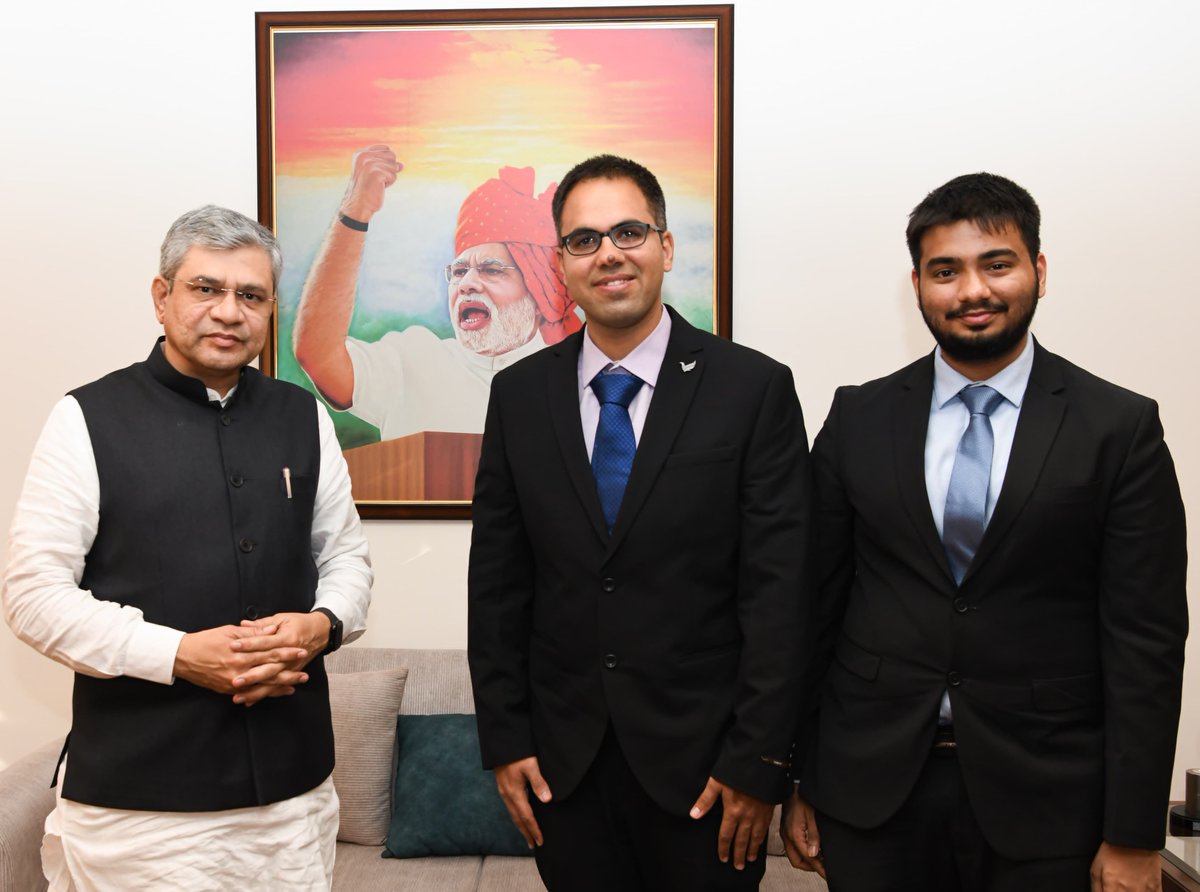
Had an insightful discussion with Hon'ble Minister @AshwiniVaishnaw about launching a strategic initiative to bring together Indian-origin AI researchers from around the world. Indians have made significant contributions to modern AI, from the early Transformers paper, to teams behind leading models like OpenAI’s GPT, Anthropic’s Claude, Google’s Gemini, and Meta’s Llama. We're collaborating with the best minds to build foundation models that will power India’s AI future.
A key challenge in building foundation models for India lies in the lack of internet-scale data, unlike the US or China, combined with the country’s immense linguistic diversity. To truly democratize these models, our approach will focus on the unique conversational style of Indians, which often involves heavy code-switching between languages and dialects. We plan to use synthetic data generation and reinforcement learning to train LLMs, and are committed to open-sourcing essential components, including frameworks and code, reinforcement learning data, and model weights for select models.
We’re looking to hire exceptional AI Engineers to join us on this mission.
👨💻 FTE: ₹40L Base + ₹40L ESOPs
🧑🎓 Intern: ₹1L/month
📍 Location: Virtual
Know someone who’d be a perfect fit? Tag them!
If you’re interested, comment below, and we’ll get in touch.
It’s only been 2 days since OpenAI revealed GPT-4o.
Users are uncovering incredible capabilities that completely change how we use and interact with AI.
The 12 most impressive use cases so far:
Greylock launched a newsletter which will bring news and insights from the Greylock portfolio and our team. Excited to see Rubrik CEO Bipul Sinha profiled in the first edition. Make sure to subscribe if you want to see all the latest news. https://t.co/UjiFyU79dW
This Apple product feels very different. For the first time I’m not really sure what I’m supposed to do with it, or how it’s supposed to fit into my life.
It will take time but developers (and Apple) will internalize the new rules and build amazing native products.
We just aren’t there yet
What are the key considerations of funding early-stage enterprise software companies in the AI era? @GreylockVC investor @chandna says that in a world driven by #AI, early-stage founders must focus on high-value use cases, build data moats, and devise smart insertion strategies.
https://t.co/HNN8sdBimh
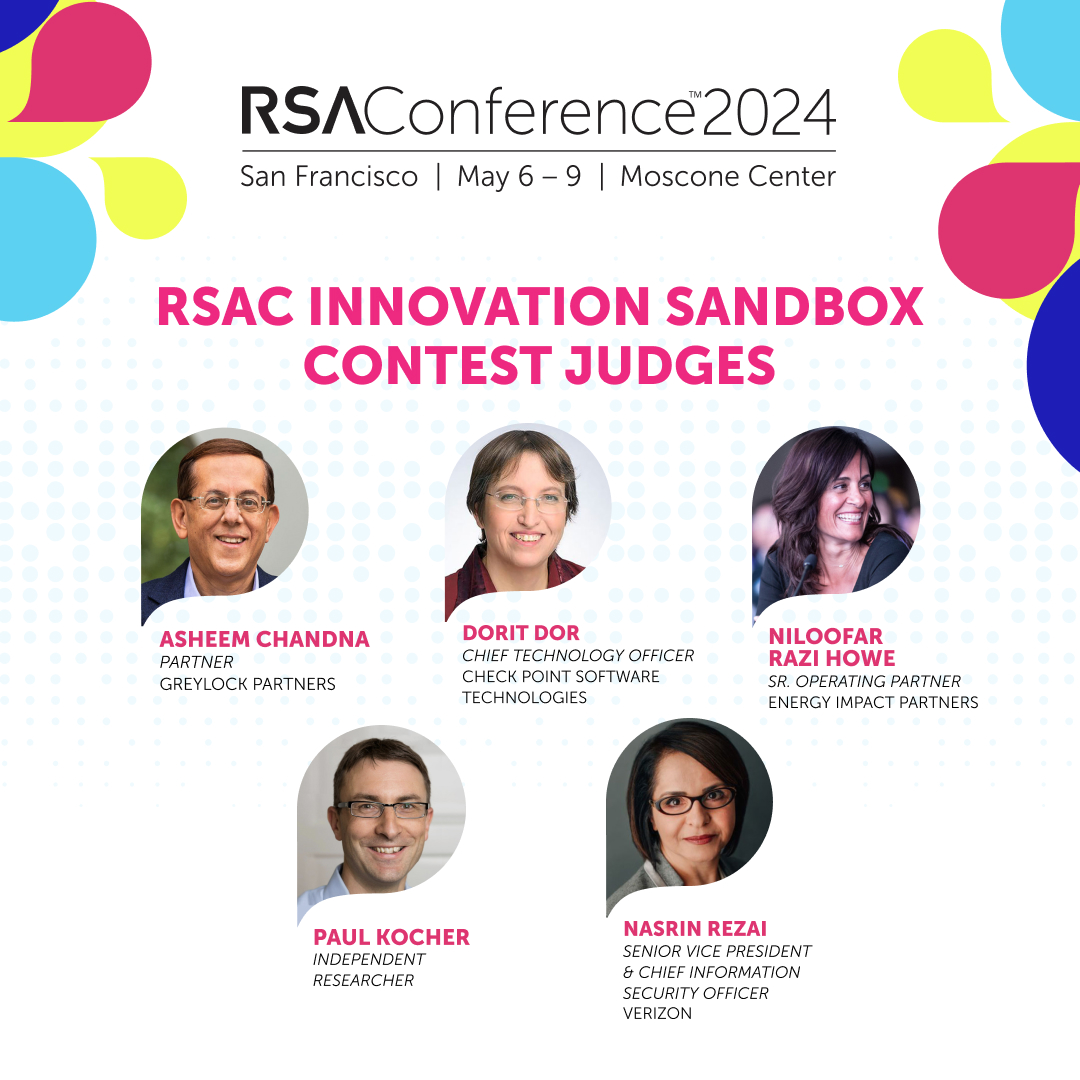
Vie for the coveted title of Most Innovative Startup of 2024 and field questions from judges @chandna, Dorit Dor, @NiloofarHowe, Paul Kocher, and Nasrin Rezai as one of top 10 Finalists competing in the coveted #RSAC Innovation Sandbox contest. https://t.co/0jSKXTiOu3
📷 We’ve raised a $22 million Series B led by @BatteryVentures. We’re excited to use this funding to continue to grow our team and product! https://t.co/0PI3v0FZLW