Excited to share the Jiang Lab’s first preprint on bioRxiv! We found that NRF2 hyperactivation makes lung cancer cells selectively vulnerable to selenite by rewiring thiol metabolism. https://t.co/Asv5JDzLTK
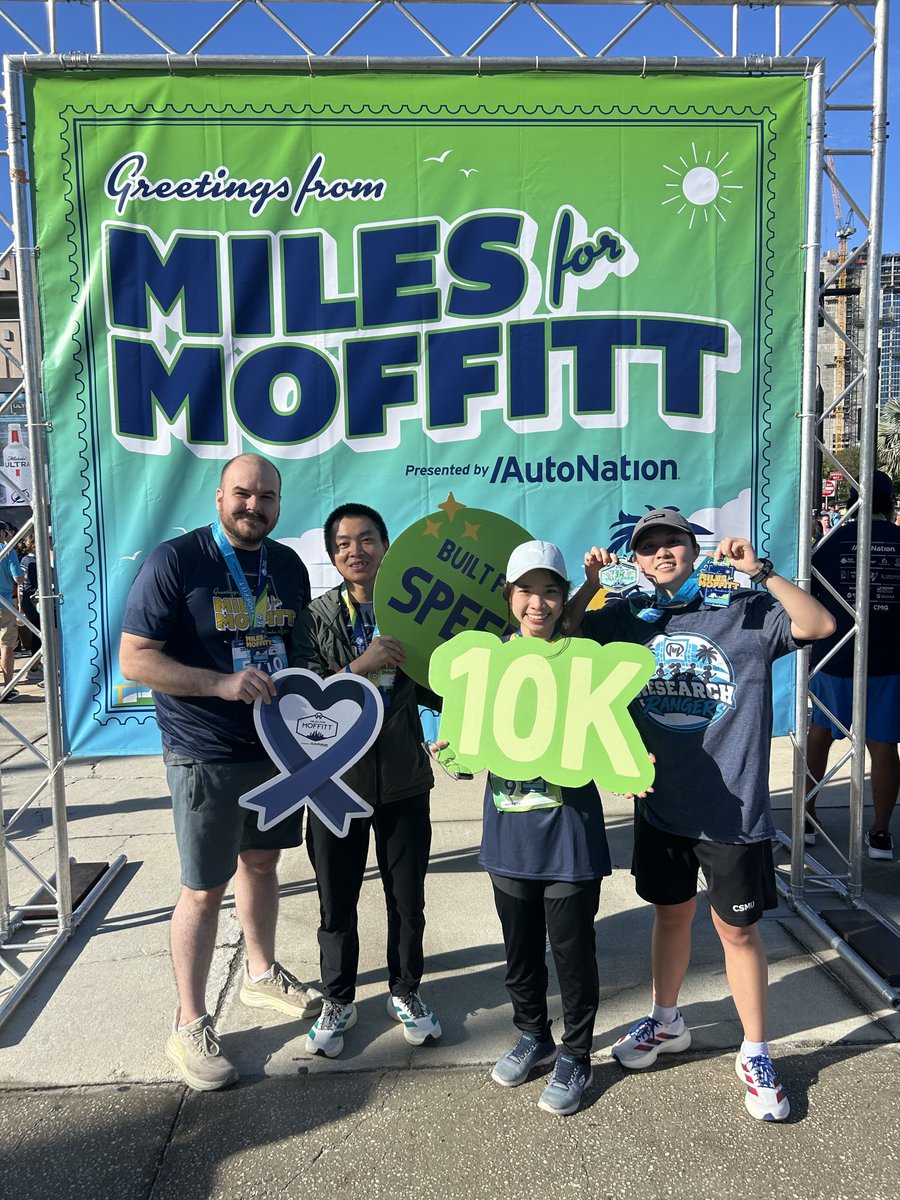
Run, everyone, run! 🏃♀️🏃♂️ From the lab bench to the finish line, the Jiang Lab joined Miles for Moffitt 2026 to help raise funds for cancer research! 💙@MoffittNews#MilesForMoffitt
Excited to co-chair the 2027 Cell Biology of Metals GRC with Paul Cobine @munchie37!
📅 Aug 1–6, 2027
📍 Portland, Maine
Amazing speakers, discussion leaders, new science & trainee talks. Hope to see you there!
https://t.co/HIfSiFp7ZW
Excited to share the Jiang Lab’s first preprint on bioRxiv! We found that NRF2 hyperactivation makes lung cancer cells selectively vulnerable to selenite by rewiring thiol metabolism. https://t.co/Asv5JDzLTK
Our data support a redox cycle that consumes NADPH and regenerates selenide. A 4 hour selenite pulse impaired mitochondrial respiration, and cell death continued after washout. Congratulations to co-first authors Ting Chao & Yun Huang, and thanks to our team and collaborators!
NRF2-driven thiol export promotes extracellular reduction of selenite to selenide. Glutathione (GSH) is required for selenite-induced cell death, and mitochondrial SQOR uses GSH to generate GS-SeH, a reactive selenium metabolite.
NRF2-driven thiol export promotes extracellular reduction of selenite to selenide. Glutathione (GSH) is required for selenite-induced cell death, and mitochondrial SQOR uses GSH to generate GS-SeH, a reactive selenium metabolite.
Excited to share the Jiang Lab’s first preprint on bioRxiv! We found that NRF2 hyperactivation makes lung cancer cells selectively vulnerable to selenite by rewiring thiol metabolism. https://t.co/Asv5JDzLTK
The NRF2-KEAP1 regulon is a transcriptional checkpoint for the NLRP3 inflammasome.
Very pleased to share our study on how NRF2-KEAP1 links extracellular matrix sensing to NLRP3 regulation.
Links to fibrosis, inflammation and cancer are presented.
https://t.co/91kc2mTvMZ
In our paper “The mechanism of cysteine sensing by LRRC58,” we identify LRRC58 itself as a direct cysteine sensor and determine how it works to control cysteine homeostasis.
https://t.co/MsKSG73B8k
Our new work by @YuyangLiu1996! Short-lived proteins are key regulators of metabolic homeostasis. By investigating their degradation, we identified TXNDC15 as a regulator of ER protein degradation and lipid homeostasis via a catalysis-independent mech. https://t.co/lVBzlXc7il
We are excited to share this new preprint from our amazing postdoc, @luisci22! Luis discovered that liver cancer cells with overactive beta-catenin switch their mitochondrial fuel usage from glucose to fatty acid oxidation—an unexpected rewiring that challenges conventional Warburg metabolism.
Congrats to Maia Kinnebrew and team! 🎉 Genetic screens and mechanistic follow-up reveal how fatty acid metabolism tunes membrane fluidity and accessible cholesterol pools. Happy to have contributed in a small way to this study.
https://t.co/8zizSBtYHR
Excited to see this online and to have contributed in a small way! Huge congratulations to @Sulfur_Vladi, Takaaki Akaike & team. Elemental sulfur (S8) accumulates in lipid droplets, & protects against lipid peroxidation and ferroptosis! 🔥
https://t.co/rTGf91lN81
Why is glutathione, rather than cysteine, the major cellular thiol? Our new work by @ToshiNakamura51 suggests unlike other amino acids, excess cysteine is intrinsically toxic to mammalian cells via mitochondrial iron accumulation. @RockefellerUniv
https://t.co/JYyu5eAoVu
Excited to see our Preview led by Amalia Megarioti online in Cell, highlighting new work showing that polyamines act as endogenous buffers of labile iron to suppress ferroptosis. Congrats to Pushkal Sharma, Whitney Henry, Ankur Jain and team!👏
https://t.co/TIhKqBRXfd
@PatrickHwuMD@MoffittNews Thank you, Patrick, for the kind introduction and support! I am honored to be part of the outstanding research community at Moffitt! Our lab is excited to explore how redox biology, mitochondria and metals influence cancer progression and therapy resistance!
#FollowFriday Chang Jiang, PhD, is an Assistant Member in the Department of Molecular Oncology @MoffittNews whose lab studies the role of redox biology and mitochondrial antioxidant systems in cancer therapy resistance.
Check out @ChangJiangLab and give her a follow!
Looking for a postdoc? We are recruiting scientists who are finishing their PhD to study how metabolism shapes cancer progression, immunity, and therapeutic resistance. Recent highlight: our Nature paper on αKG https://t.co/IHCXNuq6u0. Learn more at https://t.co/wI5ptrsTVr.