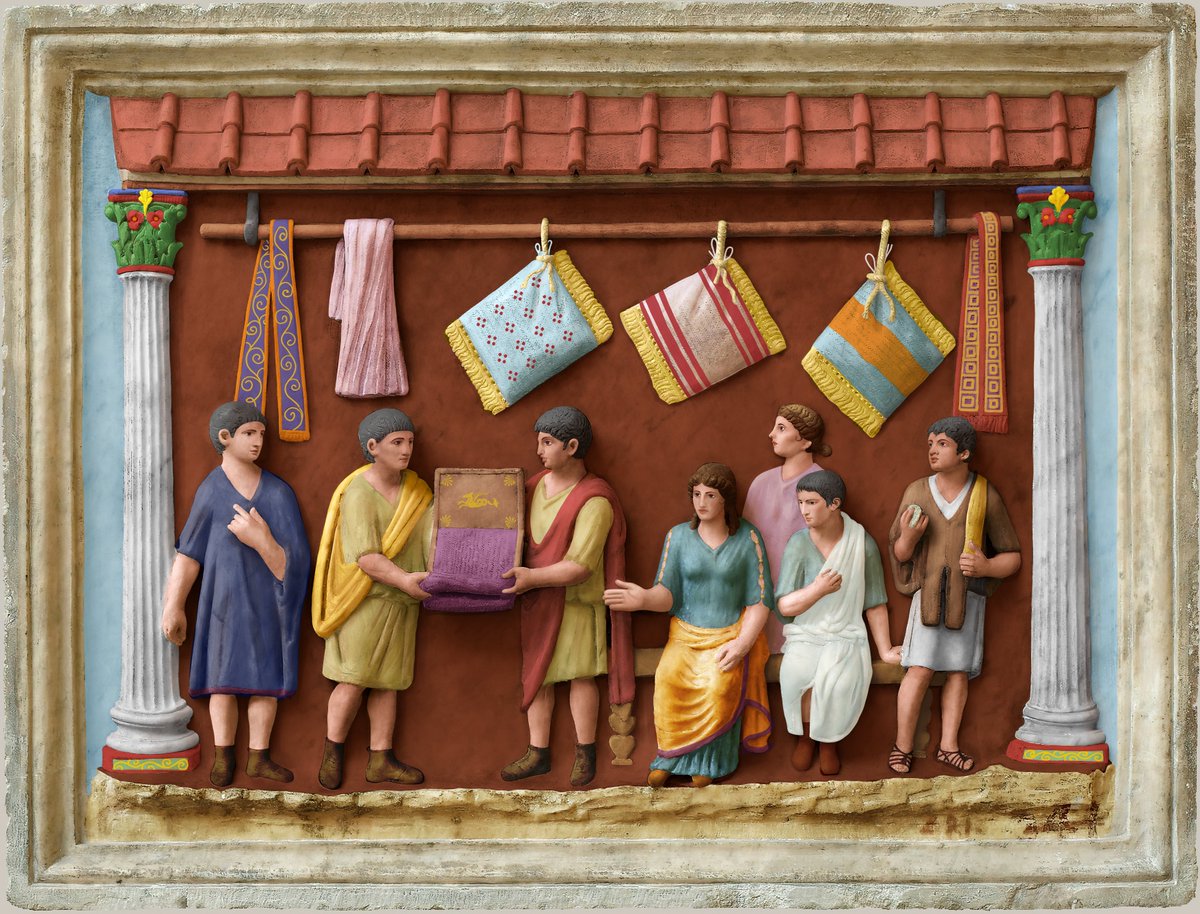
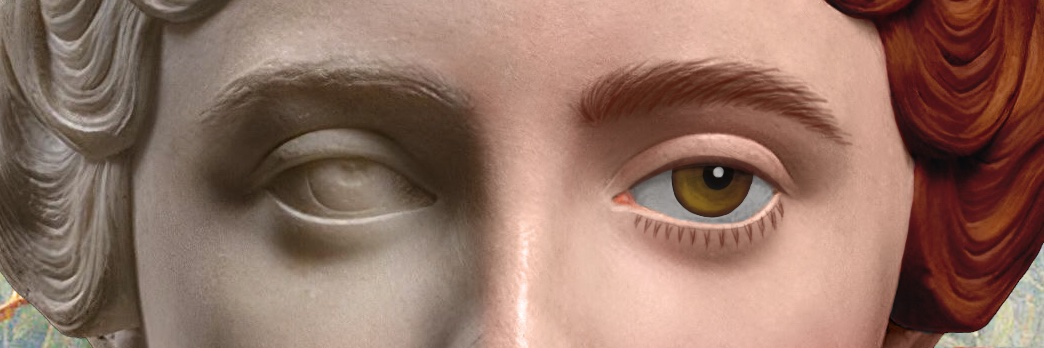
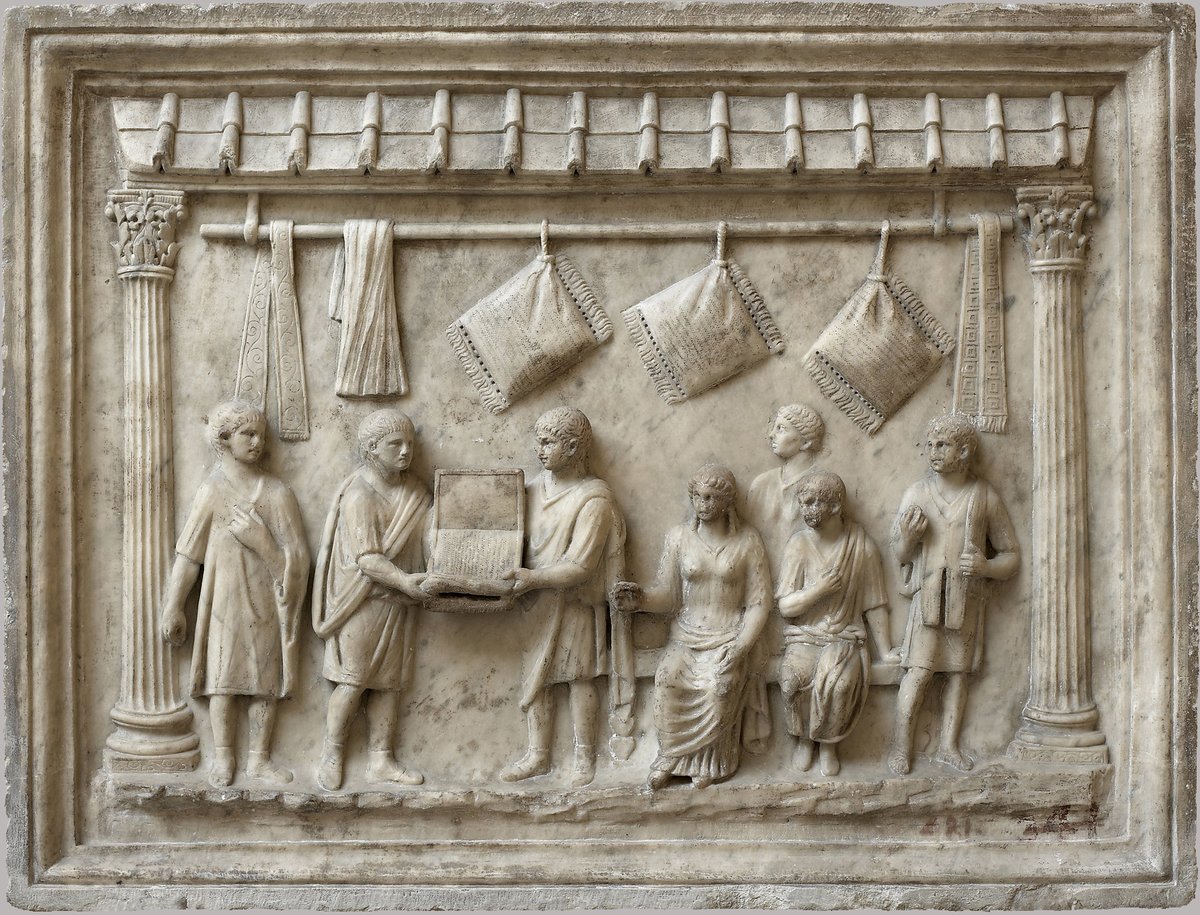
My most difficult creative challenge, I present the #polychrome version of this ca. 50 AD Roman funerary relief, showing the deceased's pillow shop. *Many* thanks to @DrNWillburger for all her time and help on research and for the original image! #Uffizi#polychromy 1/
@ilinterpaint Yes, many of these finds from a century or two ago weren’t well published, if at all, and so rediscovering them seems to be happening more often these days. Others were only partially excavated, frequently by amateurs (sometimes by pros), so it’s valuable to return to them.
@ilinterpaint I noted the location, so wasn’t surprised by the archaistic Etruscan influences on this wonderful statuette. And it’s always worth contacting museums about potential errors in scholarship - I did just that last week, and the museum has been gracious enough to change their info.
@BrontBhangra You’re using an edge case as a primary example. Many private collectors loan to museums when they want to increase the value of their artifacts. The vast majority of ancient artifacts in private hands have never appeared in museums.
It just makes me want to scream that something like this will be passed into another private collection, and not seen by the public again for many years. It belongs in a museum.
A pesar de llevar más de 25 años comprando arte en el mercado internacional y haber visto de todo, todavía me sorprendo cuando veo salir a subasta piezas tan absolutamente excepcionales como este torso de emperador romano de época Julio-Claudia (s. I a. C.) procedente de una colección particular que @Sothebys sacará a pujas el próximo octubre con un precio estimado de 8.000.000 – 12.000.000 USD
@ColeccionMMoret@Sandor79156914@Sothebys@Livia_en_Roma@NCDrusus38 That’s of course true, but unfortunately in today’s antiquities market, these pieces are treated as chess pieces, an object in which money is safely invested, and stored away until it’s once again put up for auction. Frustrating. Museum’s can’t afford to purchase, usually.
@ColeccionMMoret Hmm. Not me! All I said is that it’s a shame that it’s not going to a museum, which is where I believe it belongs, as opposed to a private collection (ending up in storage at a free hold).
@briannekimmel Wonderful place to stay, and the little village of St. Paul de Vence closes its gates at night to anyone not staying there. Charming, quiet.
@ColeccionMMoret@Sothebys@Livia_en_Roma@NCDrusus38 It’s grotesque that this will undoubtedly go into another private collection. It needs to be in a museum, seen by the public and studied by experts. Instead, it’ll probably be stuck at an airport in a free hold.
This sounds crazy, BUT this week we READ A FULL SCROLL!!
https://t.co/6Jcn13yOQv
It’s PHerc. 1667, aka Scroll 4!
And that’s not all.
We also proved that we can directly see ink in a rescan of PHerc. Paris 4 — Scroll 1 — WITHOUT machine learning…
…and we UNROLLED ABOUT 140 COLUMNS FROM IT.
This was honestly POETIC.
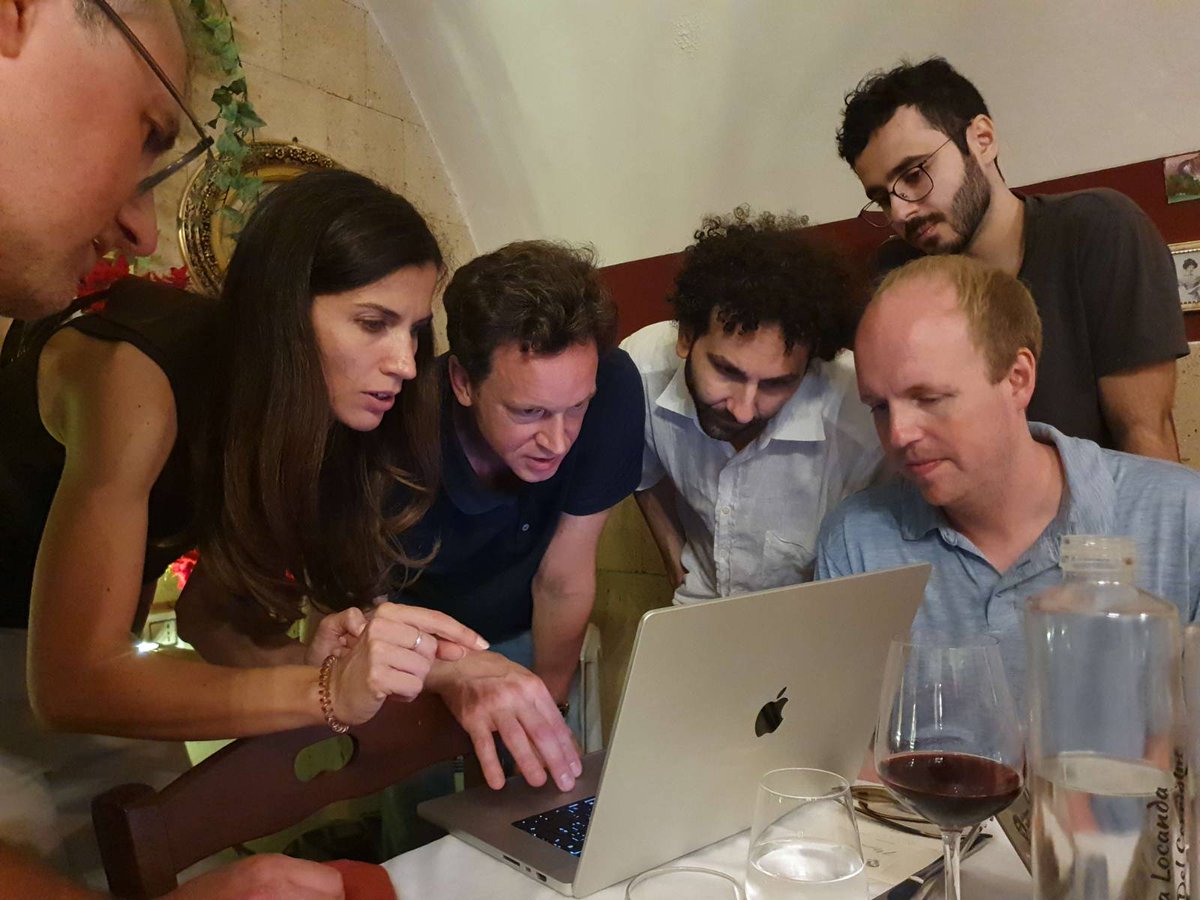
We first saw a glimpse of the results over dinner in Naples, in a restaurant where Caravaggio was stabbed. Federica was so excited — more excited than we had ever seen her — that we abandoned dinner, went back to work, and unrolled the 140 columns until 3 a.m. on a hotel rooftop, with Vesuvius in the background.
The unroll is not perfect.
But guys…
140 columns, with text visible everywhere.
It’s HUGE.
This project has been full of ups and downs, but somehow, at some point, something ALWAYS happens.
We’re starting to think these scrolls have personalities…
…and they want to be read.
@natfriedman has announced a $1M Grand Prize to read another full scroll. Official details coming soon!
@SonnyBobiche@AncientHistorry I’m being too hard on the Luytens castle. It’s not authentic, but has some nice streamline features. But the illegal Polish castle is crap.
@SonnyBobiche@AncientHistorry That illegal castle in Poland was built without permission on public land and it looks like crap. Who knows what actual materials were used? Both castles are crap.
@TriCoastAI Why is ‘the future’ always shown as a colorless void? Color is essential to our nature, and humans have used pigments, colored stone, and dyes, to express ourselves for thousands of years. Sigh …