This is what a rigged system looks like.
If you paid $1 in federal income taxes last year you paid more than Pizza Hut, Taco Bell, KFC, PayPal & Honeywell.
Trump enabled these corporate tax dodgers to shift their profits to offshore tax havens in Malta, Singapore & Switzerland.
Now let’s see if there is any blow back from the Christian Nationalists cause I’m sure they aren’t gonna like it. Cause it’s only about THEIR religious rights
The Supreme Court has struck down Trump’s unlawful tariffs, which we've been paying for about a year now. This is good news for the American people - and it's the latest proof that this president, no matter what he says, can be stopped.
The dominoes are starting to fall. One European prosecutor stated they would release all their findings to the public and wouldn’t cover up to
Protect anyone! Based on what they’ve uncovered, Trump is very guilty. Let Europe be the one to bring down Trump
Christian nationalists keep insisting America was founded as a "Christian nation" by men who all believed exactly like them.
History says otherwise.
Most Founders belonged to churches. But the architects of the republic were a mix.
Jefferson cut the miracles and resurrection out of the New Testament and kept the ethics.
Paine wrote The Age of Reason, a broadside against organized Christianity.
Washington spoke of "Providence" and the "Great Architect" and rarely took communion.
Adams died a Unitarian who rejected the Trinity.
They were not secret atheists. They were culturally Christian men who had watched religious wars tear Europe apart and said, "Not here."
So they wrote a Constitution with no religious test and a First Amendment that bars an established church. The tent was built big on purpose.
The point is not that every Founder could pass an evangelical litmus test. It is that they chose liberty of conscience over religious uniformity.
A confident republic tells that story instead of airbrushing the record to win a culture war.
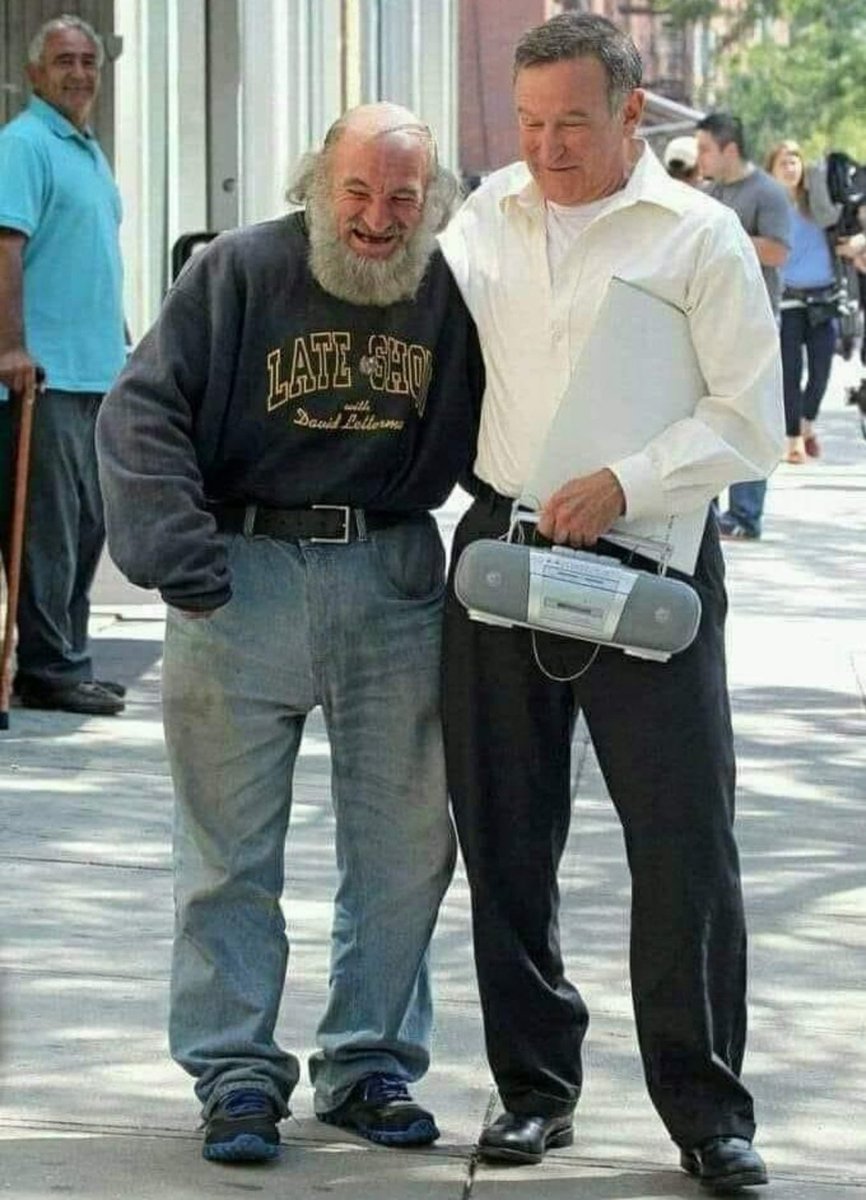
In the early 1990s, while filming Mrs. Doubtfire in San Francisco, Robin Williams made a quiet request.
He asked the crew to hire a few people from a nearby homeless shelter.
No press. No explanation. He didn’t want anyone to know why.
Later, an assistant director revealed that Robin did this on every film. He insisted that at least ten people from shelters be given jobs—catering, cleanup, production help. By the end of his life, nearly 1,500 people had worked because of him.
One man hired on Mrs. Doubtfire said, “He treated me like I’d been there forever. Joked with me every day like we were old friends.”
Robin never talked about it. Others did—after he was gone.
In the late 1980s, after a stand-up show in New York, Robin slipped into a shelter alone. No cameras. He brought pizza, sat on the floor, and listened. One man said later, “He didn’t ask about our mistakes. He asked what made us laugh as kids.”
During Good Will Hunting, he again asked the studio to hire from shelters. One man saved enough to rent an apartment. Robin bought him a suit for job interviews. “Everyone deserves a second act,” he said.
Shelters later discovered large anonymous donations. One Los Angeles shelter only learned the truth when a thank-you letter came back marked “no such address.” A worker recognized the handwriting.
Whoopi Goldberg once said, “He didn’t want applause for helping. He wanted action.”
While filming Patch Adams, Robin visited a shelter in West Virginia carrying boxes of socks, gloves, and coats. When asked why, he smiled and said, “The weather’s turning. Cold doesn’t care if you’re tired.”
Even on tour, he’d walk streets at dawn, handing out coffee and sandwiches. When a guard asked why, Robin replied, “Because this is where people are.”
Robin Williams didn’t perform kindness.
He practiced it—quietly, consistently, without witnesses.
And that may be the greatest role he ever played.
Credit to the rightful owner
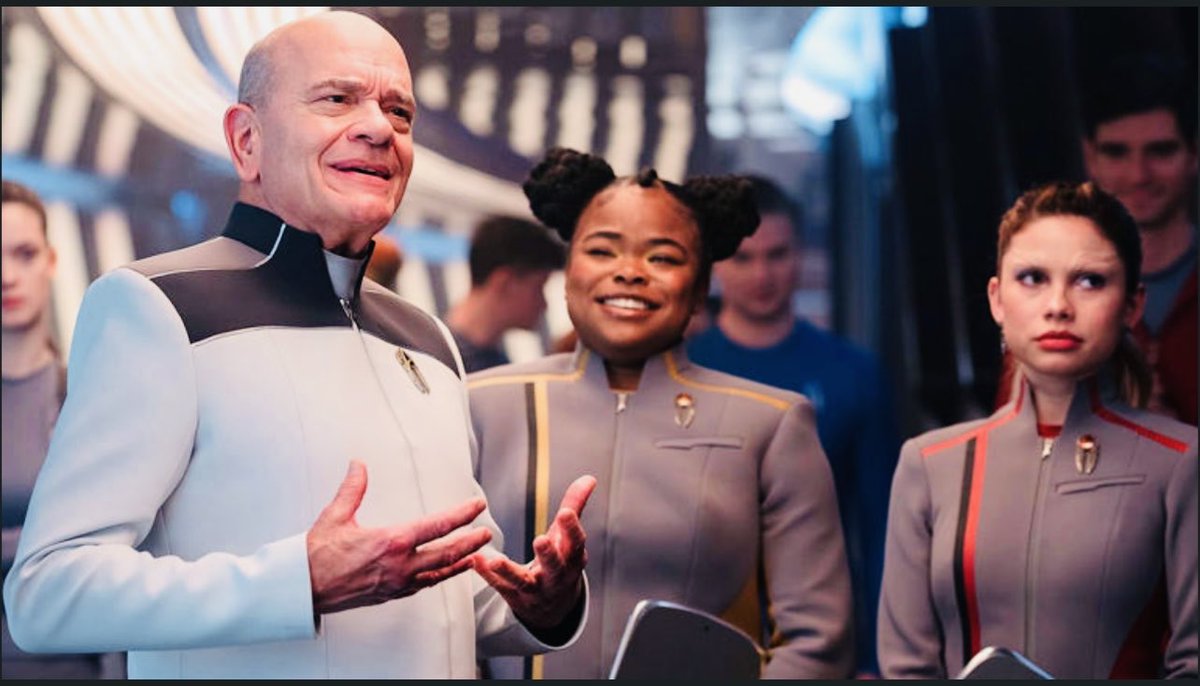
Long before the term existed, Star Trek's heart was "woke" & even though that word has been hijacked & made a cudgel to insult, to ridicule & - at the toxic extremes of social media - to justify prejudice & racism, Star Trek's heart is strong & still beating for those listening
People will still debate what Star Trek "should" be but, if they do some research, they'll discover what the man who created it meant to convey:" I believe that humanity will reach maturity and wisdom on the day it learns to value diversity in life and in ideas.” -- G Roddenberry
BREAKING: Pulitzer Board turns the tables on Trump in defamation lawsuit — demands discovery of ALL his finances and medical records in explosive legal fight.
Donald Trump thought he could bully and intimidate the Pulitzer Prize Board into submission. Instead, the Board just hit back — hard.
According to a new report from Law & Crime, members of the Pulitzer Prize Board are fighting Trump’s lawsuit with sweeping discovery demands that could pry open one of his most closely guarded secrets: his finances. After Trump sued the Board for standing by Pulitzer-winning reporting on his links to Russia — reporting that he despises — the Board is now insisting that if Trump wants to litigate, he’s going to have to play by the rules — and answer uncomfortable questions under oath.
Trump’s lawsuit claims the Board defamed him by refusing to retract awards given to journalists whose reporting detailed his ties to Russia. But the Board isn’t backing down. Instead, its lawyers are demanding broad discovery, including documents and testimony that go directly to Trump’s wealth, business interests, medical history, and credibility — areas that have long proven hazardous terrain for the president.
In court filings, the Board argues that Trump himself made his finances relevant by repeatedly injecting claims about his success, reputation, and damages into the case. In other words: if Trump says the reporting hurt his standing, then the truth about his money matters — a lot.
Legal experts say this is a classic “be careful what you wish for” moment. Trump has spent years attacking journalists, institutions, and independent watchdogs, assuming intimidation would be enough. But discovery cuts both ways. If this case proceeds, Trump could be forced to turn over records he has spent decades concealing and sit for depositions that can’t be spun away with late-night rants on social media.
The Pulitzer Board’s message is unmistakable: they’re not afraid of Trump, and they’re not rewriting history because he doesn’t like it. The awards were granted, the reporting stands, and now Trump may have to answer — in a courtroom, not on Truth Social.
This legal counterpunch also exposes the deeper irony of Trump’s crusade. A man who claims to champion “free speech” is trying to punish journalists for doing their jobs — while crying victim when those journalists, and the institutions that defend them, refuse to cave.
If Trump thought this lawsuit would intimidate the press, it may end up doing the opposite. By opening the door to discovery into his finances and credibility, he’s handed his critics exactly what they’ve been asking for: accountability.
And this time, it won’t be decided by a rally crowd or a rage post — it’ll be decided under oath.
Please like and share if you can’t wait to see how this turns out!
During the shutdown, Trump could find $40 billion to bail out Argentina & $300 million for a ballroom to host dinner parties with billionaires, but he won’t tap emergency funds to prevent millions of American kids from going hungry?
How cruel is that?
This year, Trump’s Big Beautiful Bill gave:
Google an $18 billion tax break.
Amazon a $16 billion tax break.
Microsoft a $12 billion tax break.
Facebook an $11 billion tax break.
Now, they’re writing checks to Trump for his $300 million ballroom.
Gee, I wonder why?
American Taxpayers will loan you money to go to college and drop out the first semester.
Start a business that fails within the year.
Buy a house that you can’t afford to keep up.
But if you get into a horrendous car wreck and can’t afford your healthcare insurance deductible…
Thoughts and Prayers to You.
A message from a Kindergarten teacher:
After forty years in the classroom, my career ended with one small sentence from a six-year-old:
“My dad says people like you don’t matter anymore.”
No sneer. No malice. Just quiet honesty — the kind that cuts deeper because it’s innocent. He blinked, then added, “You don’t even have a TikTok.”
My name is Mrs. Clara Holt, and for four decades, I taught kindergarten in a small Denver suburb. Today, I stacked the last box on my desk and locked the door behind me.
When I started teaching in the early 1980s, it felt like a promise — a shared belief that what we did mattered. We weren’t rich, but we were valued. Parents brought warm cookies to parent nights. Kids gave you handmade cards with hearts that didn’t quite line up. Watching a child sound out their first sentence felt like magic.
But that world slowly slipped away. The job I once knew has been replaced by exhaustion, red tape, and a kind of loneliness I can’t quite describe.
My evenings used to be filled with construction paper, glitter, and glue sticks. Now they’re spent filling out digital reports to protect myself from angry emails or lawsuits. I’ve been yelled at by parents in front of twenty-five children — one filming me with his phone while I tried to calm another child mid-meltdown.
And the kids… they’ve changed too. Not by choice.
They arrive tired, anxious, overstimulated. Their tiny fingers know how to swipe a screen before they can hold a crayon. Some can’t make eye contact or wait in line. We’re expected to fix all of it — to patch the gaps, heal the trauma, teach the curriculum, and document every move — in six hours a day, with resources that barely fill a drawer.
The little reading corner I once built, full of soft beanbags and paper stars, was replaced by data charts and “learning metrics.” A young principal once told me, “Clara, maybe you’re too nurturing. The district wants measurable results.”
As if kindness were a weakness.
Still, I stayed. Because of the small, holy moments that no spreadsheet could measure —
a whisper of, “You remind me of my grandma.”
a shaky note that read, “I feel safe here.”
a quiet boy finally meeting my eyes and saying, “I read the whole page.”
Those tiny sparks were my reason to keep showing up.
But this last year broke something in me.
The aggression grew sharper. The laughter in the staff room turned to silence. The light went out of so many eyes. I watched brilliant teachers — my friends — vanish under the weight of burnout, their joy replaced by survival.
I felt myself fading too, like chalk on a board that’s been wiped one too many times.
So today, I began my goodbye. I pulled faded art off the walls and tucked thirty years of handmade cards into a single box. In the back of a drawer, I found a letter from a student from 1998:
“Thank you for loving me when I was hard to love.”
I sat on the floor and cried.
No party. No applause. Just a handshake from a young principal who called me “Ma’am” while checking his notifications.
I left my rocking chair behind, and my sticker box too. What I carried with me were the memories — the faces of hundreds of children who once trusted me enough to reach out their hands and learn. That can’t be uploaded. It can’t be measured. It can’t be replaced.
I miss when teachers were partners, not targets. When parents and educators worked side by side, not in opposition. When schools cared more about wonder than numbers.
So if you know a teacher — any teacher — thank them. Not with a mug or a gift card, but with your words. With your respect. With your understanding that behind every test score is a heart that cared enough to try.
Because in a world that often overlooks them, teachers are the ones who never forget our children.