Imagine if Bobi Wine (@HEBobiwine) woke up one day and challenged every young Ugandan to make at least one social media post about tourism every single day for the next 365 days.
Imagine millions of young people consistently promoting our national parks, wildlife, cultures, traditional foods, beautiful landscapes, weather, historical sites and tourism experiences.
Do you realise what that could do to our economy?
Our tourism industry could grow tremendously. More tourists would discover Uganda, more businesses would emerge, more people would get employed, and more investors would become interested in our country.
When Ugandans have money, they can afford better education, access better opportunities and make more informed decisions.
When people are educated, they understand their rights, question systems, demand accountability and participate meaningfully in shaping their country.
An educated population doesn't just complain about change; it understands how to create it.
Tourism is not just about travelling. It is about employment, education, investment, culture and economic transformation.
Sometimes, we don’t need billions of shillings to start changing our economy. We need a coordinated movement, consistency and a generation willing to tell Uganda’s story to the world.
@wekesa_amos@j1omega Your contribution to tourism in Uganda is out of question, Amos. Your submissions on economic growth and governance are out of touch with reality!! See you in our boardroom soon.
@j1omega@wekesa_amos Look at this low-life, ass liking Wekesa or PLU is not getting you the posho you desperately need. You imbeciles think everyone who used his head to think is NUP? Please for the love of the nation don’t have kids, let your type of stupidity end with you.
@wekesa_amos Sitting on boards has nothing to do with intelligence! You are just nominated by virtue of your business success and not your intellectual ability! I bet I hold a more intellectual debate with your sons on these matters.
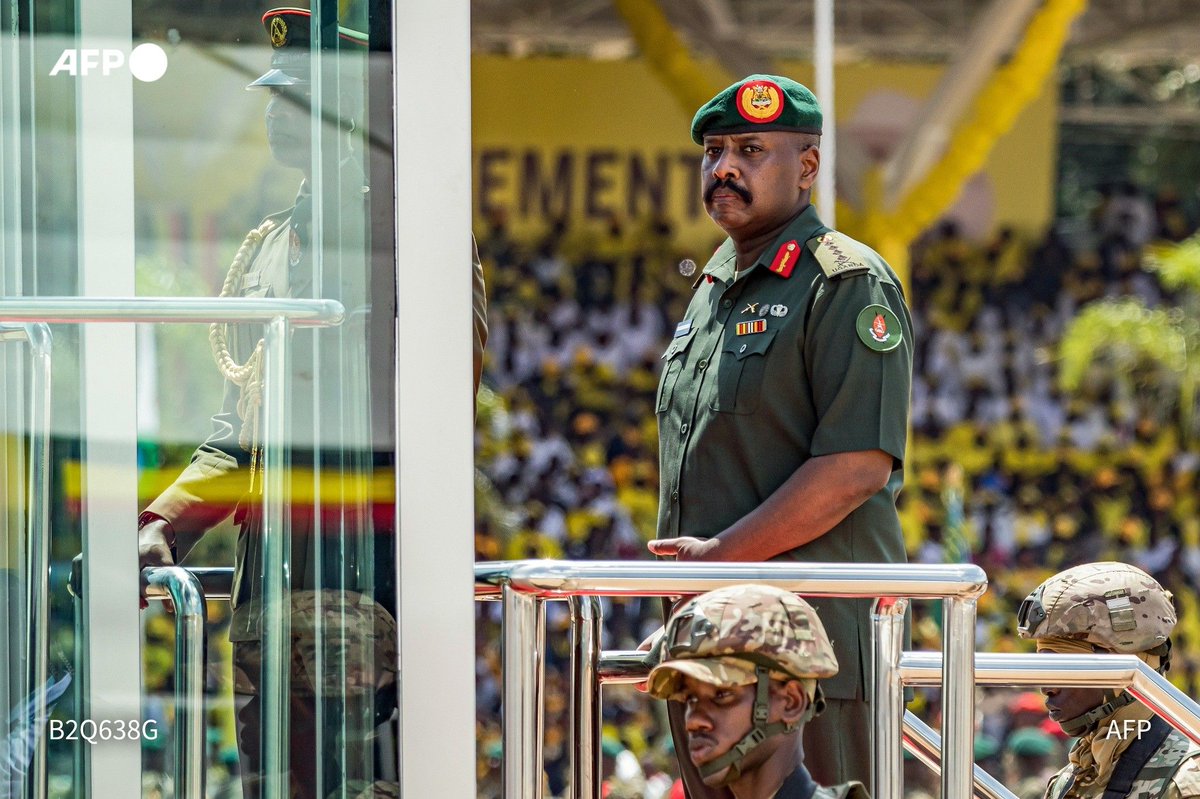
Ugandan president's plan to appoint his son, known for boasting of kidnapping and torturing rivals, as his successor, faces pushback by party leadership
https://t.co/fbGevmAr5f
UGANDANS
Some of our brothers and sisters have left and camped in the homes of our neighbors and they are shouting over the fence , since you have problems in that home, burn it down!
And we are shouting, we are going to do so meanwhile, they enjoying bread and butter, sausages. Once in a while they gather in one of the neighbors home and drink and make merry!
They enjoy our suffering from a far!
YOU LYING DIRTY HINDU!!!! Indians were paid in cash for their businesses, historical archives exist how those parasites came back year later to claim their “lost” property.
Indians were not expelled but left voluntarily because those rats wouldn’t take up citizenship.
Indians were thrown out from Uganda in August 1972 on orders from President Idi Amin Dada. Indians had transformed Uganda into the most prosperous country in all of Africa. Awon'go Idi Amin Dada Oumee, who had come to power on 25ᵗʰ January 1971, felt that they were 'blood suckers'.
Idi Amin claimed that on the 4ᵗʰ of August he had dreamt that Indians should be expelled. On the 8ᵗʰ of August he issued the necessary orders. Indians were given 90 days to pack up and go, leaving behind all their wealth and possessions. A person was allowed to carry only one hand bag with them as they left Uganda. They were permitted to carry only £50 pound with them. Everything else was confiscated, all jewellery, all money was physically taken away. Businesses which had been set up by Indians were handed over to supporters of Idi Amin.
Before expelling Indians from Uganda, Idi Amin had had killed most of the officers of the Ugandan army belonging to the Acholi and Lango ethnic groups. He was well known for indulging in violence against anyone he disapproved of.
As a result, Indians did not wait to argue with him. They fled immediately. Those who delayed fleeing were shot, their women raped.
About 90,000 people were thrown out of Uganda. All of them had been born in Uganda.
About 38,000 Indians arrived in Britain to a life of poverty and want. Some of the local governments, such as that of Leicester, issued public notices asking Indians to not come to Leicester which already had a large Indian population.
Why did Idi Amin throw out Indians from Uganda? As mentioned earlier, Idi Amin declared that he had been given a divine message in a dream to expel Indians from Uganda. In the explanations for his actions which he gave later he called Indians 'blood suckers' who were draining the Ugandan economy. Once Indians left, the Ugandan economy was ruined. Uganda became one of the poorest countries of Africa.
Did Idi Amin face any consequences for his actions? No, Idi Amin did not face any consequences for his actions. He remained President of Uganda for five more years till on 11ᵗʰ April 1979 he was finally ousted after a mutiny by a section of the Ugandan Army resulted in a military intervention by Tanzania. During his brutal rule Idi Amin had managed to kill over 500,000 black Africans. But when he was ousted the new government thought it fit to let him flee to Saudi Arabia rather than seek revenge upon him.
What happened to the Indians who were expelled? While the British government tried its best to stop the flow of Indians into Britain, the Jews of Britain welcomed them and provided them much needed support. The displaced Indians rebuilt their lives, much in the manner of Indians when they are persecuted. One such was the father of Zohran Mamdani, the young man who was elected Mayor of New York. Priti Patel, the British politician active in Conservative Party is another. Then there is the Jatiana family who became one of the richest families in UK with a wealth estimated to be over £650 million. The Madhvani family, led by Manubhai Madhvani too needs mention.
The majority of those forcibly displaced did not make it so big. Many had to struggle to make two ends meet. A very large number had to take up low paying jobs which required hard labour. But, they all remained resilient. None of them took to a life of crime nor did they commit suicide. About 300 of them did accept the apology of President Museveni in 1997 and set up businesses once again but, this time only in Kampala.
Pic. Indians getting off the flight from Uganda at Stansted airport on 18 September 1972. Photographed by P Felix who then worked for the Daily Express.
Courtesy Indian history fb post
@MunguciHenry@JOHNAMOTI Exactly all tribes encourage their children to marry from their tribes, stay in their region, speak English but not a neighbor’s language etc! Travel around and experience this grim reality.
@Ree_chill@angel_timsy If the experience was about Westerners or Baganda they would have been more happy to engage. In the end we shall all agree all people are tribalistic, no saints as they want to be treated😹😹