It’s hard to think of a richer source of human behaviors, attitudes and motivations than a 2-hour viewing of a film.
From the Wizard of Oz to Whiplash, in this deck below I share 50 Insights from Hollywood.
https://t.co/y0P6RKrxif
People forget the key principle of moneyball. It’s not about on base percentage, launch angles, etc… it’s about finding market inefficiencies. Once it was discovered that these factors were undervalued, they lose their edge because everyone pays up for them. Maybe the Rays found an inefficiency at the other end. No different than how a stock of a great company might be a great investment at one price but a bad investment at another price.
the ABS system sits at the vexed crossroads of several highly charged dynamics in our collective life. successful challenges (by your team) feel amazing, like a long-awaited blow against capricious and unearned authority; but the overall existence (and putative infallibility) of ABS inevitably ignites anxieties about the superfluity of human judgement. and yet, the challenge system relies on human hubris, intuition, boldness, and risk. it's a very compelling encounter between populism and the machine.
The 1950s moment for our brains is happening right now, and Cal Newport might be the first person to name it correctly.
In the 1950s, doctors smoked. Jogging was considered eccentric. The idea that you needed to exercise for health was fringe science. Then a handful of researchers started publishing data on heart disease and sedentary lifestyles, and within 30 years the entire country built a $100B fitness industry from scratch.
Newport's NYT argument: seven hours of daily screen time is the cognitive equivalent of smoking two packs a day, and we're treating it with the same shrug the '50s gave cigarettes. Normal. Maybe even productive.
The reading number is the one that should stop people cold. The average American reads 15 minutes a day. Down from 23 minutes in 2003. The average TikTok session is 95 minutes. We replaced the single activity most correlated with sustained cognitive ability with the single activity most correlated with fractured attention, and we did it in less than a decade.
Newport wants a few dozen book pages a day to become the new 10,000 steps. Baseline cognitive maintenance. The problem: steps are easy to gamify. Your watch buzzes, the ring closes, you get the dopamine hit of completion. Reading has no built-in feedback loop. No streak counter guilt-tripping you at 9pm.
The fitness revolution worked because the economics aligned. Gyms made money. Nike made money. Fitbit made money. A cognitive fitness revolution has the opposite economics. Every company profiting from your attention has a direct financial incentive to make sure you never sit quietly with a book.
That's why this one will be harder than getting America to jog.
Death of the Greatest!
#OnThisDay in 2001, Sir Don Bradman passed away in Adelaide.
Test Average 99.94
Test Hundred every 2.75 innings
Test Double-Hundred every 6.66 innings
Strike Rate of 74.85 in Bodyline Series
Most Runs in a Test Series - 974
First Class Average 95.15
The BBC just released a new adaptation of Lord of the Flies, the classic novel by William Golding. It's beautifully made, but it's still telling the wrong story.
A few years ago, I went looking for the *real* Lord of the Flies. I wanted to know: has it ever actually happened? Have kids ever been shipwrecked on a deserted island?
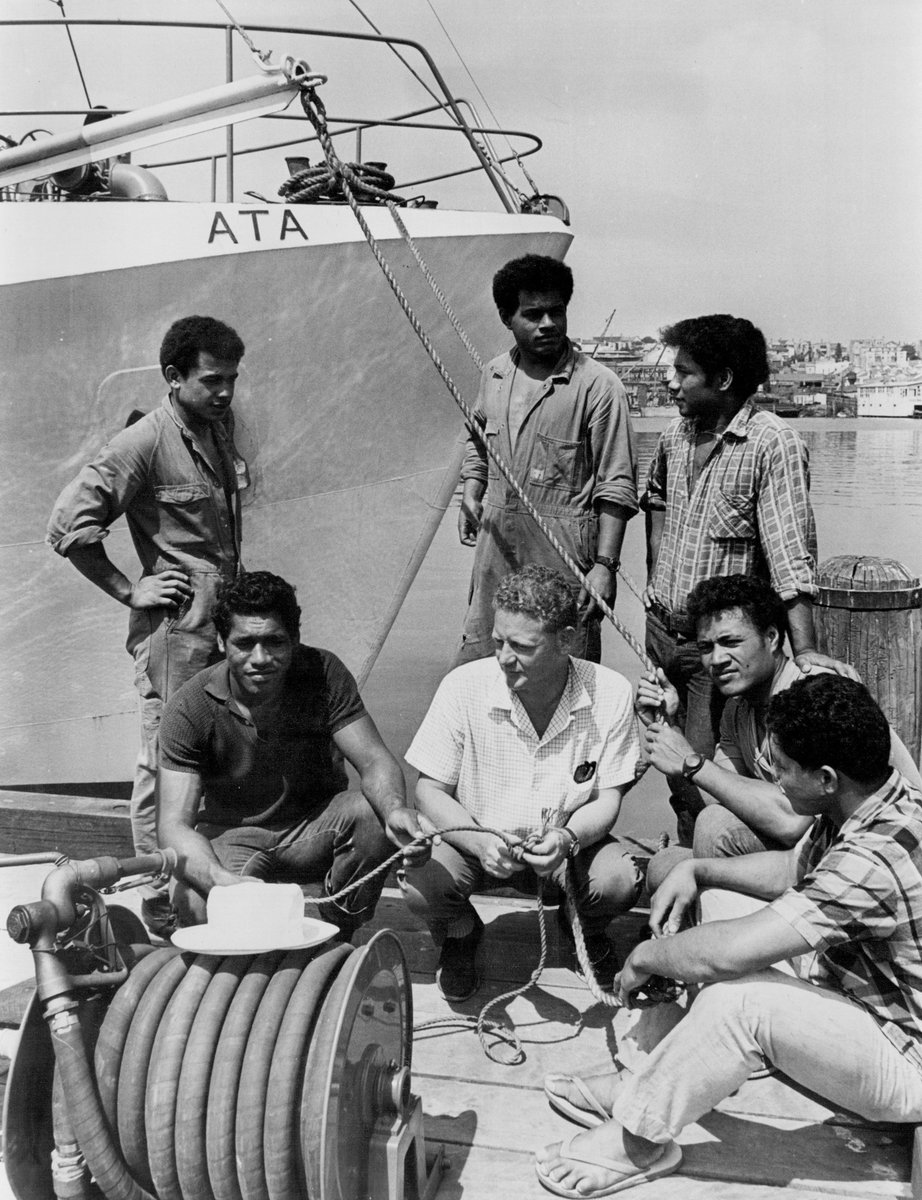
It took me a year of research, but I found it. In 1965, six boys from a boarding school in Tonga stole a boat, got caught in a storm, and drifted for eight days without food or water. They washed up on 'Ata, a remote, uninhabited island in the Pacific. They stayed there for 15 months, and what happened on that island was the exact opposite of William Golding's novel.
These boys set up a small commune. They built a food garden, stored rainwater in hollowed-out tree trunks, created a gym with improvised weights, and built a badminton court. One of them, Stephen (who would later become an engineer) managed to start a fire using two sticks. They kept it burning the entire time.
Of course they fought too. But then they argued, they had a rule: go to opposite ends of the island, cool down, then come back and apologize. As one of them told me: ‘That's how we stayed friends.’
Back home, everyone assumed that the boys – Luke, Stephen, Sione, David, Kolo and Mano — were dead. When they were finally discovered by an Australian captain named Peter Warner, he radioed their names to Tonga. After twenty minutes, a tearful response came back: ‘You found them! These boys have been given up for dead. Funerals have been held. If it's them, this is a miracle!’
Peter commissioned a new ship, hired all six boys as his crew, and named the boat the Ata, after the island where he found them. They remained friends for the rest of their lives – Peter and Mano even became soulmates. I tracked them down, and it became one of the central chapters of my book Humankind.
Here's what struck me most: William Golding (the author of Lord of the Flies) was a troubled man, an alcoholic who once said ‘I have always understood the Nazis, because I am of that sort by nature.’ I think he was projecting his own darkness onto children. And we turned it into a lesson about human nature that we teach to millions of kids around the world.
I think the real lesson is the opposite. When real children found themselves alone on a real island, they didn't descend into savagery. They cooperated, they took care of each other, they survived.
I'm not saying that the Tongan castaways were representative of all kids everywhere. But I am saying that every kid who has to read or watch the fictional Lord of the Flies also deserves to know what actually happened when it played out in real life.
Stories are never just stories. We become the stories that we tell ourselves.
Congratulations to the Super Bowl champion @Seahawks! This defense was special. MVP Kenneth Walker was dominant. And Sam Darnold gave us one of the best comeback stories in a long time. Enjoy the celebration.