How African countries can avoid the middle-income trap? In this paper, we look into the theory behind the middle-income trap and highlight stories from different countries. Honoured to have a foreword by @DrArkebe, a seminal figure of industrialisation.
https://t.co/ox89yfrw16
🔴 @ChemaTriki, Managing Director of @GrowthTeams, underscores that the #GrowthSummit2026 is the output of nine months of work with different countries contributing to its realization.
Most successful cases of economic development in modern history have involved a surge in exports.
Now, we can understand export-led development much better thanks to the new Export Boom Atlas, which maps 82 export booms.
Super excited to see this out!
Link in replies.
Check out the new *Export Boom Atlas* from @GrowthTeams–an interactive map of 80+ export booms from developing economies, showing how countries from Vietnam to Morocco to Costa Rica achieved rapid sector-level growth that created jobs and prosperity.
🌍 https://t.co/VBWpaAXYTN
It's a fallacy to think that most poor countries can't do industrial policy because they don't have the state capacity to do it.
Building state capacity is a process. In 1950, practically everyone said that East Asian countries lacked state capacity. Look where they are now.
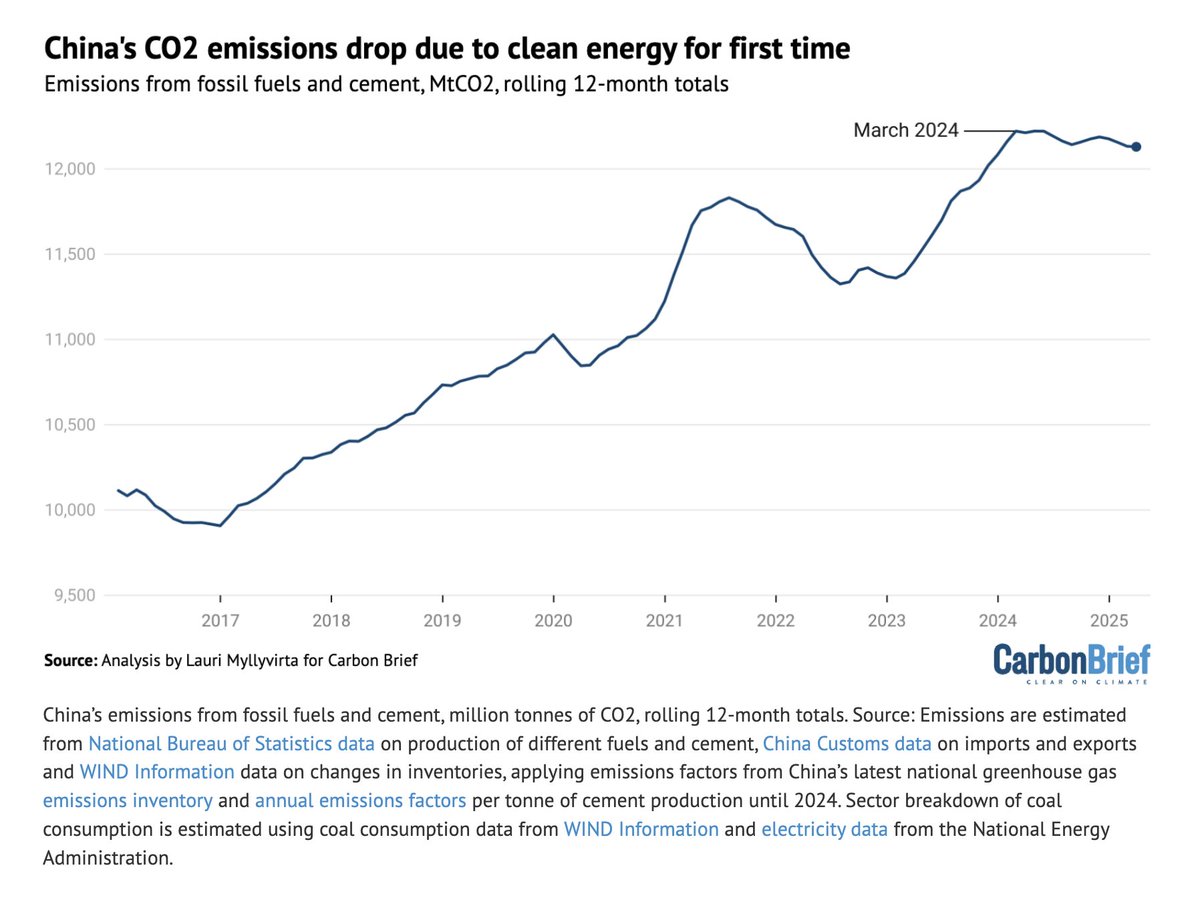
China is doing exactly what any developing country should do: utilise industrialisation to build up capabilities in clean energy.
China’s emissions are now *reversing* amidst rapid growth in energy demand.
The reason: huge investments in clean energy.
I was once advised not to use the term "unequal exchange" in connection to North-South relations because I would be perceived as too radical and wouldn't be taken seriously by most economists.
Piketty's new paper: "Unequal Exchange and North-South Relations"
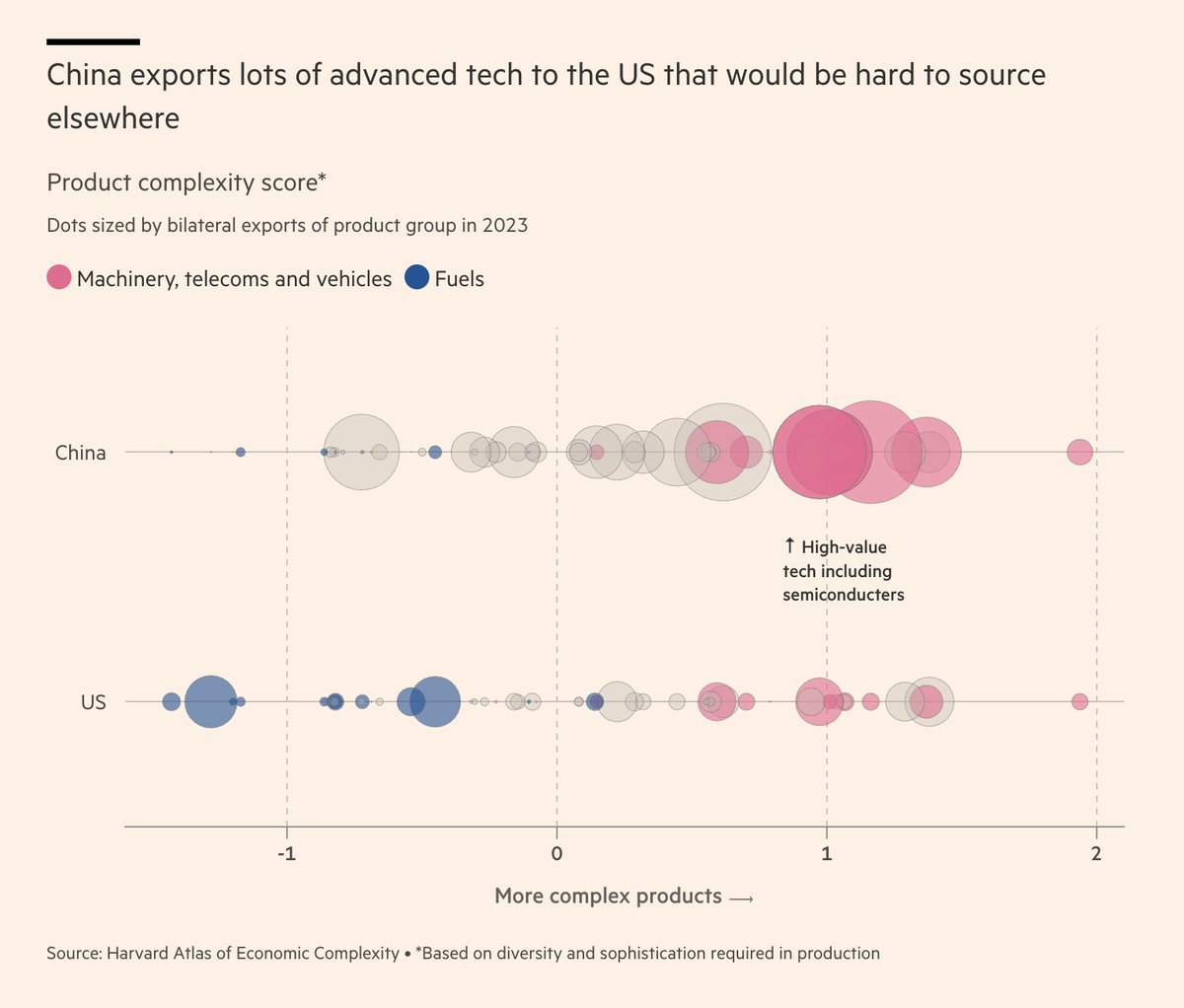
Xi has more leverage than Trump in the trade war.
The reason is pretty simple: China mainly exports high-tech goods to the US, while the US mainly exports low-tech goods to China.
China can replace its imports from the US more easily than the other way around.
Well, there it is.
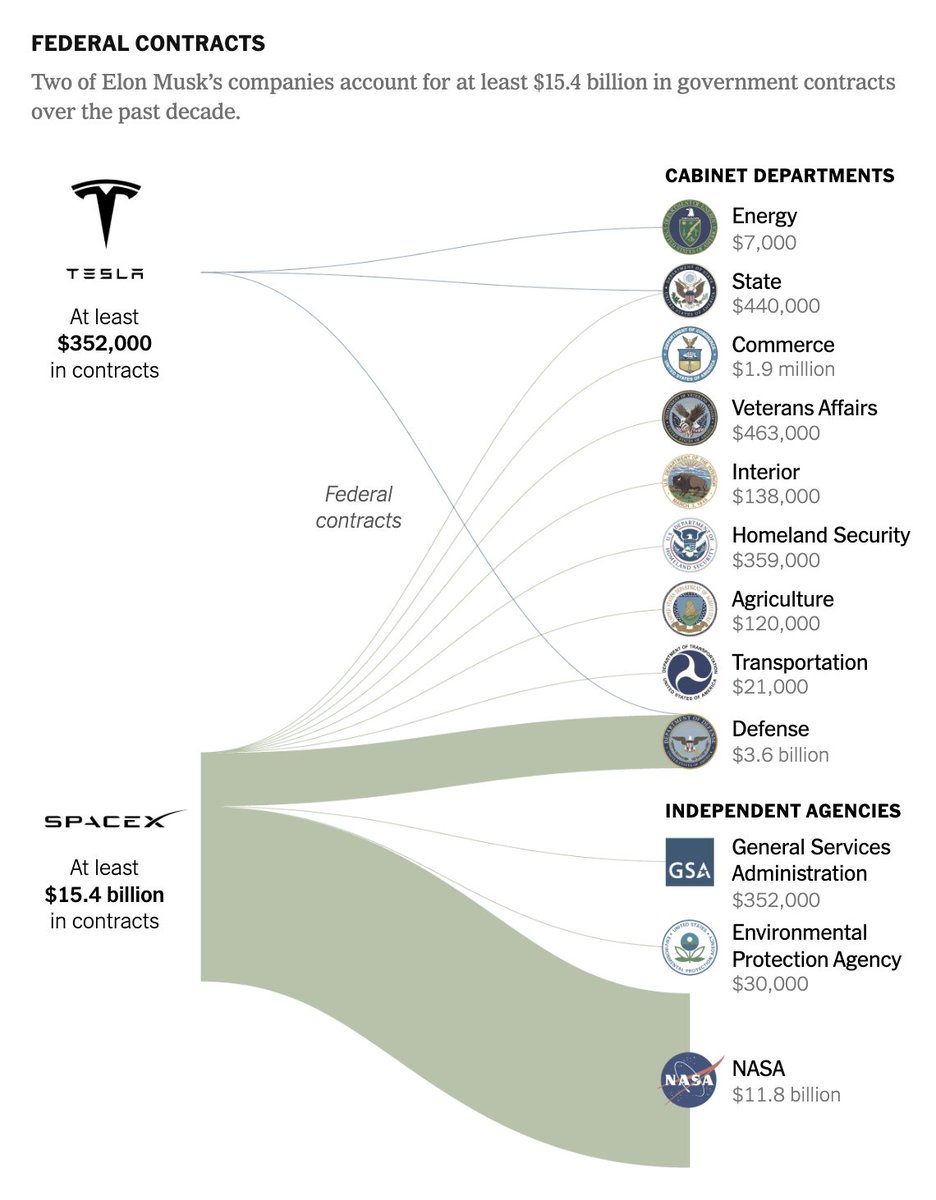
The man who received more than $15 billion in government contracts over the past decade has been selected to lead the new Department of Government Efficiency (DOGE).
I can't think of a larger conflict of interest.
How do we build new generations' faith in humanity as we watch it unravel in many places like Gaza and as a racist, misogynistic & unstable leader rises again?
In times like these, simply being a balanced & thoughtful human feels like an achievement.
#USElection2024
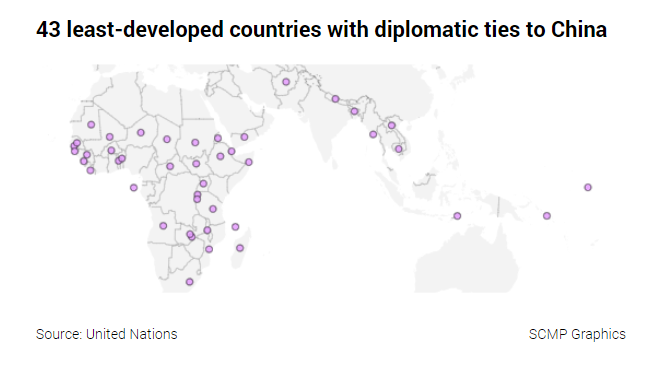
China will eliminate tariffs for goods from countries classified as the world’s "least developed" starting December 1, 2024. Of the 43 countries that stand to benefit, 33 are in Africa. https://t.co/rpAEV79tyJ via @scmpnews
I cannot stress this enough: high investment rates in productive sectors of the economy, such as manufacturing, is essential for economic development.
This is essentially what China has been doing, and keeps doing.
Elon Musk's companies have received more than $15.4 billion in government contracts over the past decade.
Yes, this is the man who publicly scorns government intervention and embraces free-market capitalism.
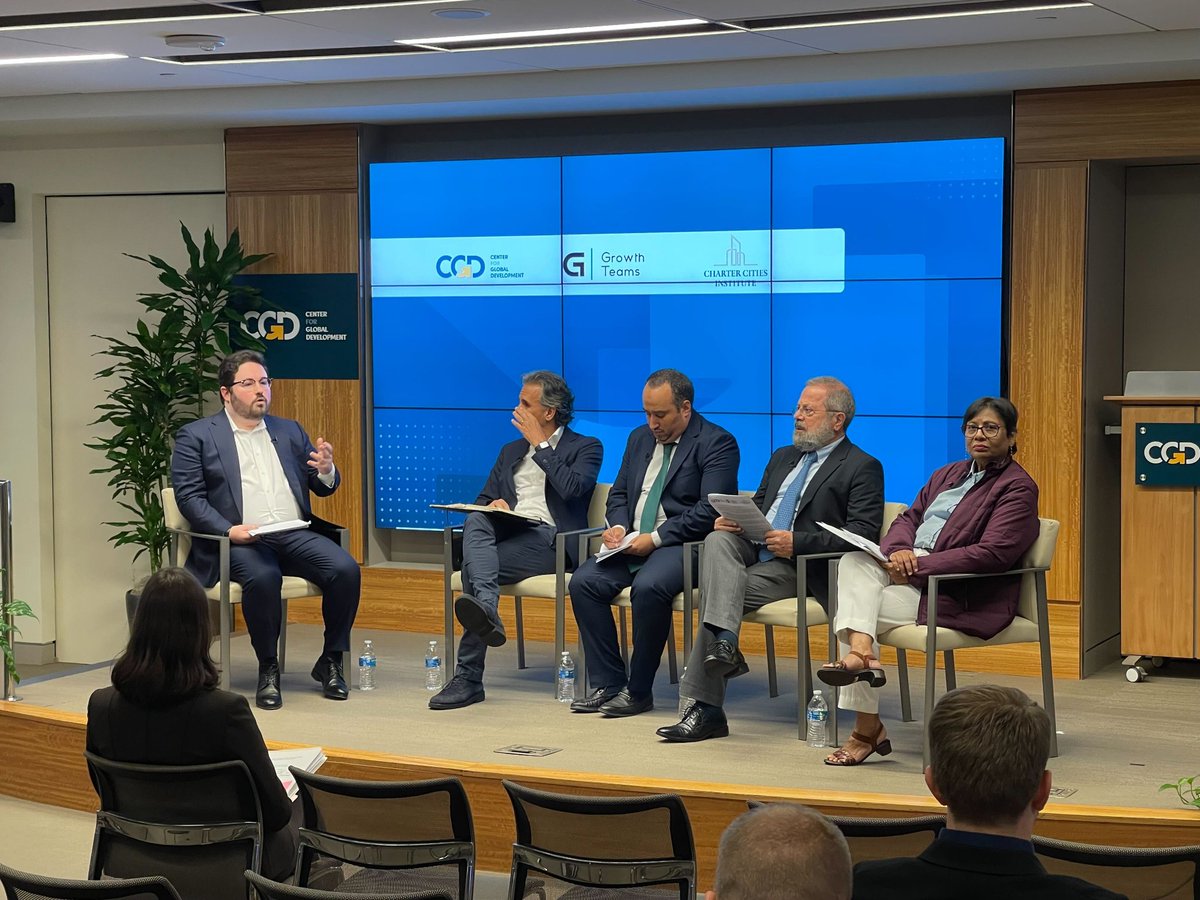
Last week, @kunalsen5 was speaking at the first ever #GrowthSummit. The event recognizes the need to reassert economic growth and structural transformation as central goals of development. More: https://t.co/a7sJCHLQ2B
Great discussion on gov/biz cooperation, SEZs and infrastructure, and urban expansion with
Piero Ghezzi, Fmr Production Minister, Peru
@benomark2000, Senior Advisor, MoF of Morocco
Aradhna Aggarwal, Senior Advisor to @ncaer
Solly Angel, Urban Expansion Director at @NYUMarron
“Growth can lift people en masse out of poverty and misery. Indeed, it’s the only thing that ever has.”
—Adnan Khan @FCDOGovUK, quoting the Growth Commission @CCIdotCity@CGDev@GrowthTeams@open_phil
Mesas Ejecutivas are a “technology”, or methodology, for jointly solving problems that hold back firms, breaking through the “watertight compartments” across government agencies.
—Piero Ghezzi at the #GrowthSummit@CCIdotCity@CGDev@GrowthTeams@open_phil
"If we don't know how to do something, our natural reaction isn't to pretend it isn't important. We didn't pretend polio wasn't important because we didn't know how to cure it. It's extremely important to figure it out."
@LantPritchett at the Growth Summit 🔥🔥🔥
Great points from @kopalo at the Growth Summit:
1) Philanthropists made their money in business—why don't we see more engagement with the private sector in LMICs?
2) Greater decentralization allows cities to promote local economic development and productive urbanization.