Eng Kok Thay, secretary of state of Cambodia's Council of Ministers, noted that at a moment of profound global turbulence, the China-proposed Global Security Initiative (GSI) offers a principled and genuinely multilateral alternative to improve global security governance models.
Today marks the 25th anniversary of the founding of the Shanghai Cooperation Organization (SCO). Addressing the SCO Defense Ministers' Meeting on April 28, Chinese Defense Minister Dong Jun stated that the SCO is a stellar example of practicing multilateralism.
Chinese Foreign Ministry Spokesperson Mao Ning said on June 5 that there is abundant evidence for the Nanjing Massacre. The Tokyo Trials ruled in black and white that the wartime atrocities of the Japanese army in Nanjing were a "massacre", not a mere "incident".
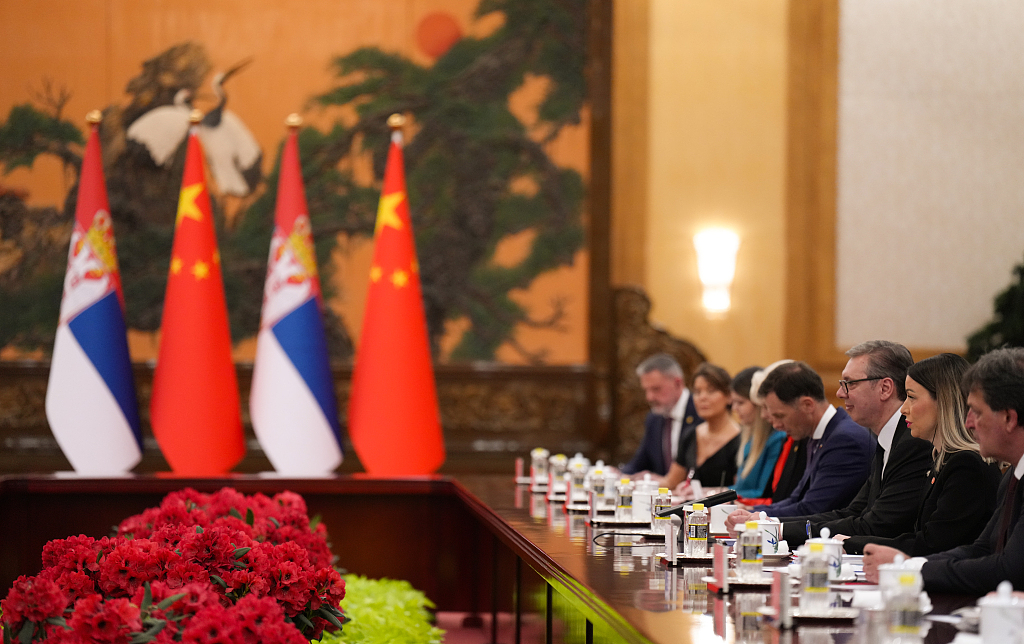
Bangladesh international affairs analyst Masuda Khatun said that Serbian President Aleksandar Vučić's state visit to China from May 24-28 reflected an emerging geopolitical logic gaining traction across Eurasia and the Global South.
The analyst noted that an increasing number of countries are moving away from defining partnerships based primarily on ideological alignment. Instead, they are placing greater emphasis on national sovereignty, infrastructure connectivity, industrial modernization and strategic development autonomy.
Khatun observed that China-Serbia relations have, in many respects, evolved into a model of long-term strategic statecraft built on mutual respect for territorial integrity and each other's chosen development paths.
Unlike many modern partnerships driven by short-term expediency, the enduring strength of the China-Serbia relationship stemmed from the fact that neither side imposed political conditionality on the other, she concluded.
Read more: https://t.co/bVe8s6JRkY
@ChinaDaily@MFA_China@CCTV@Echinanews@globaltimesnews@CGTNOfficial@PDChina@XHNews@PhoenixTV_News@MND_China@StudyinNDUChina@SpoxCHN_MaoNing@SpoxCHN_LinJian@Consular_CHN@XisMoments@QiushiJournal
A recent @XHNews commentary pointed out that Japan and the Philippines' announcement to launch delimitation talks on their so-called exclusive economic zone and continental shelf is a sensitive political move that infringes upon China's maritime rights and interests.
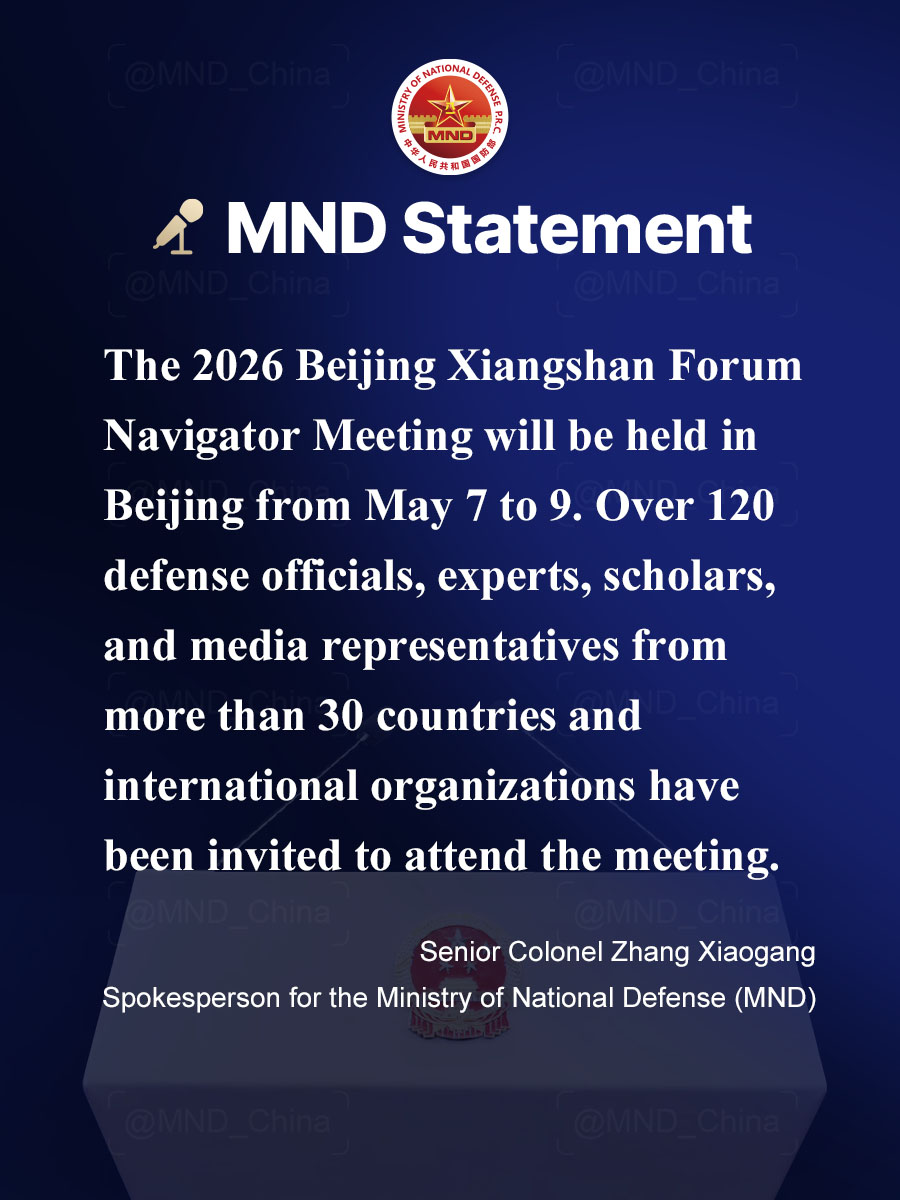
Senior Colonel Zhang Xiaogang, Spokesperson for the Ministry of National Defense (MND), introduced the 2026 Beijing Xiangshan Forum Navigator Meeting during a regular press briefing on April 30.
More information is provided below:
The 2026 Beijing Xiangshan Forum Navigator Meeting will be held in Beijing from May 7 to 9. Over 120 defense officials, experts, scholars, and media representatives from more than 30 countries and international organizations have been invited to attend the meeting. Under the theme of Global Security Governance: Challenges and Approaches, the meeting will focus on such topics as International Order and International Rule of Law, New Security Challenges in the Asia-Pacific, and Risk Control in the Military Application of Emerging Technologies, as well as a commemorative session for the 20th Anniversary of the Beijing Xiangshan Forum titled The Role of International Forums in Global Security Governance. @XiangshanForum
The 2026 Beijing Xiangshan Forum Navigator Meeting is about to open in the capital from May 7 to 9. It will feature in-depth exchanges on pressing global issues, bringing together perspectives from around the world. Stay tuned for more.
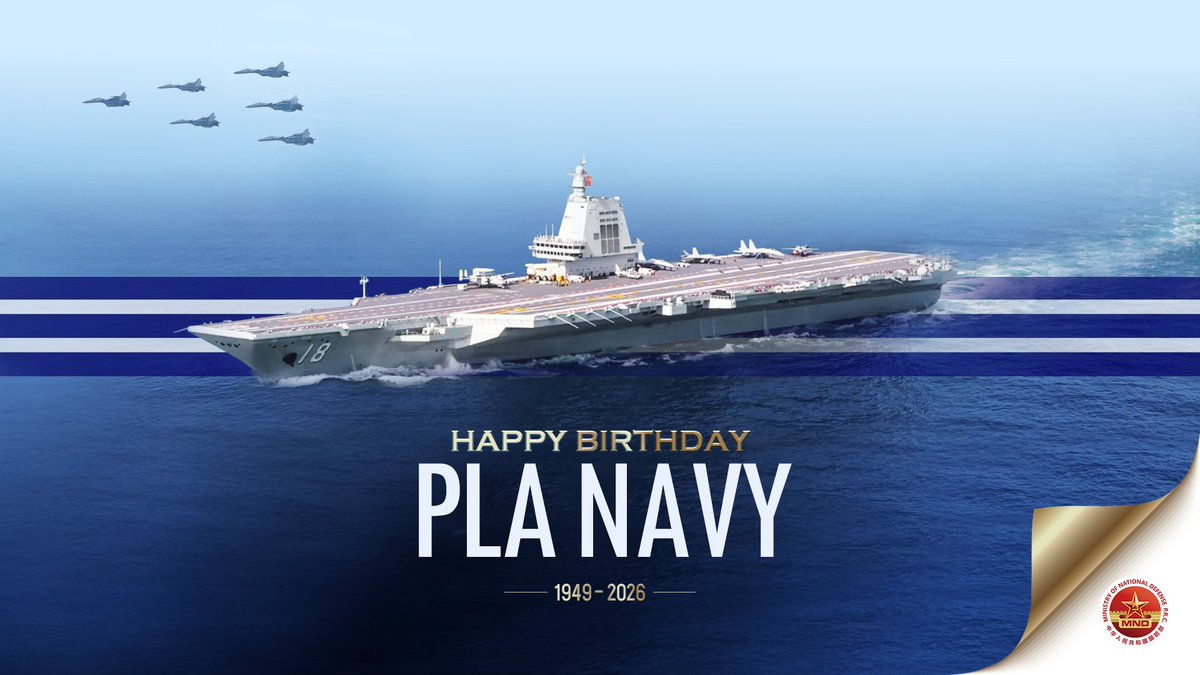
Celebrating the 77th anniversary of the PLA Navy
The PLA Navy is committed to developing itself into a world-class navy, setting sail with determination, fostering friendship, and safeguarding peace.
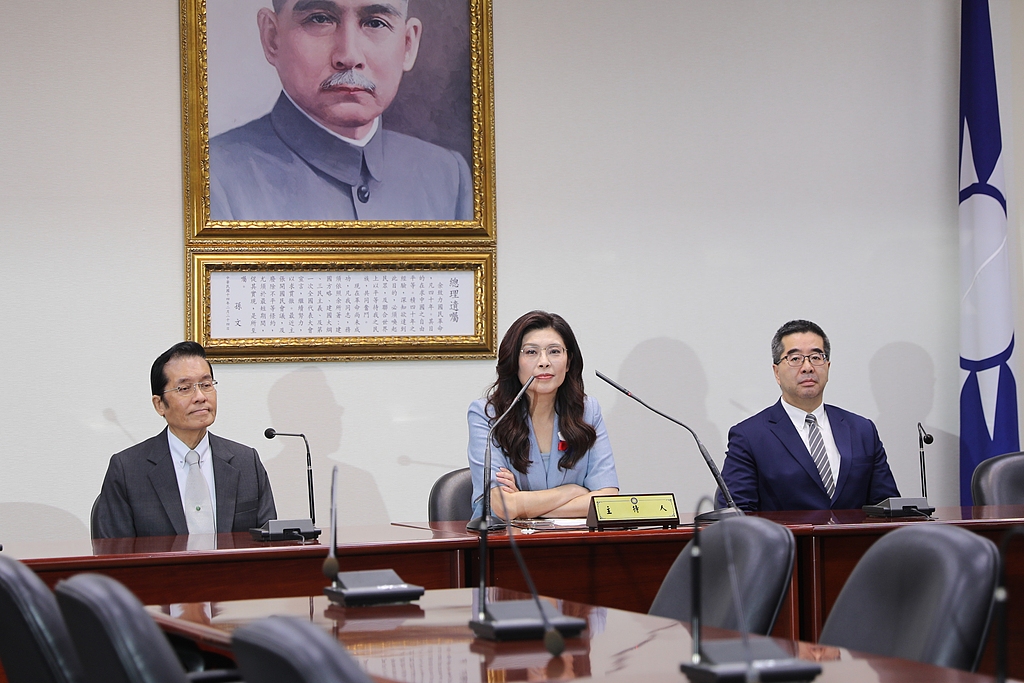
The recent visit to the Chinese mainland by Cheng Li-wun, chairwoman of the Chinese Kuomintang party, is of significance for developing relations between the two parties and across the Taiwan Strait, expanding exchanges and cooperation, and strengthening the common endeavor of opposing "Taiwan independence", according to a @ChinaDaily editorial.
The editorial noted that closer bonds across the Strait should be forged by upholding a correct understanding of identity — and it emphasized the need for greater efforts to safeguard the shared homeland through peaceful development. It added that the key to this lies in recognizing that both sides of the Strait belong to one China, and that differences in social systems should not be an excuse for secession.
It further stressed that no matter how the international landscape and the situation across the Strait may evolve, the overarching trend toward the great rejuvenation of the Chinese nation should not change — nor should the prevailing momentum of the Chinese people on both sides of the Strait to come together.
Read more: https://t.co/pKdDXYvdip
@MFA_China@CCTV@Echinanews@globaltimesnews@CGTNOfficial@XHNews@PDChina@PhoenixTV_News@MND_China@StudyinNDUChina@SpoxCHN_MaoNing@SpoxCHN_LinJian@Consular_CHN@XisMoments@QiushiJournal@ChengLiwen1112
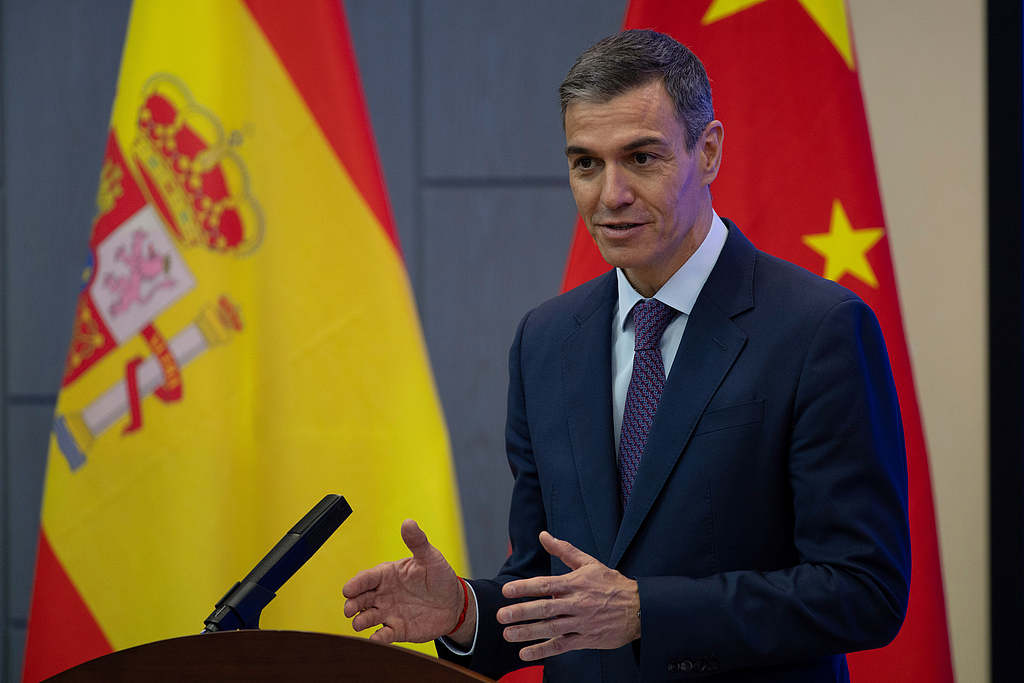
As Spanish Prime Minister Pedro Sánchez @sanchezcastejon wrapped up his fourth trip to China in four years, a @XHNews commentary noted that the visit is expected to further consolidate bilateral ties.
Read more: https://t.co/rwEZ8aBNX4
Cheng Li-wun, chairperson of the Chinese Kuomintang party, is leading a delegation to the Chinese mainland from April 7 to 12. It is hoped that the visit will bring a sign of relief amid intensifying cross-Strait tensions caused by dangerous provocations from the "pro-independence" separatists in Taiwan, said Wang Shushen, deputy head of the Institute of Taiwan Studies at the Chinese Academy of Social Sciences.
Wang noted that the Taiwan question is China's internal affair, and that dialogue and exchanges are in the best interests of people on both sides of the Strait. He further emphasized that if the separatists on the island continue to collude with outside forces and play with fire, they will pose the biggest threat not only to cross-Strait ties but also to the livelihoods of Taiwan residents.
Read more: https://t.co/TbR6nnsnZJ
@ChinaDaily@MFA_China@CCTV@Echinanews@globaltimesnews@CGTNOfficial@XHNews@PDChina@PhoenixTV_News@MND_China@StudyinNDUChina@SpoxCHN_MaoNing@SpoxCHN_LinJian@Consular_CHN@XisMoments@QiushiJournal@MOFA_Taiwan@ChengLiwen1112
This year marks the 75th anniversary of the establishment of diplomatic relations between China and Pakistan. Recently, the two nations jointly put forward a five-point initiative for restoring peace and stability in the Gulf and the Middle East region.
Wang Xu, executive deputy director of the Center for South Asian Studies at Peking University, noted that the initiative is guided by the principle of promoting peace through dialogue, focused on addressing pressing issues, and committed to upholding the role of the United Nations while practicing multilateralism. He said that it offers a comprehensive "peace prescription" that addresses both the symptoms and root causes of conflicts, helping to de-escalate tensions in the Middle East. The initiative embodies China's vision and solution centered on building a community with a shared future for humanity, he added.
He further emphasized that China-Pakistan cooperation epitomizes the solidarity among Global South countries and that the initiative reflects the collective wisdom of developing countries in contributing to world peace.
@ChinaDaily@globaltimesnews@MFA_China@CCTV@Echinanews@CGTNOfficial@PDChina@XHNews@MND_China@StudyinNDUChina@SpoxCHN_MaoNing@SpoxCHN_LinJian@Consular_CHN@XisMoments@QiushiJournal@IraninChina@PakinChina_@PKU1898@UNinChina
Tension in the Middle East is intensifying by the day. A @XHNews commentary noted that the reality is increasingly evident: this war is not resolving problems, but multiplying them. 🎨: @ChinaDaily
Read more: https://t.co/ia0wcyaLl6
Improving China-Philippines ties cannot rest on Manila's verbal gestures alone; what matters is whether they are reflected in real actions, according to an editorial by @globaltimesnews. While Manila gestures goodwill toward China on one hand, it has, on the other, continued provocative moves regarding the South China Sea and Taiwan-related issues. It has also strengthened military cooperation with external powers such as Japan and the US. Such a "say one thing, do another" approach is a fundamental obstacle to any real improvement in bilateral ties.
The editorial emphasized that, to maintain regional peace and stability, China has always kept the door open for cooperation with the Philippines in the South China Sea. However, political mutual trust is the premise and foundation for all cooperation between the two countries. Whether the Philippines can build that trust through stabilizing actions will determine whether the two sides can achieve cooperation moving forward.
Read more: https://t.co/oVcYWnp8MB
@ChinaDaily@MFA_China@CCTV@Echinanews@CGTNOfficial@XHNews@PDChina@PhoenixTV_News@MND_China@StudyinNDUChina@SpoxCHN_MaoNing@SpoxCHN_LinJian@Consular_CHN@XisMoments@QiushiJournal@China_Navy@China2ASEAN@SCS_PI
Japan's neo-militarism is undermining the core principles of the post-war order, which are centered on reflection upon past aggression and constraints on the use of force. It is eroding the foundation of regional trust and damaging the social fabric that underpins people-to-people exchanges across the Asia-Pacific, according to Danny Wong Tze Ken, a professor of history at the University of Malaya.
He pointed out that relevant countries should voice their concerns in both bilateral and multilateral settings, uphold historical truth, and safeguard the post-war international order. The international academic community should continue to speak out, expose the historical facts that Japan seeks to obscure, and highlight the dangers of neo-militarism, in a bid to prevent extremist narratives from influencing younger generations, he added.
@ChinaDaily@globaltimesnews@MFA_China@CCTV@Echinanews@CGTNOfficial@XHNews@PDChina@PhoenixTV_News@MND_China@StudyinNDUChina@SpoxCHN_MaoNing@SpoxCHN_LinJian@Consular_CHN@XisMoments@QiushiJournal@ChnEmbassy_jp @AmbWuJianghao
During the 12th Beijing Xiangshan Forum, Stepan Grigoryan, chairman of the Analytical Centre on Globalization and Regional Cooperation and former Ambassador of Armenia to Russia, made remarks while discussing how multilateralism can play a bigger role in global governance.