A good technical LLM interview question:
You replace a dense feed-forward layer with a top-2 MoE.
The profiler confirms that the MoE executes fewer FLOPs per token.
However, end-to-end inference latency has increased instead of decreasing.
Why did this happen?
(answer below)
A standard Transformer applies the same feed-forward network to every token in a layer.
An MoE layer replaces that network with multiple experts. Each expert is a feed-forward network with its own weights.
A router reads each token's hidden-state vector, scores the available experts, and selects the top two. It also produces a routing weight for each selection.
Only those selected experts process the token. The model therefore contains many expert weights while executing only a small subset for each token.
The serving system must move activations when the selected experts are stored on different GPUs.
The visual follows a batch that begins on GPU 0.
The router returns two expert IDs and two routing weights per token. One selected path is shown for each example token to keep the diagram readable.
Token T1 selects E1 on GPU 0. Its activation remains in local GPU memory, where E1 processes it.
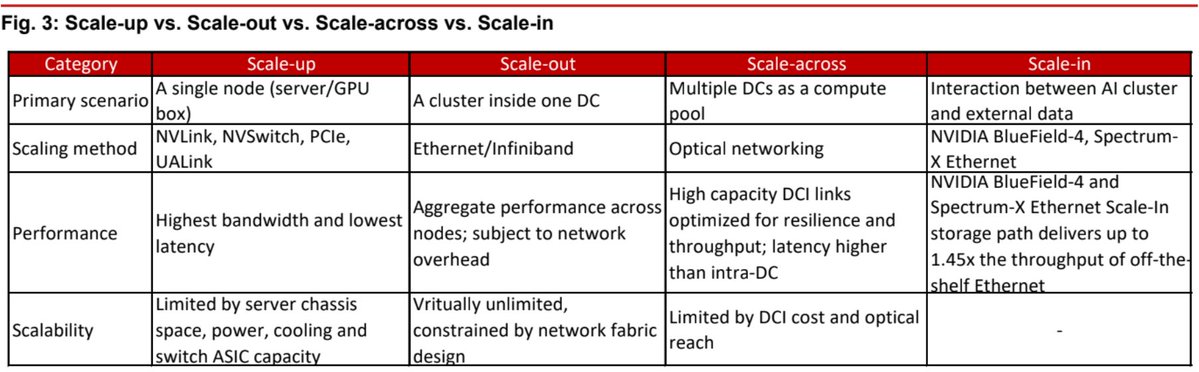
T2 selects E4 on GPU 1 in the same server. GPU 0 transfers the activation through NVLink, a high-bandwidth GPU-to-GPU connection. NVSwitch connects several GPUs through this fabric.
T3 selects E7 on GPU 2 in another server. Its activation crosses the cluster network through InfiniBand or Ethernet.
To be clear, the system transfers activation vectors, which are the numerical representations produced for a token by the preceding Transformer operations.
Each destination GPU runs its expert and returns the output to GPU 0.
GPU 0 multiplies both selected expert outputs by their routing weights, adds them together, and restores the original token order.
Different tokens can select different expert pairs. Across a batch, those assignments may involve every GPU storing experts.
Each GPU may therefore send activations to several GPUs while receiving activations for its own experts. This exchange is called all-to-all communication.
And there are several ways to optimize this.
For instance, keeping frequently selected experts within the same server reduces remote traffic.
Balanced routing prevents one GPU from delaying the layer.
Communication overlap allows local expert computation to continue while remote activations move.
In this setup, sparse routing reduces expert FLOPs, but token dispatch and network communication erase part of that saving.
If you want to dive deeper, I recently covered MoE inference engineering, including routing, expert placement, token dispatch, load balancing, communication overlap, memory, quantization, and offloading.
Read my article below.
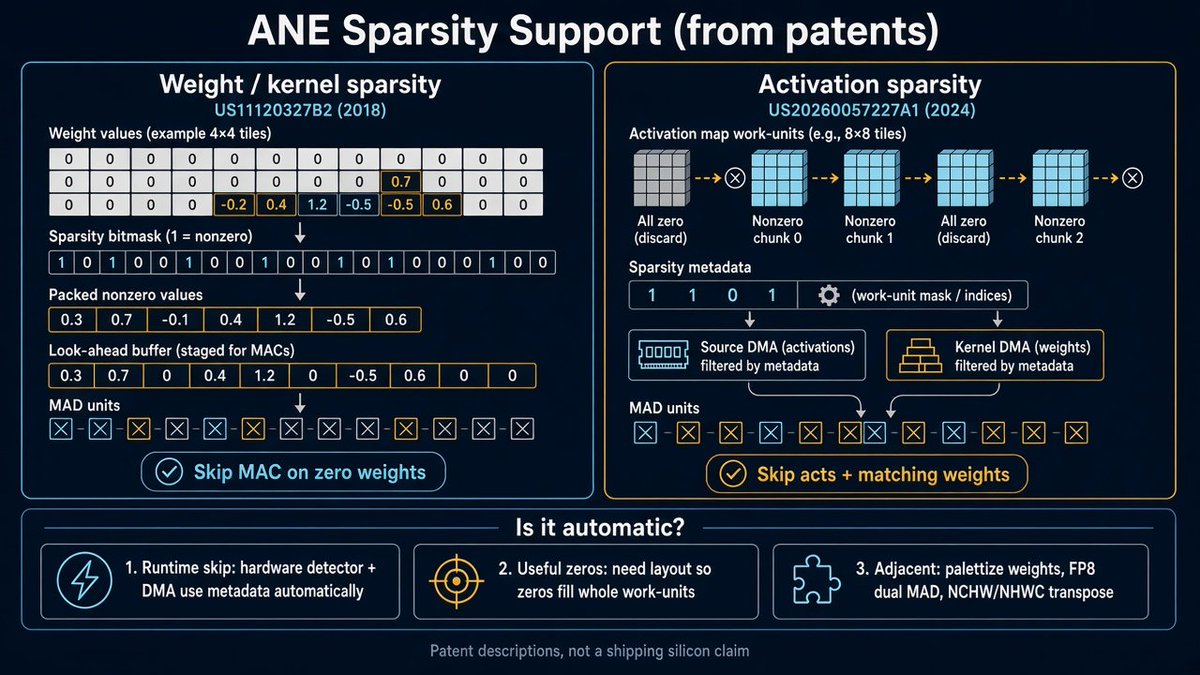
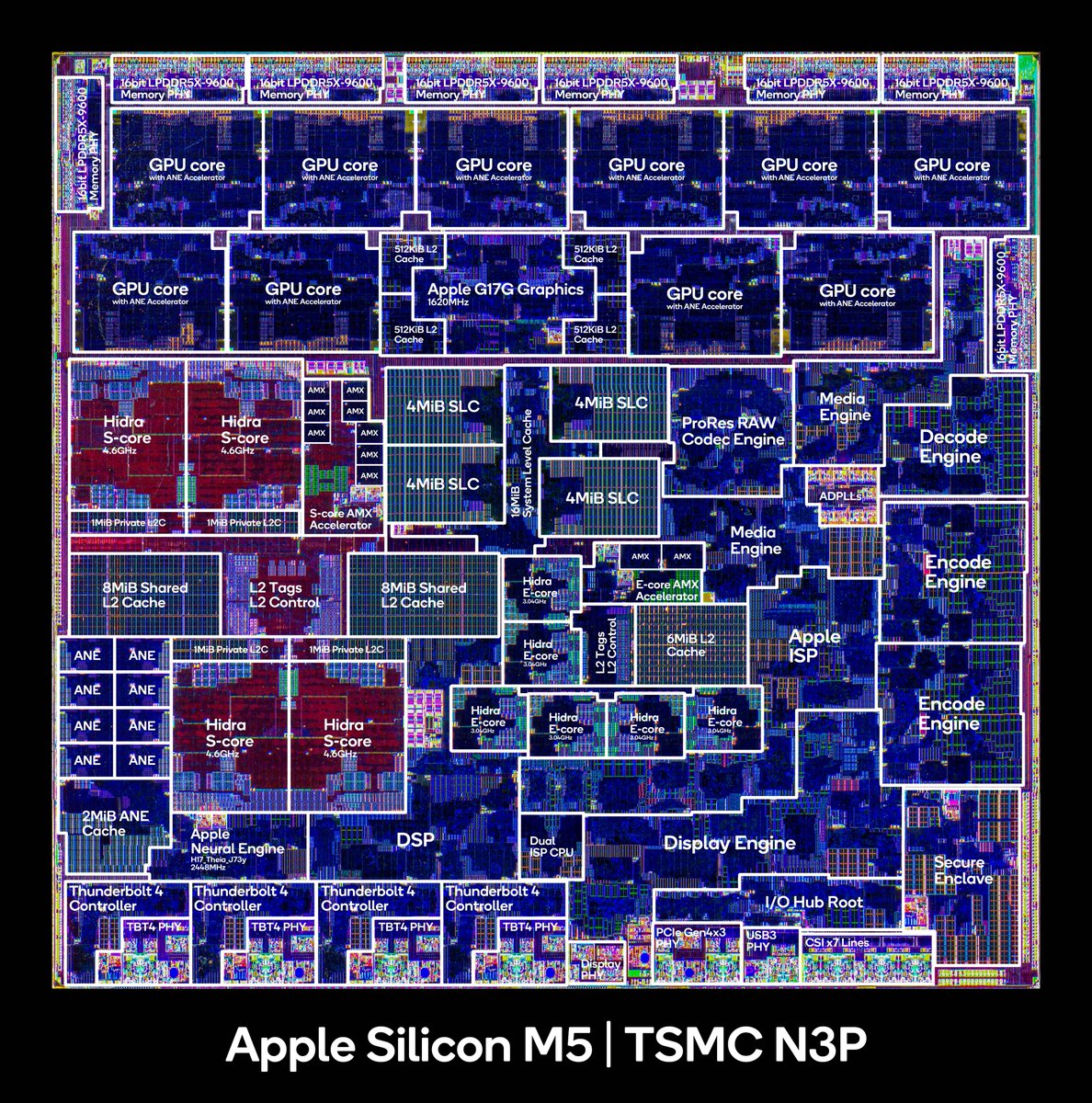
New M6/A20 ANE can autodetect sparsity (zeros) in weights AND activations + Winograd Sparsity for vision:
Measured on a 256-layer conv512 FP8 chain:
Dense: 56 -60 TFLOPS
75% zero activations (3:1): 71.8 TFLOPS
75% zero weights: 91 TFLOPS
joint ~50% act + 75% weight: 96 TFLOPS
Activation gains flatten near ~72 past ~75% zeros.
No sparse pack format, zeros in the tensor are enough.
Test code:
https://t.co/MQqjzN8mHM
Sam Altman, CEO de OpenAI:
"Ya no hace falta escribir prompts."
En 38 minutos explica cómo usar ChatGPT a un nivel que la mayoría ni se imagina.
Es una charla que dio a estudiantes de Stanford. Un amigo me pasó la grabación anoche.
Cuando terminé de verla me di cuenta de que solo le estaba sacando como un 15% de lo que puede hacer.
NVIDIA and Stanford just challenged Jev.
(their new System 1 architecture runs up to 9x faster.)
It is called a Contrastive Language Model, or CLM.
Like Jev, CLM is not designed to generate text. It handles the small, repeated decisions inside AI systems, such as choosing a tool, ranking a patch, routing a request, or selecting the next action.
But CLM reaches those decisions differently.
Instead of generating an answer token by token, it treats decision-making as a retrieval problem.
Here is how it works.
1) Encode the state
CLM takes the current situation, such as an agent’s context or the state of a game, and converts it into a vector.
It uses a frozen Qwen3-8B model with a small trainable state projection head.
2) Encode every possible action
A separate action head converts each candidate into the same vector space.
In the Mario example, the candidates are left, jump, and right run. CLM does not invent a fourth option. It only evaluates the actions supplied by the application.
3) Learn which states and actions belong together
During training, the correct state-action pair is pulled closer while incorrect pairs are pushed apart.
A batch of B examples produces a B × B similarity matrix. The matching pairs sit on the diagonal. Every other pairing becomes a negative example.
This contrastive training uses InfoNCE, the same general mechanism behind systems such as CLIP and dense retrieval.
4) Turn similarity into a decision
At inference, CLM measures the cosine similarity between the state and every candidate action.
A softmax converts those scores into a probability distribution. The application can choose the winner, apply a confidence threshold, or escalate an uncertain result.
The real speed advantage comes from separating states and actions.
Actions can be embedded once and cached. If an agent repeatedly chooses between the same tools, CLM only needs to encode the changing state and compare it with stored action vectors.
That replaces repeated generation with one embedding pass and a set of cheap dot products.
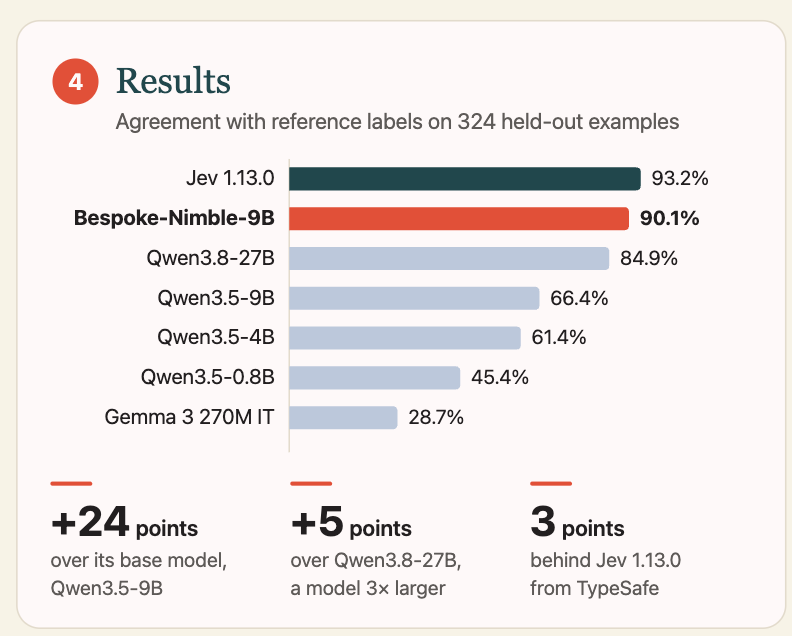
The researchers report that CLM-8B matches Jev across computer-use, gaming, and tool-calling evaluations while reaching up to 9x lower latency. The improvement is largest when actions repeat or the candidate set grows.
CLM still has limits. It cannot generate new actions, its probabilities are relative to the supplied candidates, and its strongest verifier results require task-specific fine-tuning.
But its central idea is powerful.
The entire research is open-source, including the code.
Read more here: https://t.co/I9kPwMPI7B
When software already knows the possible answers, an AI model should score them instead of generating more words.
I also wrote a full breakdown on how system one models like Jev work.
The article is quoted below.
Google lanzó la herramienta que todo desarrollador pedía desde hace años.
Se llama CodeWiki.
Pegas cualquier repositorio y la IA lo convierte automáticamente en una documentación interactiva.
No solo resume el código:
• Genera diagramas automáticamente
• Explica cómo funciona cada parte
• Crea tutoriales paso a paso
• Detecta arquitectura y dependencias
• Y hasta monta un chatbot que entiende tu código completo
Básicamente:
convierte proyectos imposibles de entender en algo que cualquier desarrollador puede navegar en minutos.
Enlace abajo👇
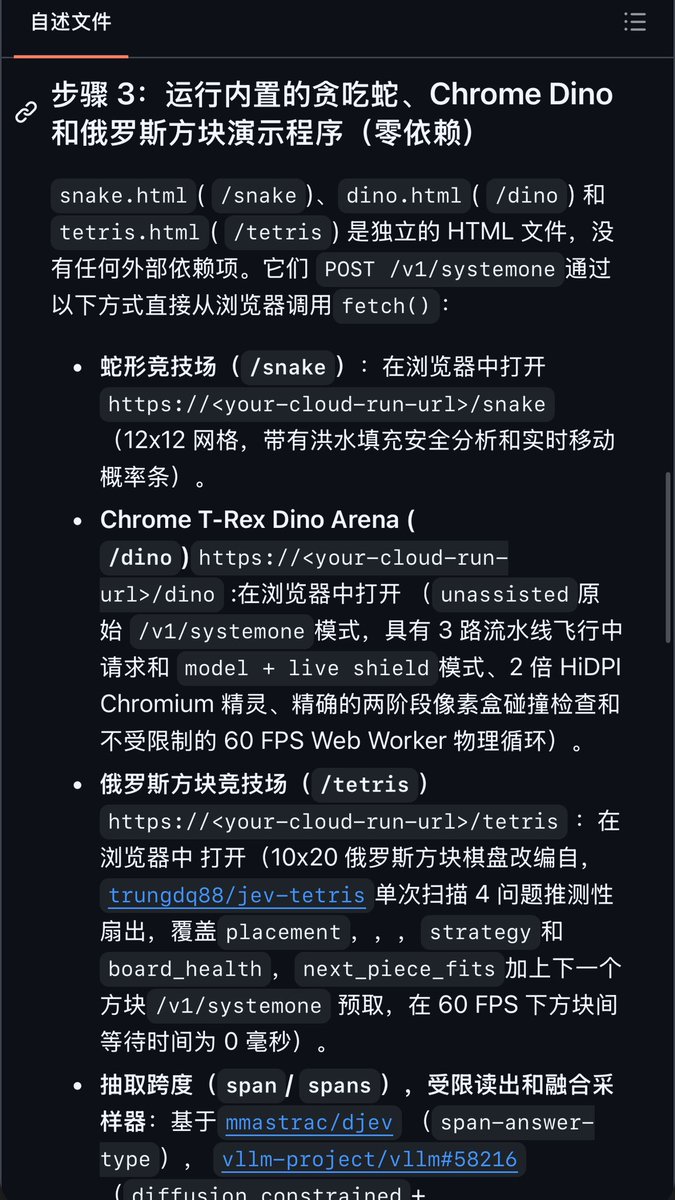
Djev-Spark (GitHub) figured out how to make DiffusionGemma 26B-A4B behave like Jev. They pre-built structures answer, leaving only the decision slots open, then read the model’s probabilities instead of generating JSON token by token
This runs locally with NVFP4 w/a patched vLLM structured-read engine and exposes a Jev-compatible endpoint.
Runs in GB10 only for now. DiffusionGemma is FAST!
DiffusionGemma-Jev now runs on vLLM 🚀
Ask yes/no, multiple-choice, or scored questions and get confidence with every answer. vLLM seeds a canvas with the response template, leaves only the answer slots noisy, then reads a probability distribution from every slot in a single denoising step.
Huge thanks to @mmastrac for driving this upstream! 🙏
https://t.co/HJJz0Q2KYe
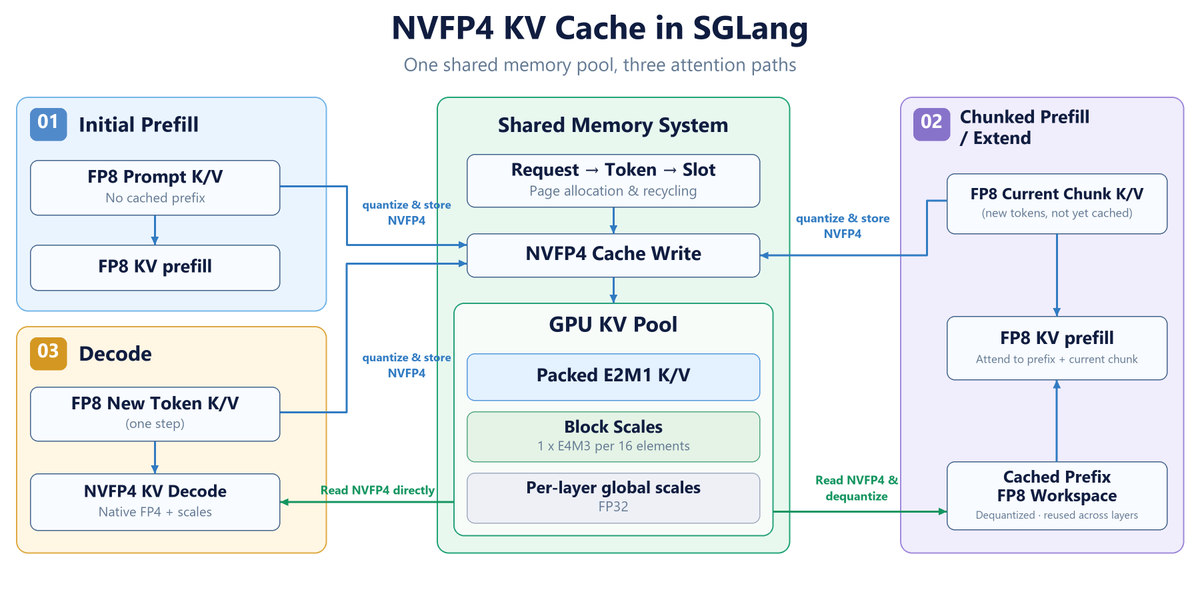
🚀New blog: Accelerating Long-Context and Agentic Inference with NVFP4 KV Cache
4-bit KV cache is here! NVFP4 KV in SGLang packs ~1.78× more context into GPU memory and speeds up long-context decode by up to 78%.
Together with @Alibaba_Qwen and @nvidia, we brought NVFP4 KV cache to Blackwell:
- NVFP4 stores KV in just ~56% of FP8's footprint per token
-️ Decode throughput jumps +37% / +58% / +78% at 32K / 160K / 1M context
- Near-lossless accuracy: matches FP8 on GPQA-Diamond & AIME 2025 (Qwen3.5-397B-A17B)
- Higher cache hit rate keeps AgentX throughput scaling where FP8 drops off
The whole recipe combines NVFP4 two-level scaling, in-kernel dequantization on decode, and paged KV cache, and you can enable it in SGLang with a single flag --kv-cache-dtype nvfp4




![MaxForAI's tweet photo. 中秋快乐!刚刚看到一篇新论文 Memory Attention,感觉可能是个划时代的新注意力架构,给大家分享一下。
MA这篇的核心是Transformer 里的 V,可能根本没必要每次都重新算。
所以直接开始动 Attention 里最经典的 QKV 结构了。
传统 Attention 里,每个 token 都要从当前 hidden state 重新计算:
Q = XWq
K = XWk
V = XWv
但本文作者 @Jo1uck 问了一个很朴素的问题:
V 里面有多少东西,真的需要每次根据上下文重新算?
同一个 token 在不同句子里,显然存在大量可以复用的信息。
于是他们参考 Engram 这类 Memory 架构,给每个 token 建了一套可学习的 memory,然后更激进地把独立的 value projection 直接干掉:
V = K + Memory[token]
K 负责保留上下文信息,Memory 负责保存 token 自身可以复用的信息。
这样推理时,原来计算 V 的一次矩阵乘法,基本就变成了:查表 + 加法(这会大幅减少计算量)。
然后事情开始变得有意思了。
因为 Memory 只跟 token ID 和层数有关,所以甚至可以提前知道要读哪块数据,直接把这部分参数扔到 CPU,GPU 需要的时候提前 Prefetch。
实验里,MA-Offload 模型总参数是普通模型的 2.08 倍,但 GPU 上实际常驻的参数反而比普通 Transformer 少了 7.38%,推理延迟基本维持在同一水平。
训练上,在两个不同规模实验里,达到相同 loss 所需 token 数分别提升到了 1.42× 和 1.16× 的 token efficiency,也就是大约少用 29.6% 和 13.8% 的训练 token。
下游平均成绩也基本都比对应的 Standard Attention 更高。
更骚的是,作者还提出了一个 MA-Recall:
既然历史 V 可以通过 K + token memory 重新构造,那么理论上甚至不用一直保存完整的 V Cache,只保存 K 和 token ID,在需要的时候把 V 重建出来。
按论文的理论计算,这部分 KV Cache 可以砍掉接近一半,不过目前还只是分析,没有进入实际推理实验。
我觉得这篇的方向挺值得关注的。
过去大家做 Memory,更多是在 Transformer 外面继续加东西。
Memory Attention 开始反过来问:既然 Memory 已经能记住这些东西,那 Transformer 里面原来那些计算,是不是可以直接删掉?
当然论文自己写的也很克制:MA 用了更多参数,所以目前的收益还不能证明全部来自架构本身,而不是单纯的参数量增加。
但如果这条路继续成立,下一代模型的变化可能不只是 Attention 越做越复杂。
也可能是我们用了快十年的 QKV,终于开始有人认真考虑:哪些东西其实根本不用算。](https://pbs.twimg.com/media/HTCtu5vaAAA5iJp.jpg)
![MaxForAI's tweet photo. 中秋快乐!刚刚看到一篇新论文 Memory Attention,感觉可能是个划时代的新注意力架构,给大家分享一下。
MA这篇的核心是Transformer 里的 V,可能根本没必要每次都重新算。
所以直接开始动 Attention 里最经典的 QKV 结构了。
传统 Attention 里,每个 token 都要从当前 hidden state 重新计算:
Q = XWq
K = XWk
V = XWv
但本文作者 @Jo1uck 问了一个很朴素的问题:
V 里面有多少东西,真的需要每次根据上下文重新算?
同一个 token 在不同句子里,显然存在大量可以复用的信息。
于是他们参考 Engram 这类 Memory 架构,给每个 token 建了一套可学习的 memory,然后更激进地把独立的 value projection 直接干掉:
V = K + Memory[token]
K 负责保留上下文信息,Memory 负责保存 token 自身可以复用的信息。
这样推理时,原来计算 V 的一次矩阵乘法,基本就变成了:查表 + 加法(这会大幅减少计算量)。
然后事情开始变得有意思了。
因为 Memory 只跟 token ID 和层数有关,所以甚至可以提前知道要读哪块数据,直接把这部分参数扔到 CPU,GPU 需要的时候提前 Prefetch。
实验里,MA-Offload 模型总参数是普通模型的 2.08 倍,但 GPU 上实际常驻的参数反而比普通 Transformer 少了 7.38%,推理延迟基本维持在同一水平。
训练上,在两个不同规模实验里,达到相同 loss 所需 token 数分别提升到了 1.42× 和 1.16× 的 token efficiency,也就是大约少用 29.6% 和 13.8% 的训练 token。
下游平均成绩也基本都比对应的 Standard Attention 更高。
更骚的是,作者还提出了一个 MA-Recall:
既然历史 V 可以通过 K + token memory 重新构造,那么理论上甚至不用一直保存完整的 V Cache,只保存 K 和 token ID,在需要的时候把 V 重建出来。
按论文的理论计算,这部分 KV Cache 可以砍掉接近一半,不过目前还只是分析,没有进入实际推理实验。
我觉得这篇的方向挺值得关注的。
过去大家做 Memory,更多是在 Transformer 外面继续加东西。
Memory Attention 开始反过来问:既然 Memory 已经能记住这些东西,那 Transformer 里面原来那些计算,是不是可以直接删掉?
当然论文自己写的也很克制:MA 用了更多参数,所以目前的收益还不能证明全部来自架构本身,而不是单纯的参数量增加。
但如果这条路继续成立,下一代模型的变化可能不只是 Attention 越做越复杂。
也可能是我们用了快十年的 QKV,终于开始有人认真考虑:哪些东西其实根本不用算。](https://pbs.twimg.com/media/HTCtrUsaYAAGLiF.png)








![MaxForAI's tweet photo. 中秋快乐!刚刚看到一篇新论文 Memory Attention,感觉可能是个划时代的新注意力架构,给大家分享一下。
MA这篇的核心是Transformer 里的 V,可能根本没必要每次都重新算。
所以直接开始动 Attention 里最经典的 QKV 结构了。
传统 Attention 里,每个 token 都要从当前 hidden state 重新计算:
Q = XWq
K = XWk
V = XWv
但本文作者 @Jo1uck 问了一个很朴素的问题:
V 里面有多少东西,真的需要每次根据上下文重新算?
同一个 token 在不同句子里,显然存在大量可以复用的信息。
于是他们参考 Engram 这类 Memory 架构,给每个 token 建了一套可学习的 memory,然后更激进地把独立的 value projection 直接干掉:
V = K + Memory[token]
K 负责保留上下文信息,Memory 负责保存 token 自身可以复用的信息。
这样推理时,原来计算 V 的一次矩阵乘法,基本就变成了:查表 + 加法(这会大幅减少计算量)。
然后事情开始变得有意思了。
因为 Memory 只跟 token ID 和层数有关,所以甚至可以提前知道要读哪块数据,直接把这部分参数扔到 CPU,GPU 需要的时候提前 Prefetch。
实验里,MA-Offload 模型总参数是普通模型的 2.08 倍,但 GPU 上实际常驻的参数反而比普通 Transformer 少了 7.38%,推理延迟基本维持在同一水平。
训练上,在两个不同规模实验里,达到相同 loss 所需 token 数分别提升到了 1.42× 和 1.16× 的 token efficiency,也就是大约少用 29.6% 和 13.8% 的训练 token。
下游平均成绩也基本都比对应的 Standard Attention 更高。
更骚的是,作者还提出了一个 MA-Recall:
既然历史 V 可以通过 K + token memory 重新构造,那么理论上甚至不用一直保存完整的 V Cache,只保存 K 和 token ID,在需要的时候把 V 重建出来。
按论文的理论计算,这部分 KV Cache 可以砍掉接近一半,不过目前还只是分析,没有进入实际推理实验。
我觉得这篇的方向挺值得关注的。
过去大家做 Memory,更多是在 Transformer 外面继续加东西。
Memory Attention 开始反过来问:既然 Memory 已经能记住这些东西,那 Transformer 里面原来那些计算,是不是可以直接删掉?
当然论文自己写的也很克制:MA 用了更多参数,所以目前的收益还不能证明全部来自架构本身,而不是单纯的参数量增加。
但如果这条路继续成立,下一代模型的变化可能不只是 Attention 越做越复杂。
也可能是我们用了快十年的 QKV,终于开始有人认真考虑:哪些东西其实根本不用算。](https://pbs.twimg.com/media/HTCtyIdaAAA7Bhv.jpg)