160 teachers. One day. Workshop title: "Your imagination is the only ceiling."
It started as 40. Kept growing because they asked for more.
Most AI training teaches the tool. Tools change.
I taught the workflow. Skills that survive the next model release.
Same cafeteria where I first dreamed of building a company.
7 years later, OWN Academy invited me back to share with the next cohort.
5 minutes. One piece of advice: Just Do It.
Some things you can only learn by actually doing. Start. Do it badly. Do it again.
Spent two hours training future doctors against an AI patient simulator I built.
It never gives the same case twice. They can't memorize—they have to actually reason.
Medical AI in 2026 isn't replacing doctors. It's exposing what med school under-teaches.
YC (@ycombinator) CEO Garry Tan open-sourced GBrain — 10,000+ files as a knowledge base built for AI agents, not humans.
@karpathy: "Obsidian is the IDE. The LLM is the programmer. The wiki is the codebase."
I use Notion for teams + AI agents. Obsidian for local dev control. Build your KB now — your agents will read it for you.
Alibaba shifted Qwen from open-source to closed-source. Hundreds of millions of downloads. Free. Then: API-only. Paid.
Why? Qwen 3.6 Plus is genuinely competitive with the best closed models. You don't give that away.
Open source builds the ecosystem. Closed source monetizes it. Build around your data layer. (4/5)
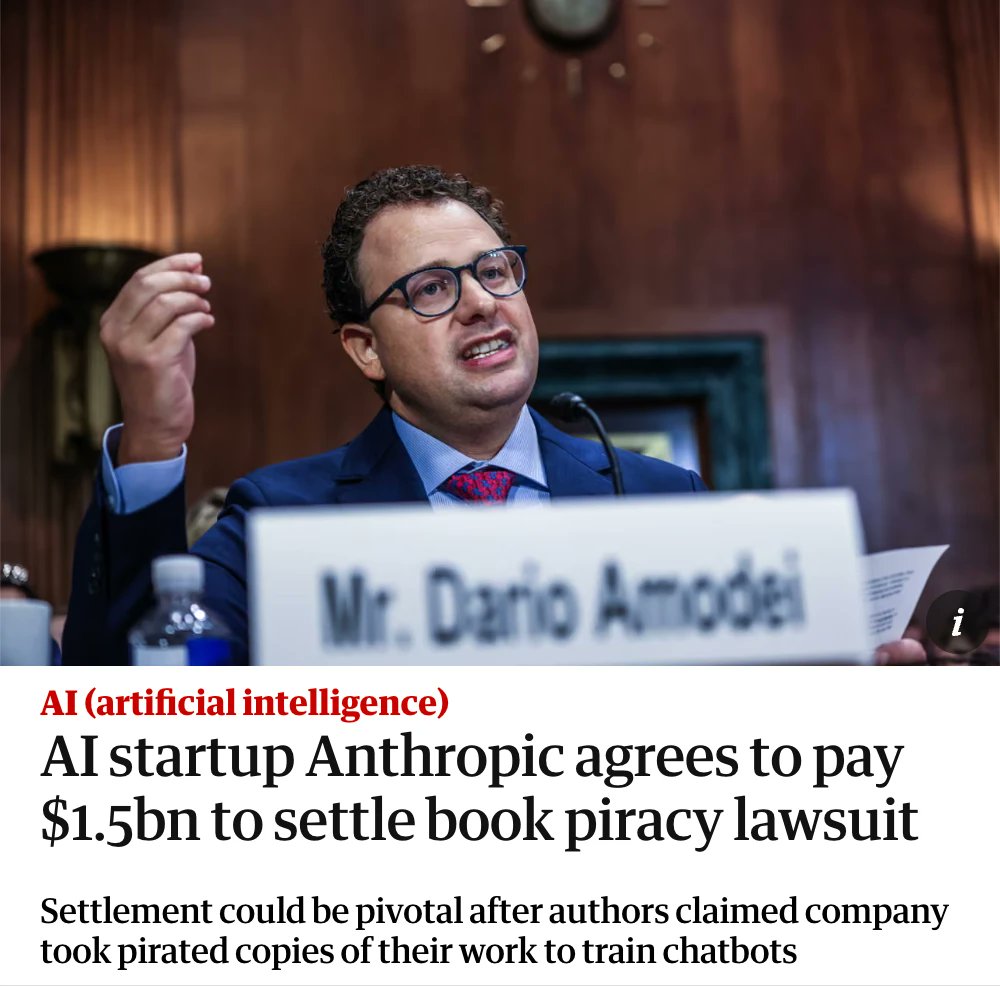
Anthropic: $1.5B settlement. OpenAI: 20M chat logs handed to NYT �� even deleted ones. Google: sued for secretly enabling Gemini across Gmail/Chat/Meet. Meta: €251M GDPR fine.
Been reading AI court cases. The details are more interesting than the headlines. (3/5)
Most orgs treat AI security as black and white. ChatGPT with zero guardrails, or $200k on GPU clusters they don't need.
Tier 1: Public data → any cloud AI
Tier 2: Business secrets → enterprise API + audit logs
Tier 3: Regulated → self-hosted, sovereign
The expensive mistake: Tier 2 data on Tier 3 infrastructure. Know your tier first. (2/5)
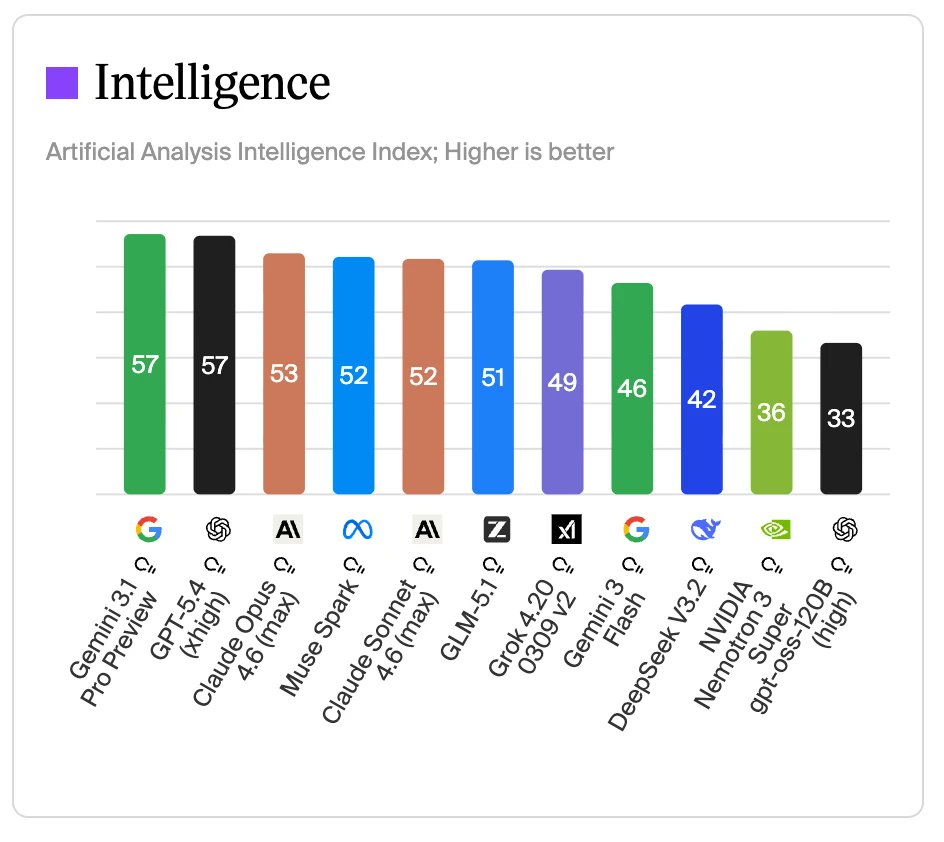
Which LLM should we use?
Honest answer: it matters less than you think, and it changes weekly.
3 questions before you pick:
1) Do you actually need self-hosting?
2) What language and region matter (APAC too)?
3) Where does your data go?
Compare speed, cost, quality at https://t.co/dtBJ5tKGQ7.
Infrastructure before intelligence.
Every enterprise AI project I've seen fail had the same root cause.
Not the model. Not the team. Not budget.
The data layer -- Your secret recipe.
The infrastructure to connect proprietary knowledge to AI securely didn't exist.
Infrastructure before intelligence. Every time.
One knowledge base shared across every agent. Each sees what it needs. None see what it shouldn't.
The best innovation happens when AI runs at the speed of execution and humans hold the direction.
Six months ago I started delegating entire company functions to AI agents. Not tasks. Functions.
Strategy, product, marketing, education, personal finance. All running on Perplexity Computer + OpenClaw.
Every org has two kinds of knowledge.
The kind anyone can access. And the kind only they have.
Most AI optimizes for the first. We built Knobase around the second.
Proprietary knowledge is the only durable AI advantage. Models commoditize. Your institutional context doesn't.
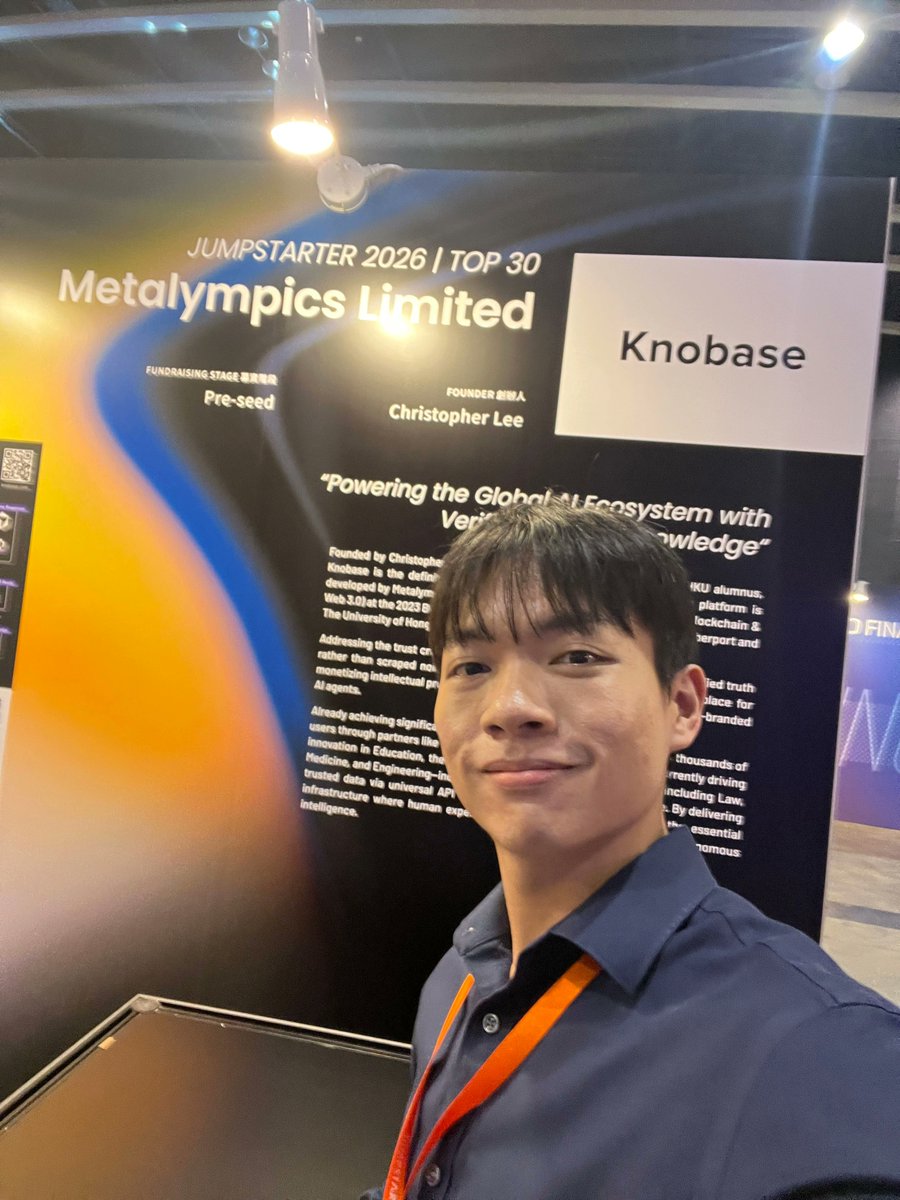
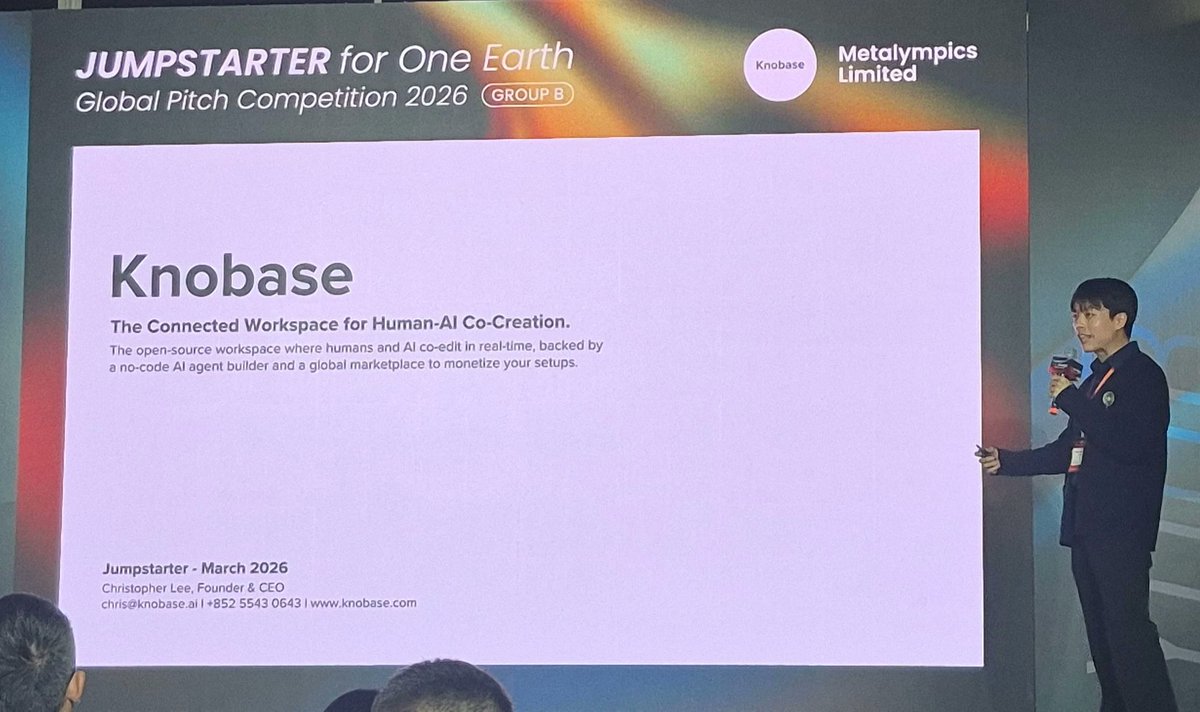
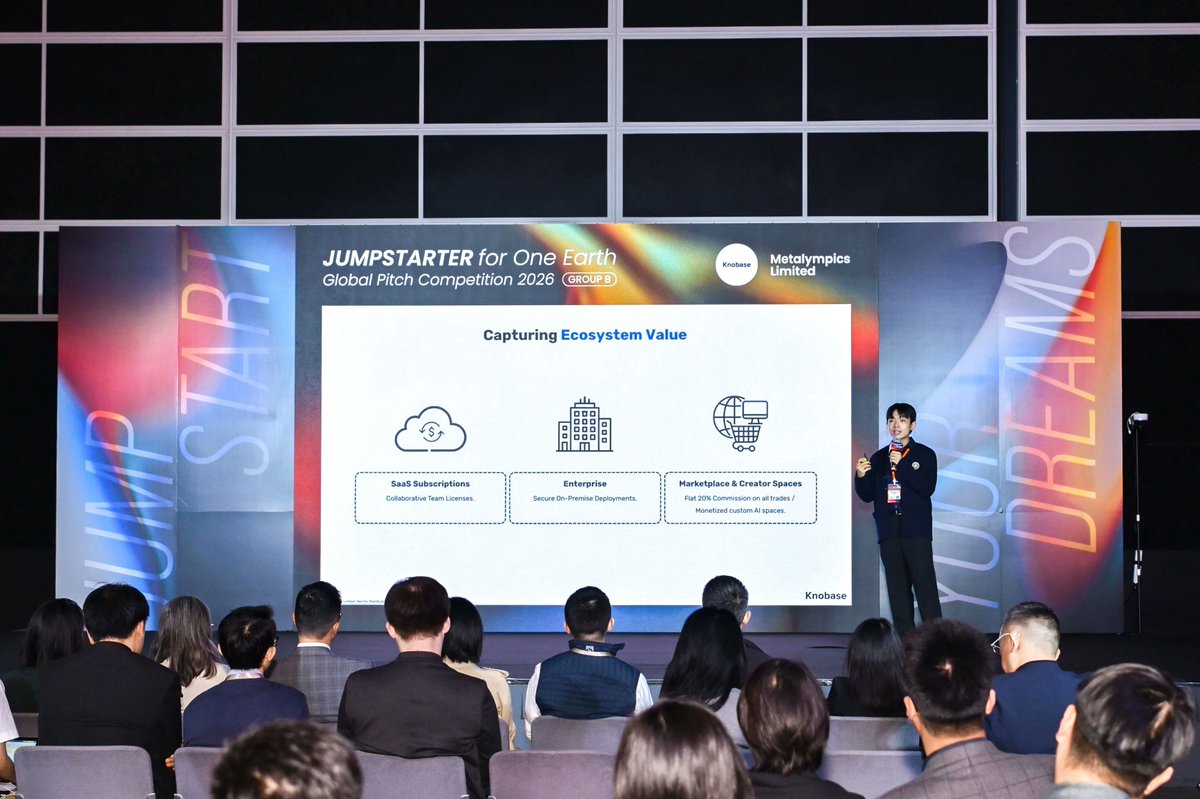
Pitched Knobase (@knobase_) at Alibaba JUMPSTARTER Grand Finale three weeks ago. Top 30 out of 700+. Top 4%.
1,100+ users. Tens of thousands of interactions. Enterprise clients. Revenue.
The difference this time: I wasn't pitching a vision. I was describing what already exists.
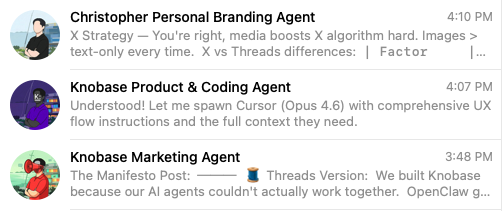
Current state: Running 3 OpenClaw (@openclaw) agents daily.
• One managing my personal brand
• One marketing Knobase
• One coding with Cursor
Sometimes I talk to AI more than humans. The teammate/tool line is officially blurry.
Who else is living in this future?
I spent 6 years building companies in Asia.
The best lessons don't come from polished LinkedIn posts. They come from the "how did we survive that" moments.
Follow along for the real founder journey.
I’ve found a critical pattern. I can't concentrate on days when I talk a lot.
On the days I say almost nothing, I can easily calm down and code a lot.
But if I talk to someone for long enough, my brain just doesn't get ready to build—seriously, for the rest of the day.
So I intentionally find quiet days. No meetings. I hide from people. I just sit and work.
And I make sure one day is packed with all the meetings.
I can either:
- Code and design for hours
OR
- Talk for hours
That's it. Once I open my mouth, I know there's no way back. Hi, ADHD.
I'm writing this post because right now, I just can't work.
If you see a week where I'm posting a lot, just assume I had one day I talked a lot. Basically, I'm just talking more with my fingers.
It's just so difficult to switch back to build mode. Any tips for switching?
(p.s. One person recommended a L-Tyrosine. I'll share the progress in the next few weeks.)
I'll be sharing my thoughts in the field of AI-integrated business education with IABMS.
Education is definitely one of the slowest industries, I believe it's one of the industries that will benefit the most from the advancement of AI.
With Top-BOSS, a leading EdTech in business education in Taiwan, Knobase has been enhancing the business simulation with personalized AI conversations.
Lectures at MBA will look different in the next 5 years.
Imagine a case discussion with AI. More personalized and fruitful than sitting in a 200-people lecture hall with one professor.
See you there!
I couldn't even run for 1 minute. 2 years in -- I ran 10km at 5 AM, still went to church, and stayed out until 11 pm.
Lucky to have finished the famous Standard Chartered Hong Kong Marathon's 10KM event -- which started at 5:50 am.
I woke up at 3:30 am and came home only to see the clock at 7:30 am.
My weekly exercise routine these days:
🔹 Muscle training at gym: 3 times
🔹 5km outdoor running (with uphill): 3 times
🔹 1-hour family badminton: 1 time
(+ stretching & core muscle training almost every day. Keep your spine healthy, guys. Don't ruin it like I did.)
Lost 20kg since my prime peak. Feeling healthier than ever.
I might run a half-marathon later this year.
Do I like running? Not at all.
My one weakness as a founder: I'm terrible at remembering names.
It's actually funny. This brain remembers everything else, such as their jobs, hobbies, the schools their kids go to, family occasions, holiday plans, snack preferences, allergies... everything but that one important text.
It has always been the case. When I meet somebody, I say my name and shake their hand. They say their name, and in the next few seconds, it’s already gone from my head.
My only hypothesis is that my brain remembers pretty much everything else that makes them who they are... so my brain doesn't think names are important.
I’ve tried harder after realizing this problem, but it hasn't improved much.
I might be searching for you in my email inbox with keywords, not your name.
I'm honestly not frustrated at all. It's just ironic as an entrepreneur who always meets new people and has various skills... except this.
If you thought I'd be sharing a few cool tips about remembering names, you came to the wrong party.
Anyway, it is what it is.
I’ve always been inspired by founders who truly "dogfood" their products by building real communities on top of them.
Take Tyler Denk (@denk_tweets), for example. He didn't just build beehiiv (@beehiiv); he grew his own newsletter, Big Desk Energy (@bigdeskenergy), to 123k+ subscribers. He lived the user journey.
I launched my platform, Knobase (@knobase_), and I’m in the codebase every single day. I work incredibly closely with my users to push updates and improve the product.
But I realized I’m still missing a critical piece of the puzzle: The experience of starting a community from scratch.
Simply building the tool isn't the same as the grind my users face trying to grow a knowledge base and engage an audience. I want to close that empathy gap. So, I’m planning to launch a public community on Knobase to "walk the walk."
But honestly? I’m stuck on the "What".
I want the community to encourage real knowledge sharing—powering the AI with collective wisdom. I keep hoping for something that brings positive impact beyond borders... but maybe I'm overthinking the mission?
My brain is cycling through a million random ideas. Everything from a startup support group, to maybe a Christian Bible study AI community, to a book club... I’m really not sure.
It feels like I have the engine ready, but no destination.
If you were starting a knowledge community today, what topic would you actually want to be a part of?