If you’re ever feeling bad about yourself, just remember: 30+ student groups at Harvard signed a pro-Hamas statement in response to 1,000 Israelis being slaughtered, and then the Ivy League university was too cowardly to condemn them, so said nothing, until nationwide backlash mounted, at which point they released a statement in which they made no mention of their student groups, so they continued receiving backlash, at which point they released a follow-up statement trying to distance themselves from their student groups. And now the students themselves are scrambling to take back their statement upon realizing that future employers don’t want to hire terrorist sympathizers.
The people who are supposed to be among our nation’s brightest aren’t actually intelligent at all.
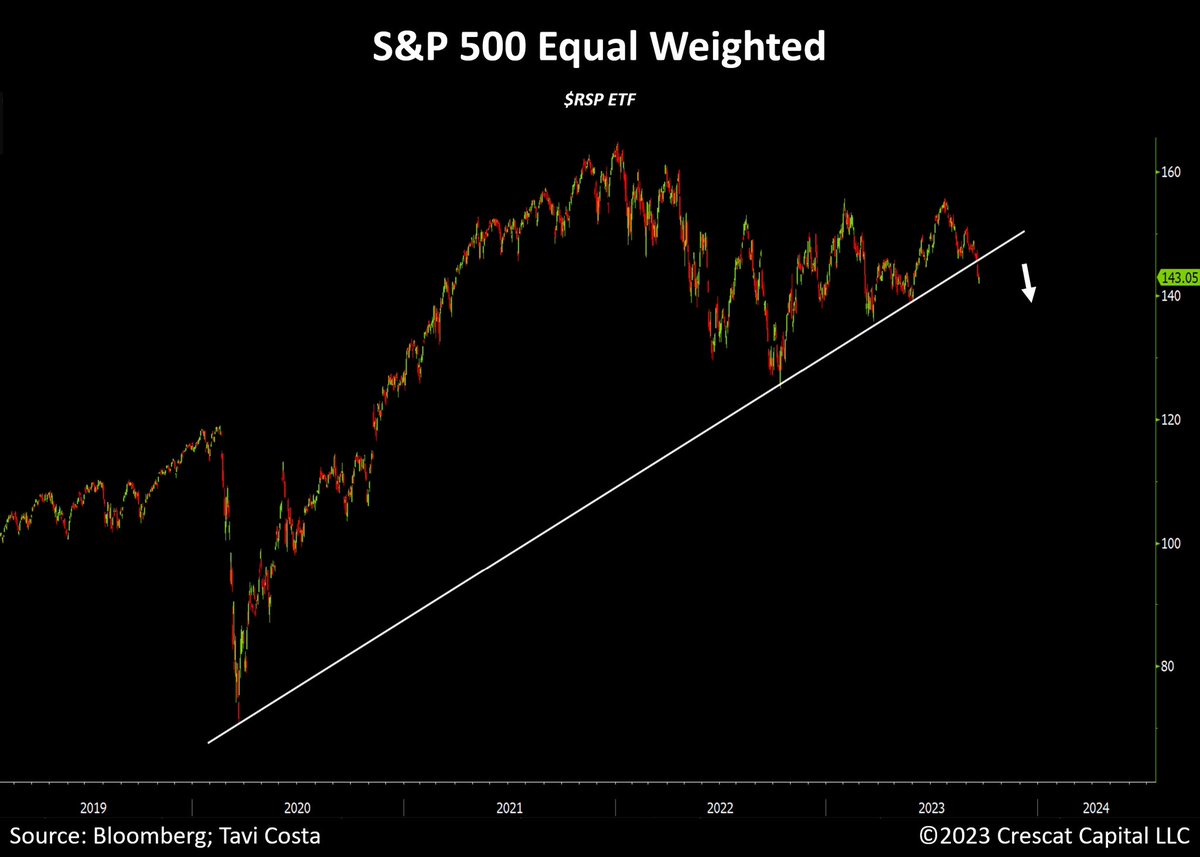
The major indexes are oversold and may bounce, but stocks are still under selling pressure. Our short term model switched to cautious on 7/26 and very cautious on 8/3 (an effective sell signal for individual breakout trading). Our long term $SPY model that went on a buy signal on 1/13/23 laddered down yesterday and raised some cash, effectively nailing down a partial profit. Continued weakness would force more cash soon and likely put the LT model on an outright sell signal. Personally, I'm currently in virtually 100% cash and have maintained a large cash position since early August. I've even entertained a couple short trades, but with minimal overall exposure.
Current situation:
1. Stocks are falling like a recession is coming
2. Oil prices are rising like there's no recession in sight
3. Interest rates are rising like we have 10% inflation
4. Gold is falling like inflation is gone
5. Housing prices are rising like rates are falling
6. Commercial real estate is falling like its 2008
Nothing adds up here.
Do you ever just walk past the bread aisle at H‑E‑B and catch a whiff of that heavenly pumpkin swirl bread and tell yourself, “this is why I choose curbside.” 🥹😩
If 45% of people were to default on their student loans, the effects on the economy would be profound and multifaceted. Here's a breakdown of what might occur:
1. **Impact on Lenders**: The most direct and immediate impact would be on the entities that hold these student loans. If they're federal loans, the U.S. government would see a significant loss in expected revenues. Private lenders would experience substantial financial losses.
2. **Credit Scores**: Defaulting on student loans negatively impacts the credit scores of the borrowers. This makes it harder for them to access other forms of credit like mortgages, car loans, and credit cards, which can delay other major life milestones like home ownership.
3. **Consumer Spending**: A decrease in creditworthiness means that a large portion of the population would reduce or delay spending, particularly on big-ticket items. This can slow down economic growth.
4. **Weakened Financial Institutions**: Banks and financial institutions that have heavy exposure to student loans might experience liquidity problems or, in extreme cases, insolvency. This could cause a reduction in lending activities or tighter lending standards, further slowing down economic activity.
5. **Government Revenues and Spending**: If the majority of these are federal loans, the U.S. government might face decreased revenue collection. This could lead to higher taxes, reduced government services, or increased national debt.
6. **Stigma and Mental Health**: A wave of defaults could introduce a psychological and cultural shift. Defaulting on loans is often accompanied by feelings of shame, guilt, or failure. On a large scale, this might have public health implications, with increased rates of anxiety, depression, or other mental health challenges.
7. **Potential Reforms**: Such a massive default might prompt calls for systemic changes, ranging from student loan forgiveness to a complete overhaul of the higher education financing system.
8. **Labor Market Implications**: Professionals may hesitate to enter certain fields due to the fear of being unable to pay back loans. This might result in labor shortages in specific sectors, especially those that require higher education but might not offer salaries high enough to manage loan repayments (e.g., social work or education).
9. **Economic Multiplier Effect**: A decrease in consumer spending or decreased lending from financial institutions doesn't just impact the immediate parties involved. Money that's not spent on a new car or home, for instance, means less income for manufacturers, builders, salespeople, etc., and this has a cascading effect on the broader economy.
10. **Potential International Ramifications**: Investors worldwide watch the U.S. economy closely. If there's a significant default on student loans, it might lead to reduced confidence in the U.S. economy. Foreign investors might be less inclined to invest in U.S. assets, leading to potential issues in currency, trade, and debt markets.
In summary, while a 45% default rate on student loans would be unprecedented, it's clear that the consequences would ripple across multiple sectors and layers of the economy.
If raising interest rates from zero to 5.5% hasn't returned annual #inflation to a sustainable 2% rate, what difference will an extra quarter point make? Even a 6% rate is likely inadequate to the task at hand. The only question is will the patient die of the disease or the cure?
What is the biggest business secret hiding in plain sight right now?
Well, we’ve been saying for a while on @theallinpod that we should prepare for interest rates “higher than we like and for longer than we want”.
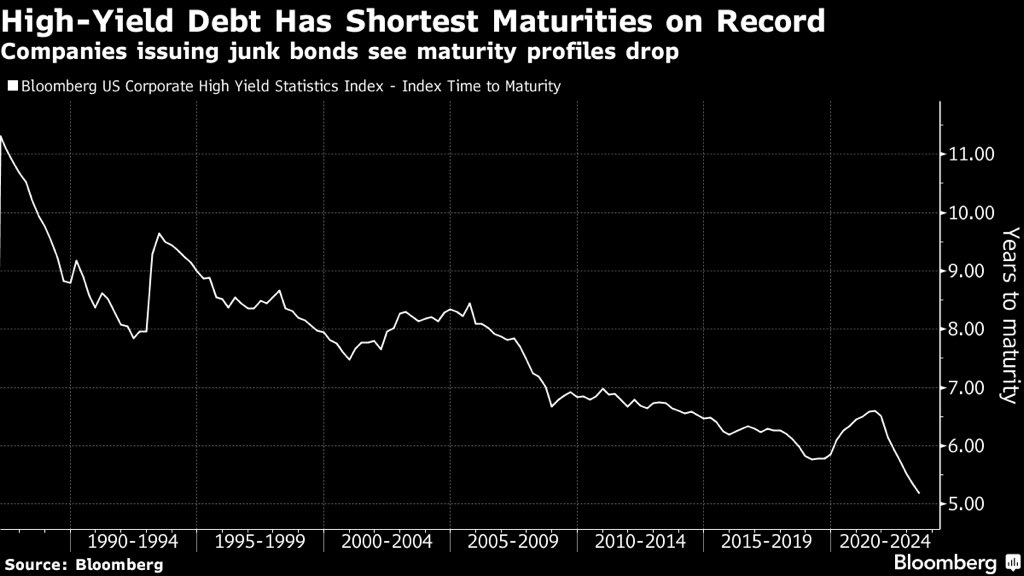
The most under reported issue in business is how Corporate America is about to hit a massive debt wall because of it.
A “debt wall” is a term that describes how much debt is due at various times. If a lot of debt comes due at the same time, it puts a lot of pressure on a company.
It turns out that companies issued a ton of short term debt during the pandemic at close to 0% interest rates. As you can see below, hundreds of billions of dollars will come due starting Jan-2024 and will need to be refinanced at MUCH higher rates.
Prepare for a bunch of companies who will not be able to refinance their debt and will thus see their equity value incinerated. This will hit the private equity industry very acutely, whose core playbook involves wrapping their companies in gobs of high yield debt.
That said, this will also ultimately create opportunities for those with capital on the sidelines to act as a buyer and recap the best of these companies.
Expect a bunch of articles about potential corporate bankruptcies starting this fall…lots of money to be made if you’re paying attention.
ChatGPT is getting 65 million visits per day.
But almost everyone's STUCK in beginner mode, missing out on its true potential.
Copy-Paste these 9 Advanced ChatGPT prompt techniques that will SAVE you hours a day: 🧵
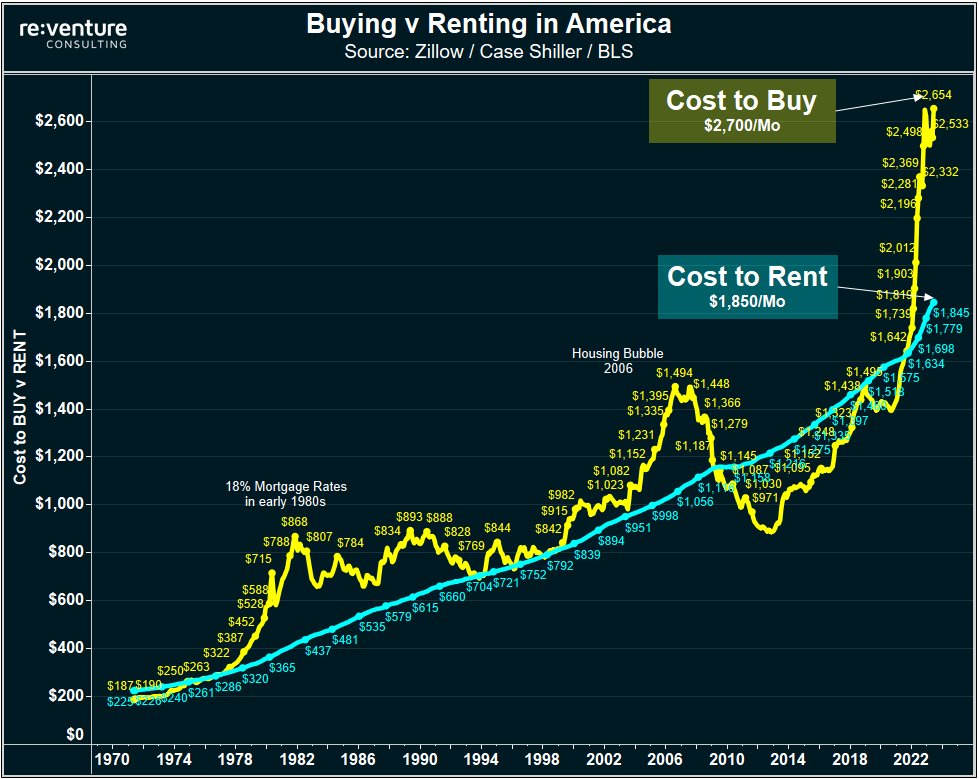
Mortgage rates back to 7%.
Meaning that the cost to buy a house in America is now approaching $2,700/month when including mortgage, tax, insurance, and maintenance.
Meanwhile, cost to rent is $1,850.
Biggest gap we've ever seen. Something has to break.