Listen to nature.
It tells us: monitored wildlife populations have declined by an average of 73% since 1970.
But it tells us this too: what falls can rise again. Elephants, tigers, green turtles, tuna. All made a comeback.
Not by chance. By people. Share with hope. #LivingPlanetReport
Footage credit: WWF & Open Planet
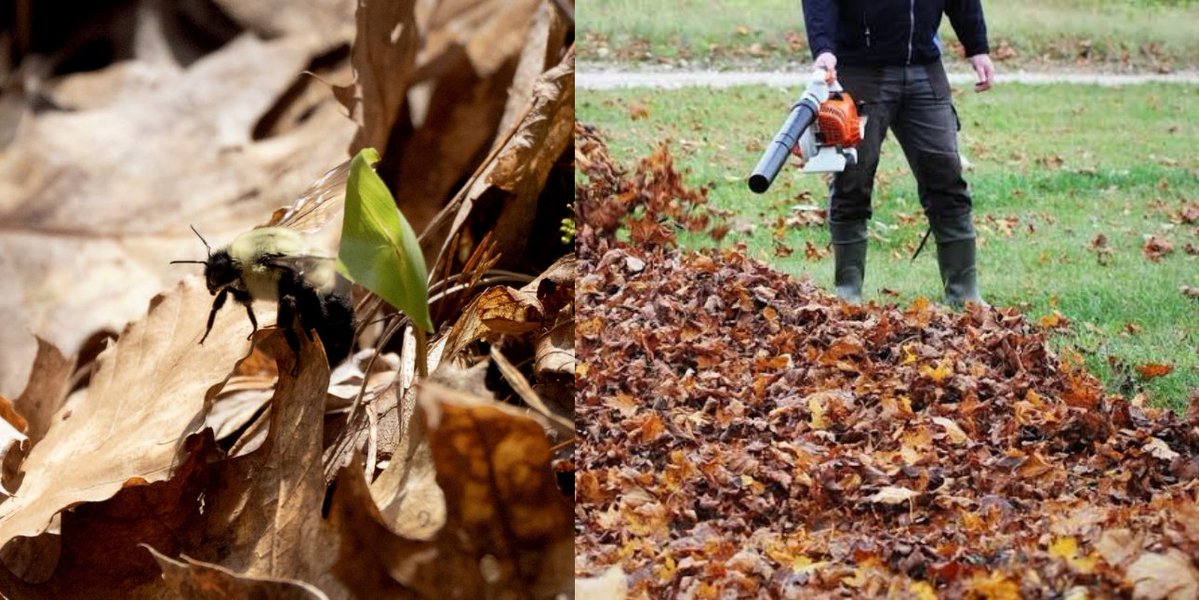
Every use of a leaf blower is a massacre.
A typical blower pushes air out at 150 to 200 mph. That's faster than a Category 5 hurricane, aimed straight at the layer of leaves where next year's butterflies, moths, and fireflies are hoping to spend the winter.
Woolly bear caterpillars curl up under those leaves. Luna moths hide their cocoons in them, disguised as dead leaves. Fireflies lay their eggs in them. Bumblebee queens sleep an inch or two below. Blast the beds down to bare dirt and all of it gets scattered, exposed or bagged for the landfill.
Flip it to vacuum mode and it's even worse. It sucks up whatever's in the leaves, insects and spiders included, and chops it up.
In 2019, Germany's environment ministry told people not to use leaf blowers unless they're indispensable, because small animals get sucked in or blown around and damaged.
Get a rake. Move the leaves off the lawn and driveway, pile them whole in your garden beds and under your trees, and leave them there until spring.
Next year's bumblebees and fireflies will thank you.
Crops under solar panels can be a win-win, and in dry places, shade can reduce water use, increase CO₂ uptake and water-use efficiency; and crops are on average 30% bigger and healthier.
Moths aren't attracted to lights. They're trapped by it. Thy keep their backs to the brightest thing around: and for millions of years, that was the sky.
[🎞️ whyrd_ig]
Big gulp! The Nautilus team spotted a gulper eel doing just that in @HawaiiReef. That pouch-like mouth can inflate in an instant, scooping up much larger prey like a pelican! This gulper was likely a juvenile, as they can grow up to three feet in length. #NautilusinPMNM
Big gulp! The Nautilus team spotted a gulper eel doing just that in @HawaiiReef. That pouch-like mouth can inflate in an instant, scooping up much larger prey like a pelican! This gulper was likely a juvenile, as they can grow up to three feet in length. #NautilusinPMNM
Tech business idea that makes life better! Just heard live speech of Prime Minister of Canada who said they're removing now tons of ghost gear. Not all world leaders know what ghost gear even is, do they? Canada is beautiful in so many ways, becuse of people who care
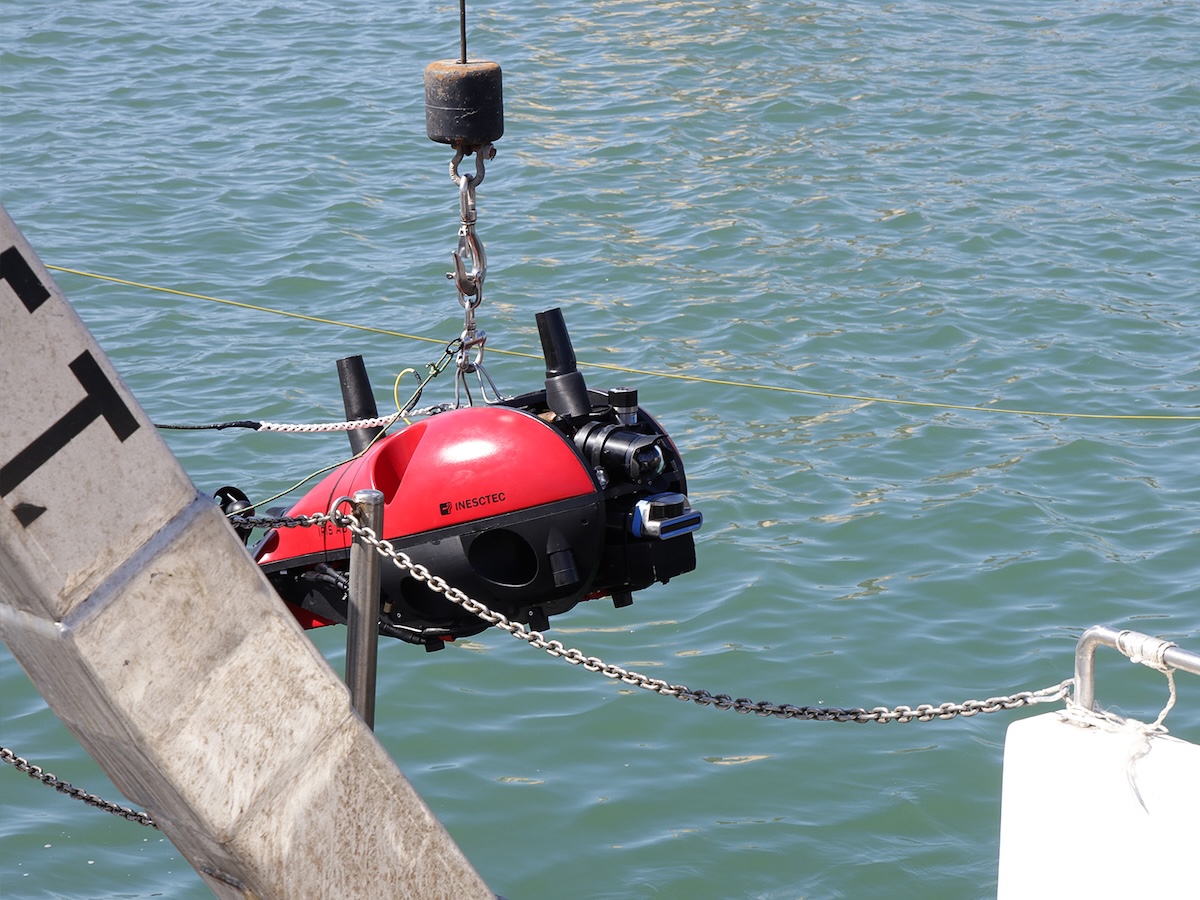
The international EU-funded NETTAG+ initiative, leveraging autonomous robotics from INESC TEC, acoustic sensors, and AI to locate abandoned ghost fishing gear, has been recognised with the prestigious Atlantic-WestMED Project Award 2026
Read more 🔗 https://t.co/QbDQgi3Ogf
@MarkJCarney Those who know what it is- would see this as a big achievement. !Tons! of ghost gear removed and new ways of monitoring! Oceanic life of all kinds is grateful (Speechlessly) ! Fishermen benefit from this too and can say just Thanks! (unlike fish)
@rationalaussie ASI likely will have self perseverence goal, so diversified ways and help-each-other is always logical, biology is the only validated longterm way to keep intelligence going. But it only works good and for billions years if theres diverse forms and solutions aka biodiversity
@rationalaussie biology is the only validated longterm way to keep intelligence going in largely unpredictable universe. But it only works so good and nonstop if theres diverse forms and solutions aka biodiversity
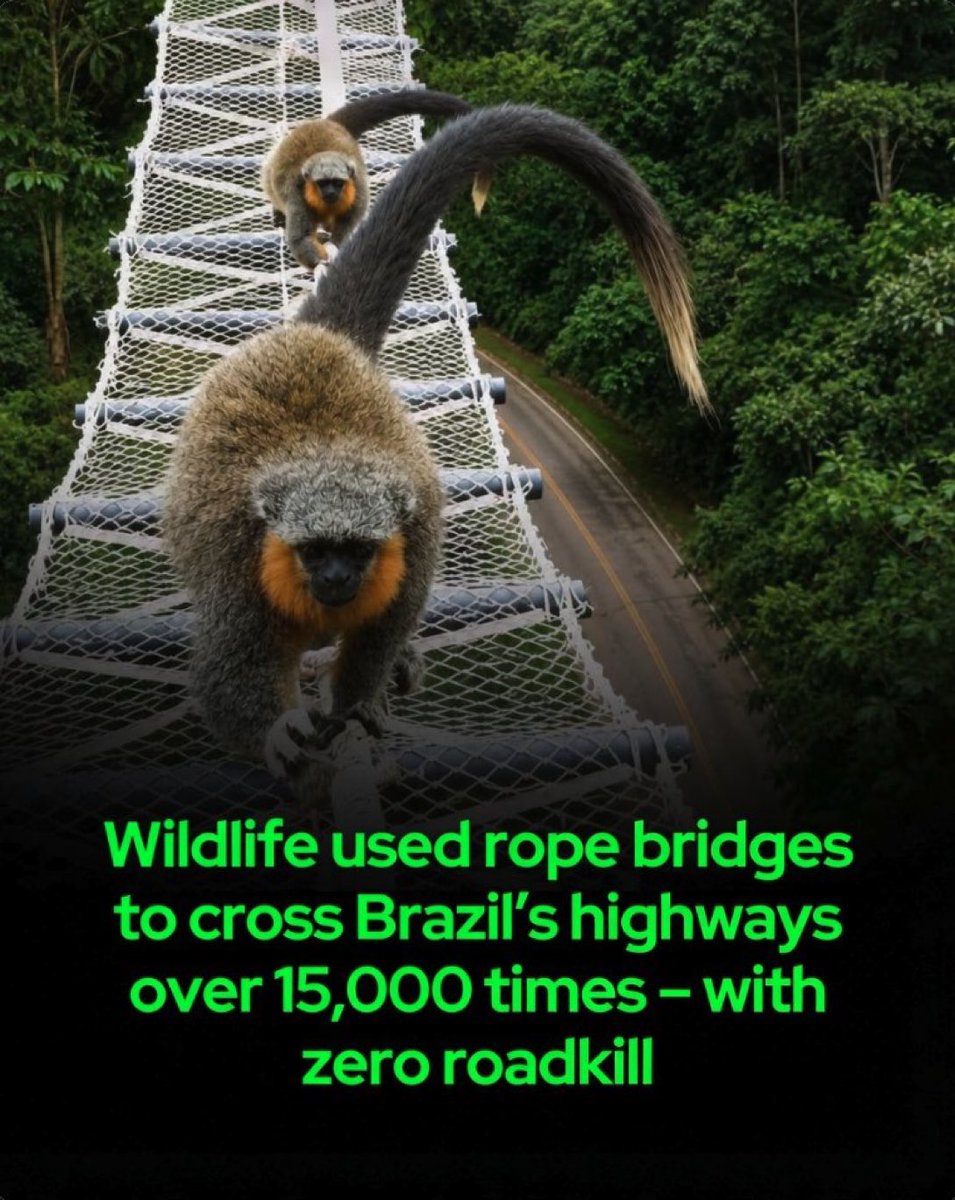
Rope bridges have enabled wildlife to cross a highway more than 15,000 times without a single recorded death.
In Alta Floresta, a municipality in Mato Grosso state, Brazil, eight canopy bridges were installed in response to rising concern over animals killed while traveling between forest fragments separated by roads. Camera traps monitored the structures for 15 months and documented thousands of crossings by monkeys and other arboreal mammals.
Among the species using the bridges were spider monkeys, red howler monkeys, night monkeys, capuchins, Schneider’s marmosets, and the critically endangered Alta Floresta titi monkey. The bridges were developed by Projeto Reconecta, a conservation initiative founded by Brazilian biologist Fernanda Abra. Each crossing consists of layers of interwoven rope designed to support different styles of movement. Some monkeys walk across the top, while others swing underneath or rely on their tails for balance. Opossums, sloths, and various small mammals have also been recorded using comparable structures.
The project demonstrates that animals often require time to adjust. In Alta Floresta, capuchin monkeys waited seven months before first using one of the bridges. Ongoing monitoring indicates that use increases as wildlife grows accustomed to the new pathways.
Roads create problems beyond direct collisions. They fragment habitats, isolate populations, and limit gene flow between groups. Over time, this can diminish genetic diversity and leave threatened species more susceptible to disease, habitat loss, and inbreeding. The loss of fruit-eating primates further harms the forest, as many of these animals disperse seeds and aid plant regeneration.
Brazil hosts the world’s greatest diversity of primates, yet nearly 9 million mammals are estimated to die on the country’s roads each year. The federal transport department has now adopted Reconecta’s rope-bridge design as the recommended national standard for Brazilian highways. Eight additional bridges are planned for Alta Floresta, and the project is expanding to other regions of Brazil as well as neighboring Suriname.
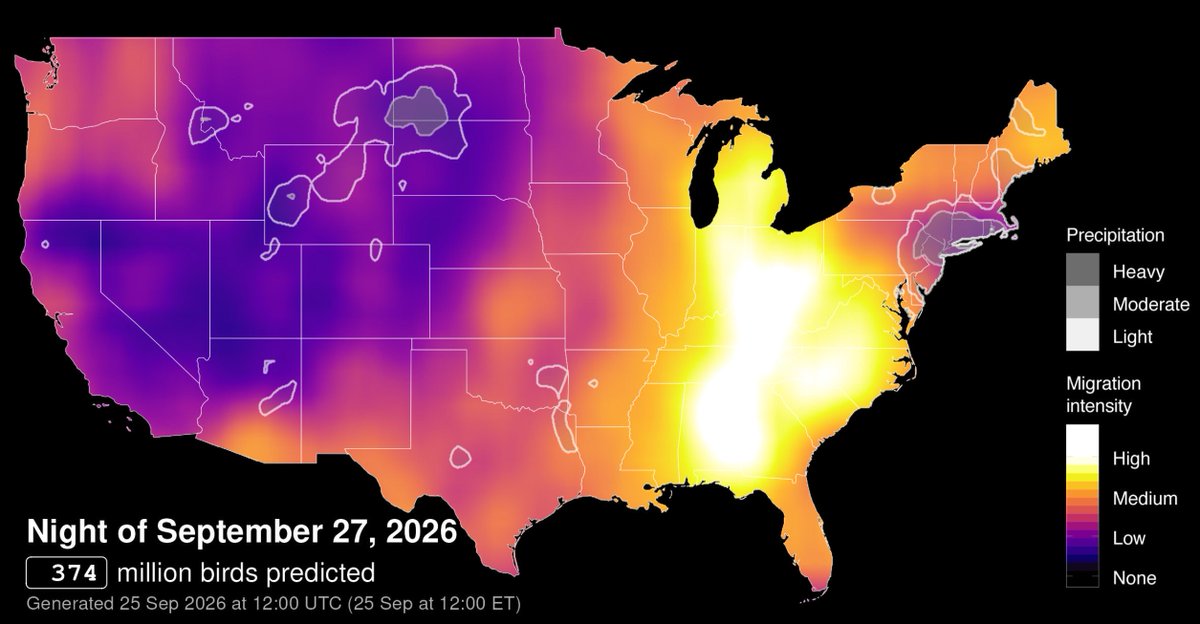
About 340-375M birds are predicted to migrate across the U.S. each night this weekend!
Lights at night can be very disorienting to birds during their long fall migration. To help prevent deadly bird collisions, turn off or dim unnecessary lights!
Graphic: CornellLab, BirdCast
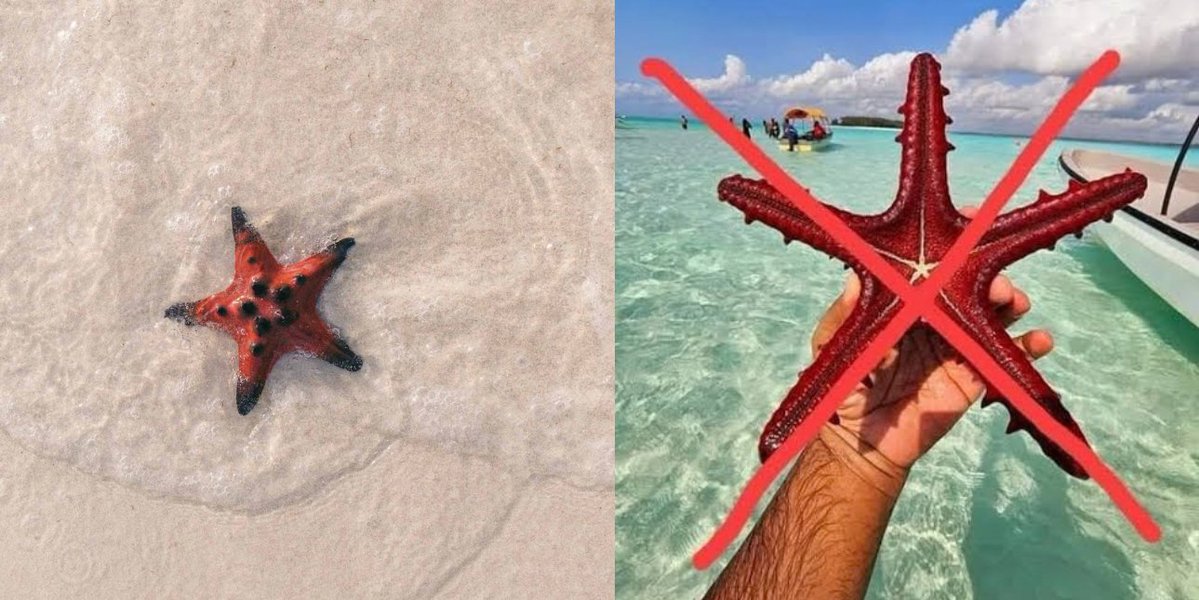
If you're a little ocean critter, it really sucks ass when a human rolls up and picks you up out of the water.
Take the humble sea star, for example. No gills, no lungs. It breathes through tiny bumps on its skin that pull oxygen straight out of the water. Lift it into the air for a photo and those bumps collapse. The critter suffocates.
And the grab itself does damage too. Sea stars, limpets, and mussels hang onto the rock with everything they've got, because letting go means getting eaten or washed away. Pry one off and you can tear it or kill it. Flip a rock and whatever lives underneath gets baked by the sun.
In a lot of marine protected areas, picking up an animal even for a second can get you fined.
Crouch down, get close, take the picture in the water. If you have to touch, wet your hand in seawater, make sure it's sunscreen-free, and use two fingers. Then leave it where it is.