The strongest argument against KJV-Onlyism is the Greek text of Revelation.
Much of the KJV's underlying text of Revelation back-translated into Greek from Latin.
Most importantly, it contains an unique reading not found in ANY Greek text prior to Theodore Beza's 1556 edition
@TheMuppetPastor I mean, I see the point, but this still leaves the question unanswered…
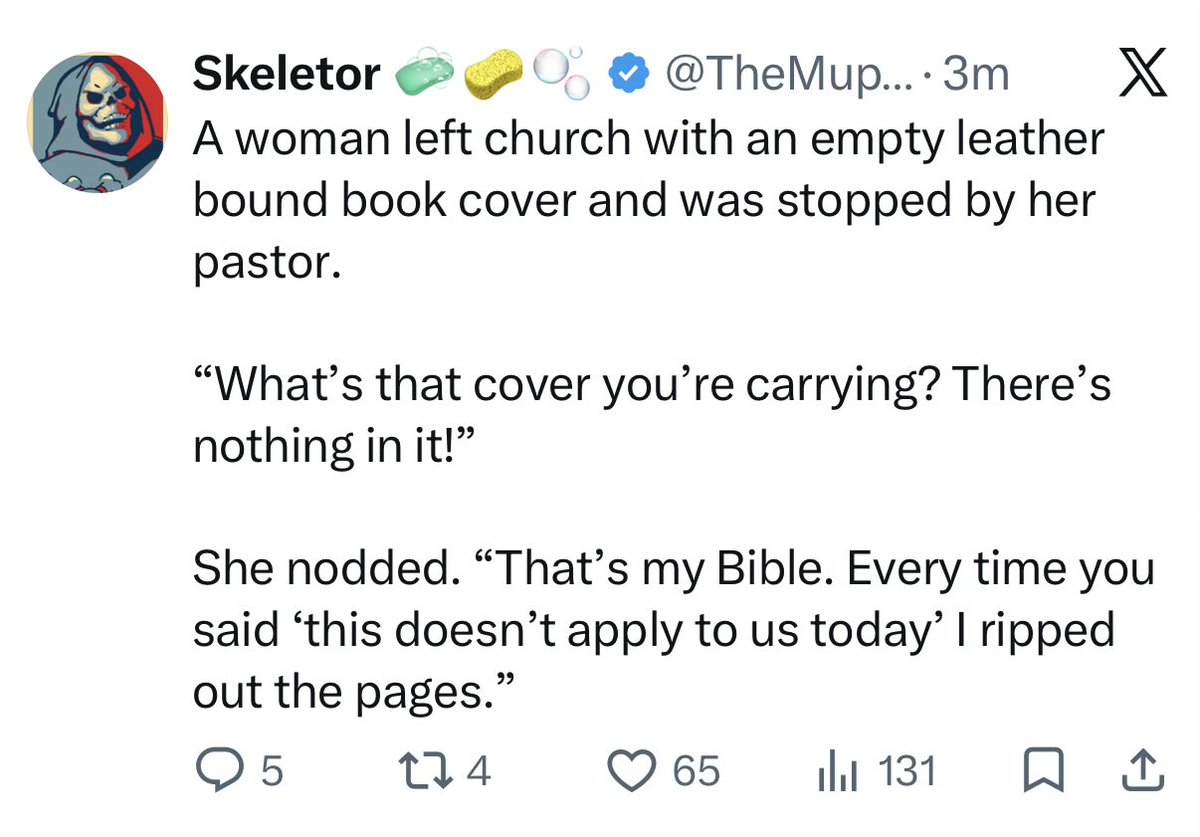
What’s your hermeneutic for determining what applies and what doesn’t?
Does that same hermeneutic work for both the Hebrew Bible and the New Testament?
I don’t disagree that literary and social-historical context are important to interpreting the biblical texts, but they don’t always clarify every difficult passage.
Sometimes passages are just difficult.
Ask Jephthah. Or Ezekiel.
@MechlerJib79375@CrankyFed Dogs weren’t considered acceptable sacrifices in the ANE.
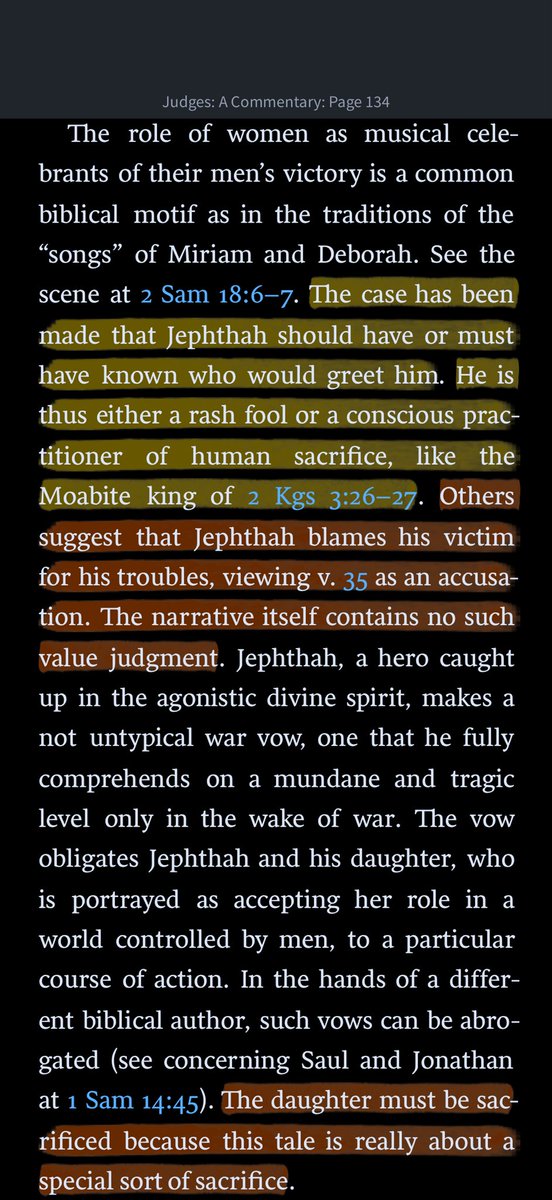
Jephthah may have actually intended a human burnt-offering all along, as many scholars suggest. He only expresses sorrow when it’s his only daughter who shows up.
Cf. Butler, WBC (Thomas Nelson, 2009), 288.
This is, near as I can tell, the consensus reading of scholars – even conservative ones: Jephthah offered his daughter as a human burnt-offering (‘olah).
See Block 1999, NAC, 375; Butler 2009, WBC, 292; Soggin 1981, OTL, 215–218; Niditch 2008, OTL, 133–34; Moore 1895, ICC, 299
@CrankyFed Well… YHWH’s spirit was upon him when he made the vow and then Yhwh upholds his end, necessitating Jephthah to keep his word (cf Judg 11:35–36).
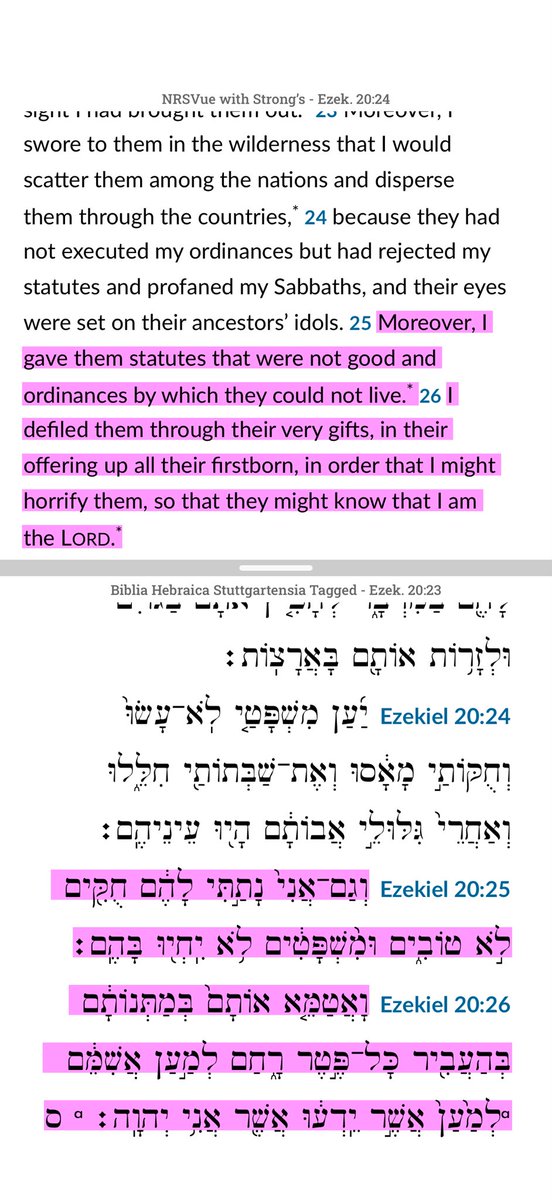
Ezekiel 20 also suggests Yhwh endorsed it by means of “not good laws” to “horrify” Israel.
@wheatthinwiens@CrankyFed Thanks, I’ve found a full .pdf of it.
Unfortunately, this seems more of a theological-homiletical commentary than a dedicated critical one.
I think much of his argument is built upon presuppositions, and does not work lexically / linguistically (cf ‘olah in HALOT; BDB).
This is, near as I can tell, the consensus reading of scholars – even conservative ones: Jephthah offered his daughter as a human burnt-offering (‘olah).
See Block 1999, NAC, 375; Butler 2009, WBC, 292; Soggin 1981, OTL, 215–218; Niditch 2008, OTL, 133–34; Moore 1895, ICC, 299
Daily reminder Christian’s ignore the fact Jephthah makes a vow to Yahweh for victory in battle: whatever comes out of his house first, he’ll offer as a burnt offering. It’s his daughter. He carries it out.
@wheatthinwiens@CrankyFed Thanks, I’ve found a full .pdf of it.
Unfortunately, this seems more of a theological-homiletical commentary than a dedicated critical one.
I think much of his argument is built upon presuppositions, and does not work lexically / linguistically (cf ‘olah in HALOT; BDB).
@xcnikahd It’s a minority reading, but some suggest that Jephthah consecrated his daughter to perpetual virginity via temple service, hence “weep over my virginity, I and my companions” (11:37).
Once I track down a source I’ll share it here
Many scholars actually suggest that Jephthah intended a human burnt-offering all along.
See Barry G Webb, “The Book of Judges: An Integrated Reading” JSOTsupp 46 (1987), 64; Spronk 2019, HCOT, 341–53.
Similarly, Moore 1895, ICC, 299; Butler 2009, WBC, 288.
@wheatthinwiens@CrankyFed I’ll double check Jordan’s work when I am able, but I find this perspective far from compelling.
The wording of the vow is pretty explicit: “I will cause it/him to go up as a burnt-offering (‘olah).”
I think this is the majority reading, in spite of theological difficulties
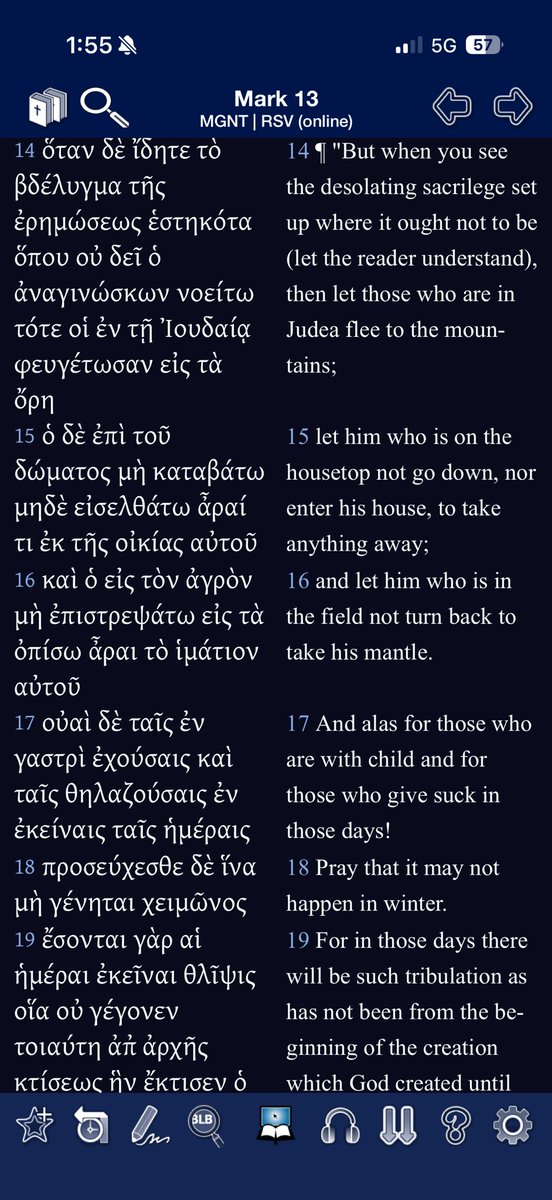
The strongest argument against KJV-Onlyism is the Greek text of Revelation.
Much of the KJV's underlying text of Revelation back-translated into Greek from Latin.
Most importantly, it contains an unique reading not found in ANY Greek text prior to Theodore Beza's 1556 edition
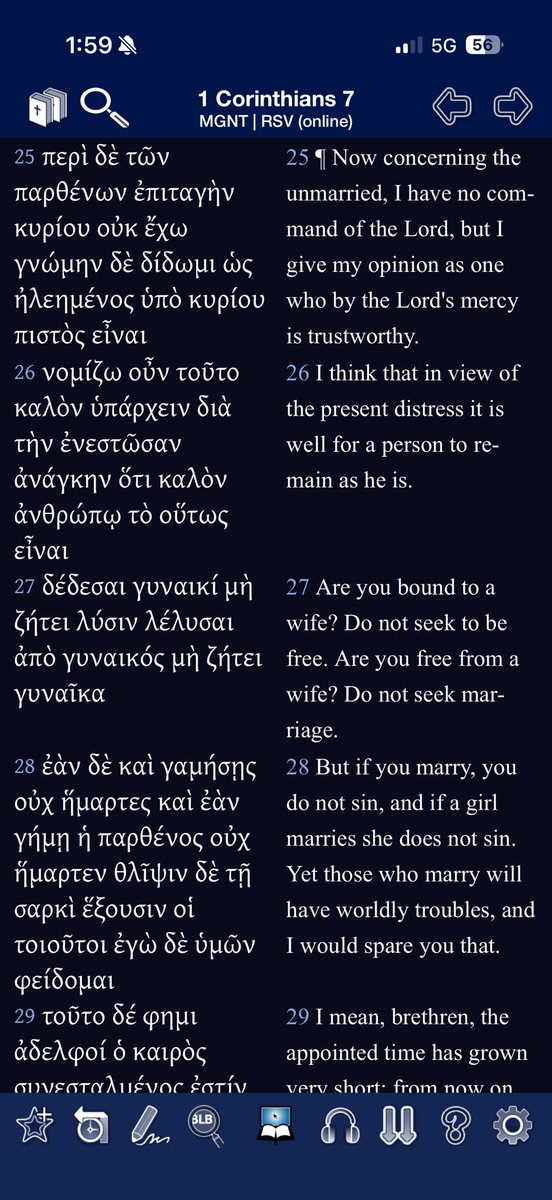
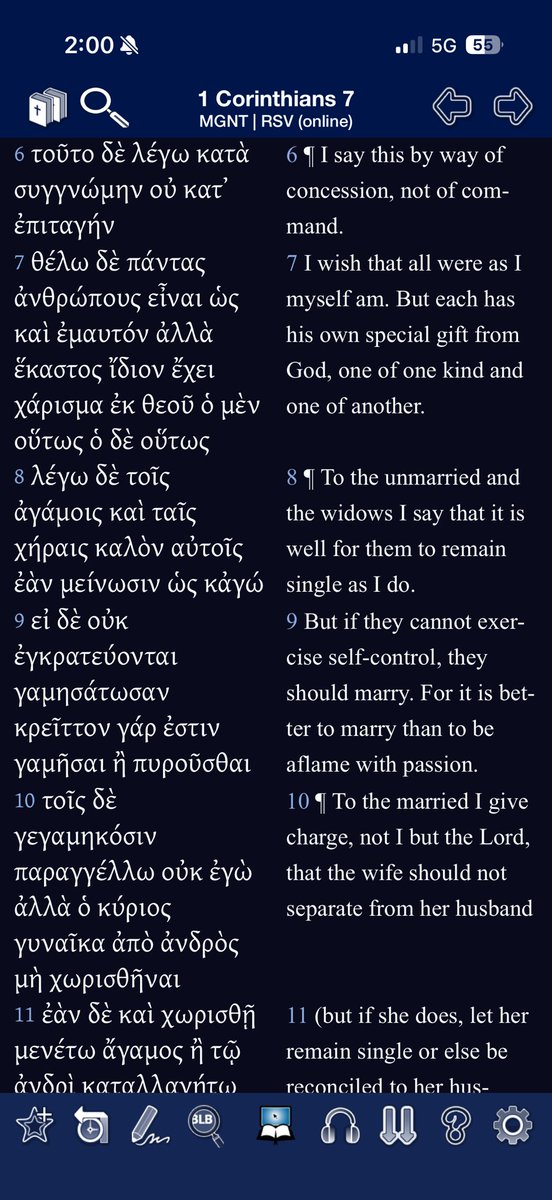
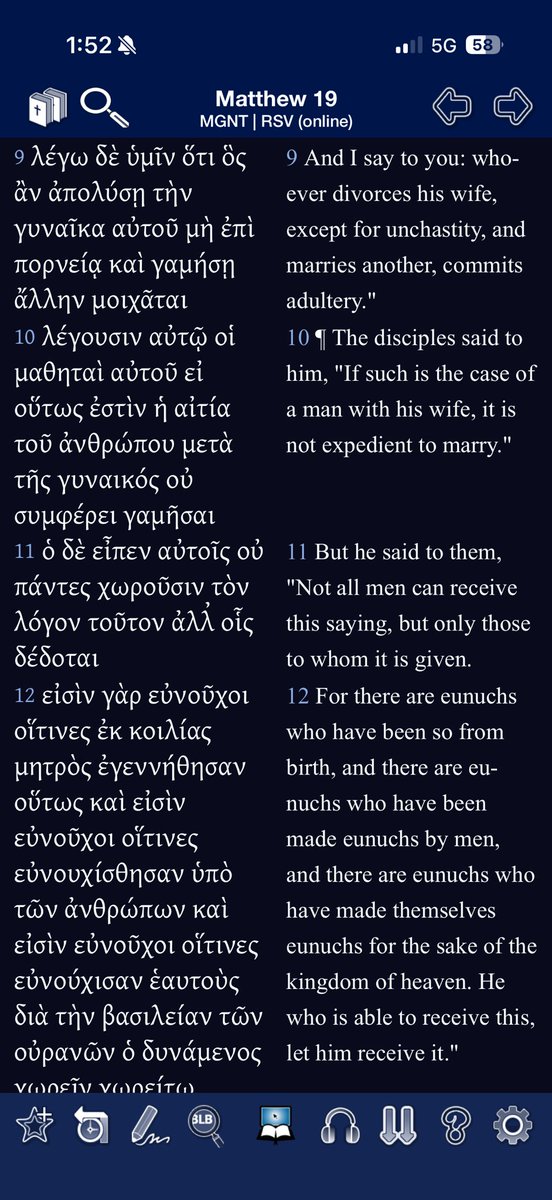
Both Jesus and Paul were single, didn’t have children, and thought that the Kingdom of Heaven was imminent.
While Paul says that it’s not sinful to marry, he views celibacy for the kingdom as the ideal.
After all, why change life circumstances when the Parousia is so close?
@Katapetasma2@dmichaelclary No they didn't. You're whole theological "shtick" pits OT v NT in a heretical manner.
Be fruitful and multiply has never been abrogated.
I guess that I just don’t see the problem here… If your reading / interpretation of scripture is at odds with evidence, maybe the problem is your reading / interpretation.
Or perhaps even the presuppositions you have about the text themselves…
During a recent Biologos event, N.T. Wright and Dr. Francis Collins surprised folks with a musical number, singing that the Earth is 14 billion years old and that the events in early Genesis were products of evolution.
Notably, Collins believes humans evolved from groups of thousands of primates that existed 100,000 years ago, specifically saying the concepts of Adam and Eve as the literal first couple and the ancestors of all humans ‘do not fit the evidence.’
Similarly, Wright believes Adam and Eve were likely 'human-like creatures' and 'proto-humans' that lived up to 650,000 years ago, saying on his podcast:
"It seems to me perfectly reasonable to suppose that God would say to one pair of proto-hominids, whatever we’re to call them,’ come with me. I’ve got a special purpose for you...So that it seems to me is a way of saying that if there were an original Adam and Eve, that would be what it was all about."
@theshepherd2018@RandalRauser Well, I guess not all of them, but Abraham and Jacob were, both of whom had encounters with Yhwh. Isaac is a bit less prominent than the other two.
Where does he tell them? Or why didn’t he tell them?
@RandalRauser Yeah, Yhwh explicitly endorses it in the Covenant Code; see the laws about taking a female sex-slave/concubine (’amah) in Exod 21:7–11.
You simply cannot diminish the material rights of your first wife if you take a second.