Publication alert:
"EU Restrictive Measures and Third Countries’ Evidence" w/Celia Challet in
@EFAReview
With a particular focus on Ukraine.
https://t.co/X3HuYCd5Zs
One to keep an eye on - I hear ambassadors at Coreper tomorrow will discuss whether to remove sanctions on Chinese chipmaker Yangzhou Yangjie Electronics, listed for helping Russia's military, because European carmakers are struggling without access to it's chips...
China has just released new State Council regulations on outbound investment (《国务院关于对外投资的规定》), significantly tightening controls on Chinese investors investing abroad. The new rules expand the scope of state oversight and further integrate outbound investment into China’s broader national security, export control, and data governance framework.
Key provisions include:
1. The definition of “investor” has been broadened. Previously, the rules mainly applied to domestic enterprises and organizations (中国境内的企业、其他组织). The new regulations explicitly include individual residents (居民个人). Article 27 also states that investors who fail to complete required approval or filing procedures for overseas investment may face fines and confiscation of illegal income. This likely explains last week’s draconian restrictions on Chinese individuals investing through foreign stock brokers.
2. Article 13 directly links outbound investment to China’s export control regime. Investors are prohibited from exporting or using banned goods, technologies, services, or related data abroad, and restricted items require prior authorization. The provision also covers indirect technology transfer through cross-border deployment of personnel, technical guidance, overseas work arrangements, or training programs. In effect, outbound investment is now explicitly tied to China’s controls over technology, data, and talent flows.
3. Article 15 incorporates outbound investment into China’s national security review system. Relevant State Council departments may review overseas investments, asset transfers, or disposals that affect or may affect national security. Organizations and individuals are required to cooperate fully and comply with review decisions. This provision is particularly noteworthy when read alongside the recent ban involving Manus.
4. Article 22 further restricts cooperation with foreign legal and regulatory authorities. Chinese organizations or individuals involved in overseas litigation, arbitration, or foreign investigations must comply with China’s laws on state secrets, data security, personal information protection, export controls, and judicial assistance before providing evidence or materials abroad. Where approval is legally required, the relevant procedures must be followed first. In practice, this makes it extremely difficult for foreign governments to obtain data from Chinese firms — a point illustrated by China’s recent first finding of improper foreign extraterritorial jurisdiction in the Nuctech case.
5. Article 32 extends these rules to investments in Hong Kong, Macau, and Taiwan unless separate rules apply. This means the new outbound investment controls also affect the Hong Kong market, potentially dealing another blow to Hong Kong’s role as an international financial center.
Overall, the new regulations mark another major step in China’s tightening control over cross-border capital flows, technology transfer, and overseas economic activity. It is becoming increasingly difficult for Chinese investors to invest abroad independently of state oversight. The move also suggests growing concern in Beijing over capital outflows and pressure on China’s foreign exchange reserves.
https://t.co/DBR9u1L9H0
Artificial intelligences do not undergo experiences, do not possess a body, do not feel joy or pain, do not mature through relationships, and do not know from within what love, work, friendship or responsibility mean. Nor do they have a moral conscience, since they do not judge good and evil, grasp the ultimate meaning of situations, or bear responsibility for consequences. They may imitate or even simulate, but they do not understand what they produce, for they lack the affective, relational, and spiritual perspective through which human beings grow in wisdom. #MagnificaHumanitas
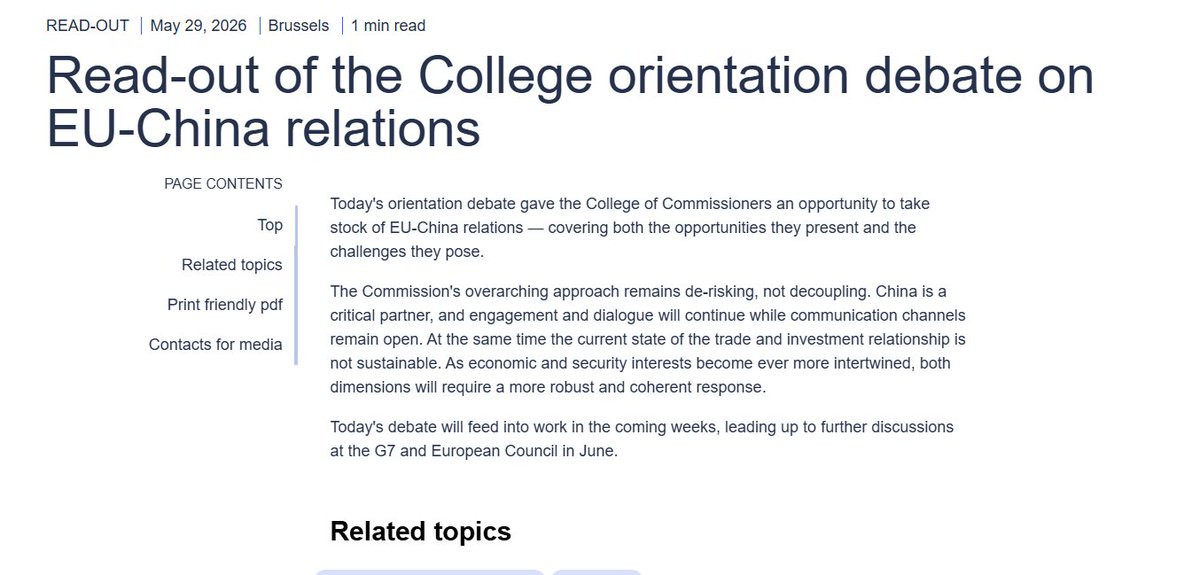
Commission China debate is now over - short readout
"Current state of the trade & investment relationship is not sustainable" & "requires a more robust and coherent response"
"China is a critical partner, engagement & dialogue will continue while comms channels remain open"
EU Foreign Ministers just gave the go-ahead to sanction Israeli settlers over violence against Palestinians.
They also agreed new sanctions on leading Hamas figures.
It was high time we move from deadlock to delivery.
Extremisms and violence carry consequences.
If trade agreements can foster cooperation on export controls against adversaries, they can also include commitments to refrain from export controls among allies.
New Singapore-New Zealand deal commits to free flow of essential products even in times of crisis.
@RobFrancisEU I can't read it, unfortunately. I was just thinking: on substance, similar provisions (that are criticised) are to be found EU-UK TCA, EU-Chile, and EU-Mexico; on procedure (the split), we can debate. Not such a big impact, eventually. Letta supported this approach in his report.
So finally change at the top of @Trade_EU . Sabine Weyand heads to a teaching job at the University Institute Florence while Ditte Juul Jorgensen takes over (currently energy DG). Announcement soon.
What five decades of summitry reveal about U.S.-China relations ahead of the Trump-Xi summit next month
My latest in @ForeignPolicy with my @AsiaPolicy colleague @harrisonwang2
We draw four lessons from a database of all 136 direct conversations between U.S. presidents and PRC paramount leaders, from Nixon’s sit-down with Mao in February 1972 through Trump’s call with Xi this February.
1️⃣ Success should be measured not by whether Trump and Xi make a dazzling announcement but by whether they leave behind thicker diplomatic machinery than they found. Follow-through matters more than the press release.
2️⃣ Leader-level diplomacy matters most when the relationship is thin. So far this decade, U.S. and Chinese leader have averaged 2.5 conversations per year, down from 4.6 in the 2010s and 5.6 in the 2000s. Trump is the key player in DC's China policy, so this summit is critical to the U.S.-China trajectory.
3️⃣ The most productive summits focus on tractable problems rather than abstract aspirations about the broader relationship. Purchase agreements and a Board of Trade are far more likely outcomes than a grand bargain over Taiwan.
4️⃣ Do not over-read atmospherics. They are important but spectacle can obscure how little strategic alignment actually exists. The important questions to ask are practical ones: Did the summit create a schedule for future leader contact? Did it restore or strengthen military communications? Did it deepen working-level contacts on issues such as fentanyl, arms control, and cancer research? Did it produce credible processes for managing trade and investment disputes without touching the most sensitive national-security restrictions?
Trump's objective in Beijing should not be to resolve the U.S.-China rivalry, but to impose more discipline on it. In a relationship defined by strategic competition, the most valuable outcome would be clearer bottom lines and more reliable mechanisms for handling friction, as well as a deeper understanding of shared and divergent interests on transnational challenges.
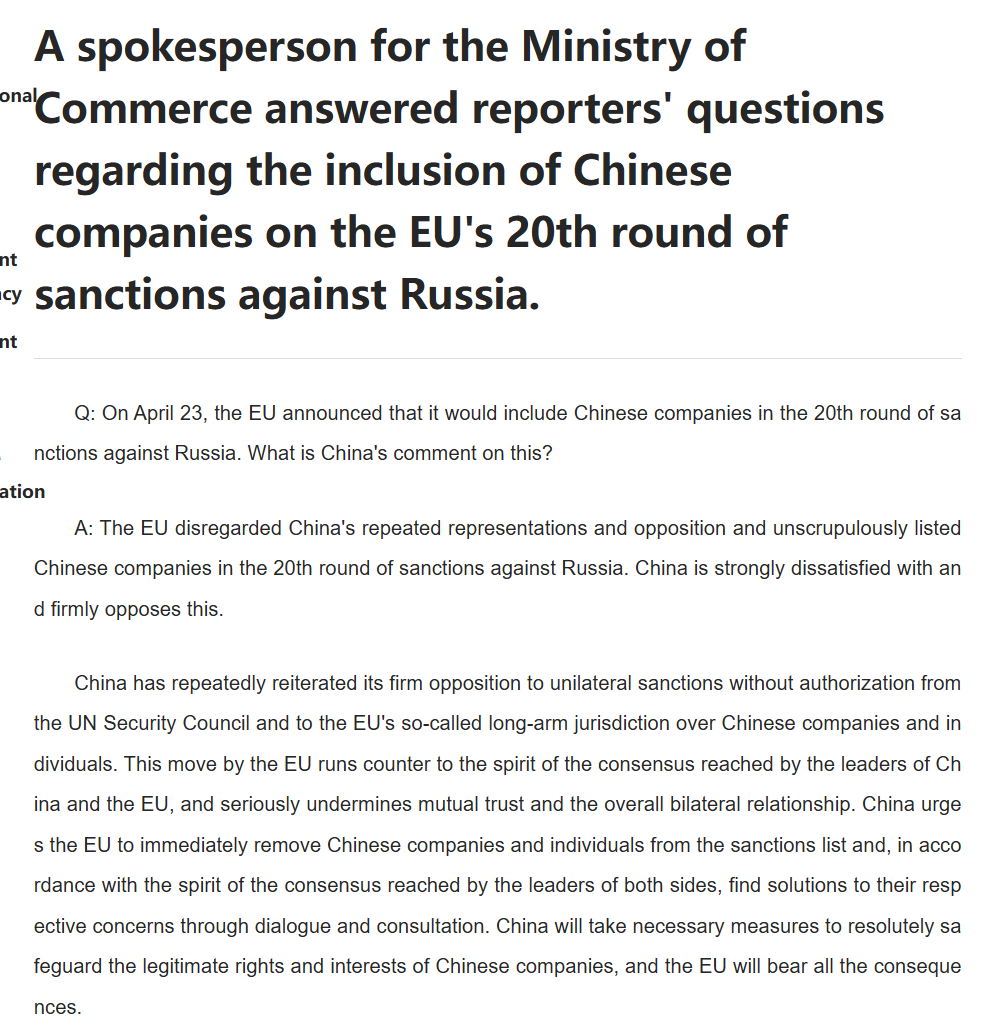
Fierce threat from China after the EU listed > 2 dozen Chinese/HK companies in its 20th package of sanctions:
"China will take necessary measures to resolutely safeguard the legitimate rights and interests of Chinese companies, and the EU will bear all the consequences."
Montenegro’s place inside the EU is now taking shape.
Today, Member States decided to start drafting Montenegro’s EU Accession Treaty.
This is a major step on the path to EU membership, a clear recognition of Montenegro’s progress, and an encouragement to accelerate reforms.
It also offers a chance to draw lessons from past enlargements and include new and stronger safeguards in future accession treaties to prevent backsliding on the rule of law and fundamental values.
I know there is huge excitement around Magyar's win, and I myself am very relief that Orban will be gone. At the same time, I'm bit skeptical about the future with Magyar's government and the impact in the EU overall. Let's not forget his history and his awkward takes.
The core message is clear: Magyar government will restore freedom, the rule of law, and democratic governance. Not as abstract ideals, but as the foundation of a functioning state. Hungary aims to rebuild its credibility within NATO and the European Union - acting as a constructive, reliable partner that contributes to a stronger Europe. Predictability and stability are key commitments from day one. The goal is a Hungary that allies can trust, and citizens can rely on. This also means a firm stance on human rights, and a return to honest, transparent governance.
# First international press conference of Prime Minister-Elect, Péter Magyar
Xi to Sanchez:
"In the world today, unruly elephants are born under the bushes;
The global order is filled with collapsing etiquette and bad music.
当今世界乱象丛生;
国际秩序礼崩乐坏。"
"Jesus is silent, not because he has nothing to speak, but because he will not follow the logic of verbal violence. His silence is a refusal to participate in the game of power that crushes. It is a silence that refrains from fueling the cycle of evil, nor does it seek to hurt anyone" - Quote from the Palm Sunday Meditation of H.B. Card. Pizzaballa
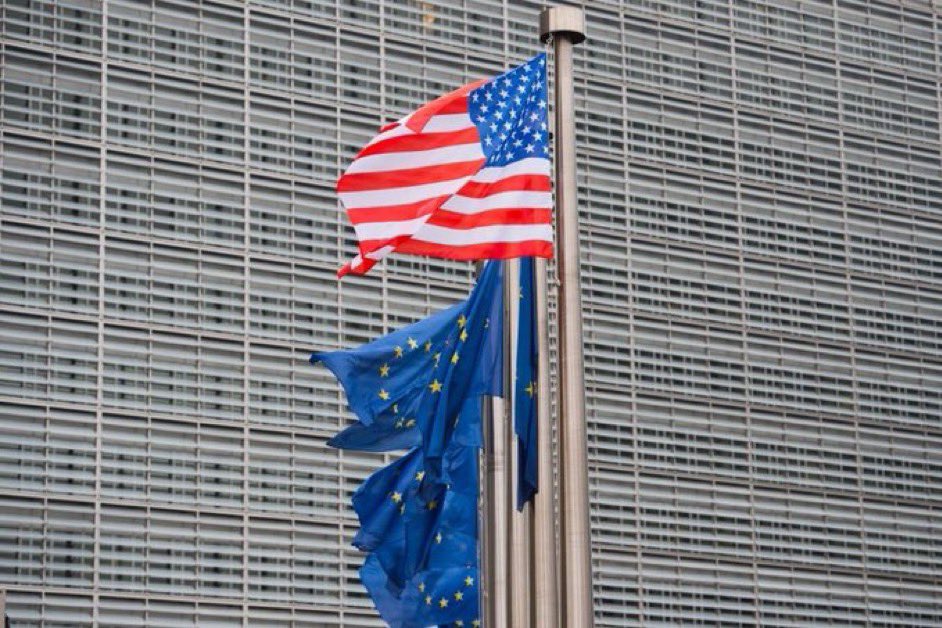
🇪🇺🇺🇸 A crucial step by @Europarl_EN today. We need the EU-US deal in force on both sides - delivering real certainty for EU businesses and showing that genuine partnership gets results.
This is the direction we need. Tomorrow, I will meet Ambassador @jamiesongreer in Cameroon.
The EU is limiting the flow of confidential material to Hungary and leaders are meeting in smaller groups — as Polish Prime Minister Donald Tusk warned of long-standing suspicions Viktor Orbán’s government is sharing information with Russia. https://t.co/74KTr4CHGk