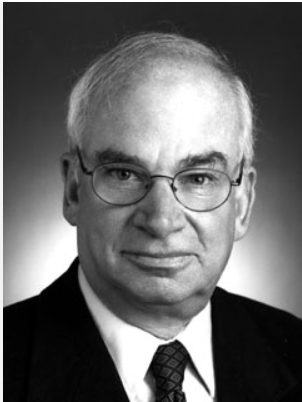
Today's edition of "theory papers you should know" is Joel Sobel's 8-page gem, "How to Count to One Thousand". At a high level, it's about building in redundancy in completing a complex task. At a low level, it's about how to count a stack of $1 bills to see if you have $1000.
¿Es el problema de la corrupción en España solo de reglas o de nuestros políticos? No. Tenemos reglas horrorosas, sí, y una selección de élites pésimas, pero cualquiera que pasee por una calle de una ciudad española comprobará cómo muchos españoles (españoles de España, para que no haya duda) se saltan constantemente las reglas, aparcando donde les da la gana, tirando basura donde no corresponde o llevando al perro sin cadena en sitios donde no se puede (ejemplos que vi en solo dos días de noviembre, la última vez que fui a Madrid).
Ya sé lo que me van a decir: estas son anécdotas, no es evidencia seria. Pero resulta que sí tenemos evidencia seria.
Hasta 2002, los diplomáticos de las Naciones Unidas tenían inmunidad diplomática respecto de las multas de aparcamiento en Manhattan, por lo que podían aparcar donde quisieran, sin más límite que las normas culturales de sus países (o las reglas internas de las embajadas).
A dos economistas, Raymond Fisman y Edward Miguel, se les ocurrió considerar las multas de aparcamiento impagas de los diplomáticos de cada país como una medida de la corrupción en ese país. Si los diplomáticos “pasaban” de las reglas de aparcamiento porque no había consecuencias, era una medida de lo corrupto de ese país (o al menos de un grupo de élite, que son sus diplomáticos).
El resultado es un artículo muy famoso, “Corruption, Norms, and Legal Enforcement: Evidence from Diplomatic Parking Tickets”, publicado en una de las mejores revistas de economía del mundo.
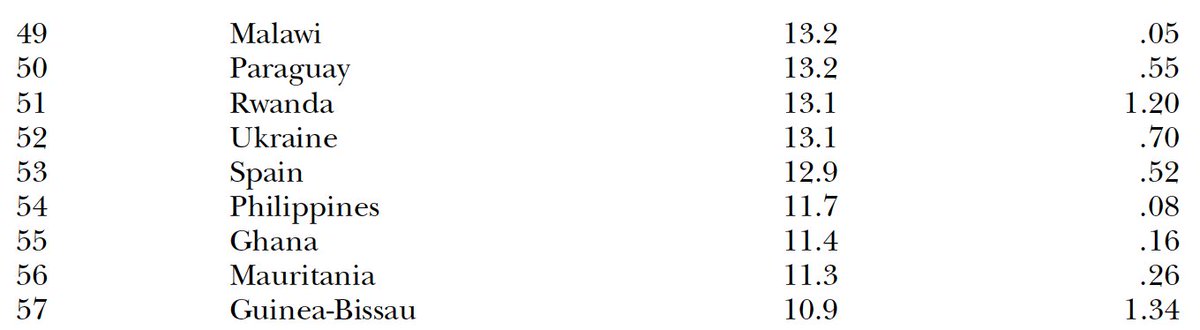
¿Cómo salen los diplomáticos españoles? Mal. El diplomático español medio acumuló 12,9 multas sin pagar por año en cada uno de los cinco años del estudio, es decir, algo más de una multa al mes (como referencia, en 1998 había 15 diplomáticos españoles acreditados en las Naciones Unidas en Manhattan). Como se ve en la tabla, España está al nivel de Ruanda o Ghana.
En comparación, los diplomáticos de Noruega o Suecia no acumularon ninguna multa impaga. Como me contó uno de los autores del trabajo: cuando un diplomático sueco vio el estudio, le respondió que una multa de tráfico no pagada hubiera sido un escándalo tan grande en Suecia que el ministerio de asuntos exteriores entero tendría que haber dimitido.
Para contrastar, una vez un alto funcionario español, trabajando en Estados Unidos (no político, funcionario de los de oposición rimbombante), me explicó, ante mi sorpresa: ¡Estar en las Naciones Unidas es fantástico (bueno, empleó otra palabra más fea), puedes aparcar donde te salga de las narices!
Pero lo interesante es que cuando las reglas cambiaron en 2002 y los diplomáticos perdieron su inmunidad, las multas de tráfico de los diplomáticos españoles cayeron a 0,5 de media al año.
¿Cuáles son las conclusiones que saco de este artículo?
Primero, España es un país con una cultura de normas pobre. Un grupo de élite, los diplomáticos en las Naciones Unidas, abusaba, en promedio, de manera descarada del sistema (me imagino que habría mucha heterogeneidad, con algunos diplomáticos con pocas multas y otros con centenares). Y encima presumían de ello.
Segundo, los cambios en las reglas funcionan: las multas cayeron de 12,9 a 0,5.
Tercero, a largo plazo probablemente el cambio de reglas llevaría a que cambiara la cultura.
After four years full of challenges and hard work, it's time to move on.
I leave with the feeling that the mission is complete. 4 seasons, 3 championships.
I will never forget the love I received from the fans from my very first days.
Catalonia is my place on earth.
Thank you to everyone I met along the way during these beautiful four years.
A special thank you to President Laporta for giving me the chance to live the most incredible chapter of my career.
Barça is back where it belongs.
Visca el Barça. Visca Catalunya 💙❤️
@fcbarcelona
I am presenting in "preview mode" today for the first time Messy Jobs, in the Alumni Weekend of @LSEPublicPolicy. I profit from the opportunity to show you the cover by James Clarke!
We are working hard towards a June 15th publication date. Hopefully we shall make it!
Attention @arxiv authors: Our Code of Conduct states that by signing your name as an author of a paper, each author takes full responsibility for all its contents, irrespective of how the contents were generated. 1/
Una de las cosas más frustrantes de mi trabajo es la sensación de competir con las manos atadas a la espalda.
1. Madrid ofrece peores condiciones que muchas otras CC.AA. En el caso de los ayudantes doctores la diferencia con Cataluña es superior a los 10mil euros.
Celebrated every April, Sant Jordi's Day is Catalonia’s favorite day for love and literature.
In celebration, the Fernández family donated books, roses, and bookmarks to the students.
He also visited the Brooklyn Nets offices to hand out roses for each employee, sharing in the tradition 🌹
Recently accepted by #QJE: “Making the Invisible Hand Visible: Managers and the Allocation of Workers to Jobs,” by Virginia Minni (@VirginiaMinni): https://t.co/0sFxZd1tba
Just in: Detroit Pistons star Cade Cunningham has been diagnosed with a collapsed lung and is expected to miss an extended period of time, sources tell ESPN.
A day like today, exactly 25 years ago, my admired advisor Sherwin Rosen died, way too young, at 62 years of age. He was then the president of the AEA. We owe him some crucial ideas. I highlight 7.
Hedonic Prices and Implicit Markets (JPE, 1974). How does the market price something as complex as a car, a house, or a job? Goods are bundles of characteristics. In equilibrium, the price schedule is the envelope of heterogeneous buyers' bids and heterogeneous sellers' offers—so market prices reveal the implicit value of each characteristic. Key to environmental valuation, the value of life, and urban quality-of-life indexes.
Monopoly and Product Quality (JET, 1978, with Mussa). Did you wonder if your tourist class seat is too narrow? A monopolist who faces buyers differing in taste for quality degrades what she sells to low types so high types can't mimic them and capture the surplus. The foundational screening model.
Education and Self-Selection (JPE, 1979, with Willis). Do grads from better colleges earn more because of how much they know? People sort into college by comparative advantage: those who go are better at college-type work, those who don't are better at non-college work. The returns need to be corrected. A crucial idea for an entire literature.
The Economics of Superstars (AER, 1981). Why do rewards concentrate at the top in music, movies, sports etc.? When output can be replicated at zero marginal cost, and there is little substitutability in production, small talent differences produce enormous earnings gaps. The economics of the internet, twenty years early.
Rank-Order Tournaments (JPE, 1981, with Lazear). When individual output is noisy, firms pay on rank; the spread between winner and loser is the instrument that elicits effort.
Authority, Control, and the Distribution of Earnings (Bell Journal, 1982). In a hierarchy, each manager's talent is multiplied across everyone below her. A slightly better person at the top is worth disproportionately more- a better general decides which war we fight, hence affects all of our marginal products. That is why we see convexity of pay at the top of organizations.
Prizes in Elimination Tournaments (AER, 1986). In a multi-round promotion ladder, the biggest jump must come in the final round, because the option value of future rounds has vanished, only the current prize can motivate.
Professor Rosen would look distracted in seminars. He would look confused. Then he'd say something that changed the entire analysis and discussion. He never tried to look good at the speaker's expense. He just saw the problem more deeply than anyone in the room- no exceptions.
One personal anecdote: during my PhD studies, I was totally depressed: I could not advance, all my ideas were awful. I could not bear going to his office. As i was coming upstairs towards the 4th floor of the Social Science building I met him in the stairs. He said. "I have not seen you, Luis, for a while." I said "Sorry Prof. Rosen, I had nothing to show you." He said "Well, you have to come. Come every week, whether you have something or not". incredibly, that short exchange was probably the most important one in my life. The duty to go to his room got me out of the hole.
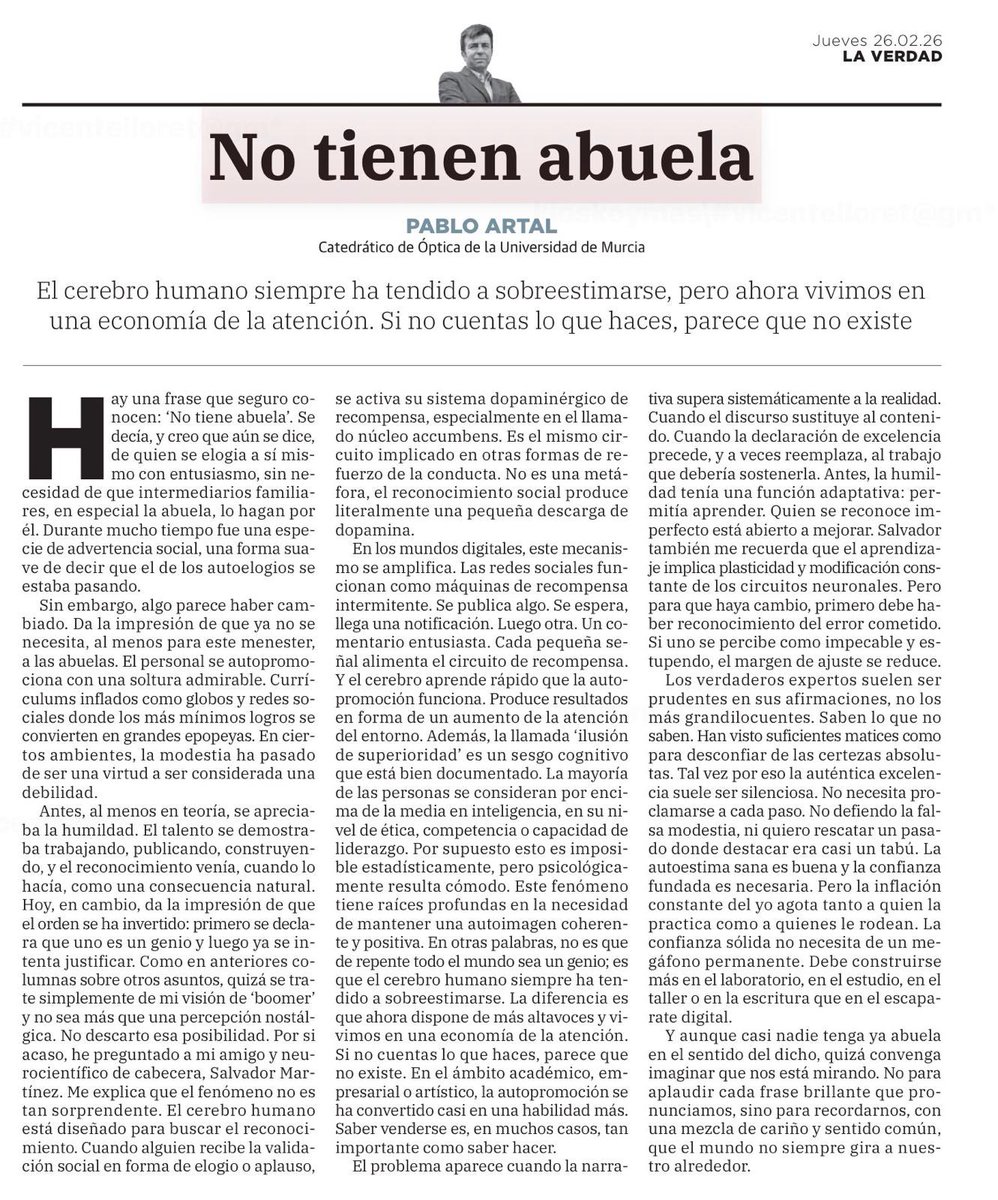
"No tienen abuela"
Mi artículo de opinión quincenal de hoy en @laverdad_es
"Antes, al menos en teoría, se apreciaba la humildad. El talento se demostraba trabajando, publicando, construyendo, y el reconocimiento venía, cuando lo hacía, como una consecuencia natural.”
I have recently received several DMs from both first year grad students and first year assistant professors. The link is not surprising because there is a specific kind of vertigo that comes with Year 1 of grad school and Year 1 of a professorship. It's the gap between who you think you should be and who you feel like you are in the moment, where two worlds collide:
The Imposter Syndrome: "They're going to realize I'm just guessing."
The Uncertainty: "There is no map for this, and I'm the one driving."
For all of those out there, please hear me: the first year isn't a test of your intelligence; it's a test of your endurance through the "I don't know" phase.
But I want to go further than just reassurance, because reassurance alone doesn't build anything.
That discomfort you're feeling? It's actually diagnostic information. It means you're operating at the frontier of what you know, which is exactly where you're supposed to be in a research career. The people who never feel that discomfort are often the ones playing it too safe with their questions.
And the fog doesn't just clear on its own. It clears because you do specific things: you read papers you don't fully understand and struggle through them anyway. You sit in seminars feeling lost and eventually start recognizing the shape of arguments. You write terrible first drafts and revise them into less terrible drafts. The endurance isn't just emotional, it's the endurance to keep doing the work when the feedback loop is painfully delayed.
One more thing: there actually are maps. Advisors, reading lists, established literatures, methodological frameworks. The real challenge is that nobody hands you the map. You have to go find it and figure out which one applies to your particular problem. That's a learnable skill, not a character trait.
So yes, you are not broken. But pair that knowledge with this: start building the thing you're missing. Find the map. Do the next hard read. Write the next bad draft.
The fog clears for the people who keep walking through it. I'm rooting for you.
The Detroit Pistons are signing two-way guard Daniss Jenkins to a two-year contract, with a team option for 2026-27, sources tell ESPN. The Pistons and Jenkins' agent, Derek Jackson of UNLTD Sports Group, negotiated the new deal using part of the team's bi-annual exception.