Yes I totally understand the commit of the 104, but do you prefer to do 104 averages or 52 on which you have a guest with a better story/value, you spend more time for a good packaging, you spend more time think about the final structure and a better editing so better videos... the satisfaction of the audience will largely compensate the volume, so you will probably have more views and more regular viewers returning to each podcast. Imagine a viewer who doesn't know you and decides to give you his time for a 2-hour podcast, if he sees something average after investing time, he probably won't come back. I agree you can't have CEOs on every podcast, but you can find people who have done extraordinary things (you already have some guests who have bring a good amount of views) and work on retention by removing all low-value segments
Excellent for the 3 CEOs it's huge! As a suggestion I will switch to one podcast a week to avoid cannibalization, keep only high value-added podcasts like CEOs, I will not post those with less "known" guests unless the value provided is really "out of the norm" or "specific" because it offends the audience and finally the reach but this is only my opinion. And you arrive in a red ocean (of podcasts) so you need something to stand out from the crowd if you want to progress fast enough 👌
Yes I understand, the problem is that you have a recent channel so you have to package the promise of the video with something that stands out from the crowd, many podcasts use the same typo and colorimetry. An (American) person spends about 3 hours watching content a day, so the more you reduce the size of the podcast, the more you increase your chances that someone will grant this time (keeping the value of course), but keep it up it's good work 💪
we just spent a few thousand dollars to host an exclusive dinner for founders, strategists, and creators.
we made no money from it, and that was never the point. i did not even pitch.
the return on a dinner like this does not show up the day of or the day after. it shows up months or years later, when someone at that table needs help with youtube or a friend asks them who to talk to about long form.
now when those people think of long form youtube, they think of me and the delicious steak they got served.
to be honest, the real benefit was that i got to introduce people who should know each other. i've wanted to host something like this for a long time. i love doing it.
to be honest, the roi is really just my excuse to bring cool people together.
@MarioJoos Love seeing this Mario. The work you share consistently challenges how people think about content strategy. Hoping our paths cross at one of these events soon. Looking forward to what you’ll bring in 2026
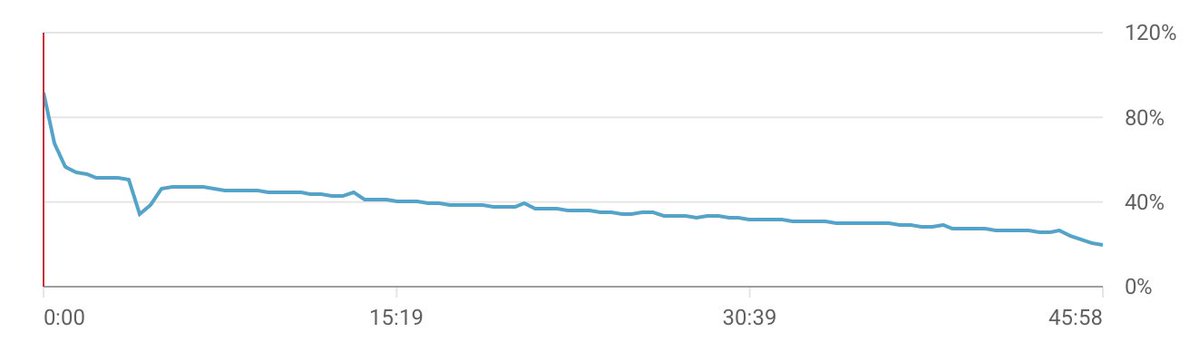
The drop on your retention graph is not when people left.
YouTube draws that curve with about 100 time points, then connects them.
8-minute video → a point every ~5 seconds.
20-minute video → every ~12 seconds.
45-minute video → every 25–30 seconds.
The cliff you see at 8:12 often started between 7:40 and 8:12. There was just no dot there.
Don’t recut the timestamp of the fall. Rewatch the 20–40 seconds before it.
That’s usually where the promise broke.
If you’re over 100k on YouTube and you only check views, you’re reading the wrong report.
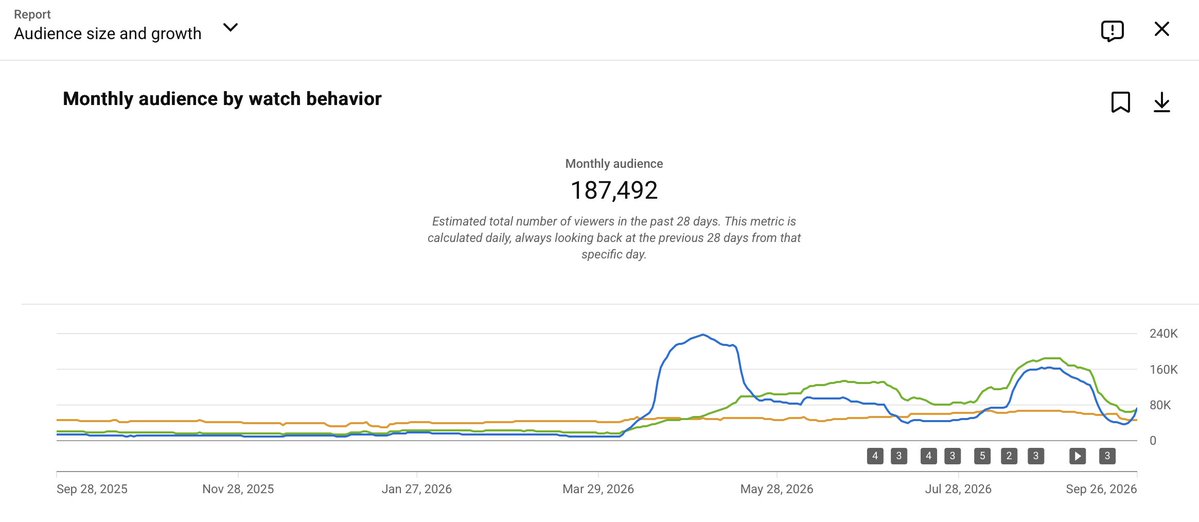
Open YouTube Studio → Advanced mode → Audience → Monthly audience by watch behavior.
The line that matters is Regular viewers.
Hits move the blue line. Health is whether Regulars climb when the hit is gone.
Client channel: Regulars went from ~40k to ~67k. Casuals rose with them. People started coming back to the next video, not just the spike.
Read it on 12 months, then zoom 90 days.
12 months tells you if the floor is rising.
90 days tells you if the last 6 uploads built the floor or just rented a spike.
If Regulars are flat while views jump, you bought attention. You didn’t grow the channel.
🚨 Huge update: YouTube just announced video AB testing, thumbnail generation & more.
I’m here in the YouTube offices in New York… and they’ve just made their biggest update in years.
Here’s the 3 changes I am most excited about + my take as a strategist running some of the biggest channels on youtube:
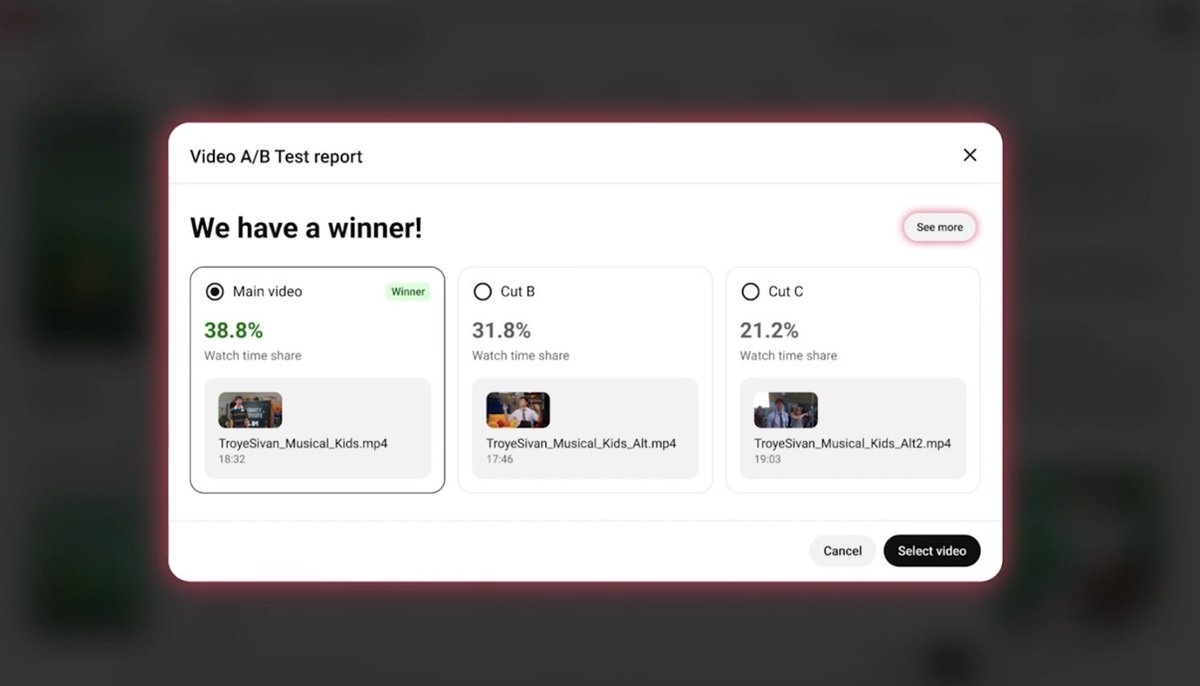
1. Video AB testing
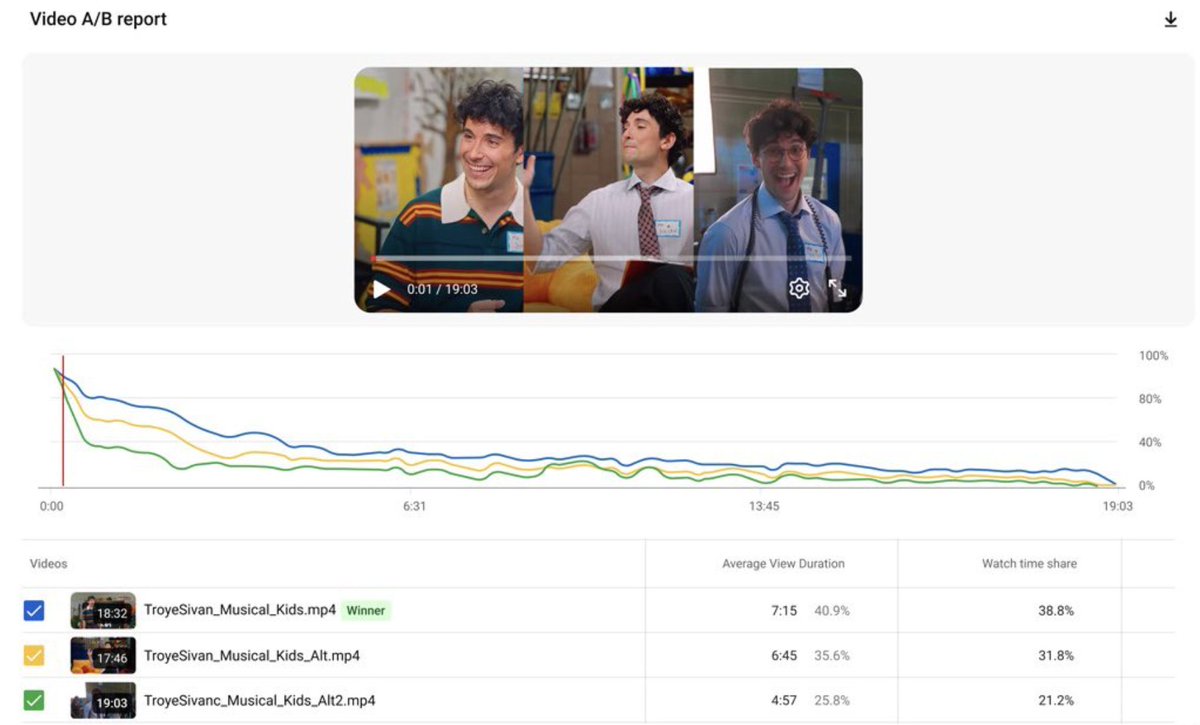
YouTube is going to allow you to upload three different versions of a video now (starting with shorts and then rolling out to more) and test them over a period to see which gets the best watch time.
My take: I am so excited by this and it feels like something we’ve all wanted for years. How often are you stuck between two different intros, or two different ways of ending a video?
Now having the ability to get real data back is insane. I am going to heavily use this with intros.
2. Dynamic thumbnail testing for different audiences
YouTube will now actually dynamically test different thumbnails with different audience segments. Allowing you to have different packaging for your returning viewers vs casual/new.
My take: This is very interesting. Current AB testing for thumbnails essentially helps you find the best thumbnail for the biggest majority of your viewers… but that isn’t the best thumbnail for every segment.
A core viewer might click on something very different to a brand new viewer. I think this will allow creators to print more views and test new styles that previously might have never won in the test.
3. Thumbnail generation in YouTube studio
Directly in your studio you will have an ‘ask studio packaging assistant’ that can analyze your video and past performance and generate thumbnails (and titles) for your video.
My take: This one’s been coming. The interesting thing for me is that when presenting this, youtube said something very interesting: they will match your style.
This is the hardest step when using most Ai thumbnail generators, so if they can pull this off… could change the game.
Really excited to see how these new features work.
Youtube shared that they will be tested and rolled out in the coming months.