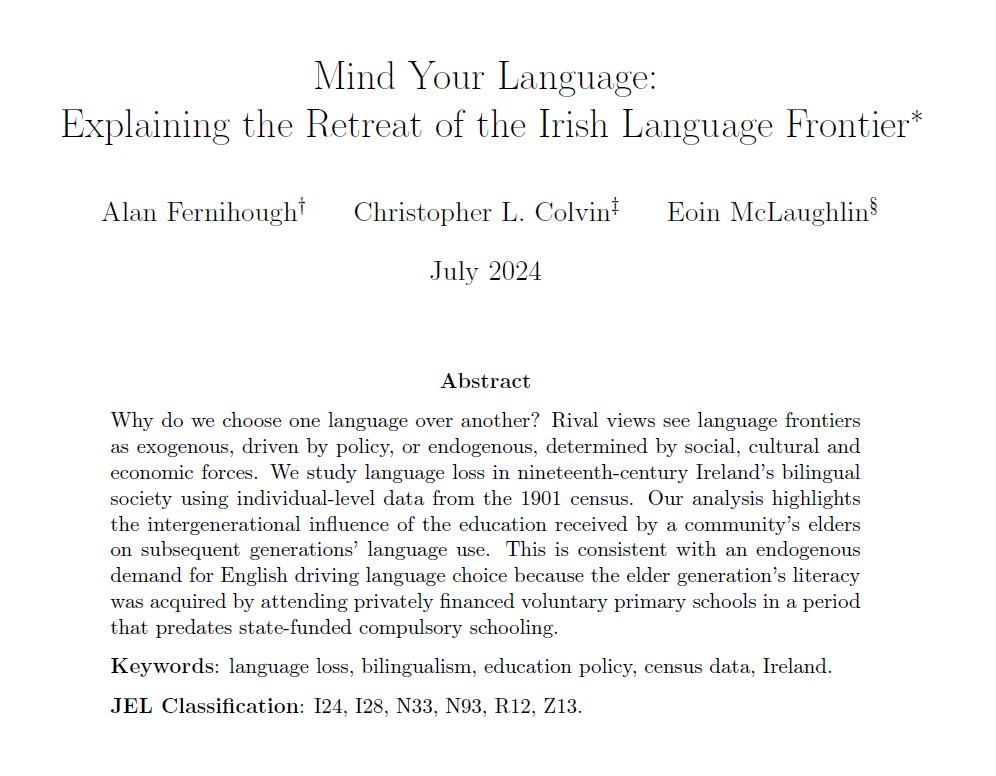
New working paper announcement! Ever wondered why Irish is such an endangered language? Joint work with Alan Fernihough and Eoin McLaughlin (@eoinaldo) crunches the numbers. We argue language loss was driven by endogenous demand for English, not exogenous policy imposition.
🎙️ How do you raise a Celtic Tiger? With Seán Kenny🎙️
In this episode of Everything Economic History, Andrew and Lloyd sit down with @SeanEKH, host of the Economic History Podcast, to talk about GDP, the Celtic Tiger, and much more!
Listen here: https://t.co/aYvjWndgBb
@tcdeconomics @TCD_SSP @QUBBusiness@economicsucc
#econtwitter
#Irisheconomics
#NSRPProject
Episode 3 of @10Things_ToKnow on 18th November dives into food security. The challenges of growing food in Ireland amidst extreme weather and global instability. @ClioChris from #AICEEHP project @QUBelfat @ceph_ie@tcddublin shares key insights
@GrahamBrownlow@LongInitiative@ProfJohnTurner@eoinaldo "7.17 How can organisations, with a particular focus on public bodies, most effectively learn lessons from (i) crisis response; and (ii) systemic policy problems; and address them?"
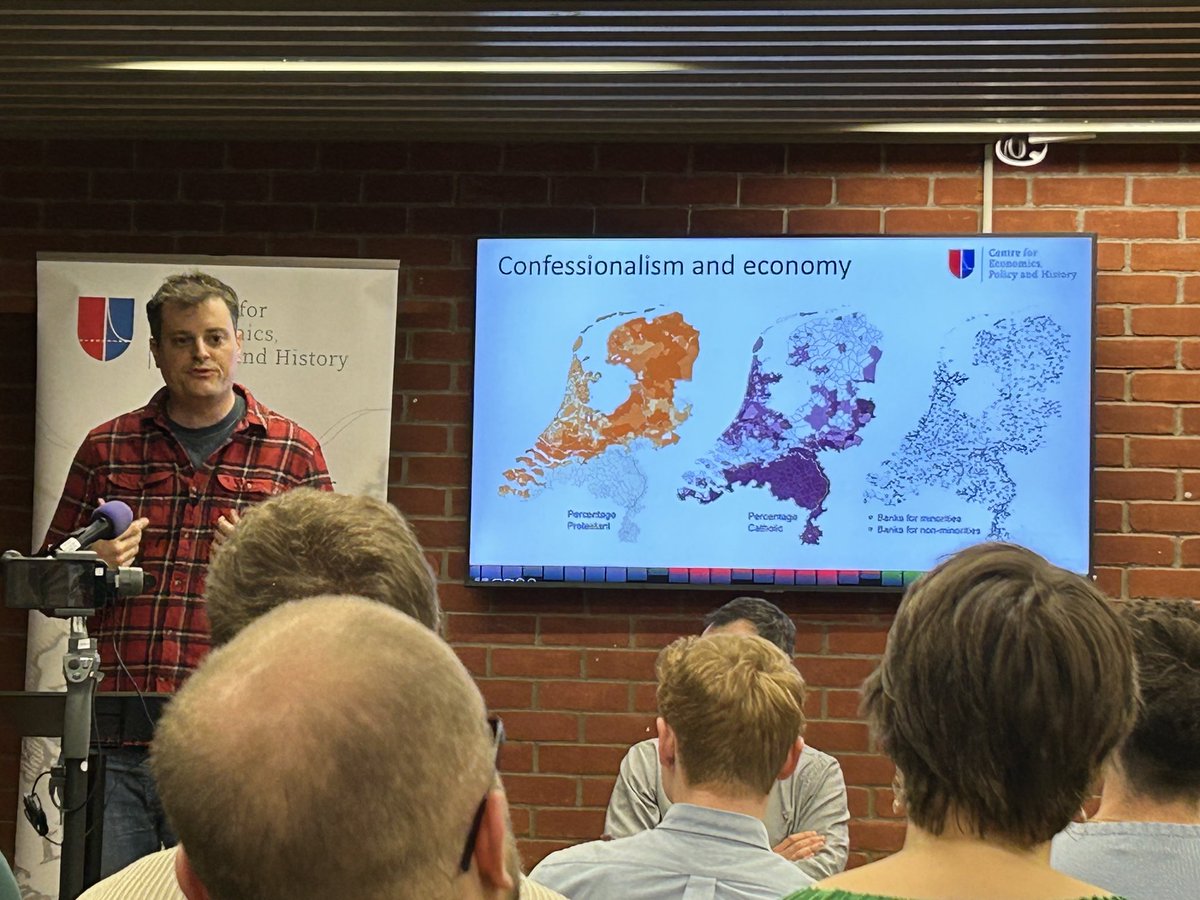
@ClioChris takes us to the Netherlands to look at confessionalism and the economy and the impact this had on society in the 1920s @QUBPolicy #esrcfestival
Excited to have joined the editorial team at Business History! Send us your best papers. We are open to qualitative, quantitative and mixed methods. Single case studies, or large datasets of firms and industries. Critical junctures, or long-run analysis. All approaches welcome.
📕Call for papers📕
CEPH is excited to announce its third call for papers as part of the CEPH Irish Research Initiative. This online workshop, which focuses on the theme of ‘Religion, Division and Development in Ireland’, will be held on Tuesday December 10th 2024.
The call for papers closes on Thursday October 31st, details can be found here: https://t.co/wkIeevKw8u
@tcdeconomics@QUBBusiness @TCD_SSP @hea_irl@juliazim86@alandebromhead
#EconTwitter #EconomicHistory #Economics #cfp #NSRPproject
"Age structure and age heaping: solving Ireland’s post-famine digit preference puzzle" (with Stuart Henderson and @eoinaldo), just published open access in European Review of Economic History (@The_EHES) https://t.co/Z55GxYXHCG
There are so many age heaping papers out there today. We think this is because it is an easy-to-calculate measure using readily available census data. But what heaping really means is open to debate. We encourage colleagues in economic history to join this debate.