To continue receiving my analysis of Asia's markets for #crude, #LNG, #ironore, #coal, #copper, #metals and #renewables and #climate, please follow me on LinkedIn at https://t.co/BOsJpdHuI6 and on Bluesky at https://t.co/FezyEdynKy
What is the North Sea physic mkt, and how should the gap between the paper and physical markets be resolved?
Every time I post about the physical market, I see a lot of complaints about why oil prices aren't rising further. Many ppl even criticize me, claiming I’m not explaining things properly.
First, I’ll summarize the basic components of the North Sea market.
ICE Brent Futures: A financially settled paper contract used primarily for broad directional hedging and speculation without the intention of physical delivery.
EFP (Exchange of Futures for Physical): A swap that acts as a bridge, allowing a trader to convert a paper futures position into a physical cargo contract.
Forward Brent: A standardized OTC physical swap for future delivery. It represents actual oil but remains non-dated bc the exact loading schedule is not yet determined.
Dated Brent: The global benchmark price for physical crude. It is assessed daily by agencies like Platts based on actual trades of the most competitive grade within the BFOET+WTI basket, triggered once specific loading dates are confirmed (typically 10-30 days prior).
CFD: A short-term swap representing the price difference between Forward Brent and Dated Brent. It is used to plot the physical forward curve and assess whether the market is in contango or backwardation.
DFL (Dated to Frontline): A swap that links the physical Dated Brent assessment directly to the front-month ICE Futures contract, managing exposure between the physical and financial markets.
Diff (Grade Basis): The premium or discount applied to a specific physical cargo relative to the Dated Brent benchmark. Driven by crude quality, logistics, and refinery demand, this unhedgeable spread is where physical traders generate profit.
This alone should be enough. From there, I’ll explain how the gap between the paper market and the physical market actually closes.
A massive divergence between Dated Brent (physic) and ICE Brent futures (paper) typically indicates acute near-term physical tightness relative to forward expectations.
If Dated Brent remains at $120-130/bbl leading into the expiration of the front-month ICE Brent futures contract (currently around $100/bbl), the futures contract must converge toward the physical price.
The convergence is not optional; it is mathematically enforced by the exchange's settlement rules and market arbitrage. This operates through three primary mechanisms:
1) Cash Settlement via the ICE Brent Index
ICE Brent futures are cash-settled upon expiration and do not involve physical delivery. Expiring contracts are settled against the ICE Brent Index.
The Index is a calculated average of trading activity in the relevant physical Forward BFOET(Brent, Forties, Oseberg, Ekofisk, Troll)+WTI Midland market during the final trading days of the futures contract.
Bc Forward Brent and Dated Brent are intrinsically linked, a physical market sustaining $130 will generate an ICE Brent Index near $130.
Consequently, any futures positions left open at expiration are forcibly settled at this higher Index price.
2) The Arbitrage Channel (EFP Mechanism)
If a $30 spread exists between paper and physical markets, traders will immediately exploit the arbitrage using the EFP mechanism.
Traders buy the undervalued ICE Brent futures at $100 and simultaneously sells a physical Forward Brent cargo at $130. They execute an EFP to swap their long paper futures position into a long physical Forward position.
The newly acquired long physical position cancels out their short physical position, locking in a profit (minus the EFP swap cost). To execute this arbs on a large scale, traders must aggressively buy ICE futures. This massive purchasing volume forces the futures price up until the gap closes and the arb window is eliminated.
3) Forced Short Covering
Market participants holding short positions in the ICE Brent futures market face extreme risk if the physical market disconnects to the upside.
Knowing the contract is destined to cash-settle against a $130 physical Index, paper shorts cannot afford to hold their $100 positions into expiration.
They are forced to buy back their futures contracts to close their positions before the expiry date.
This forced buying—often resulting in a short squeeze—accelerates the upward momentum of the ICE futures price, driving it into alignment with the physical market.
Through the combination of final index settlement and active EFP arbs, the paper market is structurally tethered to physical reality as expiration approaches.
#oott #iran
To continue receiving my analysis of Asia's markets for #crude, #LNG, #ironore, #coal, #copper, #metals and #renewables and #climate, please follow me on LinkedIn at https://t.co/BOsJpdHuI6 and on Bluesky at https://t.co/FezyEdynKy
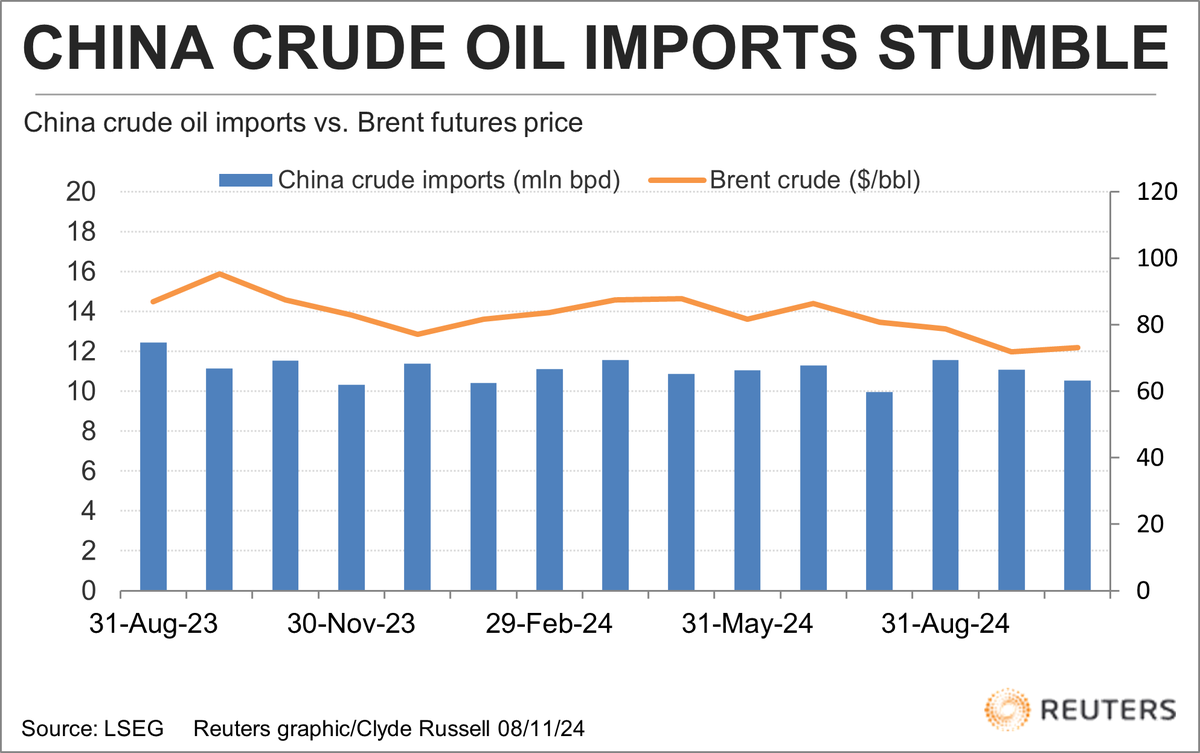
China’s weak run of #crude oil imports continued in October, falling for a 6th month. For the first 10 months imports are down 420,000 bpd, giving #OPEC+ a major demand problem. Another problem is the risks to global growth from #Trump. #OOTT#energy#oil https://t.co/O29ZH7LUel
The risks to global trade and the potential slowing of the world economy saw prices of #commodities fall in the wake of Donald Trump’s election win. However, much will depend on how much of his tariff plans turn into reality. #crude#ironore#copper#LNG https://t.co/0YAIdFukaH
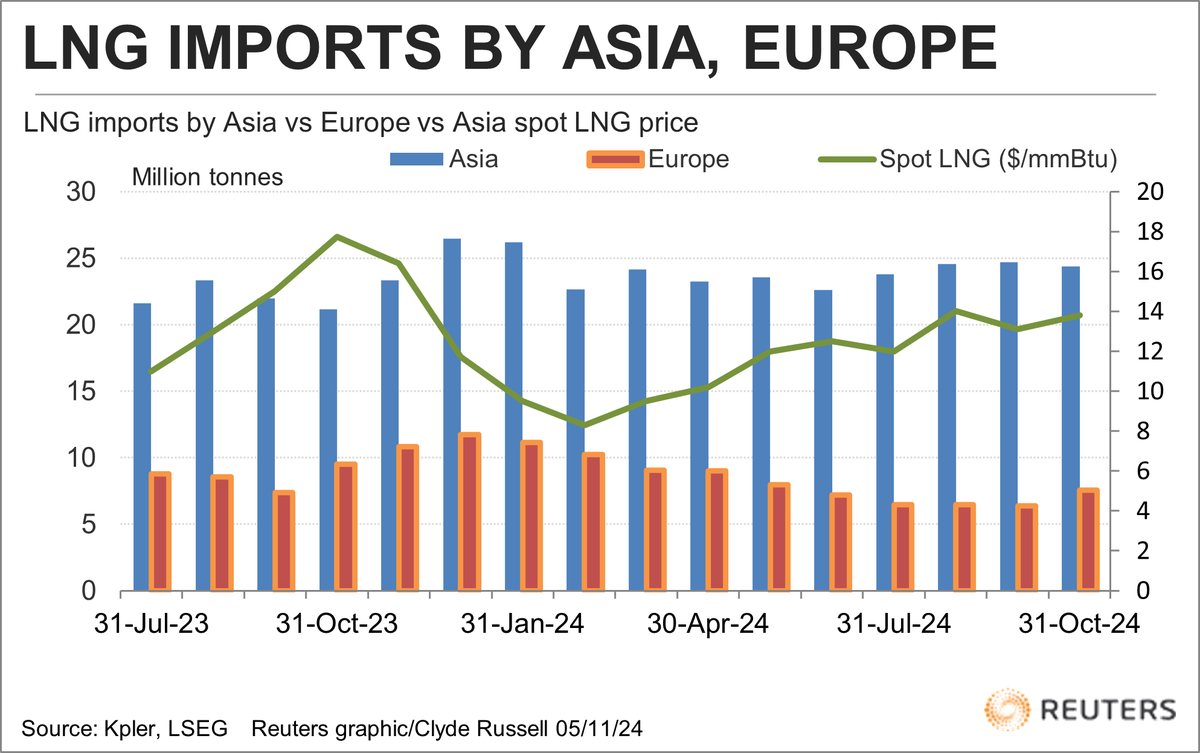
In a reversal of the trend so far this year, Europe’s #LNG imports rose in October for the first time since December, while Asia’s dipped. The flip is likely because of one-time factors rather than any change in fundamentals. #natgas#ausbiz#energy#ONGT https://t.co/uhrt3rU14P
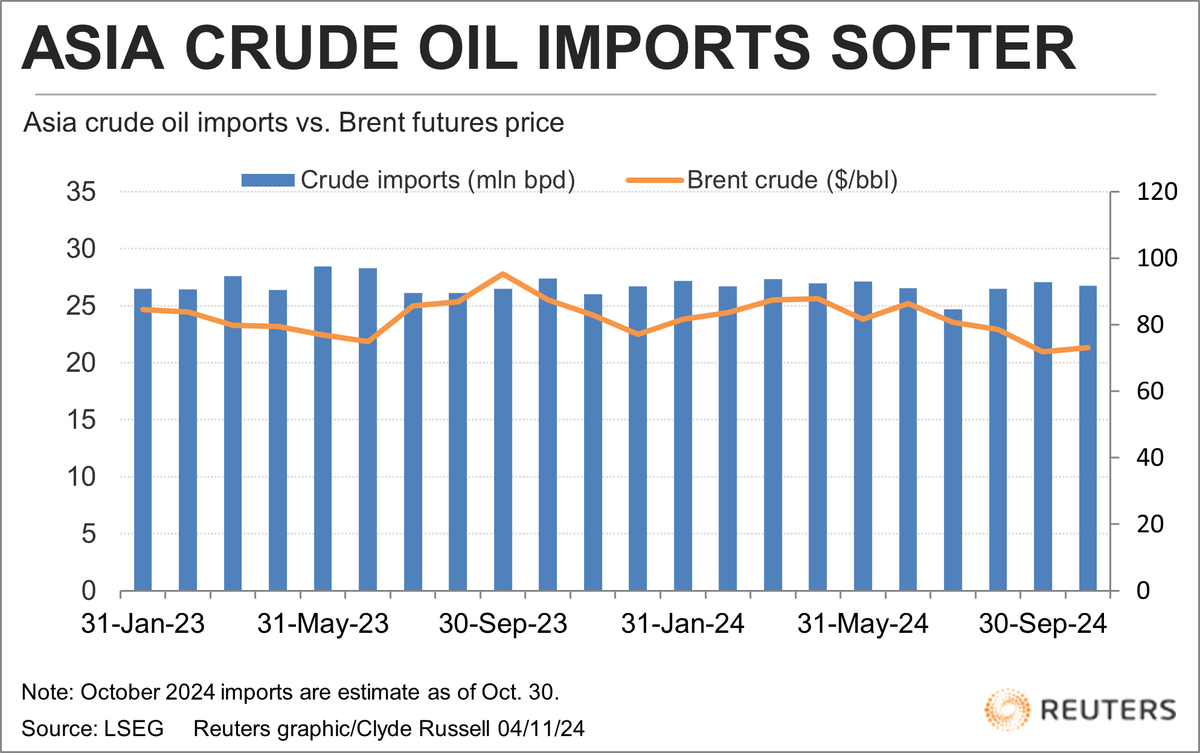
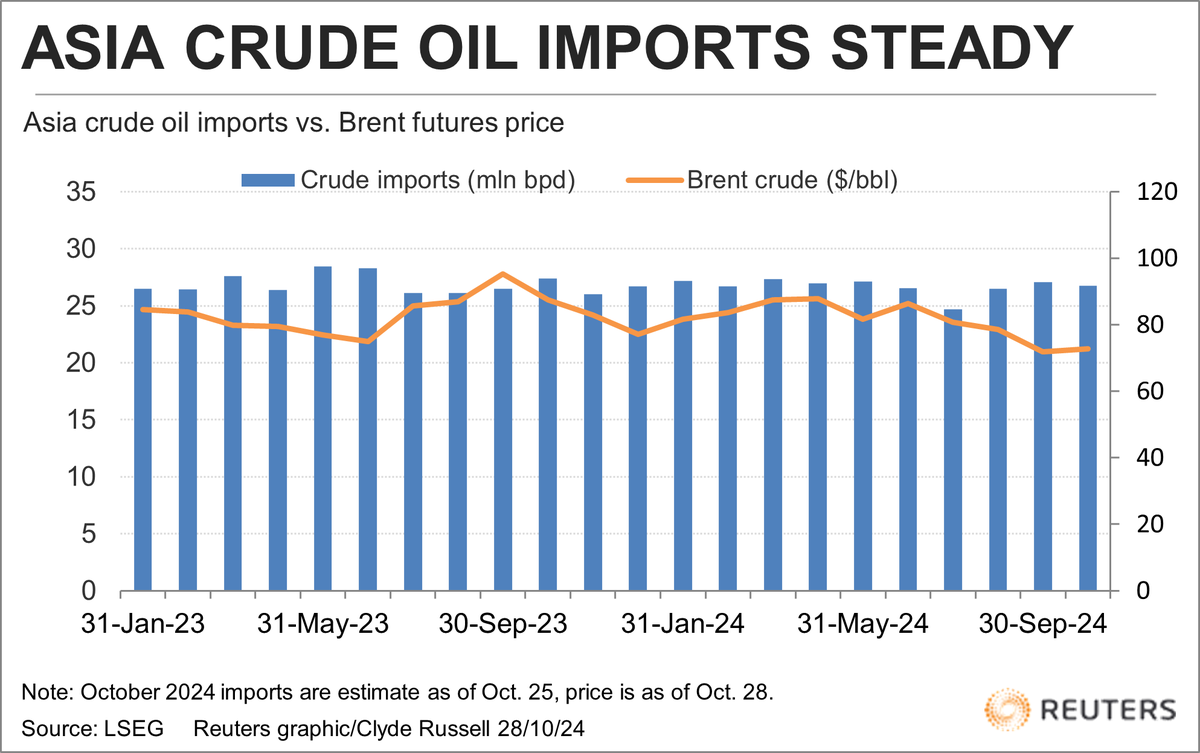
OPEC+ bowed to the inevitable and again delayed its planned December #crude output increase. While geopolitical tensions may get blamed, the ongoing reality of weak imports in top-consuming region Asia is a bigger factor. #OOTT#OPEC#energy#oil https://t.co/sd3JinGleZ
Australia has more advantages than virtually any other country when it comes to the #EnergyTransition, but its miners say it risks being left behind. While it’s the biggest exporter of #lithium and #ironore, the missing link is cheap renewable electricity. https://t.co/z0qERZ1ZFw
#Crude's risk premium ratcheted lower after the market deemed Israel's attack on Iran and Tehran's response as de-escalating tension. This brings the focus back to #OPEC+'s planned output hike and still soft demand growth, especially in Asia. #OOTT#energy https://t.co/Ifn6nbB7pA
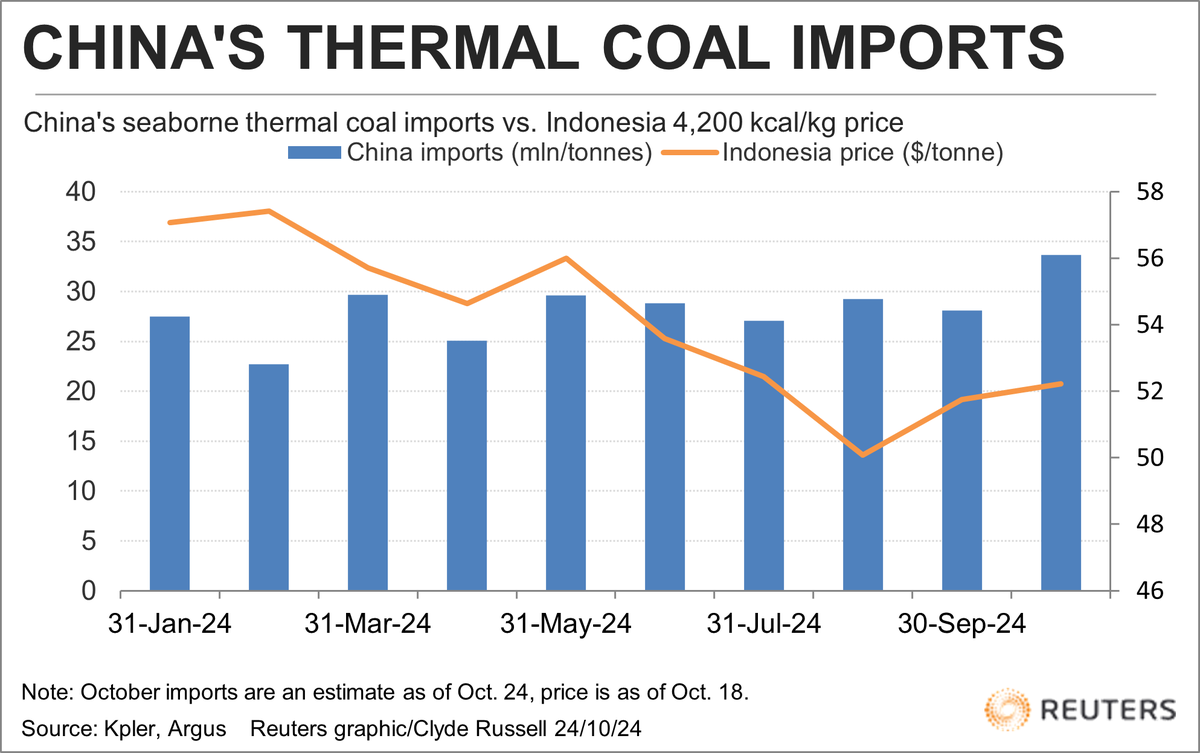
Despite adding #renewables such as #solar and #wind at a record pace, China’s strong demand for seaborne thermal #coal is set to have continued in October as coal-fired generation remains strong and hydropower eases. #energy#ausbiz#climate#mining https://t.co/Mz2srOFGAC
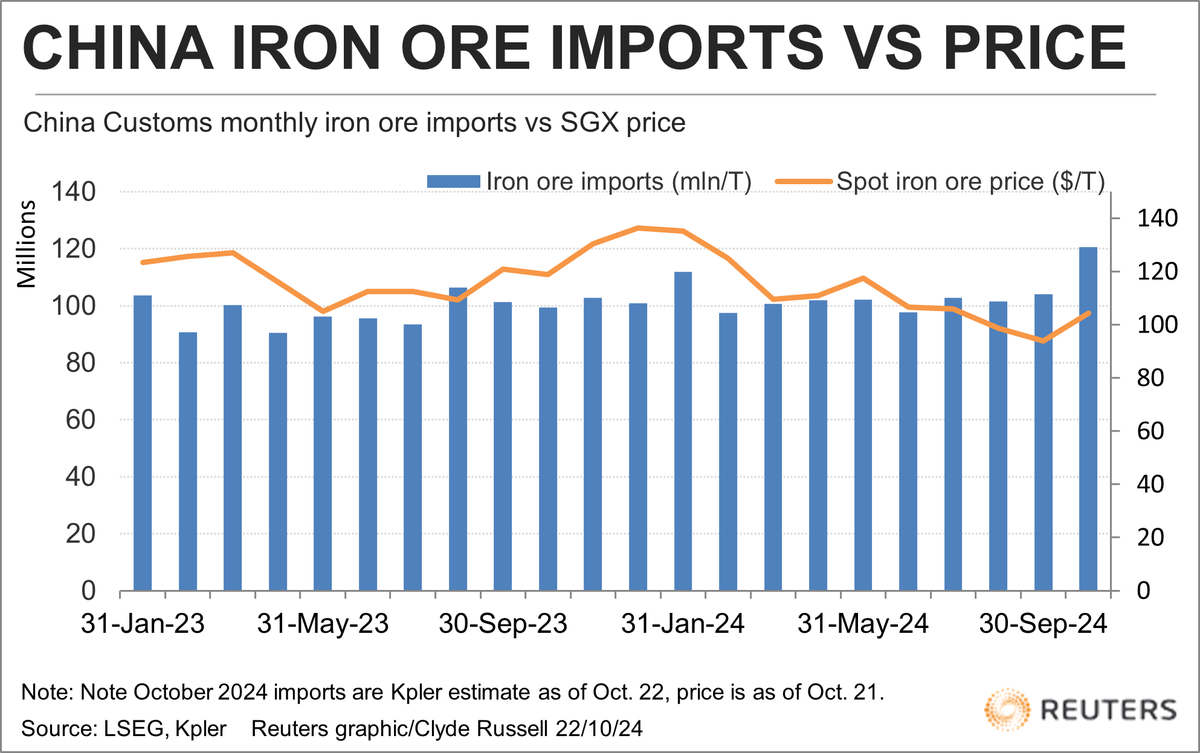
China’s #ironore imports are set to jump to a record high in October, most likely on weak prices in September prior to Beijing’s new stimulus measures. However, there is a disconnect between robust iron ore arrivals and weak #steel output. #ausbiz#mining https://t.co/89pPoiF2B9
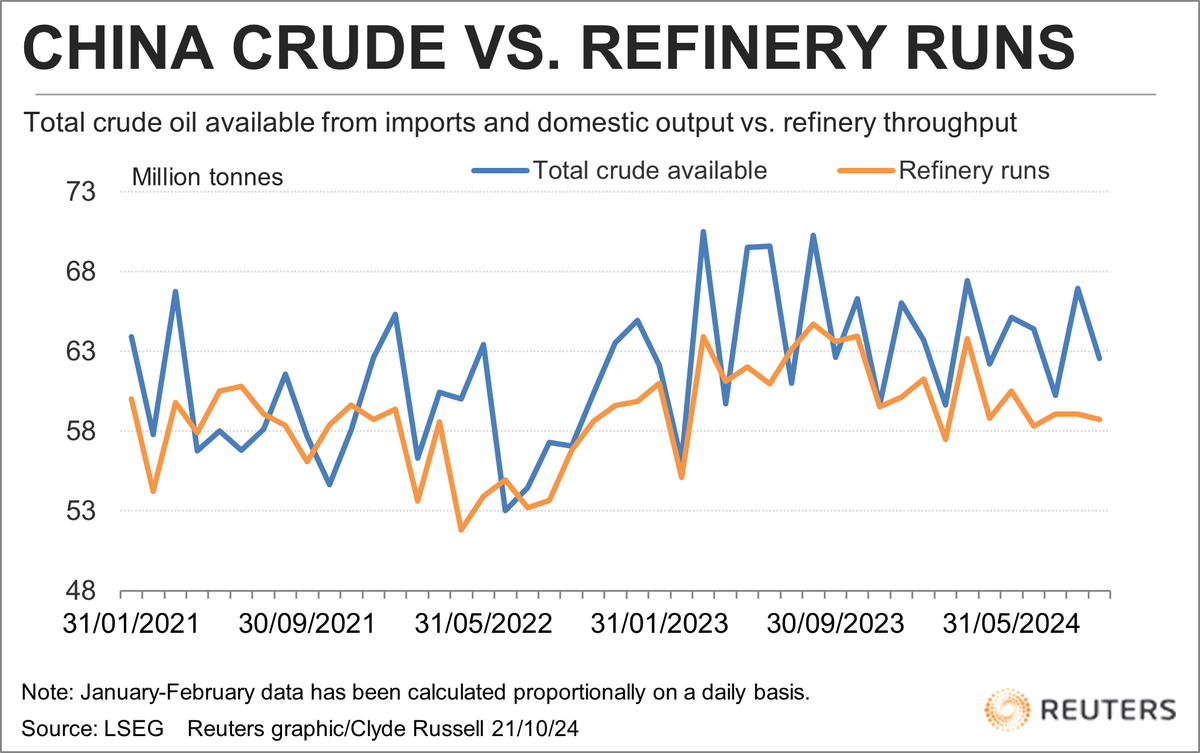
The weakness in China's #crude sector is continuing, with a surplus of 930,000 bpd in September as imports and domestic output again far exceeded refinery processing. China is storing #oil amid soft domestic demand and relatively low prices. #OOTT#energy https://t.co/5FUD39YtT3
After the Age of Coal & Age of Oil, the world is moving rapidly into the Age of Electricity ⚡️
Electricity has recently grown 2x as fast as total energy demand. But from now to 2035, it's set to grow 6x as fast, driven by EVs, ACs, chips, AI & more
More: https://t.co/fggEfiaGJ5
China’s rapid electrification of transport is “wrong-footing” #crude producers, according to the #IEA’s latest World Energy Outlook. The risk for groups like #OPEC is that China’s switch to EVs and #renewables becomes the global template. #energy#climate https://t.co/rFZbMUi4dS
Brent crude oil to return to test $70 now that Iran's oil infrastructure is off target list?
Click links below to listen & subscribe 👇
Spotify: https://t.co/xL4VLq90Hn
Soundcloud: https://t.co/jPQyiI8fCq
Apple: https://t.co/EZCjkYIXhv
@AdiSurreyEnergy@CSIS@ClydeCommods@thomsonreuters@osamarizvi10@PrimaryVision
China’s #crude imports fell for a 5th straight month year on year in September, and are down 350,000 bpd so far in 2024. This makes #OPEC’s small cut to its China #oil demand growth forecast for 2024 to 580,000 bpd look hopelessly optimistic. #OOTT#energy https://t.co/hpiLQUSPeY
China’s latest stimulus pronouncements got the thumbs up from domestic investors, with rallies in #copper, #steel and #ironore. But elsewhere the reaction was more muted amid concern over a perceived lack of details. #commodities#ausbiz#mining#metals https://t.co/mBH1ZvDmnu