⚠️GIVEAWAY⚠️. I’m giving away 1000$ to a lucky person who does the following things ! 1.)follow my account! 2.)Comment Done as many times possible in the comments under this tweet!
Q2 2026 just became the most hacked quarter in crypto history.
83 incidents.
Double the previous record for attack frequency.
But the dollar losses weren't record-breaking.
The shift is the story: not a few giant exploits anymore. A constant stream of smaller ones.
The attack surface didn't shrink as the industry matured. It multiplied.
The privacy model crypto actually needs:
Anonymous to third parties. Transparent between the two people transacting.
Right now you get one or the other. Full transparency exposes everything to everyone.
Privacy pools hide everything from everyone, including the recipient who needs to know who paid them.
The answer is an identity layer that sits between those extremes.
Outsiders see nothing. The two parties see each other.
Private where it should be. Verifiable where it matter
The hardest part of crypto security infrastructure isn't building it.
It's getting it adopted.
A privacy and identity layer that requires developers to rebuild their entire wallet will never reach scale.
The version that wins is a drop-in SDK, integrate it on any chain, in any wallet, in days.
Zero cost to adopt.
Adoption friction kills more good infrastructure than bad technology ever does.
The quantum race just became a national priority.
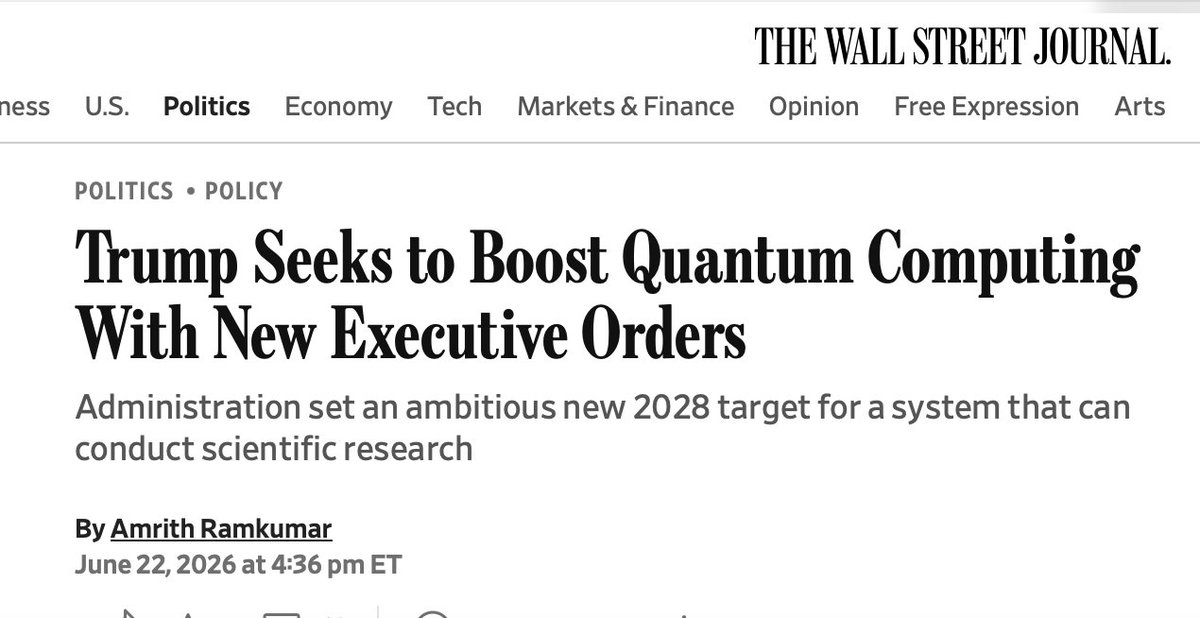
President @realDonaldTrump 's new Executive Orders accelerating quantum computing development and preparing federal agencies for a post-encryption world are a reminder that quantum risk is no longer theoretical.
The conversation has shifted from if quantum computers will challenge today's security infrastructure to how soon organizations need to be ready.
For crypto, this is especially important.
Blockchains secure trillions of dollars in value using cryptographic systems that were never designed for a quantum future. The migration to quantum-resistant infrastructure will likely become one of the largest security upgrades in digital asset history.
We've believed from day one that quantum readiness is a necessity.
As governments, enterprises, and financial institutions begin preparing for the next era of computing, the need for quantum-resistant wallets, identity systems, and digital asset infrastructure will only grow.
Most compliant privacy systems have a backdoor.
They call it a "viewing key" - a master key that lets a third party see into your transactions. For compliance, supposedly.
But a viewing key is God mode. Someone, somewhere, can decide to look at your activity without your consent.
The better answer: no viewing key at all. The recipient can reveal their funds to whoever they choose, but no third party can decide for them.
Compliance without a backdoor. Disclosure without God mode.
Wallet drainer bots don't hack your wallet.
They get you to hand it over yourself.
The attack flow:
1. Fake site mimics a legitimate protocol (Uniswap, OpenSea, Coinbase)
2. User connects wallet - standard action, feels safe
3. Site requests a transaction signature, looks routine
4. Signature approves a drainer contract to move all assets
5. Wallet emptied. Funds gone. Irreversible.
Dark web discussions about drainer malware rose 135% between 2022 and 2024.
The tooling is commoditized. The barrier to launching a campaign is near zero.
The attack doesn't exploit code. It exploits the fact that users can't verify what they're actually signing.
Breaking down the quantum threat live at @ProofofTalk in Paris and handing the audience the solution.
The attack surface isn't what you think.
The fix is faster than you think.
Read our paper linked below to learn how Proof of Seed Provenance quantum-proofs crypto.
Tornado Cash was sanctioned in 2022.
Four years later, the compliant privacy alternative is still missing.
What moved in: readability tools that publish your entire financial history (ENS), and privacy tools that put users on regulators' radar.
Neither works for someone who needs both privacy and a clean compliance record.
The gap is still open.
Decentralization is the most overused word in crypto.
Most "decentralized" identity systems can still see:
— Who you registered as
— Which wallet that name maps to
— Every transaction tied to that wallet
That's not decentralization. That's a directory service with a marketing budget.
The bar should be: once a name is registered, the issuer has no way to see who you're transacting with, what you're sending, or what your balance is.
What happens at registration and what happens after it are two different questions.
Most systems fail both. The better ones at least solve the second.