Want to Know What a Great Team Captain Looks Like?
Read The Captain Class by Sam Walker.
Then watch Jalen Brunson.
In The Captain Class, Walker studied some of the greatest teams in sports history. His conclusion was surprising:
The most important leader on championship teams was rarely the most talented player.
Instead, they shared a common set of leadership traits.
When I watch Jalen Brunson, I see many of those same characteristics.
1. He Leads by Example
Brunson doesn’t ask teammates to do things he isn’t willing to do himself.
His preparation, consistency, and professionalism set the standard.
Leadership starts with actions.
2. He Competes Relentlessly
Walker found that elite captains possessed an almost obsessive competitive drive.
Brunson may not be the biggest or fastest player on the floor, but few compete harder.
His edge shows up every possession.
3. He Stays Composed Under Pressure
The best leaders are thermostats, not thermometers.
They set the temperature.
Big game. Bad call. Tough stretch.
Brunson remains steady.
His team follows his example.
4. He Holds Teammates Accountable
Accountability isn’t about yelling.
It’s about protecting the standard.
Brunson has earned the right to challenge teammates because he holds himself accountable first.
5. He Puts the Team First
Great captains care more about winning than recognition.
Brunson consistently shares credit and shines the spotlight on others.
The mission is bigger than the individual.
6. He Builds Trust
Championship teams are built on trust.
Teammates trust Brunson because he is consistent.
They know what they’re getting every day.
Trust creates influence.
7. He Elevates Everyone Around Him
The ultimate test of leadership:
Do people perform better because you’re around?
Brunson makes teammates better.
That’s what great captains do.
8. He Raises the Standard Daily
Culture isn’t built in speeches.
It’s built in daily habits.
Effort.
Preparation.
Communication.
Toughness.
The standard is the standard.
And Brunson lives it.
The Lesson for Coaches
Too many coaches choose captains based on talent.
The Captain Class teaches a different lesson.
Look for the player who:
▪️ Leads by example
▪️ Competes relentlessly
▪️ Stays composed
▪️ Builds trust
▪️ Holds others accountable
▪️ Makes teammates better
Those players change programs.
Those players build culture.
Those players win.
That’s why Jalen Brunson is one of the best leadership examples in sports today.
Nobody hangs a banner for points per game.
“When you are a star in your role and embrace doing the little things, that breeds winning basketball.” - Josh Hart
Be a star in your role.
Sacrifice ME for WE.
Coaches: you will want to bookmark this one. 🎥
I'm convinced @DukeWBB Coach Kara Lawson is one of the best leaders in sports. This clip on urgency, growth not being linear, and the idea that there is no finish line is superb:
🥱 Need It > Want It. The people who win aren’t always the most gifted, they’re the ones who refuse to look away from what’s required RIGHT NOW. They stay present with the hard, the boring, and the uncomfortable, and they attack anyway. Wanting shows up when it’s convenient; needing shows up when it costs you something.
📈📉 Growth isn’t a straight line. There will be peaks that tempt your ego and valleys that test your belief. Real leadership is keeping your urgency and sharpness intact through all of it. Trusting that consistency is what will carry you through. Don't let your own impatience with stagnancy take your spirit.
🏁 There is no finish line where you finally get to coast, only new levels that ask more of you. Better is a direction, not a destination. The “ceiling” you feel is often just an imaginary story you’ve told yourself about what’s possible. Growth asks for the endurance to keep going and the humility to treat every day, every season, every year as another chance to get better.
Bring urgency to the way you show up every day. Don't ever give up on your own growth. 🌱
The scariest finding in this paper: the subjects couldn't tell it was happening.
UPenn ran this study on 48 healthy adults. One group slept 8 hours. Another slept 6. Another slept 4. For 14 straight days. They tested cognitive performance every 2 hours from 7:30am to 11:30pm.
The 6-hour group's reaction times, working memory, and sustained attention deteriorated on a near-linear curve. By day 14 they were performing at the same level as someone who hadn't slept at all in 48 hours. The 4-hour group hit that threshold by day 6.
Here's the part that should unsettle everyone who thinks they "do fine" on 6 hours: the subjects' self-reported sleepiness flatlined after the first few days. Their brains kept getting worse. Their perception of how impaired they were stopped updating. The cognitive decline was invisible to the person experiencing it.
The researchers found a hard threshold. Any wakefulness beyond 15.84 hours in a day produces cumulative neurobiological cost. That cost compounds every single day you exceed it and does not reset with a weekend of sleeping in.
About 35% of American adults sleep less than 7 hours a night. 40% of those get 6 hours or less. In 1942 that number was 11%. We built an entire professional culture around a sleep schedule that this paper says is functionally equivalent to pulling consecutive all-nighters.
"I'm fine on 6 hours" is the most common response to sleep research. The first thing chronic sleep debt destroys is your ability to notice chronic sleep debt.
@NCAA@MarchMadnessMBB nothing against the Chainsmokers but why are we delaying tip off to the second semifinal by an extra 20 minutes for live entertainment?
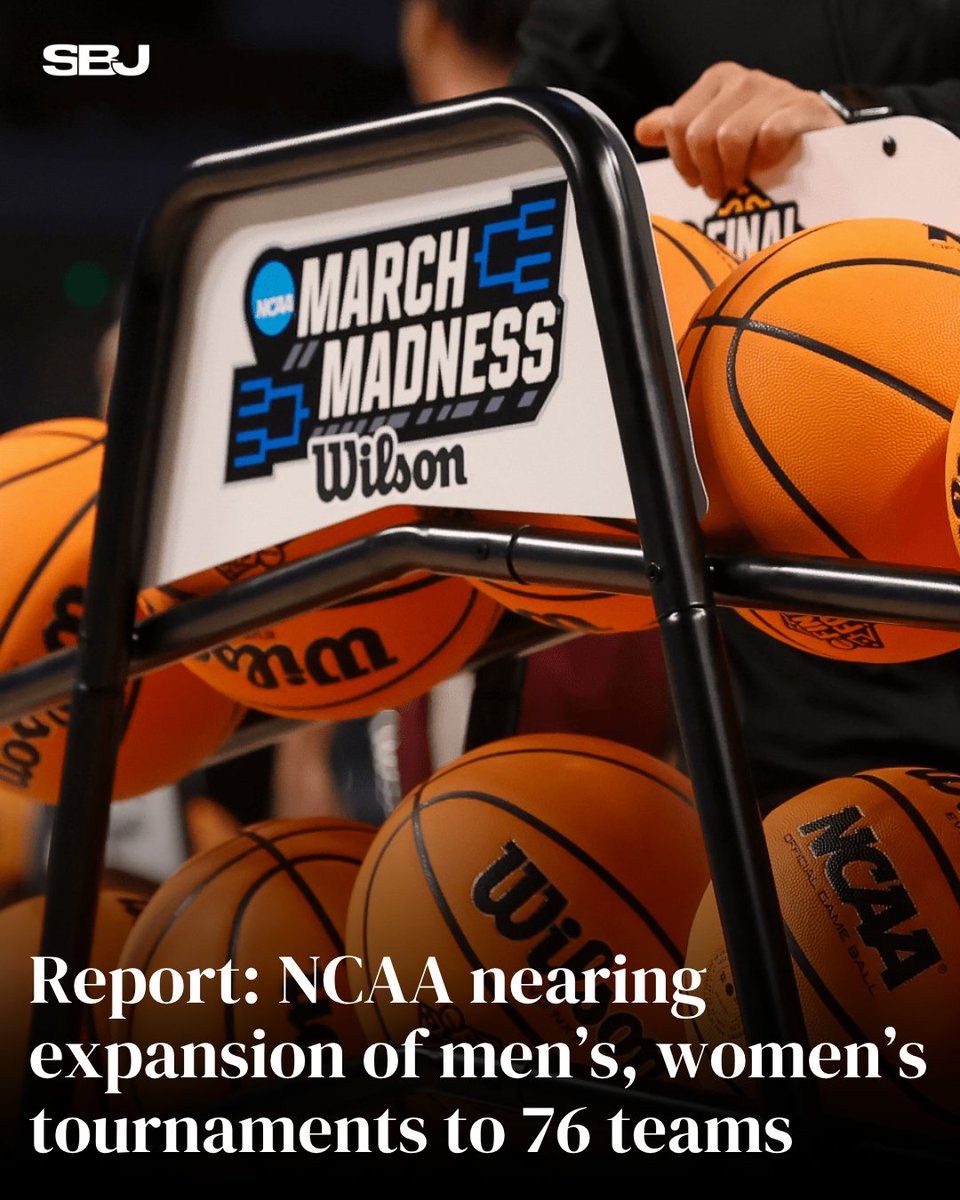
NCAA leadership is expected to finalize an expansion of the men’s and women’s tournaments to 76 teams soon after this year’s tournament 🏀
The proposal would add eight games to the First Four, with 24 teams playing in an opening round before advancing into the main bracket.
Via @YahooSports | https://t.co/p64Ssx3W8a
I think he’s right. The double regionals were a worthy experiment — but I think it’s time to go back. If for no other reason, to give the players a better experience.
Not sure why the NCAA pays for new rims and balls. Put that money in the units pool.
“There’s no shortcuts to this. It’s a grind and you’ve got to love it. These dudes love it and they show up every day and they work,” Grant McCasland
Winning is the love and relentless will to put the standards on display every single day.
“Courage is not knowing where the finish line is and going as hard as you can.” - Bill Self
The great ones…
- Don’t need certainty
- Don’t need guarantees
They give everything they have - no matter how long the road.
Steph Curry with a great message here about affecting the game, even when you don’t stat
“If it’s not your night stat wise, whether you play two, 10, 20 minutes, come with the right energy.”
A winner is a winner, no matter how many minutes they play
Interviewer: “Your mental strength is your greatest gift.”
Novak Djokovic: “I need to correct you. It’s not a gift. It’s something that comes with work.”
https://t.co/L3Z5Utf5u5
"I wasn't a clutch player.
At least that's what I believed.
Every pressure situation: Crap, here we go again. I'm not going to be able to get it done.
And that's exactly what happened.
Why? Because the story you tell yourself drives your response.
Negative story → negative response.
But here's what changed everything:
I traced that belief back to its origin. Two scenarios. Two failures. That's it.
And I'd been carrying them like they were proof of who I am.
They weren't proof. They were data points.
So I asked a better question: What can I learn from those moments?
That's the difference:
Fixed mindset: "This happened, so it will always happen."
Growth mindset: "This happened. What does it teach me?"
Your inner critic isn't telling you the truth about who you are.
It's telling you a story about what happened.
And you get to decide if that story defines you or develops you."
— Luke Falk @coachlukefalk@coachajkings
full episode:
https://t.co/EdIZ1gQp9j
High school basketball isn’t complicated.
Sprint back on defense.
Play harder than the other team every possession.
Celebrate every success like it’s a championship win.
The team that masters effort and energy beats talent nine times out of ten.