Three days ago, our USMNT manager tied the USMNT's low competitive mindset on MLS's lack of pro/rel.
"We need to change our mindset.
I don't say that is not good but is not the high level to prepare the player for the high, high level. Because our sport is not entertainment. It's competition.
Because the consequence to lose is massive. In the rest of the world, if you lose and you are in the bottom, you go to the second division. If you are in the second, the third division.
And you lose prestige, you lose money, you lose plenty of things. The pressure is different.
But if you are in the MLS, you are in the bottom after 6 months and you say, 'Okay, I prepare myself for the next season because I know that it's no consequence to continue losing.'
The habit that you create in your mind, you start to learn how to lose and don't be affected about that."
https://t.co/H2BVNkuLUm
It’s so amazing to see arguably one of the top 5 teams in the world be so clueless as to how to deal with a press it’s really a depressing sign at how systematic sports have got. They haven’t a clue.
They are obviously talented, obviously a good team (if you play their game, which refs help with) but this really is remarkable.
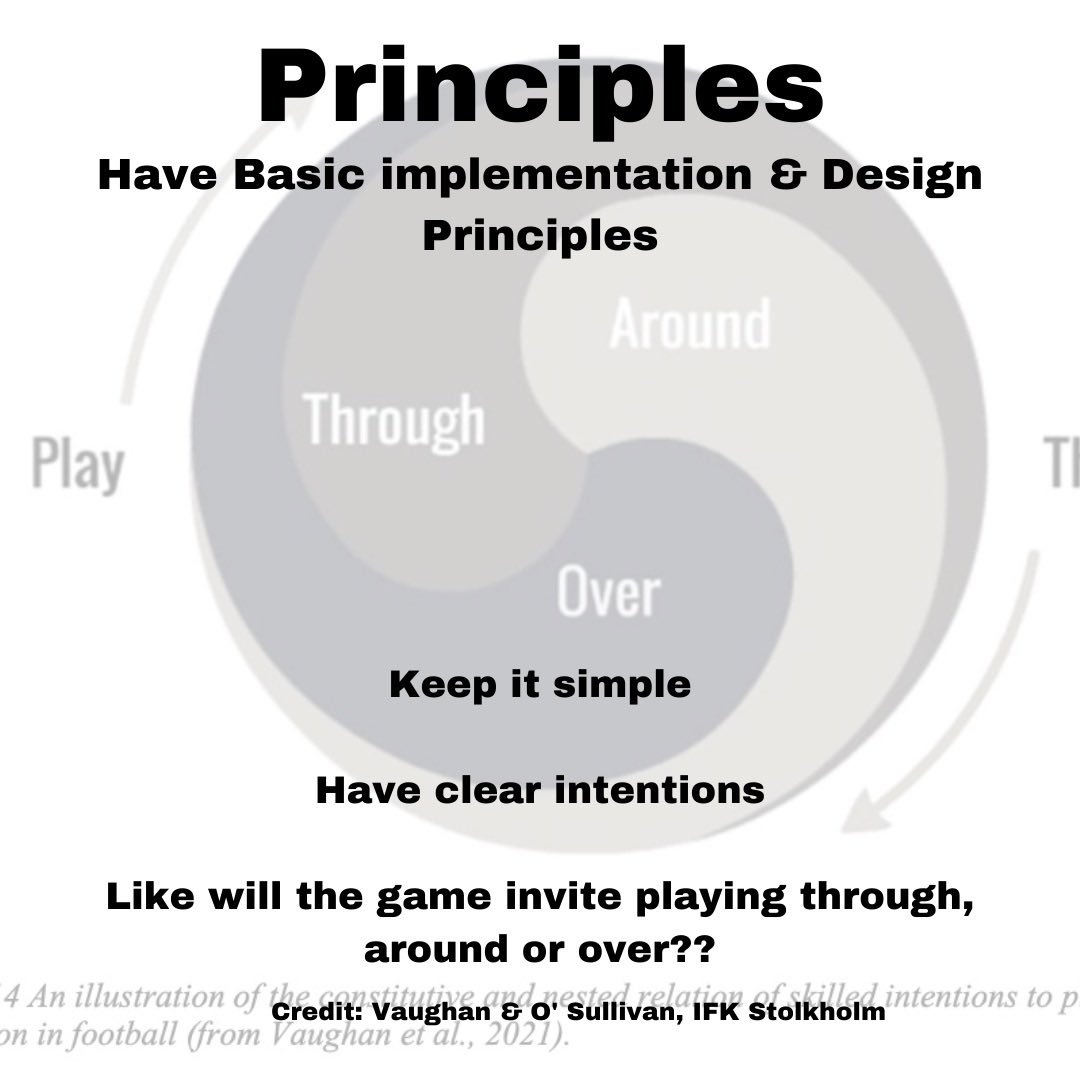
They can’t go through them, they can’t go around them, why don’t they ever go over them?
I don’t really know that answer, only they do. Are they so slavish to keeping the ball on the ground?
This is why PSG are better. They are willing to and can go through, around AND over you.
I find it hard to coach this in Gaelic Football too btw. Players are so reluctant to kick long from years of possession football.
I don’t mean just kick it away when they have men back, not cheap turnovers kicking for the sake of kicking (seeing a lot of that). But more you meet a well set low block type defence. They cheat, don’t let you through or around, cover your 2’s danger men. They have balance and cover.
Kick it long diagonal to a cluster or a big man and 1-2 break merchants. Ya you might lose it, but it’s easy to be defensively set up. They won’t score a goal from a turnover to a corner back on their endline. You win 1/3 and it’s an amazing result. You get a shot at goal, even if it’s missed, you’ve hit a major psychological blow. You are asking them the “how happy are ye with ye’re defensive system now lads?”
Defences don’t like it no.1. It rattles them.
But it’s not about that one ball itself. It’s about how it shifts the psychology. Now their cheating has a pause. Now they see a long ball coming, they are scrambling back to cover.
What will that offer - better through or around as the game goes on. 2’s might open up.
This is an old school concept in many ways. A set of tactical principles or questions we can easily ask in complex situations- can we go “over, around or through”, but was very neatly put together by @markstkhlm and James Vaughan and the lads at @AIKfotboll
These concepts are quite broad. They are not exact. They don’t tell the players exactly what to do, they act as a guide. This is the type of approach that can foster creativity in players and teams.
They help you ask the question “what am I seeing?. How are they set up? What are the opportunities here?”
And it allows you be intentional about your approach then.
You can get to a place where you are saying “let’s go over them for the first 4 balls, see what happens” That’s intentionality. See what emerges.
The big time pro coaches who figure this out and how to deliver it in short time frames (from a learning POV I think pro pre seasons are actually quite short when trying to patch a team of new signings together) will have wild success with top players. And one reason will be the players will own it and love it really quickly once they see some green shoots of success.
I signed up as volunteer coach so my daughter could start playing soccer.
10 kids. 5v5. She sat out half the game and touched the ball once when she played.
Yet we still debate whether smaller formats represent the “real game.”
Who cares? They’re kids.
More playing. More joy.
You can complain about pay to play all you want, but when I offer free weekly sessions all summer, 6-8 kids show up.
Then, when I run a 3 day camp, cap it at 20 players, and charge $200 / player... I end up with a waitlist.
Research has found that sitting close to a high performer improved performance by 15%.
Sitting close to a low performer decreased performance by 30%.
Surround yourself with people who lift you up. https://t.co/YNjQSsILyY
We are excited to announce that @thesoccerdon will serve as the Chair of Soccer Forward, bringing together leaders across sport, business, philanthropy and government.
📰 https://t.co/em5IYGOenb
I do not doubt your and many within USYS's intentions, and I truly hope this works.
But 40 years involved with soccer in the US has me skeptical.
Incentives equal outcomes, and unfortunately USSF's incentives have been shown to align with MLS owners, not with families, regardless of how well-intentioned individuals within the Federation are.
What USSF gets is clear and defined, USYS's voting rights now, full control in two years. What USSF gives up, or commits to, in return has not been made public. Is it in writing and/or binding with defined quantifiable commitments?
Many promises have been made over the years. Yet actions have consistently benefited MLS owners at the expense of families.
I hope I am wrong here.
Great question. I have been thinking about this for awhile.
A few ideas...
- One keeps what they find and forgets what they are told. (Unable to remember who to give credit to for this brilliant idea.)
- Questions over instructions. Ties into above idea.
- Simple to complex.
- Challege - What challenge is being solved for and why? Frequency observed in game?
- Solutions - 3 potential solutions.
- Scenario - Where are things? Goals, borders, objects, teammates opposition, etc. Where are they static? Where do they tend to come from and go to? Timing?
- Simple Activity Design - Work from one challenge and one solution. Design activity including simple “things”.
- Add Complexity - Add one alternative solution. Design.
- Trial - Test, review (questions), revise, repeat…
If your players only know what to do because you taught them A → B → C, they probably don’t understand the game as well as you think they do.
Hürzeler talks here about teaching the game through principles instead of fixed routes.
Because the opponent changes, the space changes, the moment changes, the answer can’t always stay the same.
The whole point is that players understand enough about what matters that they can find the solution themselves. Otherwise we’re not really teaching them football. We’re teaching them choreography.
I find using tasks with small numbers really beneficial, especially with beginners.
The fewer the players, the more involved each player becomes.
More touches, more decisions and more opportunities to explore different solutions.
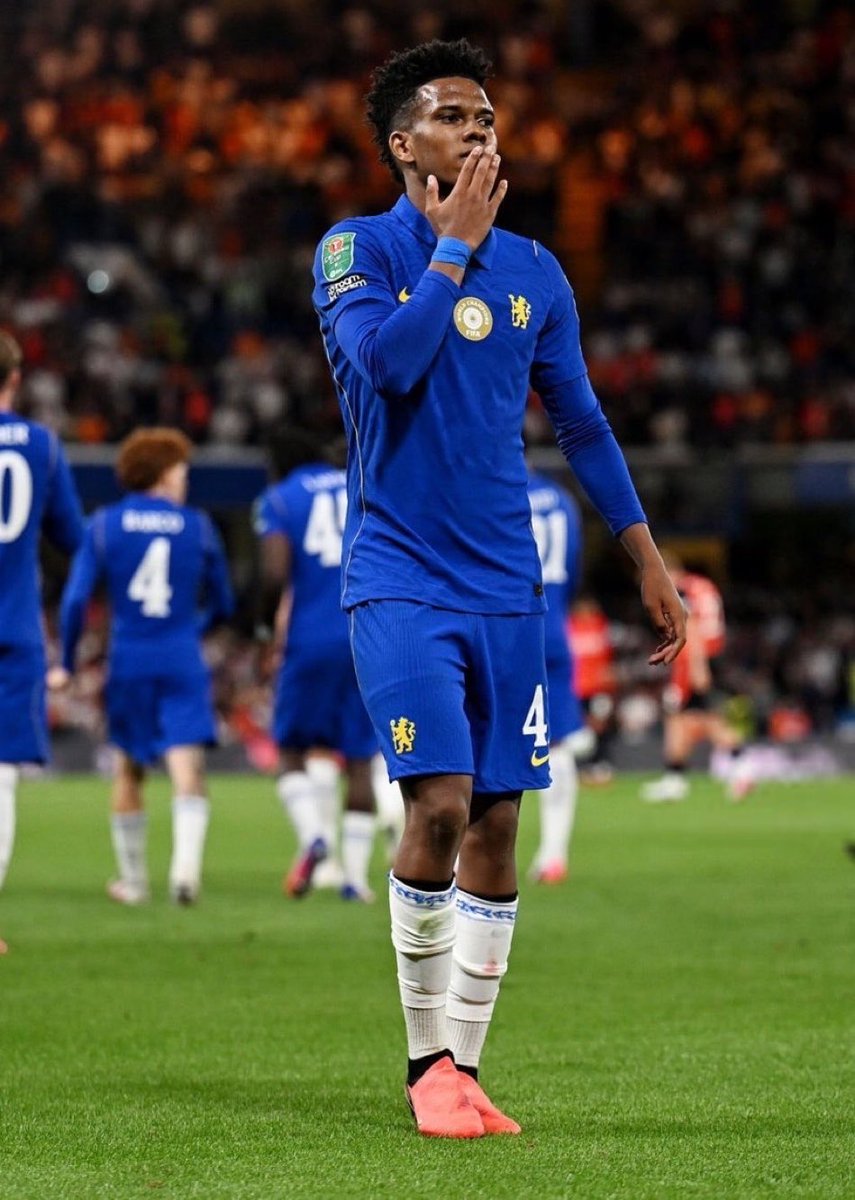
🚨 Thiago Silva on Estevao’s situation at Chelsea under Xabi Alonso:
🗣️ Thiago Silva: “I spoke with Estevao recently. I told him, ‘Don’t panic because you’ve sat on the bench for a few games. You’re 19 years old at Chelsea, not 29 and running out of time.’
He wants to play centrally. I understand that because when you watch him with the ball, you understand why. But then I told him, ‘Look at who is playing there. Palmer is there, Rogers can play there. Are you asking the coach to remove them because you’re talented?’
At Palmeiras, everybody already knew who Estevao was. At Chelsea, he has to make them know again.
He told me he doesn’t want to change his game or become bigger just because people say the Premier League is physical. I said, ‘Good. Don’t wake up tomorrow trying to become Adama Traore.’
That’s not why Chelsea bought him. They bought the boy who receives the ball and wants to dribble past somebody. Keep that. But also understand Xabi has to win football matches.
The best young players sometimes think the manager has to find a place for them. No. Make it impossible for him not to.
If Estevao gets 20 minutes, make the next team selection uncomfortable for Xabi. If he gets 30, make people ask why it wasn’t 60. Eventually you stop asking where you fit in the system because the manager starts changing the system to fit you.
That’s what I would tell him. Don’t fight Palmer. Don’t fight Neto. Don’t fight Xabi Alonso.
Fight the idea that Chelsea can be better without you on the pitch.”
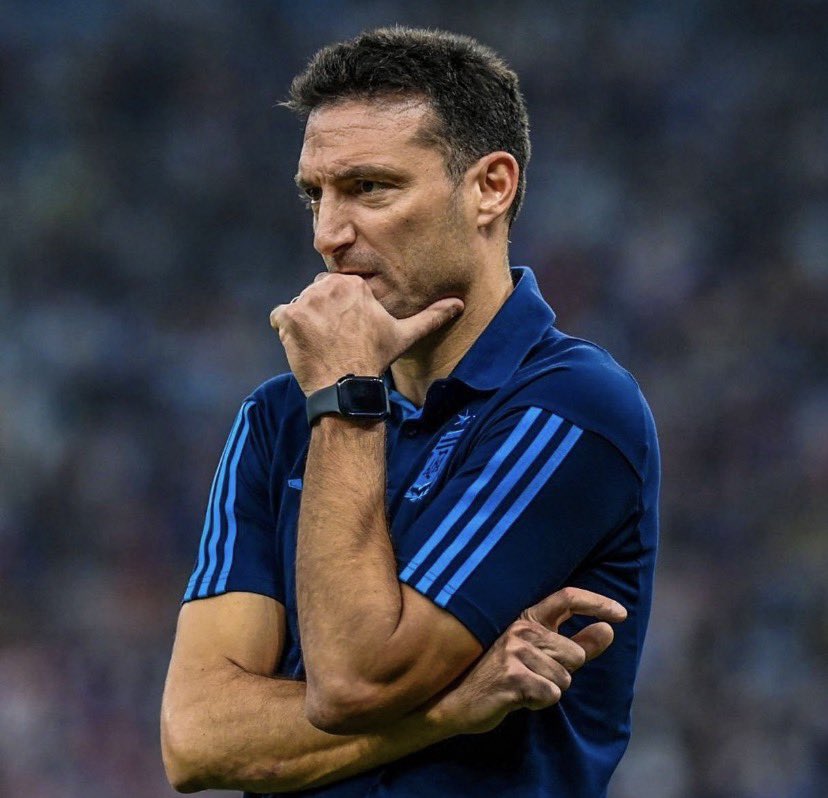
Lionel Scaloni: "We are losing the essence of football. Not only at a professional level, but also with kids."
"My children play in Spain and are overwhelmed with information. They receive the ball, and they're already being told what to do."
"There are fewer dribblers because if they barely get the ball and you say, 'Pass it!'... Imagine if Messi, when he was eight years old, had been constantly told by his coaches to "Pass it!" We wouldn't have him today."
"Football has become such a huge thing, everyone reads, studies, and thinks that with that, they can already manage."
"If you tell a 7 or 8-year-old to make a diagonal run, cover defensively... He's seven years old! Let him play with the ball, make mistakes, and when he's 14 or 15, then we can start correcting."
"It's a message for the future. This is a sport, and the beauty of football should not be lost."
@SkyeEddy@ProfBank No agreed-upon details.
Handing over voting rights with no plan to actually improve the system.
Pure “trust me bro” from a federation that has only ever served MLS owners.
Doubtful this moves the needle positively for the majority of families.
I thought about a story the other day that I hadn't thought about in years.
Back in 1998, a top marketing person I knew from my earlier days at MLS called me, since they knew I was a coach and understood the youth soccer market in Southern California. They needed help preselling tickets to MLS Cup at the Rose Bowl and were nervous that attendance could be poor if the Galaxy didn't make the final.
I started reaching out to the youth soccer market, and one of the leagues I reached out to was the Coast Soccer League. It was considered the best youth league in the country, and it was a true pyramid, bronze, silver, silver elite league up to gold, and at the top one premier bracket at the oldest age groups that was team based instead of club based. A real meritocracy.
I actually knew the leaders in the league, since I was a coach myself at the time, but they initially wouldn't return my calls. So I did some research and faxed them a list. MLS had 12 teams then, 18 man rosters, about 216 players total. Seventy two of those players, roughly one third of the league, had come up through Coast Soccer League. I listed each player and their MLS team next to their former Coast club and sent it over with one message: we need to be promoting this.
They called back within the hour. I ended up preselling a little over 20,000 tickets to that final, working with them and a few other youth soccer organizations.
I thought about that fax the other day for the first time in years, and it stuck with me. I can't prove the pyramid structure is why that league produced so many MLS players. Correlation isn't causation. But the best true pyramid in the country, in a soccer hotbed, produced a third of MLS's entire player pool.
I wish I'd put this in The Open Field. Might be worth its own chapter someday.