From universities to insurers to startups, businesses across the UK say they're locked in, overcharged, and out of options. Bold remedies are needed now.
Read our latest blog to find out why: https://t.co/X78gSOEtvE
Across the globe, Microsoft is under intensifying regulatory scrutiny over its licensing and pricing practices that actively harm customers and distort competition.
https://t.co/jDhR4cQX4O
This is exactly why we support the Veterans Affairs Management and Oversight of Software Assets Act!
The VA is already taking great steps to manage restrictive licensing practices. The bill will go even further to help eliminate duplication and save taxpayer dollars.
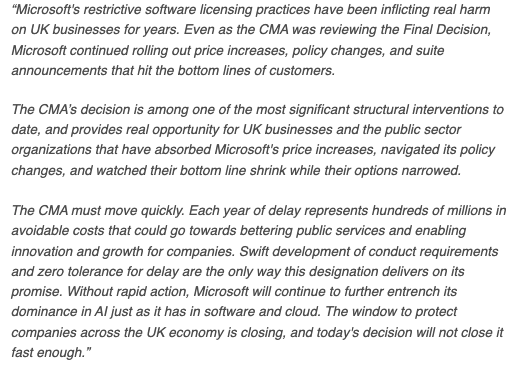
The CMA's investigation is a critical first step to address the anticompetitive software licensing practices that have inflicted harm on UK businesses for years.
Swift development of conduct requirements and zero tolerance for delay are needed to protect customers.
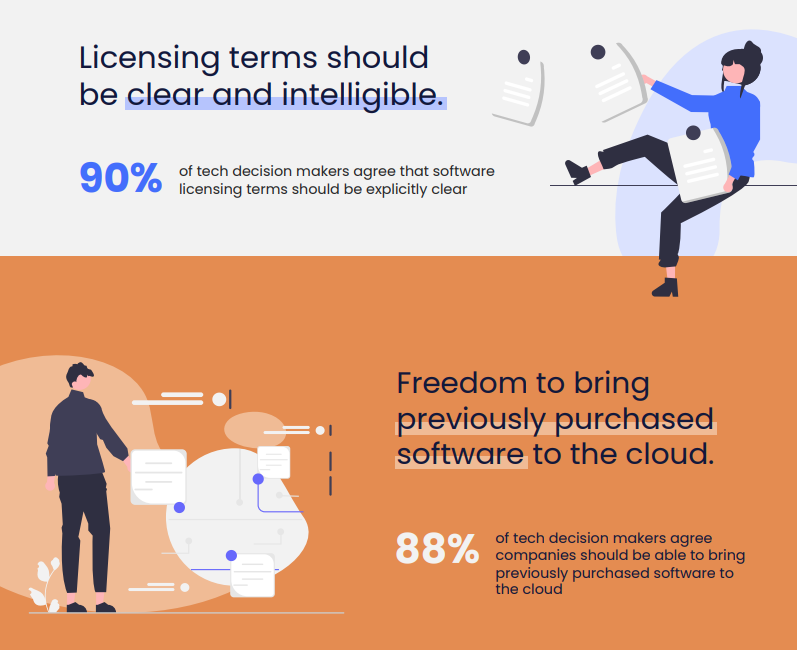
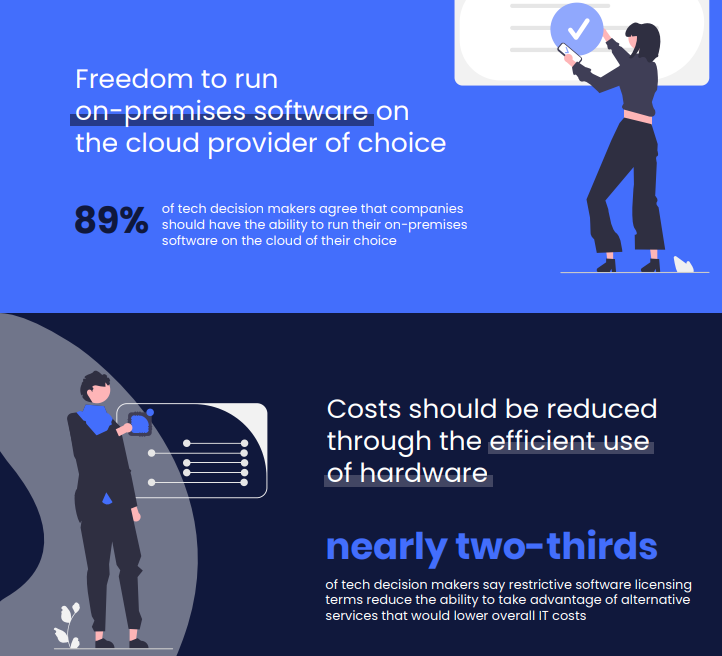
Tech decision makers agree: the Principles of Fair Software Licensing are a common sense way to ensure that the digital economy remains competitive and fair.
NEW DATA: 75% of workers say Microsoft exploits its productivity dominance to push its AI tools. The Office E7 bundle out today is the latest example, forcing employers into a costly AI package they don't want, don't value, and that squeezes competition.
https://t.co/LT0mIlwrWr
Two Microsoft Outlook accounts failed in space during Artemis II. NASA pays ~$100M/year for Microsoft software — not by choice, but because lock-in leaves no way out.
CFSL Executive Director Ryan Triplette breaks it down in @WashTimes: https://t.co/V8K3EBRtCH
Iowa taxpayers are footing a hidden bill, not for better government services, but because agencies are trapped in software contracts they can't escape.
Lawmakers in Iowa and across the country are working to address the vendor lock-in that costs states millions.
Every dollar the VA wastes on duplicate software licenses or unnecessary fees to a legacy software vendor exploiting opaque contract terms is one that should be going to veterans' care.
@RepNancyMace's VAMOSA Act will protect veterans and taxpayers alike!
🚨 Lawmakers on the @HouseVetAffairs Committee are scrutinizing software waste and data privacy risks at VA, weighing new bills to improve license tracking and protect veterans’ data.
https://t.co/azRJCTwOwn
We’ve long espoused Software Licensing Principles that address global concerns about the practices of legacy software providers and the impact on public and private sector customers.
As of yesterday, those concerns have gone galactic. We’re adjusting our principles accordingly.
Today, the @CMAgovUK announced one of the most significant structural interventions to date - a SMS investigation into @Microsoft's business software ecosystem, which has been harming customers for years.
Now, @RTriplette urges the CMA to move quickly👇
Taxpayers are getting fleeced by sneaky software contracts that lock government agencies into restrictive terms and turn them into cash cows for legacy software vendors. States across the country are fighting back.
Every state should. 👇
https://t.co/tHvkHQRjQw
Expert Michael Garland in @Capitol_Weekly: As California commits to another 5 years of Microsoft spending, taxpayers deserve to know if they are getting a return on their investment, or if the state is wasting millions while stifling competition.
https://t.co/9ymF21LNRc
The crackdown on Microsoft is intensifying.
Earlier this month, the U.S. FTC accelerated its investigation into the company's anticompetitive software licensing and tying practices.
Now, Japan joins the growing list of countries taking regulatory action.
Japanese regulators are investigating Microsoft’s local unit over possible anti-competitive practices involving the Azure cloud platform https://t.co/Fyk80AcQGk
👀NEW REPORT: Ahead of CA’s planned renewal of a massive, 5-year software contract with Microsoft, expert Michael Garland argues the state should use leverage to save taxpayer $, improve innovation & focus on competition, diversity, and interoperability.
https://t.co/DvsYWh4bEe
Microsoft’s anticompetitive software licensing and tying practices have sparked an unprecedented wave of global scrutiny.
Regulators worldwide are no longer falling for stall tactics and attempts at misdirection. The time for swift, meaningful enforcement is now.
The US Federal Trade Commission is accelerating scrutiny of Microsoft as part of an ongoing probe into whether the company illegally monopolizes large swaths of the enterprise computing market with its cloud software and AI offerings https://t.co/UDfVQnGLu6
The FTC is accelerating an antitrust probe of Microsoft and has sent requests for information to cloud and office software rivals relating to things like licensing Office/Windows for rival clouds & AI/Copilot, sources tell @joshua_sisco, me & @mattmday https://t.co/4fjn1gKVIB
This week, HB 913 passed out of the GA House Governmental Affairs Committee. Six states have already passed fair software legislation and GA is next!
The bill protects the states' right to choose software based on performance, cost, flexibility, and security, NOT vendor lock-in.
Fair software licensing legislation is gaining momentum nationwide thanks to a focus on putting residents, not restrictive contracts, at the center of technology decisions.
Read more from Executive Director Ryan Triplette in @ProvBusNews https://t.co/Lbw4IG5l0c