From neuroscience to neuropsychology I love working with people. PhD Psychology. Believe in evolution, (bio)diversity and our intelligence (if we use it)
Fotos from different public trash can in USA. Until better plastic solutions, separate trash and don't throw it away. And...
1) reduce buying trash!
2) focus on compostable alternatives
3) inform yourself better recycle products
4) reuse your items more than ones, don't buy PET
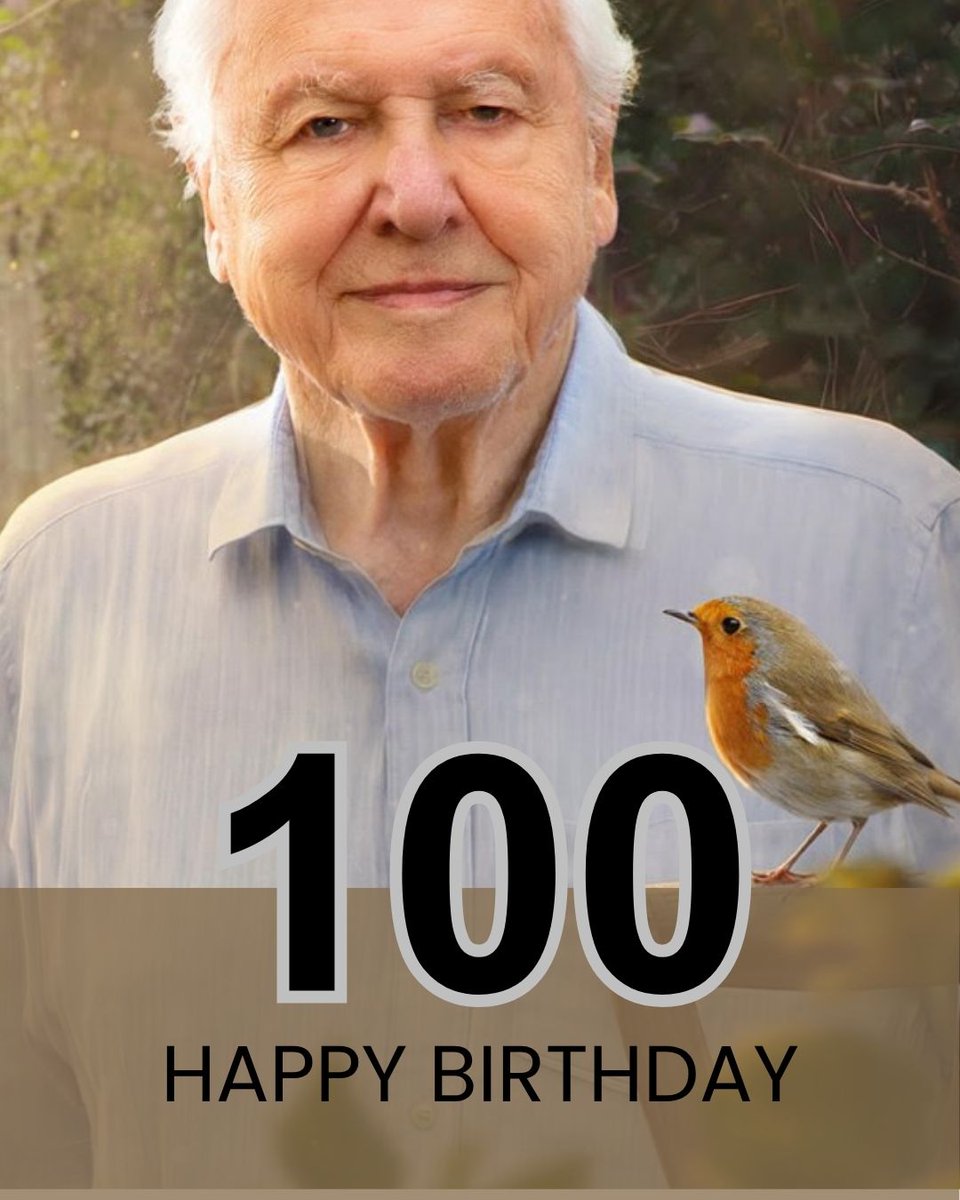
Happy Birthday Sir David Attenborough 🎉
You are an inspiration! I will never forget watching BBC Life On Earth as a child🎥 I still have the accompanying book from the series!
Almost 50 years on, there have been so many groundbreaking series & I’ve watched every one with equal fascination. They inspired me to travel to see more of the natural world and to document the stories of the animals I see 🌿
This year my own footage of kingfishers featured in the BBC documentary Secret Gardens, narrated by Sir David. I couldn't have been prouder.
🌎
We've turned this world into a living hell for gray whales.
Thousands of miles they swim, only to find their food has gone—the Arctic ice ecosystem they relied on destroyed.
Increasing numbers of their emaciated bodies are being found, as they had nowhere else to go.
1/2
@Strandjunker@atrupar Please don't discriminate against people with disabilities or 7-year-old children. They can be surprising and funny. DT can't do any of that. He upsets, irritates, and causes harm. And: If there's no brain, there's no IQ to measure
Now the world’s second biggest #rainforest, the #Congo, appears to be emitting #carbon dioxide rather than absorbing it as the world heats up. Just the latest devastating feedback that could accelerate #climate change
https://t.co/U2kIz5YLXp
Since 1900, humans have cleared 1.1 billion hectares of forest. Forests clean our air, purify our water, and are vital in the fight to address the growing climate crisis.
Keep forests standing. #ActOnClimate#climate#deforestation#climateaction#Nature
Credit: Elena Doms via Linkedin and shared by @sophiakianni
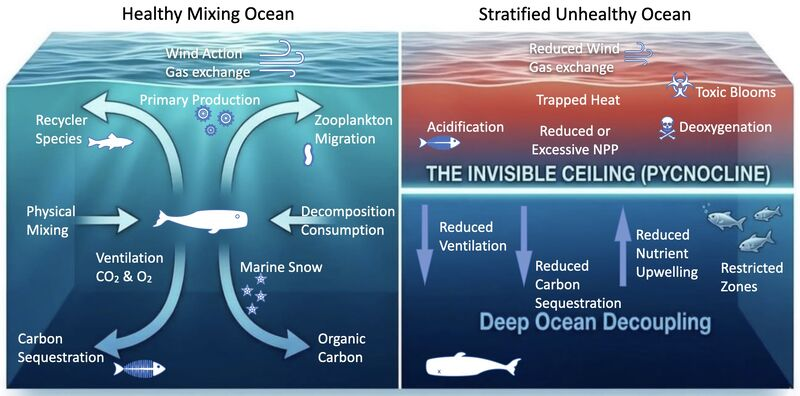
The Oceans are Losing their Breath. They’re no longer just "buffering" climate change; they are reaching a structural breaking point. In this second article in a series on Ocean Stratification (the layering of water that prevents mixing), Jan and I examine a "triple whammy" of environmental failures:
The Deoxygenation Crisis: Warmer surface layers are trapping heat and losing oxygen. Since the mid-20th century, 1%–2% of global ocean oxygen has vanished, creating "dead zones" where marine species literally struggle to breathe.
Chemical & Visual Shifts: We have officially breached the Planetary Boundary for Ocean Acidification, threatening foundational species like coral and shellfish. Simultaneously, the oceans are "darkening" as biomass and particles accumulate in the surface, further trapping heat in a dangerous feedback loop.
A Stalling Carbon Pump: The "biological pump"—the process where marine life moves carbon to the deep ocean—is slowing down. Rising temperatures are creating a "thermal wall" that disrupts the (vertical)migration of carbon-recycling species.
The Bottom Line: The ocean's capacity to absorb our emissions is flattening. As stratification strengthens and marine heatwaves become the "new normal," the transition of our oceans from a stable climate sink to a volatile risk source is one of the most significant challenges of this century.
Links to this new article and the first one covering the physical aspects of Ocean Stratification are in the comments. h/t Tom Harris and Jan Umsonst
The Great Decoupling 2: Changes in Ocean Biochemistry Driven by Strengthening Stratification https://t.co/RRdDtMrMT5
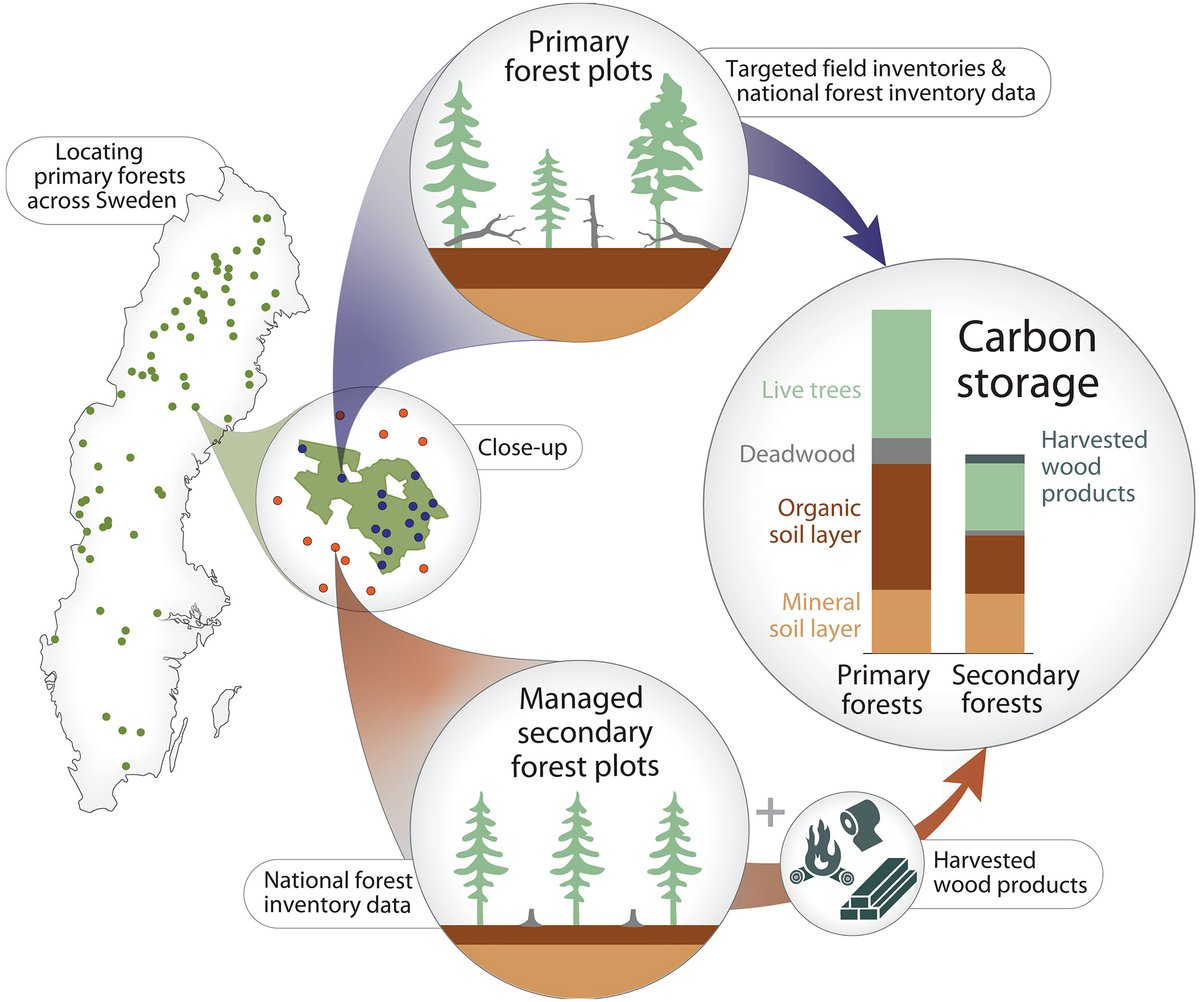
The planet’s undisturbed old-growth boreal forests may be far more important in the fight against climate change than previously realized, according to a new Science study, which finds that primary forests in Sweden store over 70% more carbon than managed secondary forests.
Learn more: https://t.co/jKr1Dgqb2D
Migratory freshwater fish are in steep decline due to pressures along their paths, including dams, altered flows, habitat degradation, pollution and unsustainable fishing.
Restoring rivers and habitats cannot wait.
Read the #CMSFreshwaterFishes report: https://t.co/WsvywHpFK1
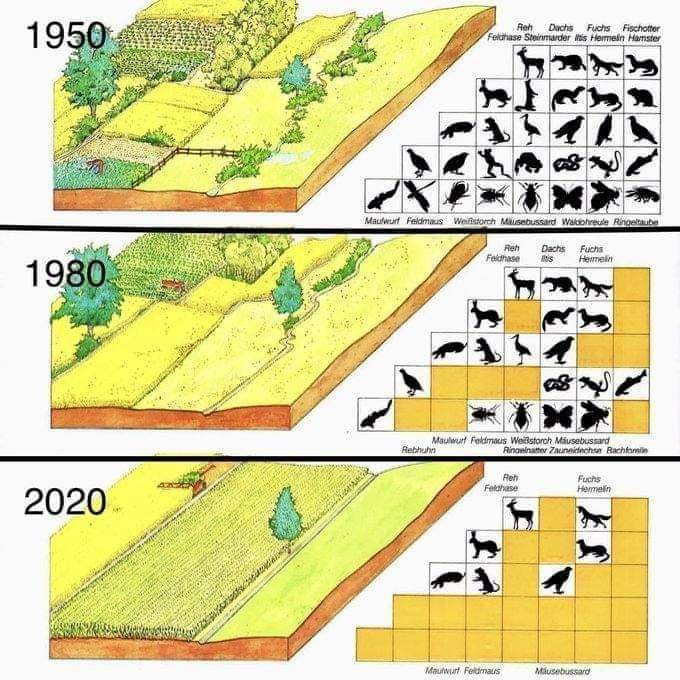
Mono-culture farming devastates the rest of nature.
Farmlands continue to lose much of their wildlife, bees, birds, insects, amphibians. But each generation measures "normal" nature against what existed in their childhood; not what existed before.
So we don't mourn the Auroch, Quagga, Eastern Elk, or drained wetland. We never knew them. We each inherit a slightly emptier world & call it normal, a shifting baseline syndrome.
Humans are remarkably adaptive... dangerously so.
Scotland is aiming to be the world's first rewilded country. It's looking to rewild 30% of the country by 2030.
We have the solutions. Replenishing and protecting nature is one of them. #ActOnClimate#climate#biodiversity
Huge-scale ecological engineering around the edges of one of the world's largest and driest deserts has turned it into a carbon sink that absorbs more CO2 than it emits, research suggests. https://t.co/FmxPAevfzO