The latest science news, groundbreaking discoveries, and fascinating features from our expert journalists. Your journey of discovery begins at Live Science.
The head of ESA's Earth observation program tells Live Science why a striking image of a recent heat wave scorching Southern Europe gives her hope that we can properly monitor — and eventually prevent — similar extreme weather events in the future.
🔗 Read more here: https://t.co/oDWSuiXlBB
Experts argue that the mysterious Voynich manuscript was incorrectly bound — a discovery that "moves the ball" in finally deciphering the 15th-century document.
https://t.co/WMSRZ019hW
In a new pilot study, 10 minutes of transcranial ultrasound stimulation reduced patients' delusion severity, scientists report.
🔗 Read more here: https://t.co/U55cKcybnZ
An AI-operated drone learned to fly from scratch and navigated a race course at speeds over 60 mph, using a single camera.
🔗 Read more here: https://t.co/04Aonke8uG
A gene variant called APOE4 is the biggest genetic risk factor for Alzheimer's disease. Scientists are finally figuring out how it works.
🔗 Read more here: https://t.co/7BSabcCGEj
A review of 41 studies found that higher exposure to air pollution was linked to greater odds of glaucoma and cataracts, with PM2.5 pollution showing the clearest association.
🔗 Read more here: https://t.co/izlnBb7xjT
Discovered in an Indigenous grave in Georgia nearly 150 years ago, the "Birdman" copper plate may actually depict a woman ceremonially dressed as a warrior.
Read more about it here: https://t.co/L5eGCoHruQ
Archaeologists discovered a first century B.C. military camp that was erected during Emperor Augustus's Cantabrian Wars.
Read more here: https://t.co/tFrbU2oMYg
Researchers have found that during the Black Death, when a third of the population of Europe was wiped out, biodiversity fell. Understanding their farming practices could help us increase diversity in modern agriculture.
Read more here: https://t.co/DGAEETAnLu
A recent study may reshape our understanding of brain evolution and open new avenues for studying neurological diseases.
Read about the study here: https://t.co/0zMLiYUk40
Petal, the world's first petabit transoceanic fiber cable, could theoretically support simultaneous music streaming for 75% of the world's population.
Read more here: https://t.co/F2gl5KqcPP
When temperatures rise, California redwoods slow down their rate of photosynthesis, a discovery that could have implications for the long-term survival of the iconic species.
Read more here: https://t.co/CG5IajruAA
Archaeologists have discovered an ancient base camp in Alaska that has evidence of the oldest dwelling and possibly the earliest domesticated dogs in the Americas.
🔗 Read more here: https://t.co/T63utlMDb3
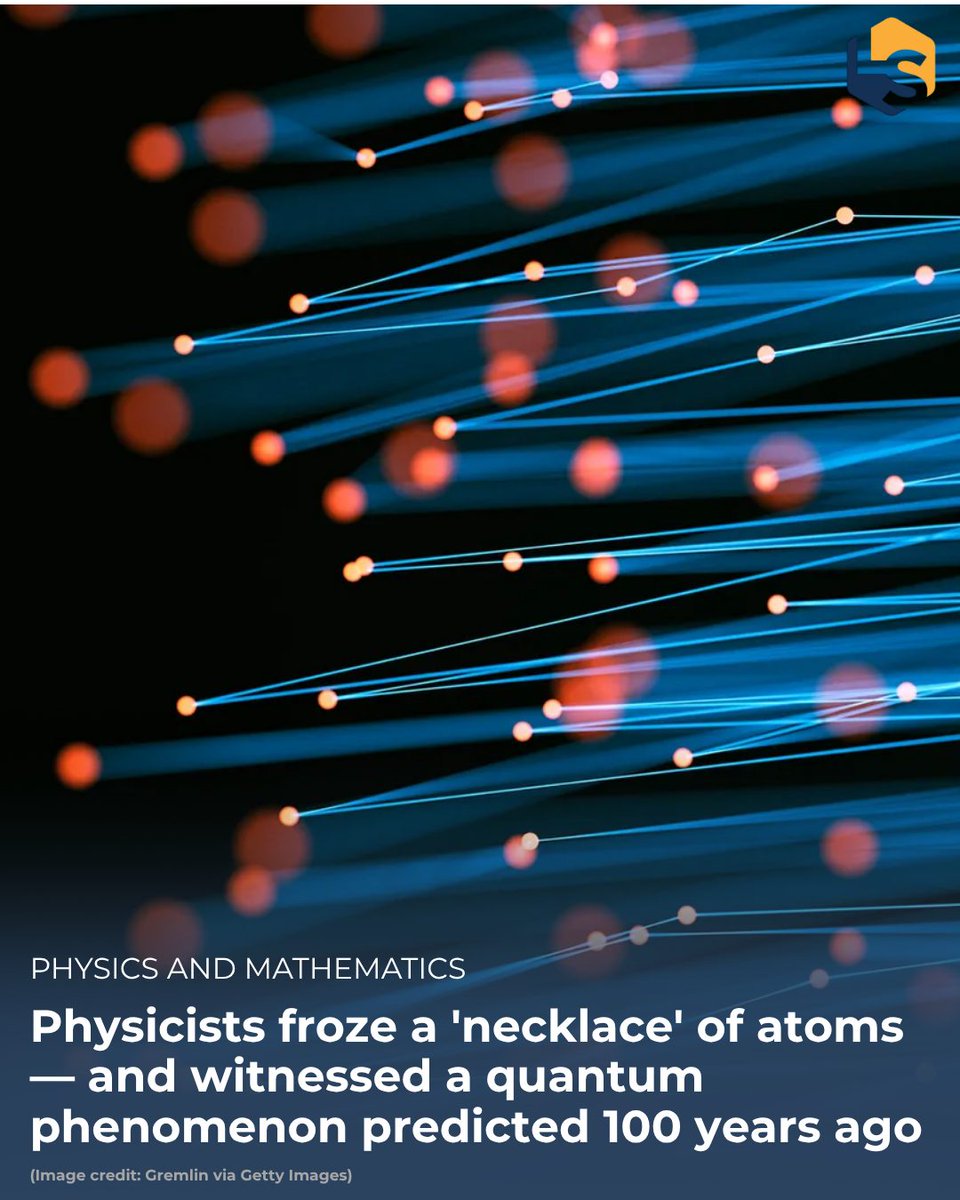
Atoms confined to a single line can bind into clusters called Bethe strings. A new experiment points to a mix of many such clusters, though the evidence is indirect.
Read more here: https://t.co/DUkLP58g1A
A fossil that sat in a museum collection for over a century is a previously unknown species of predatory dinosaur, researchers have found.
Read more here: https://t.co/CJhHqncGkr
Stellar cores called white dwarfs come in an astonishing array of colors, including what scientists say is the first known green star and the reddest star ever found, new research reveals.
Read more here: https://t.co/WYs0iYJMgA