#OpenAI announced end-of-life for GPT-3x models. This means that if you have some AI agents or applications in production that rely on GPT-3x, you will have to migrate to other models. And to migrate to other models reliably you need to ensure that they will be able to provide THE SAME quality replies as what you have tested for a long time.
This can be very frustrating, but #Integrail Benchmarking Tool comes to your rescue - in simple 3 steps you can make sure you migrate to another model in your application:
1) Pick models to compare
2) Run head-to-head tests and fine-tune prompts
3) Run systemic benchmarks to make sure you have 100% the same quality
Learn more here: https://t.co/SFHUMlzEFB
#ai #aiagents #agenticai #llm
I just published AI Agents: From Dumb to Self-Learning https://t.co/TRE55uYNlC
Tutorial on various types of AI Agents and how to build them practically
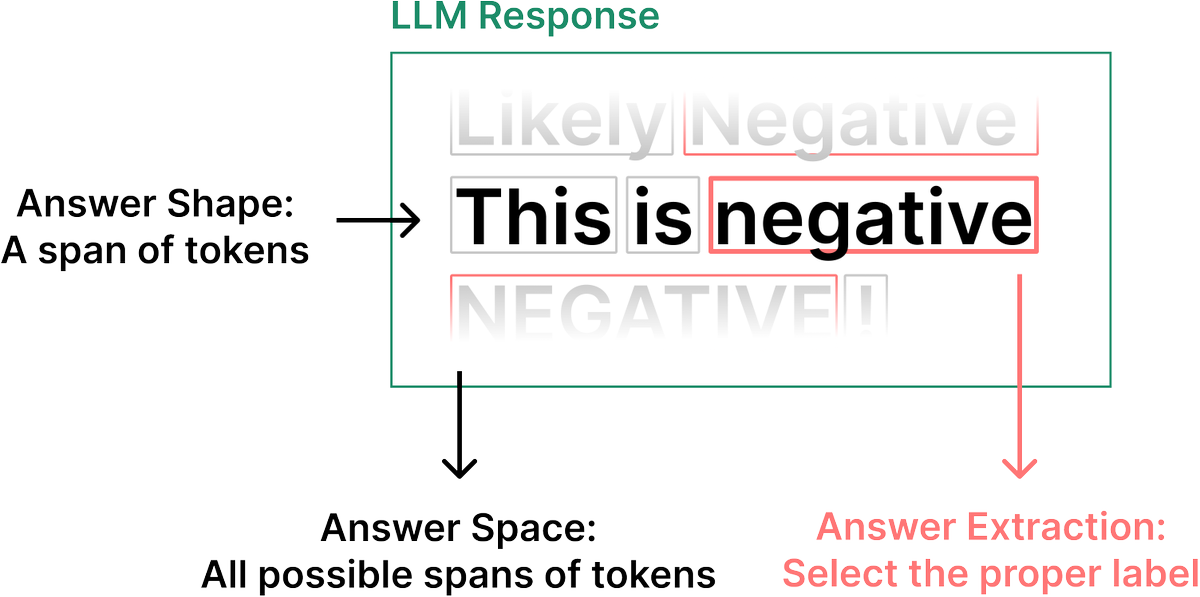
LLMs still can't reliably generate structured outputs.
This makes it necessary to perform Answer Engineering.
Here is the best advice on getting structured outputs👇🧵
Introducing Veo: our most capable generative video model. 🎥
It can create high-quality, 1080p clips that can go beyond 60 seconds.
From photorealism to surrealism and animation, it can tackle a range of cinematic styles. 🧵 #GoogleIO
We’re introducing Imagen 3: our highest quality text-to-image generation model yet. 🎨
It produces visuals with incredible detail, realistic lighting and fewer distracting artifacts.
From quick sketches to very high-res imagery, here’s a look at what it can create. 👀 #GoogleIO
The top 10 AI video tools 🧵👇
Runway is an unspoken leader, but there are a lot of other powerful - and FREE - Video Generators:
🎥Runway Gen-2
Runway Gen-2 is the leader of AI Video generators that allows users to create videos from text and image prompts. It offers a user-friendly interface and a variety of settings to fine-tune the generated content. Users can enter descriptive prompts, adjust parameters like motion, seed, and interpolate, and preview the output before generating the final video.
🎥LeonardoAI Motion
Leonardo AI's animation and video generation features allow users to easily bring their images to life with dynamic motion and animation. The platform's "Motion" tool enables users to transform static images into captivating animated videos with just a few clicks.
🎥Stable Video
Stable Video is an AI content creator that uses the Stable Diffusion model to generate videos from text or image prompts. It is currently in closed beta and offers users 150 free daily credits for video generation. The process involves selecting from AI-generated images and customizing camera movements to create videos.
🎥Pika Labs
Pika is a high-quality AI video generator that simplifies video creation. It allows users to input text prompts to describe their video concepts, which Pika then turns into reality. The platform is designed to be user-friendly and accessible, with a focus on learning and improving from feedback and diverse training data.
🎥Kaiber
Kaiber is a very powerful AI Video Generation Platform with the unique style of outputs - great for music or marketing videos with own, characteristic style.
Avaiable with Web, as IOS and Android App,
🎥BasedLabs A
BasedLabs AI is one of the newest AI Video tools that generates high-quality videos from text inputs.
🎥Synthesia
Synthesia is an AI tool that specializes in generating video content with lip syncing - awesome for talking AI video avatars.
🎥Fliki AI
Fliki is an AI video generator that allows users to create videos from text. It offers features like text-to-speech, customizable avatars, and the ability to add images and videos to the generated content.
🎥Genmo AI
Genmo AI is one of the leaders of Free Text-to-Video and Image-to-Video AI Generators.
Google Imagen Video
Google Imagen Video is an AI tool developed by Google that creates videos based on text prompts - still in beta.
🎥Assistive Video
Assistive Video is one of the Generative Tools from Assistive Chat Company - here for creating high-quality videos from text inputs.
Links and Websites of all Tools you can find at my magazine article - see at comment 👇
#ai #aivideo #aitools
@GroqInc is doing a great job when it comes to #GenAI output speed: they manage to achieve +260 tokens/second in this test, going as fast as +800 tokens/second using the brand new #LLaMa3 from Meta 👌🏻
Jonathan Ross Adam Tachner Jim Miller John Barrus @chamath
We're announcing TacticAI: an AI assistant capable of offering insights to football experts on corner kicks. ⚽
Developed with @LFC, it can help teams sample alternative player setups to evaluate possible outcomes, and achieves state-of-the-art results. 🧵 https://t.co/hvNgh9GEtc
I think AI agentic workflows will drive massive AI progress this year — perhaps even more than the next generation of foundation models. This is an important trend, and I urge everyone who works in AI to pay attention to it.
Today, we mostly use LLMs in zero-shot mode, prompting a model to generate final output token by token without revising its work. This is akin to asking someone to compose an essay from start to finish, typing straight through with no backspacing allowed, and expecting a high-quality result. Despite the difficulty, LLMs do amazingly well at this task!
With an agentic workflow, however, we can ask the LLM to iterate over a document many times. For example, it might take a sequence of steps such as:
- Plan an outline.
- Decide what, if any, web searches are needed to gather more information.
- Write a first draft.
- Read over the first draft to spot unjustified arguments or extraneous information.
- Revise the draft taking into account any weaknesses spotted.
- And so on.
This iterative process is critical for most human writers to write good text. With AI, such an iterative workflow yields much better results than writing in a single pass.
Devin’s splashy demo recently received a lot of social media buzz. My team has been closely following the evolution of AI that writes code. We analyzed results from a number of research teams, focusing on an algorithm’s ability to do well on the widely used HumanEval coding benchmark. You can see our findings in the diagram below.
GPT-3.5 (zero shot) was 48.1% correct. GPT-4 (zero shot) does better at 67.0%. However, the improvement from GPT-3.5 to GPT-4 is dwarfed by incorporating an iterative agent workflow. Indeed, wrapped in an agent loop, GPT-3.5 achieves up to 95.1%.
Open source agent tools and the academic literature on agents are proliferating, making this an exciting time but also a confusing one. To help put this work into perspective, I’d like to share a framework for categorizing design patterns for building agents. My team AI Fund is successfully using these patterns in many applications, and I hope you find them useful.
- Reflection: The LLM examines its own work to come up with ways to improve it.
- Tool use: The LLM is given tools such as web search, code execution, or any other function to help it gather information, take action, or process data.
- Planning: The LLM comes up with, and executes, a multistep plan to achieve a goal (for example, writing an outline for an essay, then doing online research, then writing a draft, and so on).
- Multi-agent collaboration: More than one AI agent work together, splitting up tasks and discussing and debating ideas, to come up with better solutions than a single agent would.
I’ll elaborate on these design patterns and offer suggested readings for each next week.
[Original text: https://t.co/y4McIAjD2m]











![AndrewYNg's tweet photo. I think AI agentic workflows will drive massive AI progress this year — perhaps even more than the next generation of foundation models. This is an important trend, and I urge everyone who works in AI to pay attention to it.
Today, we mostly use LLMs in zero-shot mode, prompting a model to generate final output token by token without revising its work. This is akin to asking someone to compose an essay from start to finish, typing straight through with no backspacing allowed, and expecting a high-quality result. Despite the difficulty, LLMs do amazingly well at this task!
With an agentic workflow, however, we can ask the LLM to iterate over a document many times. For example, it might take a sequence of steps such as:
- Plan an outline.
- Decide what, if any, web searches are needed to gather more information.
- Write a first draft.
- Read over the first draft to spot unjustified arguments or extraneous information.
- Revise the draft taking into account any weaknesses spotted.
- And so on.
This iterative process is critical for most human writers to write good text. With AI, such an iterative workflow yields much better results than writing in a single pass.
Devin’s splashy demo recently received a lot of social media buzz. My team has been closely following the evolution of AI that writes code. We analyzed results from a number of research teams, focusing on an algorithm’s ability to do well on the widely used HumanEval coding benchmark. You can see our findings in the diagram below.
GPT-3.5 (zero shot) was 48.1% correct. GPT-4 (zero shot) does better at 67.0%. However, the improvement from GPT-3.5 to GPT-4 is dwarfed by incorporating an iterative agent workflow. Indeed, wrapped in an agent loop, GPT-3.5 achieves up to 95.1%.
Open source agent tools and the academic literature on agents are proliferating, making this an exciting time but also a confusing one. To help put this work into perspective, I’d like to share a framework for categorizing design patterns for building agents. My team AI Fund is successfully using these patterns in many applications, and I hope you find them useful.
- Reflection: The LLM examines its own work to come up with ways to improve it.
- Tool use: The LLM is given tools such as web search, code execution, or any other function to help it gather information, take action, or process data.
- Planning: The LLM comes up with, and executes, a multistep plan to achieve a goal (for example, writing an outline for an essay, then doing online research, then writing a draft, and so on).
- Multi-agent collaboration: More than one AI agent work together, splitting up tasks and discussing and debating ideas, to come up with better solutions than a single agent would.
I’ll elaborate on these design patterns and offer suggested readings for each next week.
[Original text: https://t.co/y4McIAjD2m]](https://pbs.twimg.com/media/GJN6yJRaIAExh4D.jpg)