Hemos llegado para mostrar la diversidad de los suelos de Colombia.
We've arrived to show the diversity of Colombian soils.
Profile managed by @EdsonUMarroquin
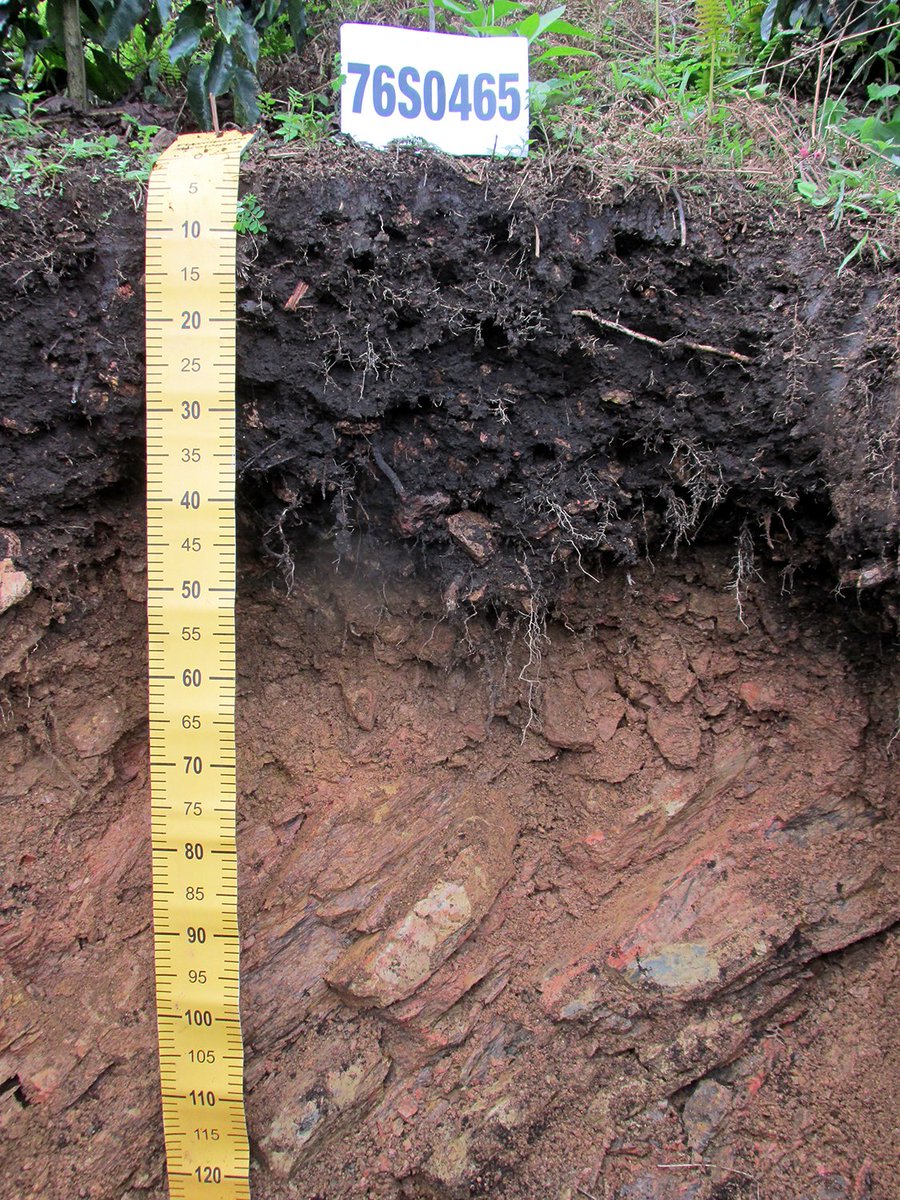
Having a dark horizon is not enough to make it a mollic epipedon.
At 0–32 cm, this soil has a moist color of 10YR 2/1, 6.4% organic C, 65.5% base saturation, and fine subangular blocky structure; therefore it is a mollic epipedon.
Its Oi1–Oe–Oi2–Oi3 sequence is dominated by slightly decomposed fibric materials, due to cold (4-8ºC) and waterlogged conditions that limit decomposition, allowing plant residues to accumulate and remain only slightly altered.
Data from: @CvcAmbiental & @igacColombia#Histosols
A Typic Cryofibrist in a stunning glacial landscape at 3810 m a.s.l. in the Parque Nacional Natural Las Hermosas, Valle del Cauca. This organic soil occurs at the bottom of a glacial cirque.
@Luka_Fertilizer Thanks. The current land use is extensive cattle grazing on kikuyo grass. The dense grass cover and root inputs are certainly interesting context for interpreting organic C in the surface horizon, although we would need more information on land-use history to explain its origin.
Having a dark horizon is not enough to make it a mollic epipedon.
At 0–32 cm, this soil has a moist color of 10YR 2/1, 6.4% organic C, 65.5% base saturation, and fine subangular blocky structure; therefore it is a mollic epipedon.
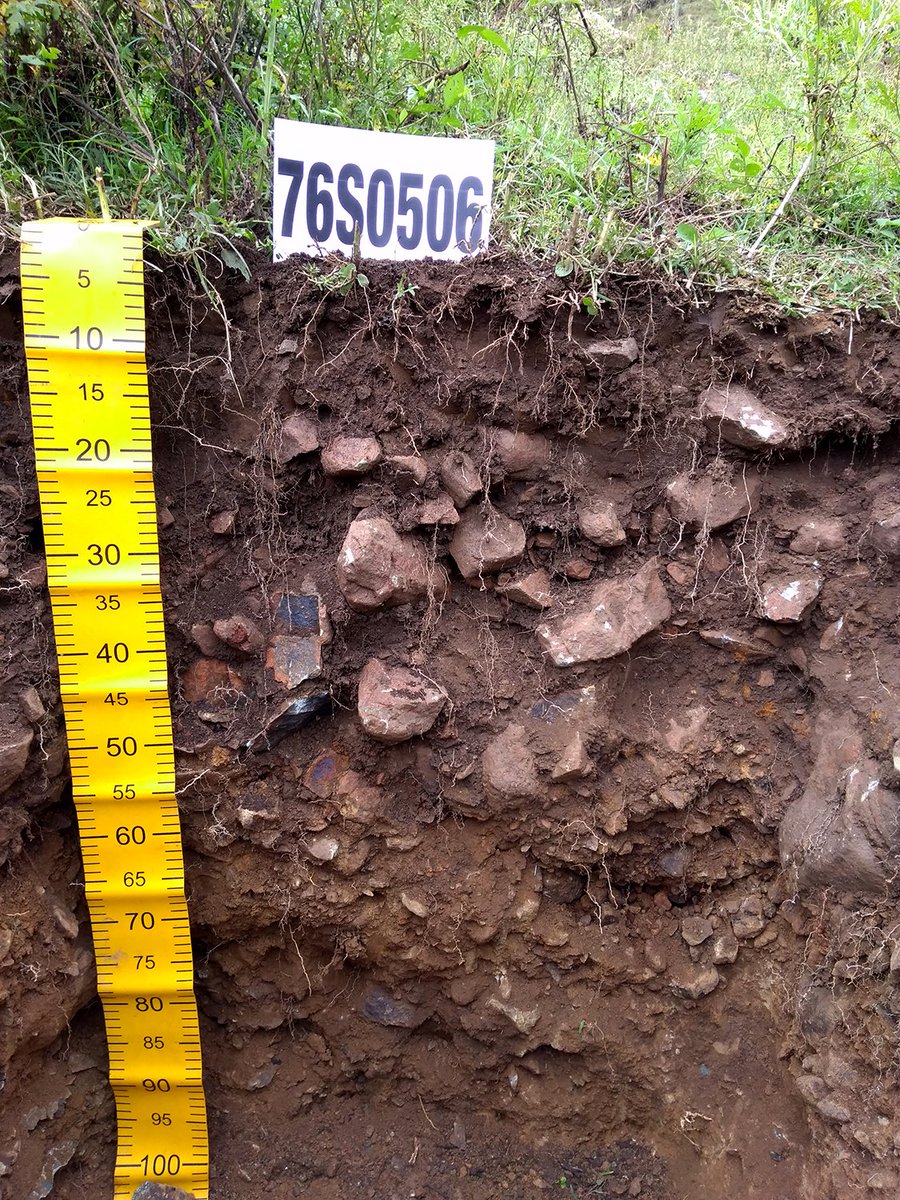
This soil occurs at 2348 m a.s.l. on heterogeneous alluvial deposits in a cool, humid mountain environment. It has an udic moisture regime and an isomesic temperature regime and it is classified in Soil Taxonomy as loamy-skeletal, mixed, superactive, isomesic Typic Hapludoll.
A high-mountain soil from Colombia 🇨🇴
A Typic Melanocryand developed from volcanic ash over glacial deposits, at 3,960 m a.s.l. in Bugalagrande, Valle del Cauca.
It has a melanic epipedon, with a melanic index of 1.6, Munsell color 10YR 2/1, and 12.5% organic carbon.
Its andic soil properties are reflected in a very low bulk density (0.53 Mg m⁻³), high phosphate retention (96.3%), and Al + ½Fe = 2.95%.
A remarkable soil shaped by the interaction of volcanic materials, glacial processes and high-Andean environmental conditions.
Colombia is a country with dazzling soil diversity, rigorously documented in soil surveys that cover its entire territory at a 1:100,000 scale. The Valle del Cauca, in the southwest between the Pacific and Andean regions, has become the first department with 100% of its territory
📢 In the coming days, we’ll be publishing some of the most representative soil profiles from this study here on X, as well as on our Facebook and Instagram accounts. Here’s a sneak peek of the beautiful soils of Valle del Cauca.
Colombia es un país con una diversidad edáfica deslumbrante, rigurosamente registrada en los estudios de suelos que cubren la totalidad de su territorio a escala 1:100.000. El Valle del Cauca, en el suroccidente del país, entre las regiones Pacífico y Andina, se ha convertido en
En los próximos días empezaremos en esta cuenta y nuestras redes sociales de Facebook e Instagram a publicar algunos de los perfiles de suelos más representativos de este estudio. Abajo dejamos un abrebocas de los hermosos suelos del Valle del Cauca.
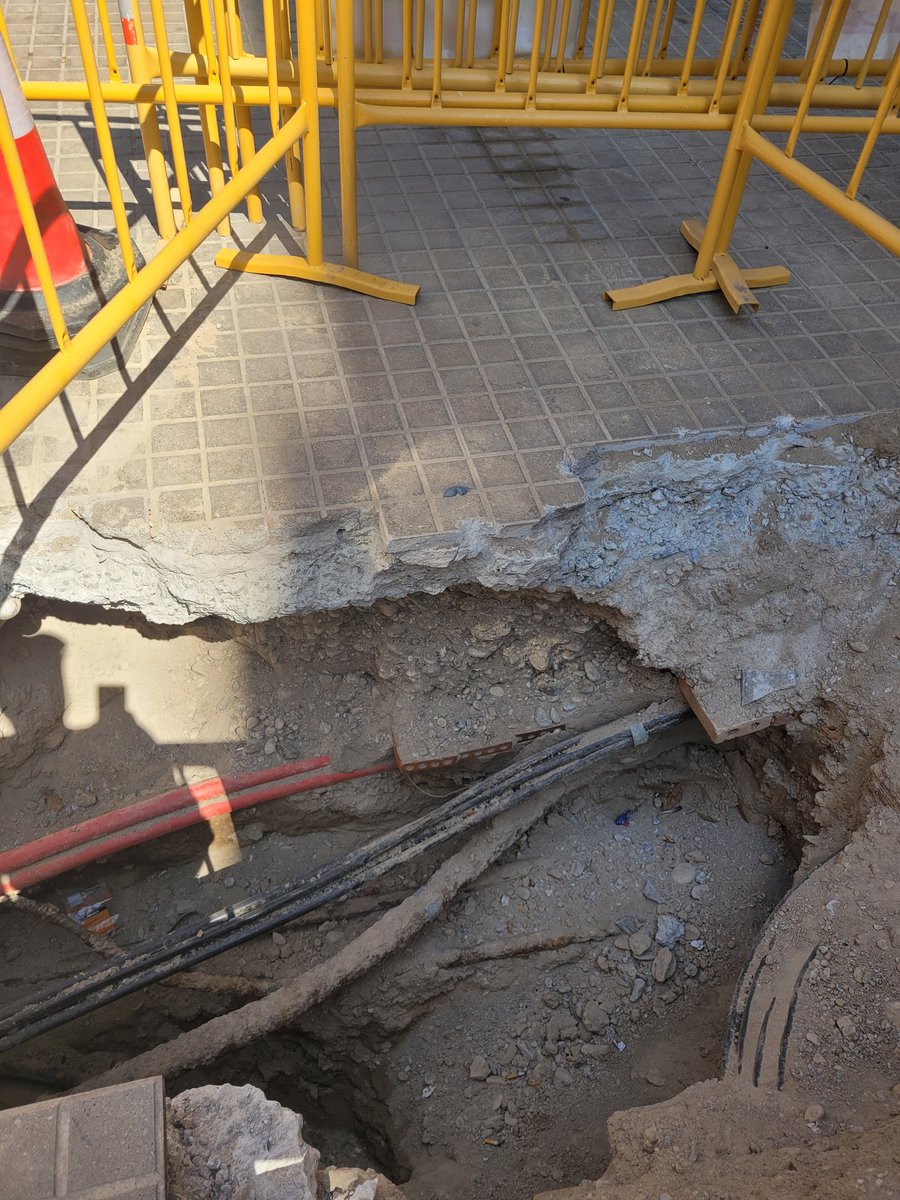
#SoilClassification time! 🧑🔬 This photo shows a profile that’s clearly a Technosol under @WRB2022. Based on its visible features, which primary and/or supplementary qualifiers would you assign? @Subsolum, want to kick it off?