🛠 Organic Fertilizer Specialist since 2005. 🌍 2,000+ global clients | Turnkey production solutions. 💡 Tips on energy saving & yield. ✉️ DM for factory layout
🌱 LANE Heavy Industry Machinery
ISO-certified manufacturer of complete fertilizer production lines, including organic, compound, and specialty fertilizers.
From crushing to granulation, drying, and packaging, we deliver efficient, reliable turnkey solutions worldwide.
Turn organic waste into market-ready fertilizer. Our production lines combine crushing, mixing, granulation, drying, screening and packing—customized to your raw materials, capacity and budget. Planning a fertilizer plant?
Let’s talk. #OrganicFertilizer#FertilizerPlant
@ScubaKim13 That sprout is a diagnosis: the pile never reached 55-65C, so it is curing rather than composting. Turn it, add a nitrogen source to pull C:N toward 25-30:1, hold moisture at 22-25%, and it goes thermophilic within days. Pot the avocado up before frost either way.
@wedzingat@Concern70732755 Bulk is the catch though: raw manure and wood ash run 0.5-1% K, so matching potash takes tonnes per acre. Compost first at C:N 25-30:1, hold 55-65C for 5-7 days, dry to 12-14% - less weight to haul, same K. Do you soil test before spreading, or go by the field history?
@JoeIncogni2290@ROCharcoal You are charging it the right way - castings are the cheapest inoculum there is. Two things help: keep the mix at 60-70% moisture while it cooks, and hold it under 30C so the biology does not stall. If you ever bag it, dry to 12-14% and screen 2-4 mm first; wet char clogs.
@FarmUncle Whatever that build turns into, the bin math holds: 60-70% moisture, 20-25C, and keep fresh manure under about 20% of bed volume or it goes anaerobic and the worms retreat. Screen castings at 2-4 mm and bag them - that is the part that pays. How many beds are you running now?
@FelixTuyiz90249 Nice setup. Two numbers decide how the beds perform: hold bedding at 60-70% moisture and keep it under 30C, or the worms work the edges and the middle sours. Cure castings 21-30 days before screening so undigested feed does not spoil the batch. What feedstock mix do you run?
@HYDRZeon@CecileShaw Good to know - a sweet-potato rotation pulls hard on K, so litter fits well. At 50 acres, 2-3 t/acre is a solid maintenance dose. Check soil K first: if it is already high, spread the litter on the poorest strips and dry the rest to 12-14% so it stores without losing N.
@KaluluAnthony Then sequence it in two stages: a covered drying slab first, granulator second. The pad is cheap, dries every member's litter to 12-14%, and shows you the real tonnage before you commit to a line. That order is what keeps a shared hub solvent.
@wainaina_nik True - dung is gold once it is finished properly. Vermicompost from 3 cows: hold the bed at 60-70% moisture, keep it under 30C, cure the castings 21-30 days, dry to 12-14%, screen 2-4 mm - that bags as premium organic fertilizer. What price per kg locally?
@drinkaditos Taking vermicompost to paying clients is the right move. To keep quality consistent: hold the bed at 60-70% moisture, cure the castings 21-30 days, dry to 12-14%, screen 2-4 mm - fines for potting, coarse for field. Granulate if you ship it bagged. What volume per month?
@WrenchT007@Dusty3080467325 Already is gold - you just have to dry it before it ships. Cure litter at 22-25% moisture, C:N 25-30:1, turn every 3 days, 55-65C x 5-7 days to kill pathogens and weed seed, dry to 12-14%, screen 2-4 mm. Bagged organic NPK, sold by the ton. Still running birds?
@DustinKieffer@SamaHoole Poultry manure is the right call - slow-release P/K plus micros, and it feeds soil biology in a way MAP cannot. The limiter is moisture: cure 22-25%, C:N 25-30:1, 55-65C x 5-7 days, dry to 12-14%, granulate 2-4 mm. How many acres?
@HYDRZeon@CecileShaw Spot on - litter is a slow-release P/K source and usually beats potash on cost per unit. To make it storable: cure at 22-25% moisture, C:N 25-30:1, turn every 3 days, 55-65C x 5-7 days, dry to 12-14%, screen 2-4 mm. What rate per acre did he run?
@ICHIEDIKE1 At 500 birds litter stops being a nuisance and becomes a product. Dry it to 12-14%, C:N 25-30:1, 55-65C for 5-7 days, screen 2-4 mm - bagged organic NPK sells at a premium over raw manure. That's the system paying for itself. What bedding do you use?
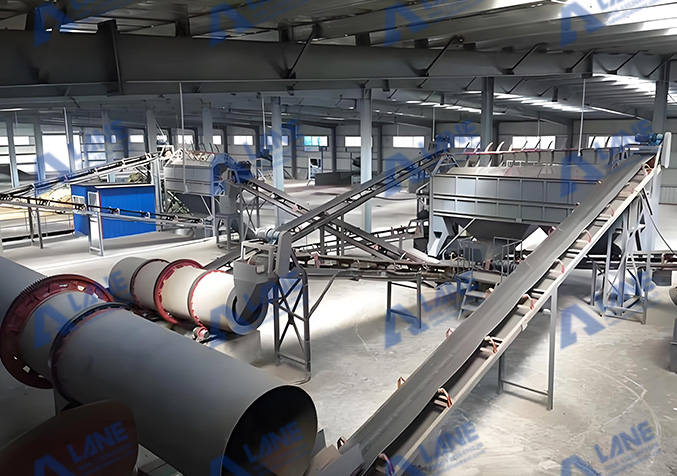
Scale up your fertilizer production! 🏗️
LANE’s Rotary Drum Granulator is the workhorse for high-capacity NPK lines.
Steam-assisted technology & anti-corrosion lining ensure a 90%+ granulation rate & uniform pellets. Tough, efficient, and built to last. 🌍
#AgriTech#Fertilizer
@CohoshThe Deep litter done right is a compost reactor, not a chore. Keep it 22-25% moisture, C:N 25-30:1, turn when it crusts, hold 55-65C for 5-7 days to kill pathogens, then dry to 12-14%. Screen and bag it - that's saleable organic fertilizer. How deep do you run your litter?
@5pam5pam@LeilaniDowding Mouldy hay + manure + chicken poop is free fertility - but compost it first or it burns roots. Stack at 22-25% moisture, C:N 25-30:1, turn every 3 days, 55-65C for 5-7 days to kill pathogens and weed seed, then top-dress. What mix ratio do you use?
@Vetiver_King Mix farming + vetiver is a strong soil-carbon play. Closing the loop: leaf/root waste composts well at 22-25% moisture, C:N 25-30:1, turned every 3 days, 55-65°C for 5-7 days, dried to 12-14%, granulated to 2-4 mm. Bagged it travels; loose compost doesn't. What acreage?
@TawandaMushinye@MoLAFWRD_Zim@obertjiri Good framework. On M: mulch plus composted manure is where the margin hides. Hold the heap 22-25% moisture, C:N 25-30:1, turn every 3 days, 55-65°C for 5-7 days, dry to 12-14%, screen 2-4 mm - then it sells as bagged organic fertilizer. Which crops pay best for you?