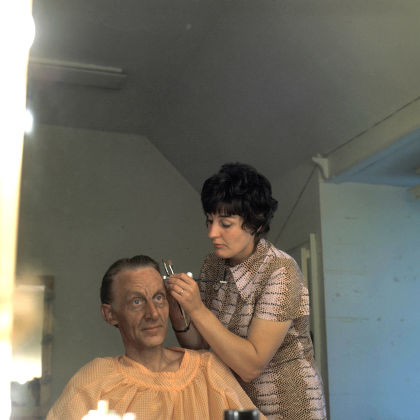
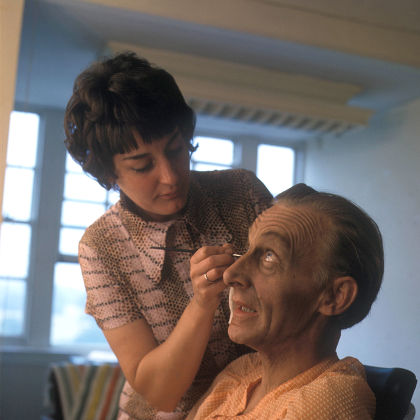
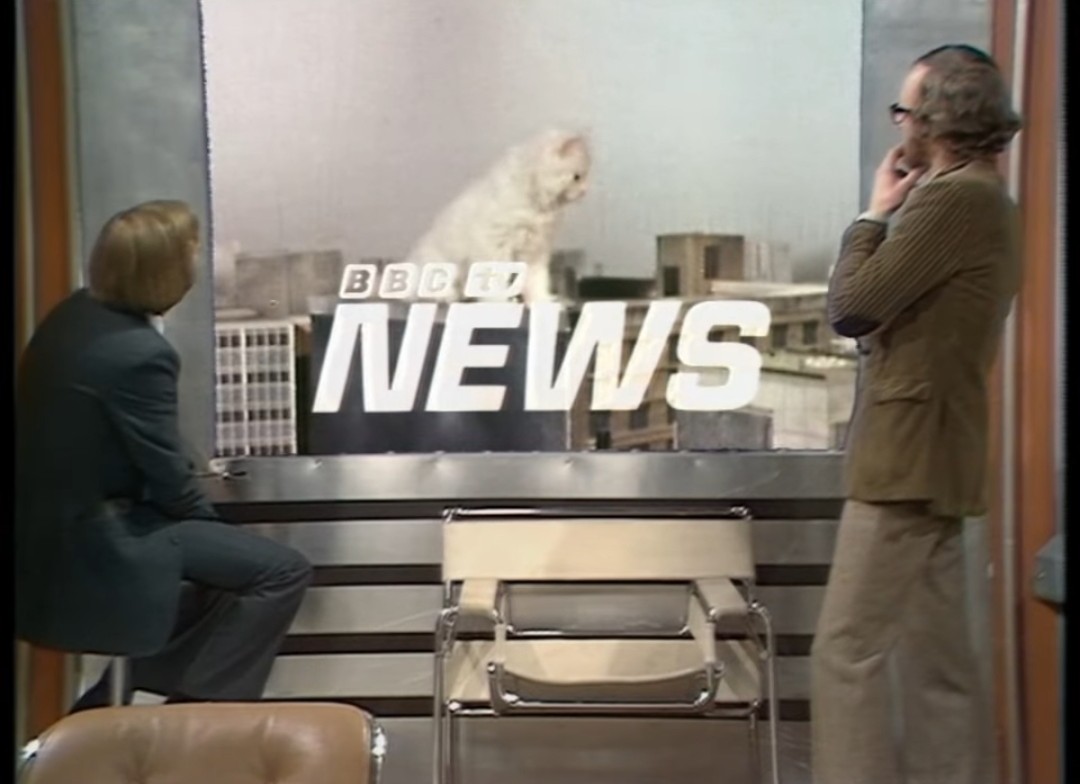
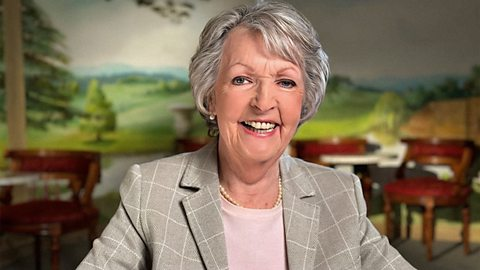
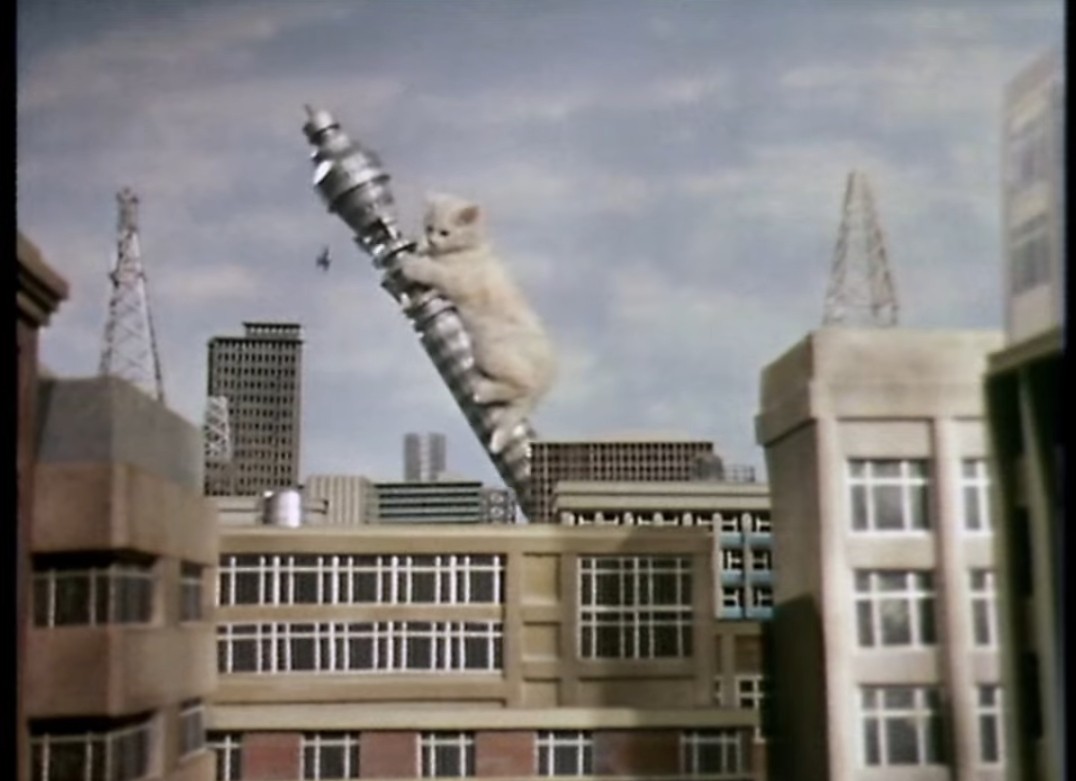
Patience and time required to transform Geoffrey Bayldon into Catweazle.
In addition to the wizard, the 70s would see GB play a vicar in Steptoe and Son; the Prison Governor in Porridge; a psychiatrist in the Pink Panther; and Organon, an astrologer stuck in the Pit in Dr Who.
#OnThisDay, June 25, 1967: Our World, the first worldwide satellite television linkup in history, is beamed live to an audience of half a billion people. In a complex geographical coordination of simultaneous broadcasts, 19 countries present live segments chosen to represent their nations and culture. Chosen to represent Great Britain are the Beatles. They are asked to compose a song for the occasion that could be easily understood across the globe. With the tape rolling at EMI studios, surrounded by famous friends, flowers, festive decor, and translations into several languages, the Beatles sing Lennon's just-written #AllYouNeedIsLove. The recording will be mixed, mastered, pressed, distributed and in the shops in just 12 days.
#GrahamNash: "What a challenge: you know, John had to write a melody that could be sung, with words that could be understood, around the world. And what an incredibly beautiful song . . . I think everyone there, from Mick Jagger on down, we all knew that history was being made that night."
#JoeCocker: "The fact that they sang it live — in front of God knows how many millions of people — had a huge impact on me."
#ColinBlunstone: "I just felt so incredibly proud that the Beatles were performing a breathtaking song and representing our country. I thought, 'I bet all the other countries in the world are probably a bit jealous,' actually."
Director #IngmarBergman: "I remember one evening on [Swedish island] Faro, Liv [Ullman] and I were sitting and watching TV, a satellite broadcast from all over the world. And we felt incredibly excited at the thought that here, on this little island, in the middle of this great ocean, we had the whole world within our reach. It was fantastic. Then, for the program finale, the Beatles came on. Wearing wreaths of flowers and pearls, they sang 'All You Need Is Love.' No other music would have been appropriate at that moment."
#JacksonBrowne: "Maybe the most amazing thing [is how] the Beatles stepped into this role of authority almost effortlessly. You think about the sort of youth market and the kind of machinery around pop stars — and the fact that they kept their identity and their integrity in the midst of all that, with that sort of rebellious point of view . . . and communicated that to everybody, even on the other side of the world. 'All you need is love' was really the thing that everybody was feeling, but when you heard it sung, it became more of a question, and a powerful one. You know, whether there was that kind of force in the world."
#BillyBragg: "Songs had previously only addressed love in purely relationship terms, and 'All You Need Is Love' suddenly takes on the status of a global movement. The political songs that endure are the most accessible to people, and this is incredibly accessible, isn’t it? 'There’s no one you can save that can’t be saved'. That’s a pretty powerful line to put in a love song. This song showed me that [the Beatles] were able to reflect what was happening in the world, that pop music wasn’t about escapism. After Sgt. Pepper had blown everybody’s mind, to come back in the Summer Of Love with this song, and for it to be broadcast all around the world as the message from a generation — 'All you need is love' — Lennon created the high water mark of the Sixties."
Sources: SiriusXM, 2017; VH-1, 2000; ITV, 2015; Ingmar Bergman Interviews, Shargel, ed; "Here There and Everywhere" radio special, 2009; Uncut Magazine, July 2001 and March, 2015
#OurWorld #TheBeatles #SummerOfLove #OTD
The Beatles - All You Need Is Love The Beatles -- (Official Video) (Rema... https://t.co/PwABYv4j02 via
@YouTube
A modest character actor in 1960s ITC shows such as Gideon's Way & The Baron, by 1969 Richard Carpenter decided to turn to writing. While driving home from a relative's farm, he became lost in the countryside. He noticed the name Catweazle scratched into an old stone gatepost...
Back to the 80s. The heyday for period drama at Granada TV. Brideshead Revisited, The Jewel in the Crown, Sherlock Holmes: fabulous locations, inventive sets, top tier casts, lavish productions.
@Idrewabird@marlo_safi That was the point of Pride and Prejudice. It's an anti-war story, inspired by one written by her brother. Elizabeth Bennet has to choose between three men she wouldn't normally be interested in, because the good men are all away in the wars. Darcy is just the least worst.
David Burke passed away this week, aged 92
Burke played Dr. Watson opposite Jeremy Brett for the first two series of The Adventures of Sherlock Holmes. He brought intelligence and warmth to the role. For many, the perfect partner in the most faithful Holmes adaptations.
Beltane or Bealtaine was a Celtic/Gaelic festival held on the 1st May to mark the beginning of summer. One of the key parts of the festival (alongside massive bonfires, feasting & making merry with beer 👀) was the exchange of posies to bring good luck.
Here's a Beltane posy for you from my garden, including cow parsley, red campion, borage & forget me not (I made the jug in pottery class)🌿
@mcbeardymullet In Australia the front door is only for people you don't really want to see. You friends and family use the back door - it's a compliment.
The first episode of The Wind in the Willows was originally broadcast on this day in 1984. A Cosgrove Hall production, it featured the vocal talents of David Jason, Richard Pearson, Michael Hordern, Peter Sallis and Ian Carmichael.
'The Last Uproar', the first episode of The Ghosts of Motley Hall, was originally broadcast on this day in 1976. Created and written by Richard Carpenter, the series starred Arthur English, Freddie Jones, Nicholas Le Prevost, Sheila Steafel, Sean Flanagan and Peter Sallis.
A Thread of London’s long-lost shopfronts.
📸 from Philip Davies’s London: The Great Transformation, 1860-1920
1. Harold Brown booksellers on Tottenham Court Road
By the mid-80s ITV had centralised purchasing of ITC series such as The Champions & Man in a Suitcase & made these available to the regional stations as off-peak 'fillers' in afternoon and late-night slots. A new generation discovered them and they became part of the pop culture.
@parismotif Duck is a northern/midlands affectionate term. It comes from the French duc (Duke). By the 1920s it was mostly used by women for their close female friends and family, so Linda's use of Duckie has a camp flavour.