In the vast catalogue of Queen’s hits, one 1989 track stands apart—not for its chart success, but for the deep personal significance that has kept it off every live stage. The song is “The Miracle,” the title track of the band’s thirteenth studio album, written by Freddie Mercury during one of the darkest periods of his life.
By the late 1980s, Mercury’s health was rapidly declining. Yet instead of despair, he crafted a song filled with hope and wonder. Brian May has repeatedly described “The Miracle” as possessing a “strange, unique magic,” noting how extraordinary it was that Freddie could summon such optimism when it was “very hard for him to be optimistic.” The guitarist sees the track as a pure reflection of Mercury’s character: resilient, defiant, and luminous even in adversity.
That emotional weight is precisely why May has vowed the band will never perform the song live. “It’s just very beautiful,” he once said, “and I feel it should only be sung by the original frontman.” For May, replacing Freddie’s voice on a number so intimately tied to his final years would feel like a betrayal. No subsequent Queen line-up—with Paul Rodgers or Adam Lambert—has ever included it in their setlists, honouring the guitarist’s quiet but firm decision.
More than three decades after Mercury’s death in 1991, Queen continue to tour the world, keeping his music alive for new generations. They blast through “Bohemian Rhapsody,” “We Will Rock You,” and dozens of other anthems every night. Yet “The Miracle” remains absent, a private memorial preserved in the studio recording alone. In choosing silence over spectacle, Brian May has turned one overlooked album track into one of the most poignant tributes to Freddie Mercury’s enduring legacy.
#BrianMay #FreddieMercury #Queen
The Song Freddie Couldn’t Bring Himself to Sing Live…
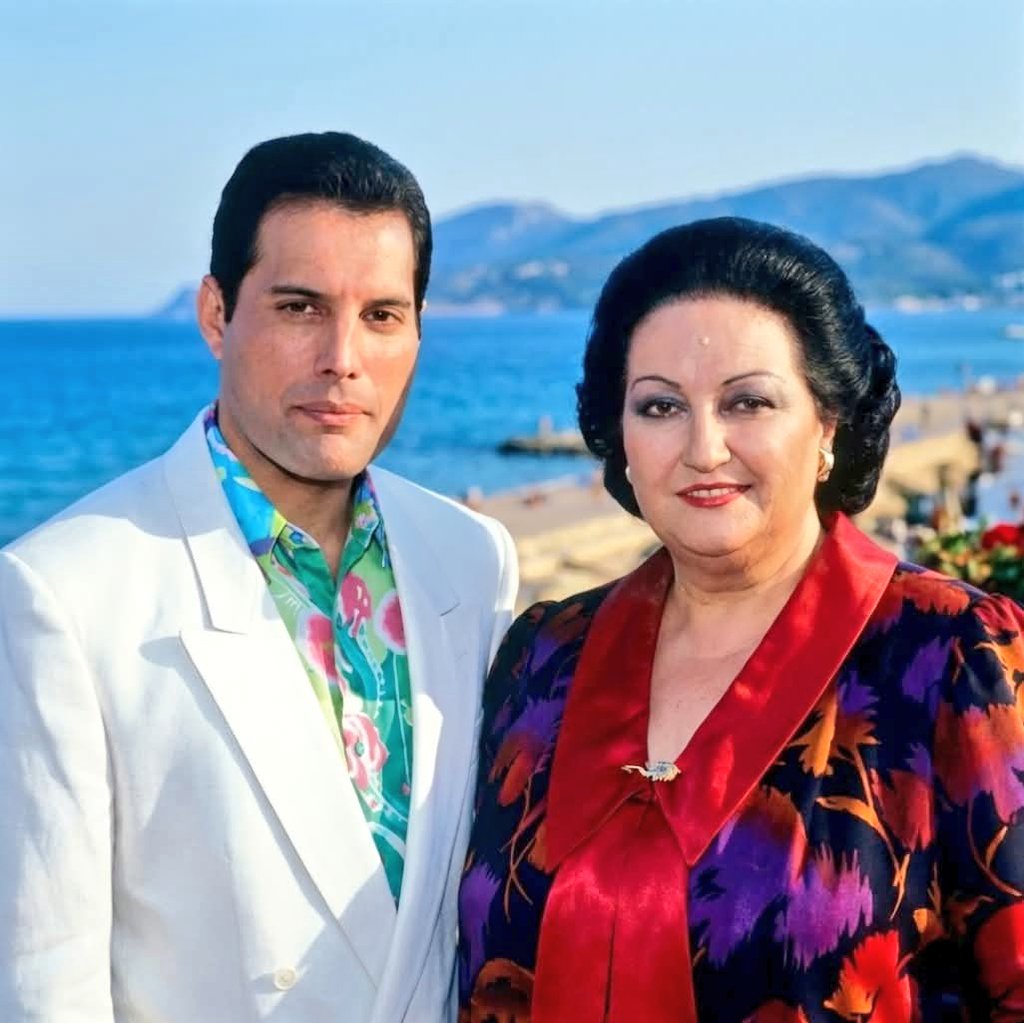
In 1988, Queen released Barcelona, a collaboration between Freddie Mercury and Spanish soprano Montserrat Caballé. It wasn’t a Queen album. There were no guitars battling for space. No drums pushing the tempo. It was something far more personal.
For Freddie, it was a dream fulfilled.
He had admired Caballé for years and finally met her in early 1987. The respect between them was immediate and mutual. When they recorded together, Freddie pushed his voice harder than he ever had — not for spectacle, but for precision. He was stepping into a world that demanded discipline over drama.
The title track, “Barcelona,” was recorded in May 1987. By the time it was released in October 1988, Freddie’s health had deteriorated significantly. Publicly, nothing was said. Privately, the strain was obvious.
Despite the song’s success — and later its adoption as the anthem of the 1992 Olympic Games — Freddie never performed it live on stage with Caballé.
The reason wasn’t fear. It was honesty.
According to people close to Freddie, he knew the song demanded a level of vocal endurance and physical strength he could no longer guarantee night after night. Rather than risk reducing it, he chose to protect it.
It was one of the rare times Freddie Mercury set ego aside for integrity.
After his death in November 1991, Montserrat Caballé performed “Barcelona” alone, calling Freddie “a true artist who knew when to step back.”
In a career defined by bravado, that restraint speaks volumes.
Sometimes the strongest performance is knowing when not to take the stage.
#FreddieMercury #MontserratCaballé
I celebrated my 100th birthday today 🎂. My family is not around anymore, so I baked myself a small cake. It’s peaceful… yet I’m still here, still alive, still wishing for a bit of kindness. ❤️ If you happen to see this, could you wish me a “Happy Birthday”? 🎉