Correcting isn’t criticizing.
Discipline isn’t demeaning.
Standards aren’t personal.
Great players want to be coached. Great coaches know how to deliver it.
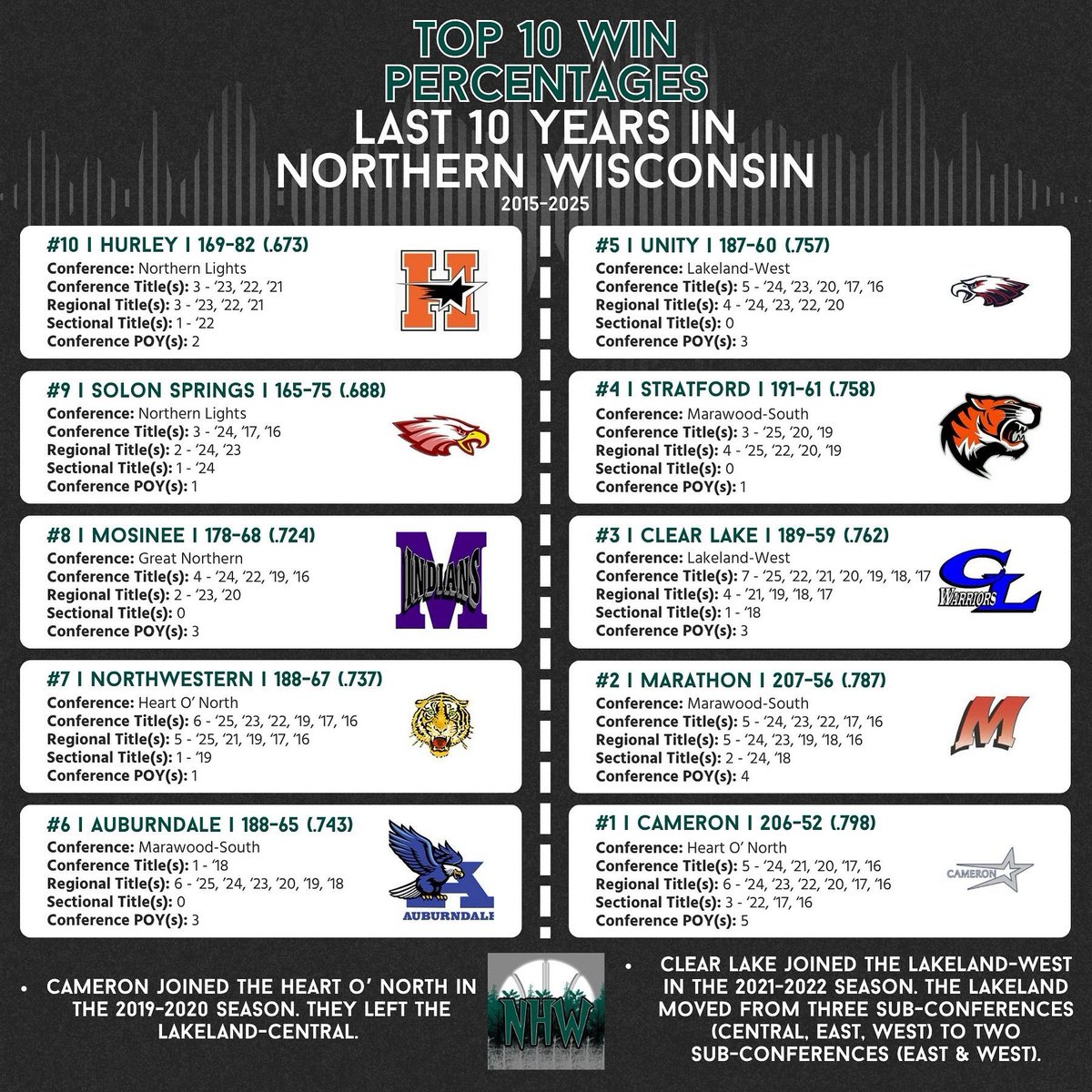
The 10 winningest programs in Northern Wisconsin over the last decade!
Good representation from the Great Northern, Lakeland, Marawood, and Northern Lights.
How often do high school athletes celebrate their teammates in front of others?
Anyone can criticize.
It takes guts to celebrate, to show MUDITA.
The easiest - first step - to start leading others is to celebrate your teammates.
Choose to Lead.
"Perfection is impossible.
In the 1,526 singles matches I played in my career, I won almost 80% of those matches.
But what percentage of points did I win?
54%
In other words, even top ranked tennis players win barely more than half the points they play.
When you lose ever second point on average, you learn not to dwell on every shot.
You teach yourself to think:
'Okay, I double faulted...it's only a point.'
'Okay, I came to the net and I got passed again...it's only a point.'
Even a great shot, an overhead backhand smash that ends up on ESPN's top 10 playlist – that too is just a point.
Here's why I'm telling you this.
When you're playing a point, it has to be the most important thing in the world. And it is.
But when it's behind you, it's behind you.
This mindset is crucial – because it frees you to fully commit to the next point with intensity, clarity, and focus."
–@rogerfederer
There are Two Pains in Life
1. The Pain of Discipline.
- Daily habits
- Get up early
- Energy giver
- Keep your poise
- Positive mindset
- Get your reps in
- Compete each day
- Hold others accountable
OR
2. The Pain of Regret.
You choose.
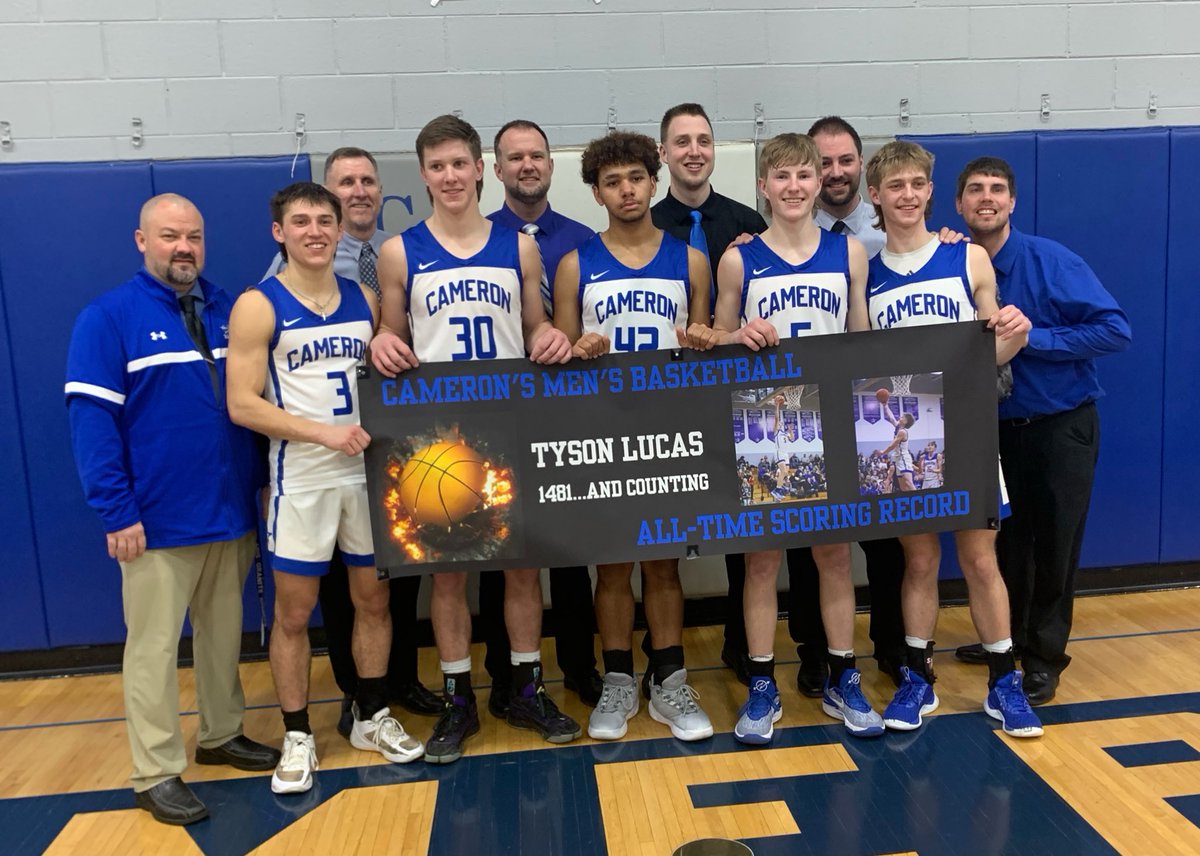
Senior Tyson Lucas (6-1) of Cameron picked as the Player of the Year in the Heart O'North Conference. Complete all-league team at ... https://t.co/gkmnYEZkFk
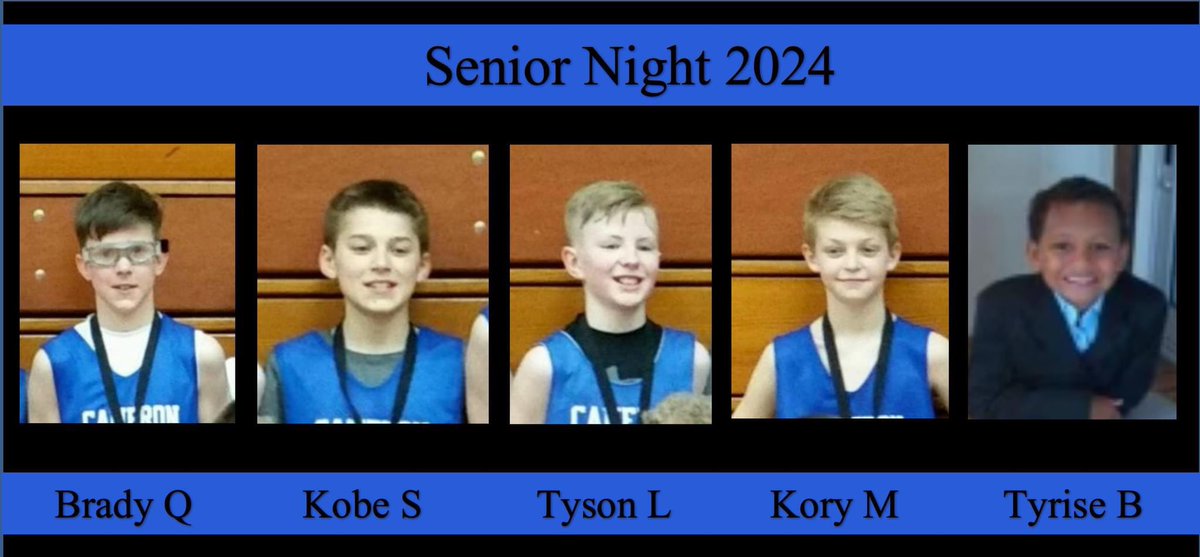
Congratulations to the following Comets for their Heart O North all conference recognition!
Tyson Lucas - 1st Team (Conference player of the year)
Brady Quinn - 1st Team
Kory Murray - 2nd Team
Carter Cherney - 2nd Team
It’s not a line.
It’s a measurement of commitment, sacrifice, respect, integrity, effort and fortitude
It’s a symbol to remind us that greatness lies in the smallest of details
Great teams have players who hold each other accountable to meeting their line of standards everyday
GREAT TEAMS HAVE GREAT TEAMMATES.
✅ Bring energy whether they're playing or not.
✅ Find ways to be in the game even when they aren't in the game.
✅ Create momentum.
✅ Are just as excited about a teammate's success as they are their own.
📽️ @MarquetteMBB
In 1989, Blaine Bishop was a D-II RB/DB at St. Joseph's College.
He had 0 Division I offers that previous spring, so he went Division II.
He said, "All I wanted to do was play Division I football. I didn't care if it was FCS."
This was just his first hurdle.
That fall, he played at St. Joseph's College. He worked hard every day to compete and get better. It was about bringing his best every day.
In the 4th game of the season, he scored 4 TDs in 4 different ways. Little did he know, there were 2 scouts at the game looking at another player.
The scouts told him, "You got a shot at the NFL."
This was just 4 months after he had ZERO D-I offers.
He was grateful for the feedback, but he took it with a grain of salt. He said, "I was always going to keep grinding and just be the best I was. I just kept moving."
That year, he was named a D-II All-American at DB. He went back to his high school president and asked if he was a D-1 player.
The president said "Absolutely." He called up the coaches at Ball State and Blaine transferred.
The work didn't stop there.
At Ball State, Blaine had to pay for his tuition his first semester and wasn't given a starting position.
So he did what he always did, he worked.
He would play any position on the practice squad. For him, it was "full blast" anytime they were on the field.
That spring, he earned a full-ride. It was just the beginning for him at Ball State.
He earned All-Mac Second Team in both 1990 and 1992.
In 1993, he would enter his name for the NFL Draft as a senior. But he was an undersized safety at 5'8".
They weren't sure he would get drafted. He said, "All I wanted was a shot."
He got that shot with the Houston Oilers, who drafted him in the 8th round. He brought that same work ethic, commitment, and intensity to Houston every day.
He played a little as a rookie, but he kept working at it and getting better every day. That hard work materialized in 1994 when he became a full-time starter.
The next year, he made his first pro bowl.
Blaine ended up playing 10 years in the NFL and was a 4-time pro bowler.
It's an astounding story considering that he didn't even have a D-I offer as a senior.
Takeaway 1: Don't underestimate the value of hard work and consistency.
Consistency isn't about perfection, it's about effort and showing up. It means focused action, discipline, and sacrifice. Blaine's story is a testament to the power of consistent effort and determination. Despite starting in D-II and facing initial setbacks, his relentless hard work and daily commitment to improvement led to extraordinary achievements. It highlights the importance of perseverance and dedication to your goals, regardless of where you start.
Takeaway 2: Resilience means having self-belief, focus, and adaptability.
Resilience is having the ability to endure while facing challenges. You have to be humble enough to grow and confident enough in yourself. Blaine's journey is a great example of resilience because he persevered through each initial setback. He adapted to his circumstances when not getting a D-I offer and focused on what he can control. That growth-mindset paved a way to success for him every step of the way.
"I was always going to keep grinding and just be the best I was. I just kept moving." - Blaine Bishop (@bbishop23)
- - -
Follow @coachajkings for more posts like this!
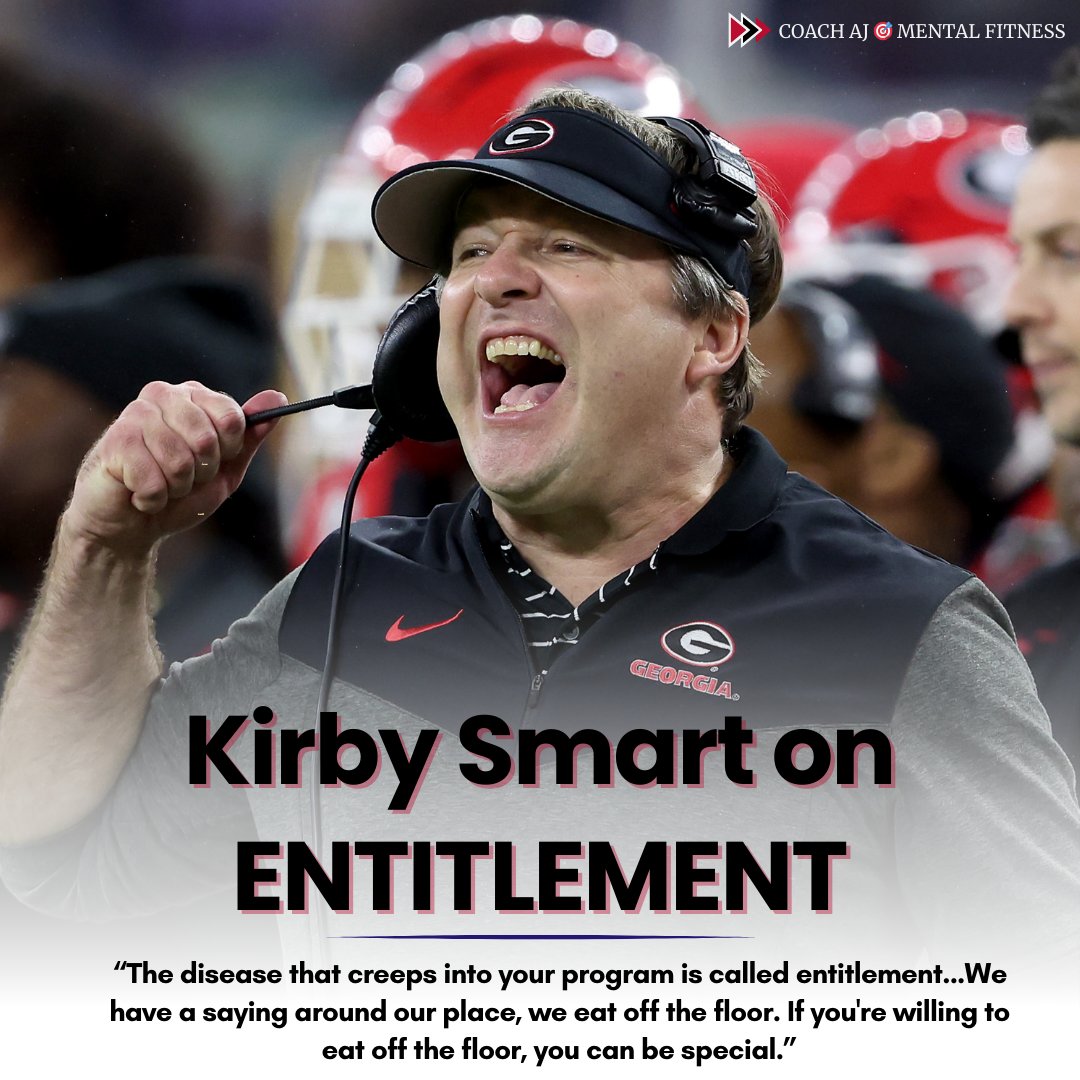
Kirby Smart said, "The disease that creeps into your program is called entitlement...We have a saying around our place, we eat off the floor. If you're willing to eat off the floor, you can be special."
Entitlement is the enemy of hard work.
It's the delusion that you deserve something that you haven't earned.
• Entitlement is the enemy of progress.
• Entitlement means you're lacking in gratitude.
• Entitlement means you're not living with a growth-mindset.
6 Ways to Get Entitlement Out of Your Culture
1. Lead by Example - Leaders should demonstrate humility and a non-entitled attitude. Leading by example is not about your position or title, it's about your behavior. When leaders show they don't consider themselves above others, it sets a tone for the team, discouraging entitlement.
2. Create a Culture of Growth - When you have a mindset of excellence and improvement then the growth will never stop. Encourage a place where learning from failures, continuous self-improvement, and personal development are valued. This promotes humility and helps people understand that effort and learning are key to success, not just inherent talent or privilege.
3. Foster a Culture of Gratitude - Create an environment where gratitude and humility are valued. Encourage people to appreciate what they have and the efforts of others. You can be entitled when you are grateful for every day and every opportunity. This mindset will reduce the feelings of entitlement and promote a more cooperative and appreciative culture.
4. Set Clear Expectations and Accountability - When people know what to expect, they know how to act. Clearly define roles, responsibilities, and goals. When team members know what is expected, they understand that success is a result of meeting these objectives, not just a default outcome.
5. Encourage Service and Empathy - Promote activities that involve serving others or contributing to the team. When people know each other and care for each other, they connect and lack feelings of entitlements. It helps drive collaboration, empathy, and service to the team. People understand the value of contributing, as opposed to expecting things without effort.
6. Regularly Assess and Adjust - Continuously evaluate the team's culture and make adjustments as needed. Regular assessment helps identify entitlement issues early and allows for timely interventions to maintain a healthy, collaborative team environment.
"We don't run from hard work; our kids don't run from work. As long as you don't have entitlement in your program, you got a shot." - Kirby Smart
- - -
Follow @coachajkings for more posts like this!
Kobe Bryant worked like he had no talent, then he played like he believed he was the best player in the world. Prepare with humility; perform with confidence.
- via @BallisPsych