🇹🇼🇨🇳 | Taiwán realizó un simulacro importante de preparación, simulando escenarios que incluyen un bloqueo, un fuerte terremoto y una invasión a gran escala por parte de China.
Jane Street pays $750k/ year for quants who can answer how to use Stochastic Process and Markov Chains in quant trading.
This 1-hour MIT lecture on probability gives you the same insights quants get paid $60K/month for.
Bookmark & watch today. Then read the article below.
Jeffrey Epstein interview full FINAL interview before death released by the DOJ
0:00 Intro & Santa Fe Institute Question
Why a Wall Street financier supported the Santa Fe Institute and advanced mathematics research.
0:38 Rockefeller University Board Role
How he joined the Rockefeller University board and the shift from reputation → numbers in finance.
2:06 Finance vs Reputation Era Shift
Rise of calculators, quantitative thinking, and statistical portfolio management.
4:13 David Rockefeller Stories
Personal anecdotes about David Rockefeller and leadership style.
5:20 Trilateral Commission Explained
Purpose, structure, and membership of the Trilateral Commission.
6:58 Leaders & Financial Illiteracy
Claim that many political leaders lack deep financial understanding.
8:22 Bank Assets vs Liabilities
How bank balance sheets differ from personal finance intuition.
10:12 Fractional Reserve Banking
Explanation of lending multiples of deposits.
11:28 Entering Elite Global Circles
Experience joining Rockefeller & Trilateral Commission environments.
12:28 First Trilateral Meeting (Tokyo)
Reactions to global leaders and discussions on inflation.
14:09 Inflation & Central Bank Fear
Why inflation dominates central bank thinking.
16:02 Financial System as Complex System
Analogy between body systems and global finance.
18:03 Complexity Theory & Santa Fe Mission
Goal of mathematizing complex systems.
21:48 AI & Neural Nets Example
AI systems producing answers designers can’t explain.
24:30 2008 Crisis Setup
Lehman collapse context introduced.
26:05 Hearing About the Crash From Jail
Learning of the 2008 crisis while in solitary confinement.
29:16 Calls to Bear Stearns & JPMorgan
Phone calls during crisis moment.
31:12 Jail Conditions & Public Perception
Treatment in jail and reactions from inmates.
34:05 Moral Hazard & Bailouts
Bear Stearns vs Lehman decision framing.
37:29 Liquidity = “Blood of the System”
Emergency-room analogy for financial rescues.
42:12 Pre-Crash Warning Signs
Discussion of whether crisis was predictable.
44:02 Cause of 2008 Crisis (Subprime Argument)
Blames subprime expansion and political pressure.
47:23 Subprime Mechanics & Accounting Changes
Mortgage packaging and mark-to-market effects.
53:12 Cycles, Crashes & Pattern Skepticism
Rejects “every 10 years” crisis pattern idea.
58:02 “No One Understands the System” Claim
Unpredictability of complex financial systems.
1:01:21 Jail Reflection & Stoicism Discussion
Detachment and “hermit” self-description.
1:03:24 Market Intuition vs Prediction
Trader instinct vs mathematical forecasting.
1:08:29 Santa Fe, Los Alamos & Complexity Science
Origins and goals of the institute.
1:12:02 Limits of Mathematics & Alchemy Analogy
Attempts to explain the unexplainable.
1:16:02 Newton & Gravity Discussion
Forces, prediction, and unexplained fundamentals.
1:18:26 Calculus & Limits Concept
Newton’s limits and division-by-zero paradox.
1:22:02 Measurement vs Reality
Problems with over-measurement in science.
1:25:31 Soul, Consciousness & Dark Matter Analogy
Soul compared to unseen physical forces.
1:29:30 Santa Fe Verdict: “Failure”
Claim that complexity math could not explain life or markets.
1:34:08 Multiple Intelligences Theory
Emotional vs mathematical intelligence.
1:38:26 Traders & Market “Feel”
Experienced traders rely on intuition.
1:40:31 Butterfly Effect Example
Small shocks → system-wide consequences.
1:42:02 Limits of Science & Consciousness
Science cannot explain romance, intuition, soul.
1:45:02 Quantum Physics vs Newtonian
Subatomic behavior defies classical models.
1:49:09 Writing vs Thinking (Socrates)
Claim that writing narrows thinking.
1:52:01 Philanthropy & Scientific Progress
Doubts about institutional research breakthroughs.
1:54:49 Ethics of “Dirty Money” Donations
Debate over whether institutions should accept funds from criminals.
Lo que se ha descubierto en el Caso Epstein, mediante más de 1500 EMAILS en los que se habla de Bitcoin & Crypto:
Bitcoin fue creado por cuerpos de inteligencia y financiado por las élites para preservar su capital, ante la devaluación del dinero FIAT desde hace décadas.
Las élites entraron a invertir en BTC en una fase temprana, y ahora que ya está consolidado, abren el activo al retail mediante los ETF.
Jugada maestra, me quito el sombrero. Lo controlan todo.
As a systematic global macro investor, I try to look past headlines and focus on mechanics.
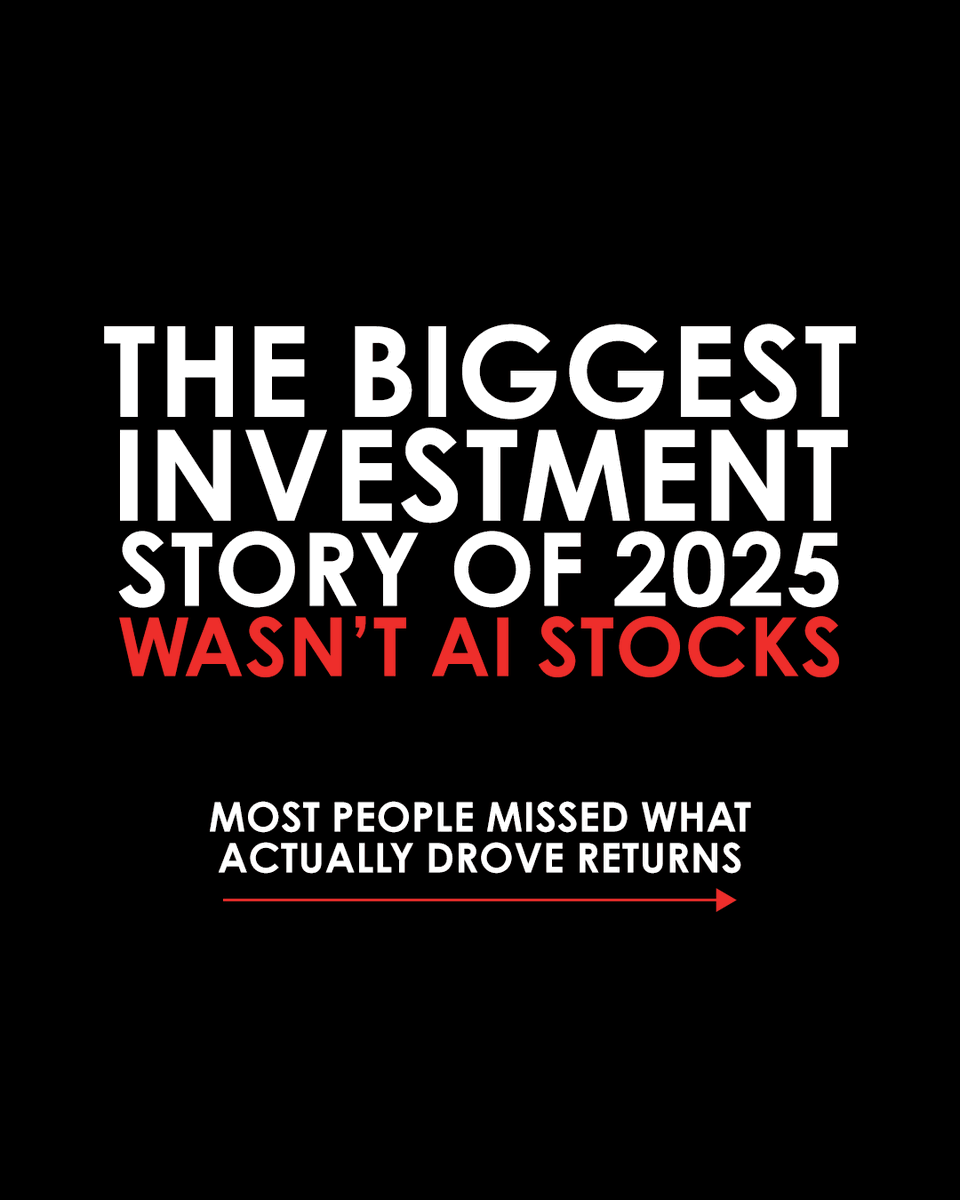
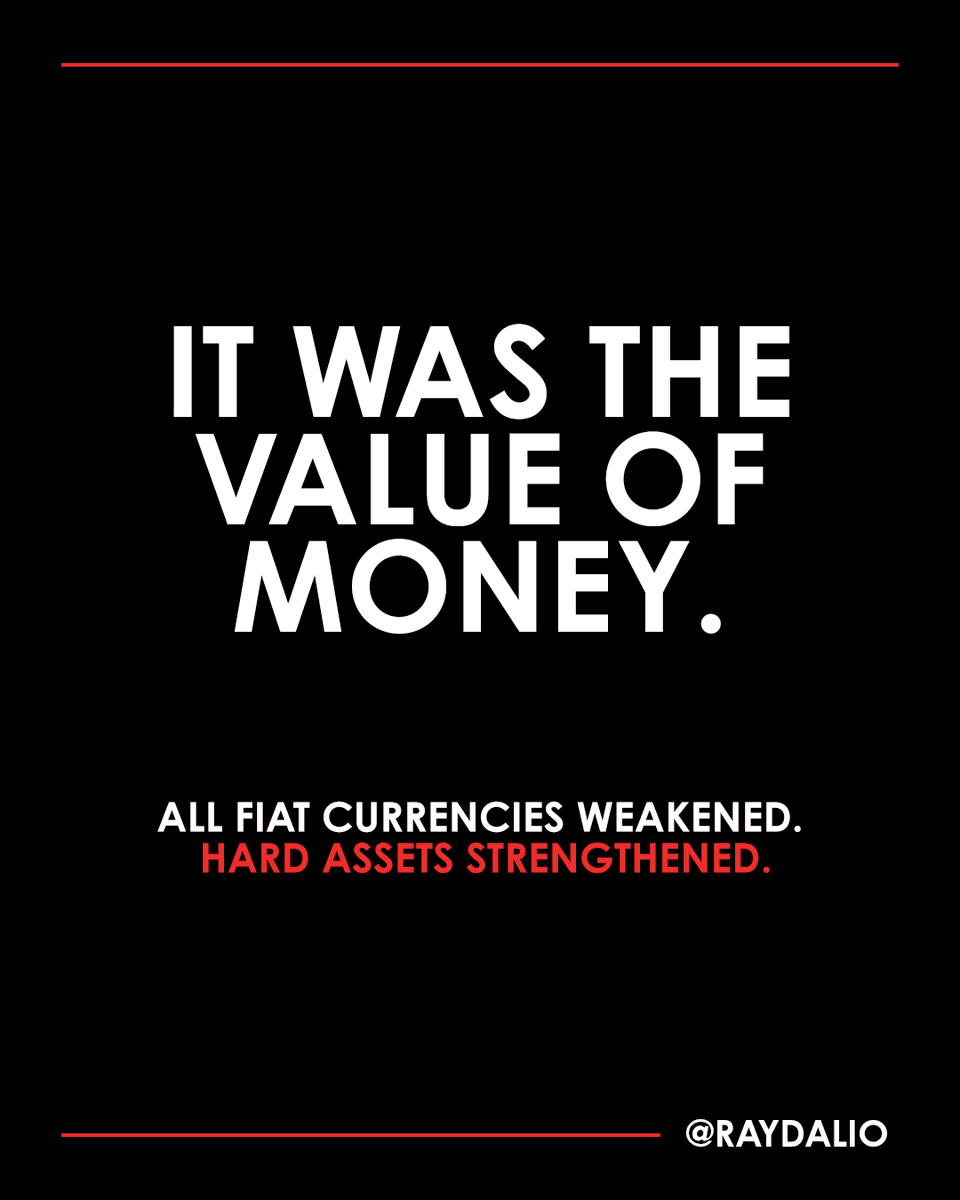
While most people will remember 2025 as the year of AI stocks, the bigger story was what happened to money itself—and how that quietly reshaped returns, capital flows, and wealth.
I break down how currencies, gold, equities, debt, politics, and the Big Cycle interacted last year—and what that may imply going forward in my recent newsletter, 2025.
You can read my latest article at the link in my bio . As always, I welcome your thoughts and suggestions.
Es una verdadera locura el hecho de que alguien intente justificar la muerte de un ser humano diciendo que "se lo ganó" o que "está bien que lo mataran", simplemente porque tenía un pensamiento distinto, una idea diferente o defendía valores conservadores
History tells us the preferred path for government policymakers trying to deal with too much debt is lowering interest rates and devaluing the currency the debt is denominated in.
Doing this is a very hidden way of reducing wealth, because as your currency goes down, it makes it look like other things are going up. But despite the downsides, this wealth shrinkage and reduction in buying power is favored by policy makers precisely because its impacts are less obvious than the alternatives.
At such times, you should expect interest rates and the currency’s value to fall.
It’s not about who gets in first
It’s about who understands what they’re investing in, acts with vision, and stays disciplined.
Investing is not about predicting the future.
It’s about recognizing value, trusting the process, and knowing how to wait.
No ignores lo que está ocurriendo frente a tus ojos. Razoná. Estudiá. Preparáte. Porque cuando llegue el momento, tú y tu familia pueden marcar la diferencia entre sobrevivir… o lamentar
El optimismo excesivo es común en momentos como este. Muchos se dejan llevar por la euforia sin cuestionar los datos. El verdadero inversor es escéptico, analiza, estudia, y entiende que los escenarios cambian.
El mercado premia al que está preparado, no al que sigue la manada.
No es necesario haber vivido una crisis anterior para entender que la historia tiende a repetirse. Los errores humanos se manifiestan en ciclos, especialmente cuando las emociones entran en juego, y en el mundo financiero, las emociones son un factor clave.
A simple vista estos datos parecen positivos, pero cuando los miras con lupa, muestran señales preocupantes.
¿Cuánto tiempo podrá sostenerse esta economía? ¿Hasta dónde llegarán estas cifras?
Estudia lo ocurrido en 1929 o en el 2008 y verás un patrón familiar.
Libro del domingo📈📉
Money works
El trading es solo una parte de tu ecosistema financiero
Ser rentable no es suficiente si no sabes gestionar, reinvertir y proteger tu capital.
La educación financiera te obliga a pensar como un gestor de patrimonio, no solo como un trader.
As the saying goes…
“First they ignore you.
Then they laugh at you.
Then they fight you.
Then they add you to the S&P 500.”
…or something like that.