📣Introducing Connect x Protect, a campaign dedicated to advancing smart, balanced and effective policies that protect kids and teens online while safeguarding privacy and parental choice.
🔗Learn more about our mission and get involved: https://t.co/wnC0r4QhXC
On Constitution Day, Pt. 2 in our #SafetySeries reminds us that protecting kids shouldn’t mean compromising the fundamental rights we’re celebrating.
@terencesamuel explores how #ageverification impacts privacy, free expression & anonymous online access:
https://t.co/otZXIw5b6h
This is the result of Texas' SB 2420, the App Store Accountability Act.
Every user must go through an ID age verification process in order to download apps - ANY apps - from the App Store.
The law is being litigated in the Fifth Circuit currently, but the law was allowed to take effect during the process.
If this is not overturned by the Fifth Circuit AND it passes federally (fortunately they're done until after elections) this will be required of every user in America.
It's Digital ID.
"Ignoring the concerns of civil society and risks to privacy is not the best path for writing policy that protects kids. Age restriction policies have largely failed elsewhere," says @KayJebelli
Read our full statement here: https://t.co/lKbsCkaNoJ
Age verification laws offer a false sense of security, especially as tech-savvy teens find ways around them.
In @townhallcom, Bojan Lazarevski (@JoinYoungVoices) urges lawmakers to consider tools that empower parents while preserving privacy for all.
https://t.co/t7hHqvM7tP
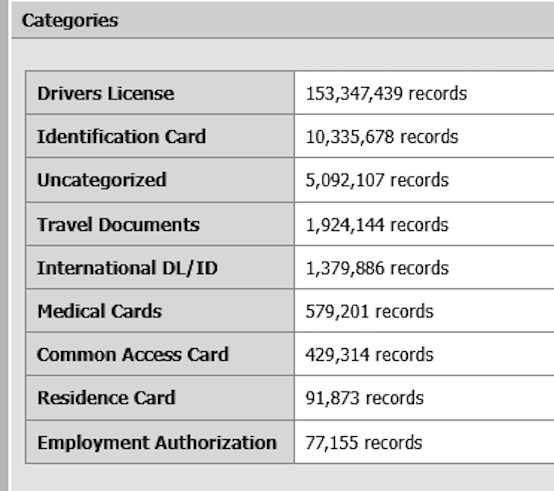
🚨 A reported breach involving millions of IDs reminds us: collecting sensitive personal information creates real risk. Online safety solutions should protect people without requiring more personal data than necessary.
Read more from @NBCNews
https://t.co/dTlZcLNX6e
Worth a read from @family_itguy: A resource that simplifies the answer to the question, "Will this Meta settlement reduce harm to kids?"
https://t.co/aQAvpTJuRC
The big Meta lawsuit out of LA, the $18B settlement where Meta admitted no wrongdoing - what does it mean? What will life be like in 5 years as a result? What precedents does it set? Will it help kids? Why did Meta's stock go up after the settlement?
TL;DR It's a smokescreen. It's a distraction. We need to watch Meta's next lobbying steps around age verification laws and the push to transfer their liability for harming kids onto other entities. Age verification systems require the fundamental underpinnings of centralized, individualized, automated censorship - controlling who is or is not allowed to see certain things. All the while, age verification doesn't solve any of the problems we're actually dealing with. Any potential solutions must pass the accountability test - the people best positioned to regulate parenting are parents themselves, and no one else. A child's health, safety and security are the responsibility of the child's parents/guardians. A non-consensual security-outsourcing arrangement is built on a false premise. Therefore it is irrelevant what anybody else thinks about how I parent, what rules I should have in my house, or what my kids do.
I put together my thoughts on some of it at https://t.co/1UFJXXrZ72 and spoke with Julie Barrett @CLADIESAMERICA about it at https://t.co/nV6nNylThH
I also just got done reading https://t.co/HFYVEV4VoS - I recommend it, it's well thought through. Stuff like:
"We are protecting children's privacy by requiring a company to know more about them."
"The settlement is billed as empowering parents, and in places it does. But plenty of these decisions used to belong to parents alone, and now they don't."
"Teenagers have been dodging house rules since long before Mark Zuckerberg was born, and the fact that enforcement is hard doesn't mean the job transfers to a state attorney general."
"Social-media feeds are, among other things, distribution systems for speech. Rules governing how lawful information gets recommended or delivered can raise real constitutional questions."
And plenty more. @Robert_Bork_Jr nailed it.
Ahead of Constitution Day on 9/17, we're highlighting #FirstAmendment concerns with age verification. On the @CatoInstitute blog, @jrhuddles argues that these policies create new threats to free expression for all users. https://t.co/3IWSJDvYVM
In @TechCrunch, @asilbwrites breaks down what Meta's recent $18B settlement with 29 states means for kids' safety, and why it has reignited concerns about age verification tech.
https://t.co/4QoKhPiLpg
“Zero-Knowledge Proofs” can prove a user is 18+, without revealing the info behind that proof. But that doesn’t eliminate risks like tracking, cyberattacks and centralized control.
@EFF breaks down why more privacy-conscious tech doesn’t fix all flaws
https://t.co/yjiSbyBi4n
We're forced to hand over photo IDs everywhere.
Hotels, phone shops, crypto exchanges, and now even social media or app stores (depending on your state)
Is it really a surprise that insecure databases get hacked and they get posted to the dark net?
153 MILLION licenses for sale online
https://t.co/25favlKP5n
#ICYMI: Last week saw a major development in kids’ online safety: Meta reached a tentative $17B settlement with several U.S. states that would introduce new safeguards for young people on its platforms.
More in @politico: https://t.co/T6UZvSJ5oX
Protecting kids online shouldn’t mean sacrificing privacy and security.
In the first installment of our #SafetySeries, @terencesamuel makes the case for shared responsibility and solutions that keep young people safe.
Read more: https://t.co/MzTYx6C7i3
With Texas’s controversial app store age verification bill in effect, experts Erika Sanders (@ncacensorship) & Peter Steffensen (@SMULawSchool) explain how it could threaten free speech & online privacy while undermining child safety.
More in @dallasnews https://t.co/1G15KNJAhQ
Safety and privacy must go hand in hand. 🤝
In @observer, @provenauthority examines the cybersecurity risks of mandatory age verification—as a patchwork of laws drives adoption of the most invasive requirements.
Read more: https://t.co/4Udr0OVKrk
Australia’s social media ban offers a warning for policymakers worldwide. Three months in, 81.5% of under-16s are still using age-restricted platforms, as age checks are easily bypassed and enforcement struggles to keep pace.
More in @TechTimes_News
https://t.co/K9VbPHm4jq
⚠️ Europe’s age verification push offers a cautionary tale.
For @rc_markets, Norm Singleton explains why one-size-fits-all restrictions undermine parental choice and overlook parents’ role in helping their children navigate social media responsibly.
https://t.co/GAAvYwxUdL
As policymakers across all 50 states explore new policy solutions to protect kids online, researchers at @ucdavis have created a public database that tracks proposed and enacted policies in this evolving landscape.
More in @TechXplore_com https://t.co/ujeGUJkgNS
#NEW: As a new school year begins, the @FTC recently launched Youville, a free resource helping kids ages 8–12 build digital literacy skills through engaging activities on privacy, online safety and digital citizenship. 💻📱
https://t.co/uEVZ9PzelJ
As students head back to school, @terencesamuel, @ckoopman and @atilamrac consider how strong partnerships between families and educators can ensure technology supports creativity, critical thinking, and personalized learning.
Full video: https://t.co/OVhwsGyxkU
“Should your computer know your age before you can use it?”
In @PCMag, @chrisbhoffman examines how age verification mandates could push operating systems to collect sensitive personal information, threatening online privacy and anonymity.
https://t.co/jrVpNFjZ9m