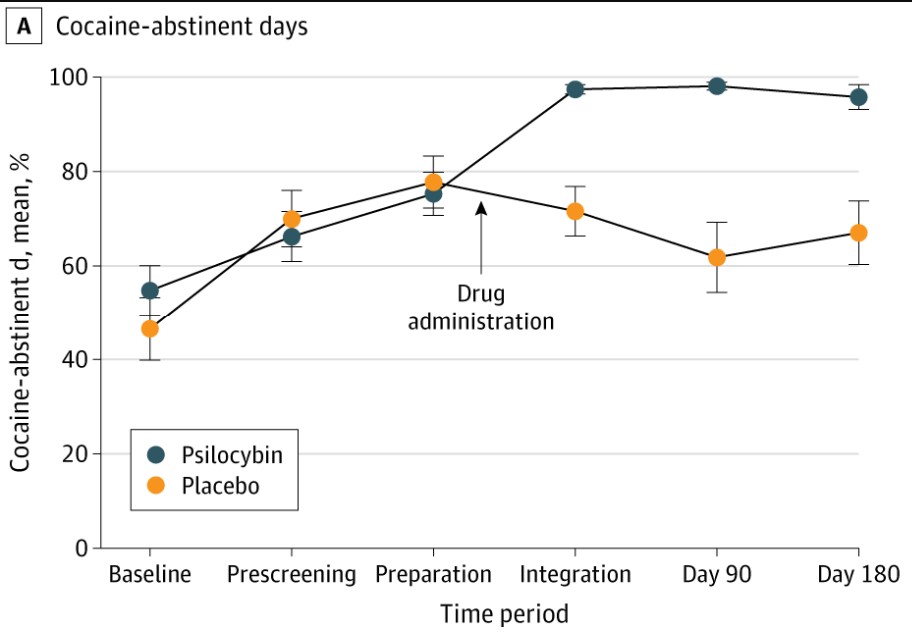
For 50 years the National Institute on Drug Abuse has spent hundreds of millions of dollars to find an effective cocaine addiction medication. After 100+ molecules & many hundreds of studies nothing has been FDA approved. It's the Holy Grail of addictions medication. Proud to have helped Peter Hendricks & team at UAB in a trial showing psilocybin to treat cocaine addiction.
@RCarhartHarris@singletonion Nice! Insight may be halfway to operationalize/distinguish psychedelic effect. Final step to contextualize/disentangle the visions from hallucinogenic effect ie, to operationalize what counts as bona fide observation into the nature of mind beyond mere features of drug.
@PaulAustin3w I wonder if these are more than just developmental windows. We see roughly the opposite neural mechanisms in models of rigid-type psychiatric disorders, where plasticity is compromised. So, what does this super-plastic state really mean for the mind? A broadened aperture of mind?
Check out the latest DPN Deep Dive!
This episode covers a recent study by @conormurray, Kaihan Danesh, & @zivacooper using mobile EEG devices to track putative biomarkers of cognitive and emotional wellbeing in people who use cannabis.
https://t.co/t77PzS1ZrK
New cannabis paper: we focused on key age groups to track recent trends in cannabis use and reviewed health effects on brain and behavior across the lifespan — is the public becoming more health conscious about cannabis use? https://t.co/3dF78LZs3o
@canna_brain@hubermanlab@billmaher Yes! Organ-specific risks of exposures: the sun may be “worse” than alcohol, cannabis, or tobacco in terms of skin. The brain? Let’s do more research.
New paper! @UCLACannabis
Using mobile EEG, we looked at markers of brain health in 140 individuals who use cannabis.
Findings point to an “arrested development” of prefrontal function in young men, translating preclinical work by Kuei Tseng.
https://t.co/G0R0Ocofv0
4.Future laboratory studies should standardize settings across conditions, screen for expectancies, etc., to further test whether/which consciousness-modifying techniques are empirical tools for the science of consciousness.
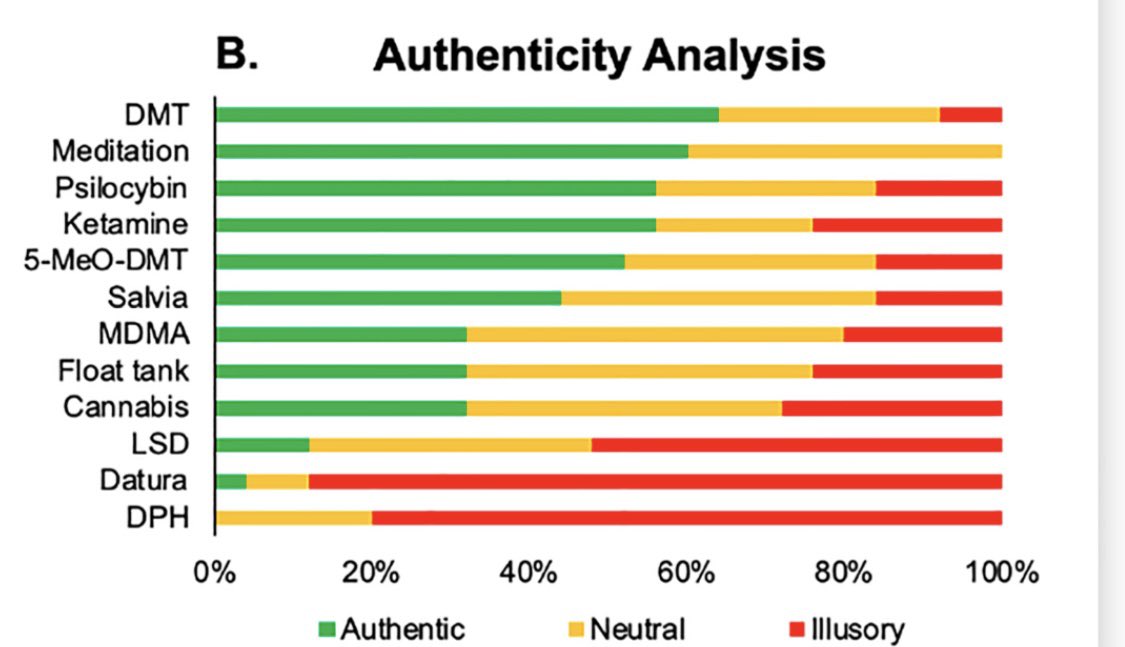
Breaking down our analysis of altered states of consciousness (ASC) and effort to empirically test “mind-manifesting” effects…🧵
https://t.co/6L2blFinf9
3.ASC that are perceived as containing “authentic” observations/insights are also perceived as being more positive. Illusion/delusion/hallucination = negative experience, generally.
@psybalazs Important finding! FYI the New Scientist article reads “daily” when I was referring to addressing acute effects - better if this read “as needed”