Staggering
"Over the past century, #England & Wales have lost 98% of wildflower meadows. We have also destroyed half of Britain’s ancient woodland, half of lowland ponds, 90% of freshwater #wetlands and 62% of all “farmland” wild #birds."
#Biodiversity
https://t.co/U8qZHBpBly
@alangray22 We moored outside a lock on the Trent the other day. Dozens of sand martins were nesting in holes in the piling right next to the boat (we checked we weren't blocking any), and flew within 2' of us, completely unfazed. Magical!
"We should stop farming cattle to save the Amazon from soy."
Before you swing that one around, have a look at where the world's soy actually goes. The Oxford food researchers did, and the breakdown is not what the documentary implied.
37% is fed to chickens.
Around 20% goes to pigs.
6% goes to farmed fish.
And beef and dairy cattle, the animals on the poster, take 2%.
Two per cent. The cow you have been told is eating the Amazon accounts for tuppence in every pound of the world's soy. The bird in your supermarket nuggets eats nearly twenty times more of it than she does.
It gets better. A soybean is crushed into two things at once, meal and oil, and the oil is a prize in its own right. It fills the fryers, floods the ultra-processed aisle, and increasingly it does not get eaten at all. Close to half of America's soybean oil is now burned in fuel tanks as biodiesel, wearing a green halo while the forest that grew it does not.
And the British cow being lectured about all this spends her life on grass and hay, off hillsides where no soy has ever grown and no crop ever could. Tofu, soy milk and edamame, for the record, take 7% of the world's crop, so even the vegans are only modest customers.
So the field was cleared to feed the chicken shed, the frying vat and the fuel tank. And the animal standing on a Welsh hill eating rain-fed grass got the blame, because she was easier to film.
Last yr plans cancelled due to drought, this yr failing infrastructure. Dread to think what 2027 will bring! Pls sign the petition at https://t.co/RzEkDO2sVP
& ensure future generations get to enjoy our historical #waterways both on & off the water #boating#boatlife#heritage
@CRCuthbert@SoSSwifts@suffolkwildlife@Natures_Voice@WriterHannahBT@B_Strawbridge We're moored on the Beeston (Nottingham) canal at the moment, and there are signs up to prevent fishing or mooring in some stretches because sand martins are nesting in the banks. The signs are being obeyed, which is great. People do care ❤️
@MarkLastMiner Er - Naburn to Selby is downstream 😉
Watch out for the bridge on the bend upstream of Selby lock: the flow tries to push you right into it, so you need to start steering early. It's a great ride 😀
The complete arseholes! Find and arrest these morons! 👇@EssexPoliceUK This is a wildlife crime and vandalism!
Newly hatched birds were left in peril after motorcyclists broke into a nature reserve and raced past nesting sites.
The bikers smashed through fences at the beauty spot in north-east Essex, which is not being named to protect it, and disturbed highly sensitive species.
Essex Wildlife Trust runs the site and a spokesperson said the fright could lead to birds abandoning their chicks, causing irreversible damage to their breeding.
It was just one of a "series of shocking incidents" the charity said had happened on a weekly basis at its sites in 2026.
"With breeding season well under way, it may be too late for those birds to try again, which is devastating," added Alex Smith, a marine and coastal engagement officer at the trust.
He described it as a "shocking" disregard for nature, reversing the hard work of staff who had been running successful nesting programmes.
The trust has almost 100 sites and it said vandalism at these locations was being reported to police every week.
None of the incidents had led to arrests or convictions, it told the BBC.
More here:https://t.co/wUeROps8C9
We can all learn from Hector's philosophy on fear.
Hector is a horse, which is to say he was born afraid. A flight animal, every nerve tuned to run from noise and crowds and sudden movement, the way every horse has been tuned for millions of years.
He was not born brave. He practised.
Year after year he met the thing that frightened him, the bands and the crowds and the saluting guns, and chose, on purpose, to stand. He built his courage the way anyone builds anything worth having, one difficult morning at a time, until the standing became who he was.
That is the first half of it, and most people stop there. Here is the second half.
After seventeen years of holding the line for everyone else, Hector learned the harder thing, which is that the war was over, and that he was finally allowed to lie down in the sun and sleep.
Stand when standing is the work. Rest when the work is done.
Be like Hector. Practise your courage. And know when to put the weight down.
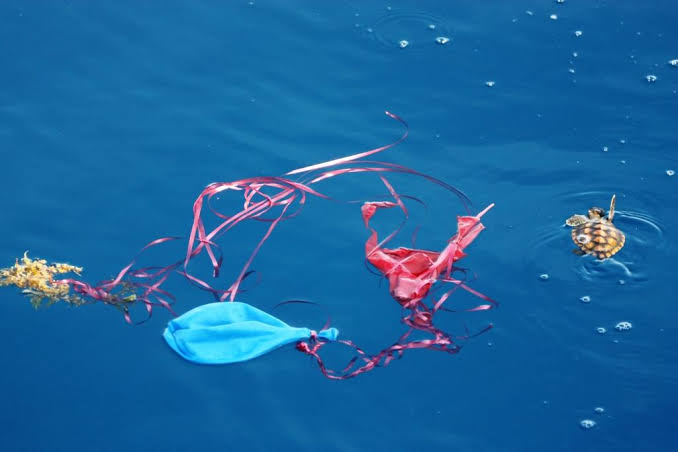
Here it is, my occasional reminder that balloons don't get up to grandma in heaven. They come back to Earth as trash.
Sometimes stuck in a tree. Sometimes floating in a river. Sometimes wrapped around the neck of an animal.
Keep the celebration of life, but lose the balloon release.
@DeeWardRottal Lovely! We were on the back of our boat on the R Trent last night, right next to sand martin nest holes in the piling (we checked the other holes & wd have moved if needed). They flew within 2' of us, feeding their young in the nests, & seemed completely unfazed by our presence.
@AllForProgress_ We've been in Yorkshire for the past two and a half years. We live on a narrowboat and don't have a car, so public transport is vital. Yorkshire seems to get that (new train stations, even!), at least near the canals - possibly not further out in the countryside.
@GowerClare We were sitting on the back of our boat yesterday with sand martins flying within a couple of feet of us. Close encounters like this are so special.
@Bleddyn25598275 Your Mum's right, and I do wear one :) The sort of cloth hat with a small brim that village cricketers wear. Also a wrung-out wet cloth round the back of the neck.
In England, you're allowed to clear about 20 metres of silt and rubbish out of a river on your own. Anything past that needs a permit from the Environment Agency. Paul Powlesland's volunteers cleared a 250-metre stretch of the River Roding with a hired digger, which is why a barrister who hauled out 200 bags of trash is now under criminal investigation.
The Roding runs through east London. Powlesland lives on a boat moored on it, and for years he and a group of volunteers have pulled out shopping trolleys, needles, old appliances, even weapons. Kingfishers, herons and dragonflies came back to water that used to be buried under junk. This one job took 10 days and a digger that cost £1,000 to hire.
The rule that caught him is oddly specific. Under England's water rules, scooping silt off the bottom of a river the agency officially manages counts as a "flood risk activity", and the law treats that the same as building a structure in the water. Do it without a permit and the offence carries up to two years in prison. The agency says it is also looking at waste the volunteers left on the floodplain. Powlesland is an environmental lawyer who has used these exact laws to protect rivers and trees, and a conviction could cost him his licence to practise.
The agency's reasoning isn't unreasonable. Dredging done badly can push flooding onto people downstream and wreck the habitat that protected animals need, which is what the permit is meant to prevent. The 20-metre allowance is there for small jobs. And no decision to prosecute has actually been made.
While investigators were knocking on a volunteer's door within a week of his cleanup, water companies discharged raw sewage into England's rivers and seas for a combined 3.6 million hours in 2024, more than 400 years of spilling packed into a single year. Only 14% of English rivers are in good health. Between 2015 and 2025, the Environment Agency investigated water companies for pollution 11,474 times. Fifty-eight of those ended in a prosecution. For serious pollution over the last five years, the number of water companies actually taken to court and convicted is zero.
So the message comes out backwards. Spend ten days and a thousand pounds making a river cleaner and an officer turns up within the week. Pump sewage into that same river for years and the chance of seeing a courtroom is close to zero.