Public speaker on behavioural science and founding member of the Cialdini Institute. Historian, golfer and member of The Magic Circle. Ex-Schroders, PIMCO & GS.
Most people optimise for the deal.
The best optimise for the relationship.
Looks slower. Feels inefficient. But often wins…and better for both sides based on trust.
Victor Frankl had it right: “Man is pushed by drives but pulled by values.”
https://t.co/VvXxuQE7qG
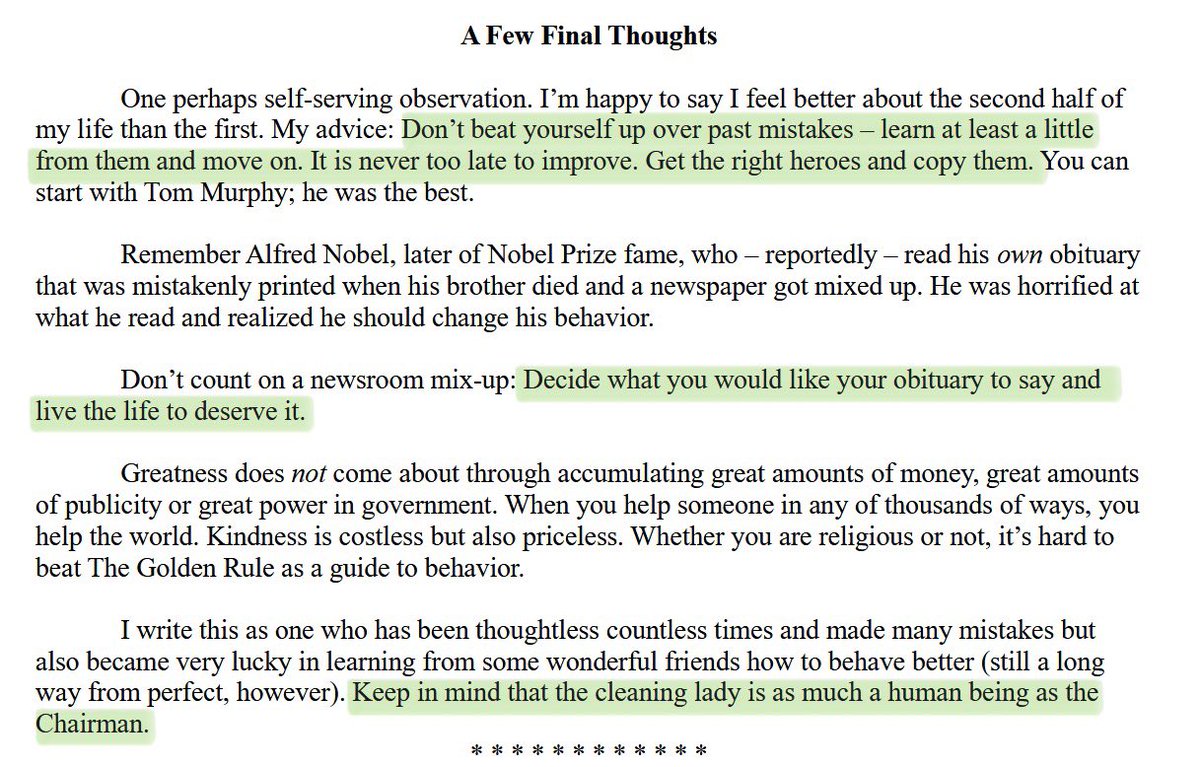
Fantastic Saturday at the @Chartered_Accts UK annual conference! Thrilled to present ‘Ethical Persuasion in a Noisy World’ - weaving @RobertCialdini’s principles with @arthurbrooks’ résumé vs. eulogy virtues.
Huge thanks to the engaged audience & top #CAANZUKConf team.
📸 @Toby_P_Photo
Two monks come to a river. A woman can’t cross.
The older monk carries her over and sets her down.
Hours later, the younger monk protests: “We’re not supposed to touch women.”
“I put her down hours ago,” the older monk says. “Why are YOU still carrying her?”
Iain McGilchrist speaking today at Pusey House chapel in Oxford. What a gift that good man is to all of us. I think he is the most important public intellectual in the Western world. I wish more people knew about him and his work.
“Complex institutions often benefit from a little randomness.
The irony is that hereditary peers are aristocratic in origin yet cognitively closer to a random slice of humanity than peers selected by political parties.”
Labour celebrates removing hereditary peers on the principle that birth should not give you a vote in Parliament. Sounds fair enough.
But hereditary peers arrive through a strange historical lottery. Within a narrow social class the selection is largely random. Nobody filters them for ideological reliability or party loyalty.
Party appointed peers pass through multiple gates. Patronage. donor networks. Think tanks. Political reputation.
Filtered systems produce competence but also consensus.
Unfiltered systems produce eccentrics but also intellectual outliers.
Complex institutions often benefit from a little randomness.
The irony is that hereditary peers are aristocratic in origin yet cognitively closer to a random slice of humanity than peers selected by political parties.
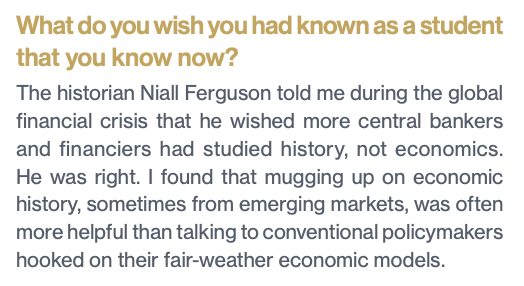
An Oxford student magazine asked me this week:
What do you wish you had known as a student that you know now?
My answer started with a conversation at a Morgan Stanley CIO event that has stayed with me ever since.
During the global financial crisis, @nfergus told me he wished more central bankers and financiers had studied history rather than economics.
He was right.
Reading economic history, including from emerging markets, has often more helpful than talking to conventional policymakers hooked on their fair-weather economic models.
🧵
Yesterday @holland_tom was outstanding as guest editor on @BBCRadio4’s @R4Today – curious and mixed with faith and history. Odd Japanese toilet ghosts (0:44:30), beautiful 800 years of worship at @SalisburyCath (1:22:15), @BeefyBotham (1:41:40), @walkermarcus’ inspiring Thought for the Day for @SaveTheParish (1:48:25), fascinating AI chat with Kate Mosse (1:51:30), powerful re-centring of England’s birth in 927 A.D. with @MichaelWoodMV (2:19:55), and that heavenly choir finale (2:48:20) – pure goosebumps!
https://t.co/75sUHBEXw0
@holland_tom was a JOY as guest editor on @BBCr4today - learned, humane and quirky: Japanese toilet ghosts, 800 years of Salisbury Cathedral, AI hallucinations, England in 927 (not 1066) - then a reflective close with a heavenly choir. Also @WalkerMarcus. https://t.co/F3IYiXOSPs
@george_yarrow@Gerald_Ashley Very McGilchristian analogy, George? Left-hemisphere narrow focus on the ‘dot’ distorts the peripheral field into monsters; shift to open, direct attention and the human reality reappears. Ideological demonisation perhaps works the same way?
Joyous!
Anna Lapwood is the official organist of the Royal Albert Hall. A few years ago she was practising in Salisbury Cathedral, and…
…better let her tell the story. ❤️
https://t.co/OS2nc6aFeL
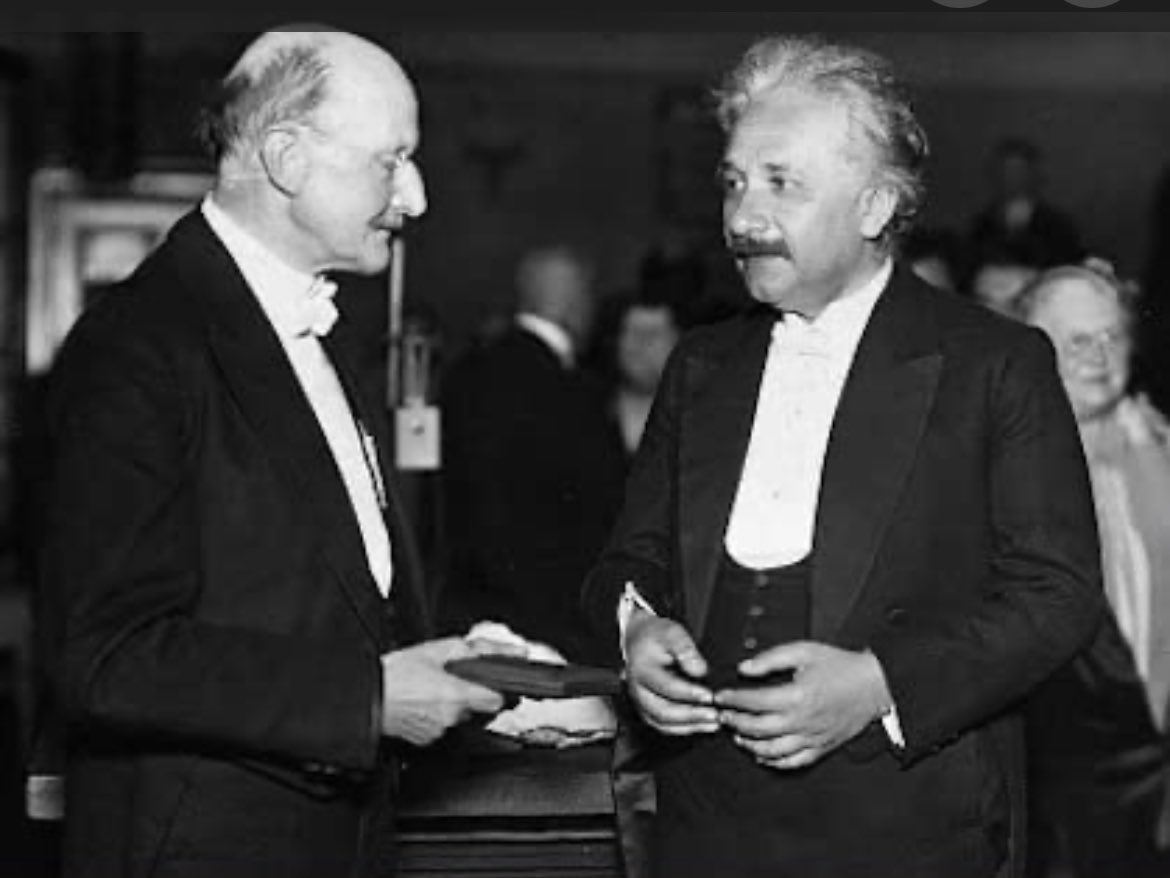
Henri Bergson argued that real time isn’t clock ticks but ‘la durée’ - a flowing, lived continuity. Einstein disagreed, insisting philosophy had no place in physics. Bergson’s reply: physics has no monopoly on reality.