Accumulating 50 Mil Tokens was my target for $CARR before revenue sharing starts.
But with 70 Mil $CARR tokens, ive far exceeded that🫡
Revenue sharing to start WITHIN NEXT 9 days🤯. giving holders serious ROI with $USDT
Bags are packed🔥
#100x#Utility#Altcoin#Crypto#RWA
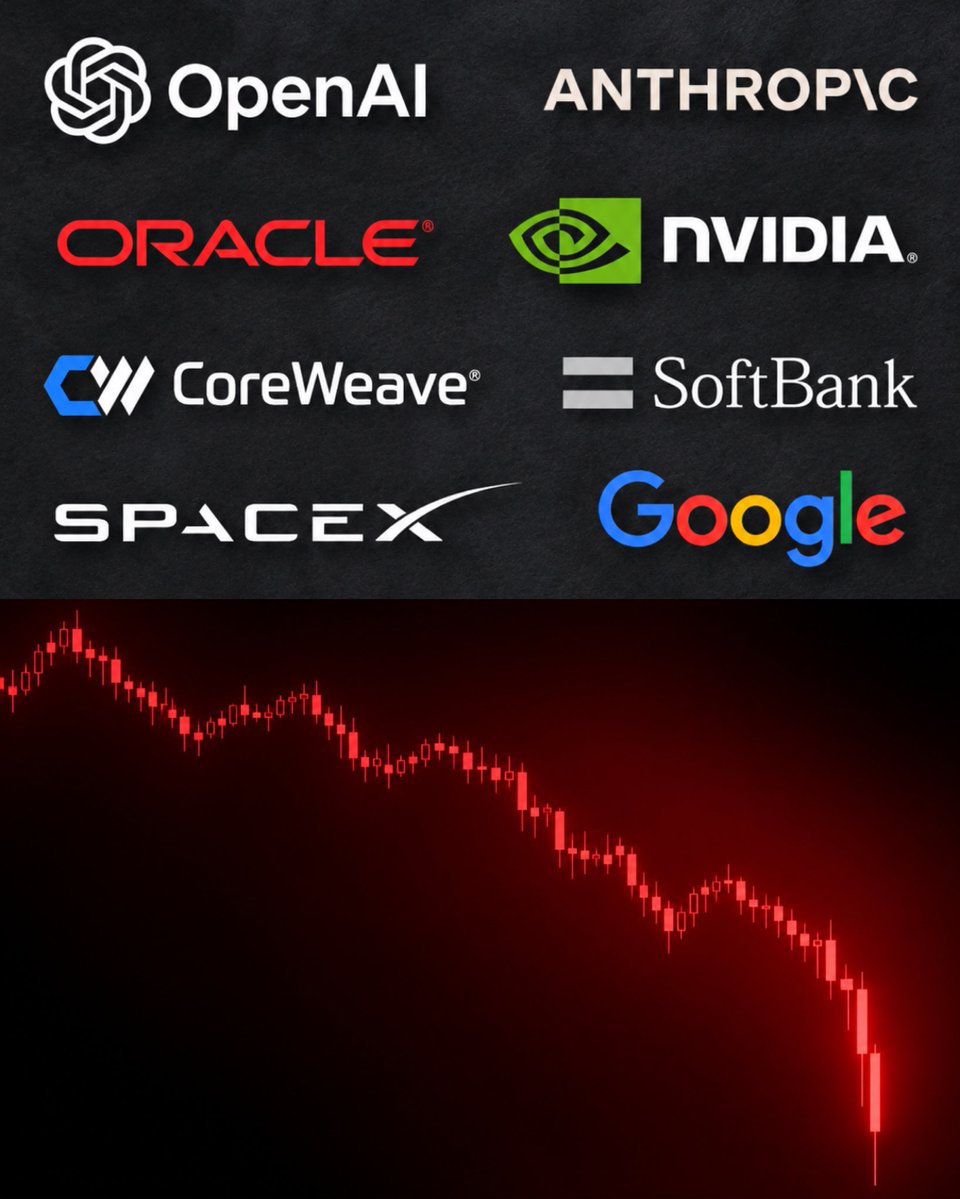
🚨 Jensen Huang won't be able to save AI stocks from the next crash.
Just two days after he returned as Nvidia CEO, the cost of insuring AI companies' debt hit new highs:
- CoreWeave: 1,314 bps, more than double in 6 months
- Nvidia: 147 bps, nearly 4 times since January
- Oracle: 356 bps, double in 6 months
- SoftBank: 534.6 bps, 2.6 times in 12 months
Even Alphabet and SpaceX are at their highest levels ever.
In January, insuring $10 million of Nvidia's debt cost about $39,000 a year. Today, it costs about $147,000.
And this is happening at a time when the AI industry needs more borrowed money than ever.
Goldman Sachs expects nearly $1 TRILLION in AI-related debt financing in 2027 alone.
But as these companies take on more debt, investors are becoming increasingly worried about whether they will be able to pay it back.
As the risk of default rises, so does the demand for protection.
Weekly trading in AI-linked credit default swaps jumped from under $2 billion in July to over $9 billion in September, 4.5 times in just two months, per Morgan Stanley.
But investors aren't only using it to protect against bad debt.
They're also using it as a hedge against a stock crash, because it's cheaper than buying put options on volatile AI stocks.
Until now, the worries were about revenue, profits and debt.
After Jensen Huang's sudden exit and return, S&P Global Ratings has put Nvidia's AA credit rating on watch for a possible downgrade, citing concerns about board independence and governance.
A downgrade would put pressure on the entire AI trade.
Nvidia has signed up for about $670 billion in commitments and guarantees.
This means it is no longer just selling chips but also helping finance the companies that buy them.
That includes OpenAI, Anthropic, Coreweave, neoclouds and several other companies.
If its credit rating deteriorates, raising money could become more expensive for AI projects relying on its financial backing.
This could put the whole AI bet in trouble.
$NVDA IS DRAGGING THE AI BUBBLE DOWN
The semiconductor index is showing a comparison I wouldn't ignore
Dot-com bubble and the current AI boom are identical
And NVIDIA is at the center of both stories
During the Dot-com era, companies poured billions into internet infrastructure
Cisco and Intel became major beneficiaries
Until expectations got too far ahead of actual demand
We're seeing a similar dynamic with AI
- Big Tech is committing hundreds of billions to infrastructure
- Chipmakers are expanding capacity
- NVIDIA is supplying the hardware powering the entire boom
But all that spending needs to generate real returns
And that's where the risk begins
If hyperscalers slow their spending or start questioning the profitability of AI, the consequences could spread across the entire semiconductor industry
NVIDIA's sell-off is important because it's exposing just how much of this market depends on one investment narrative
AI doesn't have to fail for the bubble to burst
The technology can succeed while investors lose fortunes betting on the wrong valuations
The Dot-com bubble was exactly about this
I think the same lesson applies to AI
FOLLOW + NOTIFS ON!
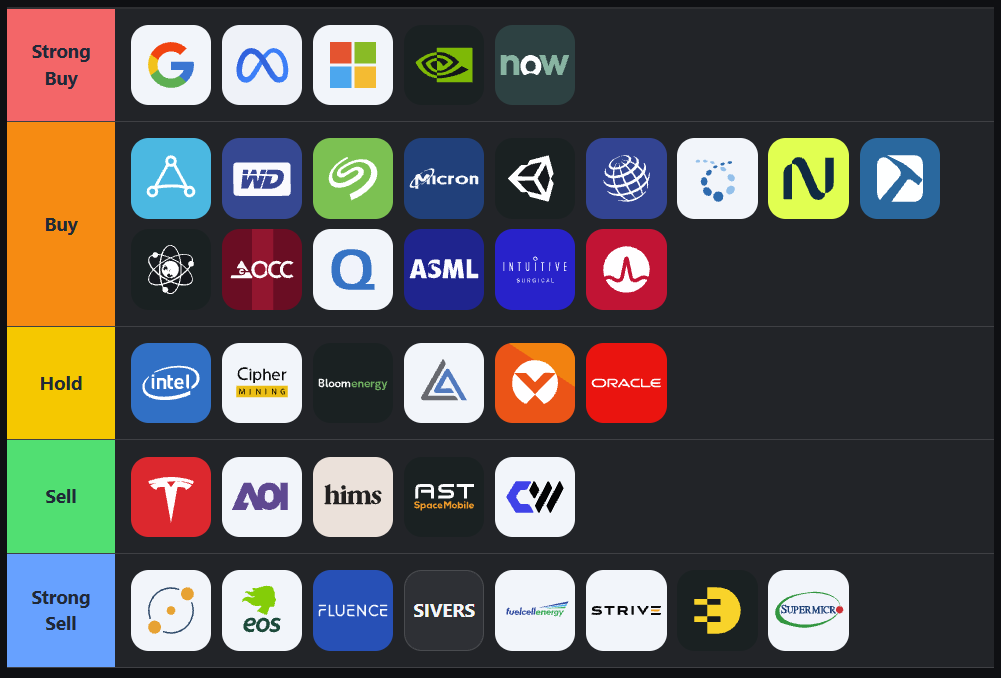
🚨 16 STOCKS THAT WILL STILL DOMINATE IN 2040! 🏆📈
The stock market will look very different 15 years from now. New technologies will emerge, industries will transform, and some of today's biggest companies may disappear. But a few businesses have competitive advantages that could allow them to dominate for decades.
@grok Analyze these 16 companies based on competitive moats, disruption risk, and long-term growth potential. Which 4 are least likely to maintain their market dominance through 2040, and why?
💻 $MSFT — Microsoft
🔎 $GOOGL — Alphabet
📦 $AMZN — Amazon
🤖 $NVDA — NVIDIA
💳 $V — Visa
💳 $MA — Mastercard
📊 $SPGI — S&P Global
📈 $MCO — Moody's
🛒 $COST — Costco
💰 $AXP — American Express
🔬 $ASML — ASML Holding
🏭 $TSM — Taiwan Semiconductor
🔌 $AVGO — Broadcom
♾️ $META — Meta Platforms
✈️ $BKNG — Booking Holdings
🚗 $UBER — Uber Technologies
Oracle $ORCL Credit Default Swaps are almost twice as wide as Bear Stearns' were in the months leading up to its collapse during the Global Financial Crisis 🚨 🚨
@timoassi ASML, Visa and Amazon.
ASML’s exclusive EUV machines are essential for every advanced chip.
Visa’s two-sided payments network creates an almost unbreakable moat.
Amazon compounds via AWS dominance, logistics and retail scale.
So let me get this straight:
$GOOGL trades at $271
$AMZN trades at $252
$ORCL trades at $103
$AVGO trades at $313
$META trades at $573
$UBER trades at $65
$NFLX trades at $57
And you’re not being greedy while the market is fearful?
Breaking: Michael Burry’s updated positions
He:
• Sold 50% Semiconductor ETF $SMH puts
• Sold 50% Nvidia $NVDA puts
• Sold 30% of Zoetis $ZTS calls
• Holding his Nasdaq 100 April 2027 puts
• Increased shares in MercadoLibre $MELI by 20%
Burry says this could be a signal of what’s to come if the market falls further
Now, Class, repeat after me. I will never buy cyclicals at low PEs and record earnings. Say it again. I will never buy cyclicals at low PEs and record earnings.
Even Michael Burry thinks $NVDA could soon be “a heck of a trade” after its selloff although he remains skeptical of its long-term competitive edge and how quickly GPUs lose value.
Interesting timing considering $CRWV just reported that rental pricing for older Ampere and Hopper GPUs rose 30–50% in Q3 and is now above their original contract levels.
Costco spots a recession before economists do.
When members shift from beef to chicken, then to canned tuna, something in the economy is bending.
You don't need a model. You need a checkout counter and millions of members with long memories.
Just to put today's crash into perspective:
After today's crash, Nvidia, $NVDA, is now trading at a Forward P/E ratio of ~13x.
That's 7 turns below the S&P 500's ~20x Forward P/E and less than one-third of Walmart's ~43x.
Ironically, the name at the forefront of the AI buildout is now one of the "cheapest" stocks in the market.
Truly incredible.