Bitcoin’s SuperCycle
A supercycle is more than a long bull market. It is a structural re-rating, usually lasting at least five years, in which an asset’s role in the global economy changes so profoundly that the old valuation framework no longer applies.
Commodity supercycles emerge when a new source of demand meets constrained supply. China’s entry into the World Trade Organisation in 2001 is the modern example. China did not invent steel, copper, oil or coal. It unlocked a vast new market for them.
The commodities did not change. The market around them did.
Bitcoin may be approaching a similar institutional opening.
For most of its existence, Bitcoin has been a scarce global asset constrained by limited access to conventional capital. Banks faced legal uncertainty, pension funds faced custody and compliance hurdles, and corporations faced accounting and reputational risk. Bitcoin therefore traded largely as a speculative asset, driven by retail enthusiasm, specialist funds, liquidity cycles and the mechanical halving of its mining reward every 210,000 blocks.
That is beginning to change.
America is building the framework for a regulated digital financial system. The GENIUS Act creates federal rules for payment stablecoins. The SEC and CFTC are establishing clearer definitions and oversight for digital assets. Tokenised Treasuries, money-market funds, private credit, equities and other financial claims are moving onto blockchain rails.
The likely result is not the displacement of the dollar. It is the digitisation of dollar finance.
Stablecoins may become digital money, used for payments, settlement and collateral movement. Tokenised securities may become digital financial claims. Bitcoin can occupy a separate role, digital capital: scarce, liquid, portable and independent of any corporate or government issuer.
That is Michael Saylor’s central proposition. Bitcoin does not need to defeat stablecoins in payments. Stablecoins are better suited to daily transactions because they preserve dollar stability. Bitcoin’s opportunity is to become the reserve asset held beneath a growing system of digital money and digital credit.
This is where the supercycle argument becomes serious. A Bitcoin halving reduces new supply, but it does not create a supercycle. A supercycle needs a new marginal buyer.
China’s WTO accession created a new marginal buyer for commodities. Regulatory clarity, stablecoins, tokenised capital markets and institutional infrastructure could create one for Bitcoin: corporations, asset managers, insurers, pension funds, sovereign entities and global savings pools able to own, custody, finance and collateralise it at scale.
AI adds a further layer.
It is accelerating demand for data centres, power and machine-speed financial infrastructure. Bitcoin miners control power capacity, land, cooling and grid connections, assets increasingly valuable to the AI economy. More stable AI-related revenue could reduce forced Bitcoin sales by miners.
The key condition for a Bitcoin supercycle is not that Bitcoin itself changes. Its supply schedule, network and monetary rules remain the same. It is that the global financial system around Bitcoin changes, becoming more digital, tokenised, regulated and institutionally accessible.
The elements are now lining up: shrinking new supply, regulated digital dollars, tokenised markets, institutional access, AI infrastructure and Bitcoin-backed credit. None guarantees a straight line higher. But if these changes create a permanent new class of Bitcoin buyers, as China’s WTO entry created a vast new source of demand for commodities, Bitcoin could shift from a recurring halving trade to a genuine supercycle re-rating as the reserve capital of a digital financial system.
#Bitcoin $MSTR $STRC
JUST IN: 🇷🇺 Russian Prime Minister Mikhail Mishustin says:
"The circulation of cryptocurrencies has also become legal in the country starting from September 1. The relevant law was signed by the president." 👀
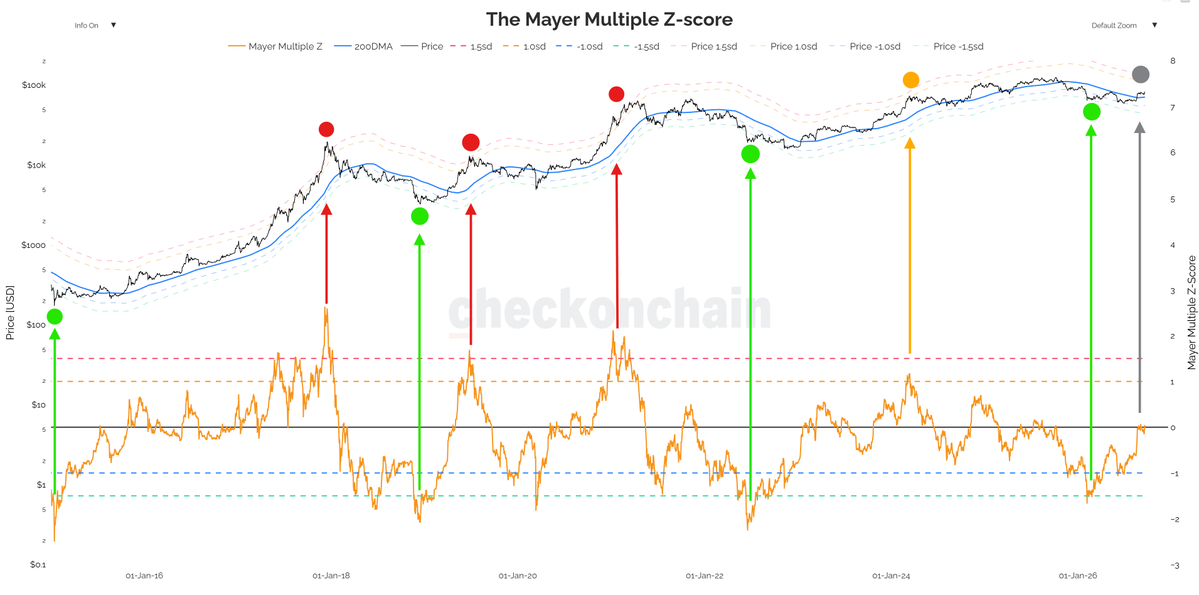
EIGHT WEEKS AGO BITCOIN WAS IN MAXIMUM PANIC AT $63,000.
Today perfectly average costs $85,000.
That's a 29% rally just to get back to normal.
The Mayer Multiple Z-score went from -1.6σ all the way back to zero.
Think about what that means.
Maximum fear created a 29% discount on perfectly normal Bitcoin.
The people who bought panic…
Just got paid.
This is how Bitcoin works every single cycle.
Extreme fear creates extreme opportunity.
And extreme opportunity rewards the people with conviction.
The panic buyers at $63K aren't lucky.
They were paying attention.
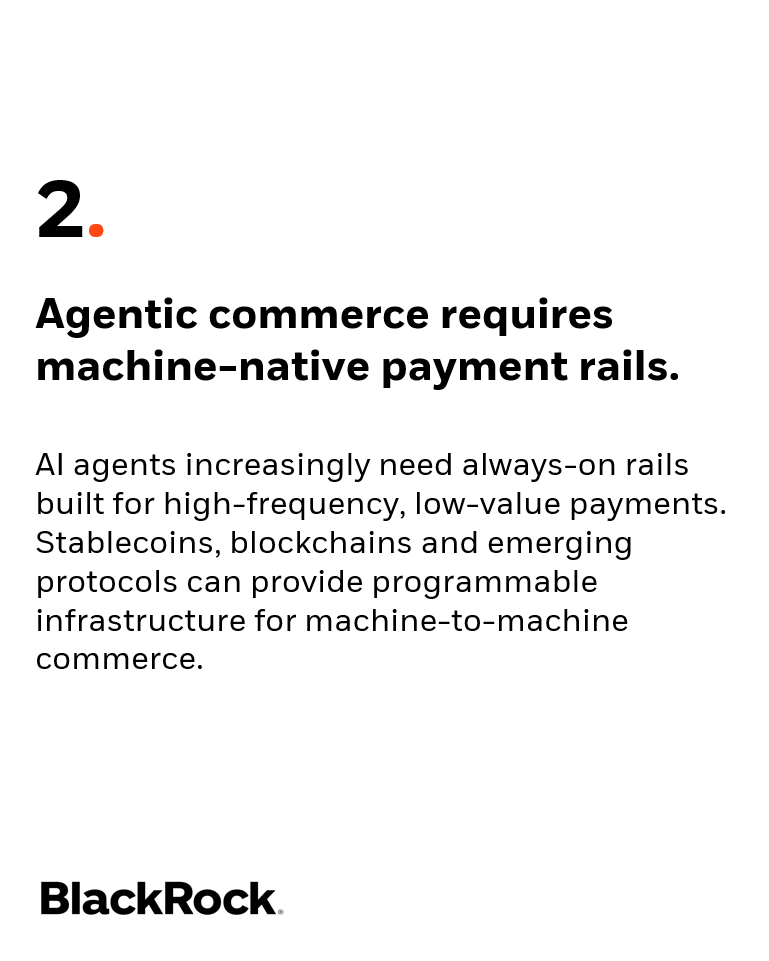
Our latest research paper explores the growing connection between AI and digital assets and explains why broad AI adoption may drive new demand, utility and applications across the digital asset economy. https://t.co/z5T88Orble
Just got off the phone with a REAL Crypto OG who's been around since 2010.
He said the SuperCycle is real.
He said this feels much more like a slow and stretched out version of the second half of 2021 than a 2022-like bottoming in terms of sentiment.
If you weren't around back then here's what this means:
- bitcoin:native is going back to ATHs in the next 2-3 months.
- Alts are going to go completely PARABOLIC (10-100x current prices)
- Retail mania is going to start
- Everyone you know from CT is going to make 6 or 7 figures
It's about to get CRAZY around here.
Get ready.
A week after the CLARITY Act stalled in the Senate, @Strike CEO @jackmallers told @jennsanasie the bill is irrelevant to Bitcoin:
“Does it impact Bitcoin's 21 million hard cap? No.”
To believe that Bitcoin has no intrinsic value means:
1. Believing that having a decentralized, global payment and settlement network outside the conventional financial system has no value.
2. Believing that having a way to protect your purchasing power from inflation has no value.
3. Believing that being able to store your wealth without counterparty risk has no value.
4. Believing that the ability to send $5 or $50 million anywhere, anytime, with minimal fees has no value.
Yet, people say bitcoin has no utility or value.
JUST IN: Legendary American financial advisor Ric Edelman compares buying Bitcoin today to buying Amazon in 1999:
"Back in 1999 people were arguing over whether to invest in Amazon. Nobody has that argument. Everybody owns it, and Bitcoin will have the same trajectory in the future."
Something very unusual is happening in the crypto market right now.
Bitcoin just absorbed 5 major bearish headlines in a single week, and it's still green over the week.
1. The CLARITY Act failed in the Senate.
2. The Fed hiked rates.
3. The Bank of Japan hiked rates.
4. The dollar index crossed back above 100 for the first time in 7 weeks.
5. Oil is climbing too.
Despite all of that, Bitcoin is still trading above where this week started.
Something similar happened back in 2023.
The SEC labeled major altcoins as securities. The SEC sued exchanges. The Bitcoin ETF got delayed again. The Fed kept hiking rates.
Bitcoin still never made a new low during that entire stretch.
Usually when this exact pattern has shown up before, the market absorbing back to back bearish news without breaking down, it often means the bottom was in.
JUST IN: $337 billion asset manager founder Ric Edelman predicts Bitcoin will go to $500,000 by 2030 🚀
"My prediction is actually kind of low compared to many others." 👀
🚨TWO MAJOR CRYPTO BILLS CLEAR HOUSE COMMITTEES
1. American Reserve Modernization Act of 2026
2. Digital Asset Tax Certainty Act
Both bills now advance toward a full House vote before moving to the Senate if approved.
Even with the CLARITY Act stalled, Congress is still moving forward on other major crypto legislation.
SEC and CFTC also moving ahead with crypto rules under existing law.
These bills could boost crypto adoption by giving investors clearer tax rules and strengthening Bitcoin's role as a US strategic reserve asset.
Key Provisions of American Reserve Modernization Act of 2026:
1. Creates an official US Strategic Bitcoin Reserve
2. Government Bitcoin must generally be held for at least 20 years
3. Federal agencies must report their Bitcoin and crypto holdings
4. Treasury must publish regular reports and audits
5. Other crypto held by government could be sold to buy Bitcoin or reduce debt
6. Government would study ways to acquire more Bitcoin without raising taxes or borrowing.
7. Protects the right to buy, hold, transfer and self-custody Bitcoin.
US government holds around 328,000 Bitcoin, and this bill could keep that BTC locked up for years while allowing the government to acquire more.
Key provisions of the Digital Asset Tax Certainty Act:
1. Tax relief for crypto fees under $10
2. New rules for mining and staking income
3. Clearer tax rules for stablecoins
4. Wash-sale rules extended to crypto
5. Crypto lending treated more like traditional securities lending
6. Changes to crypto broker reporting requirements.
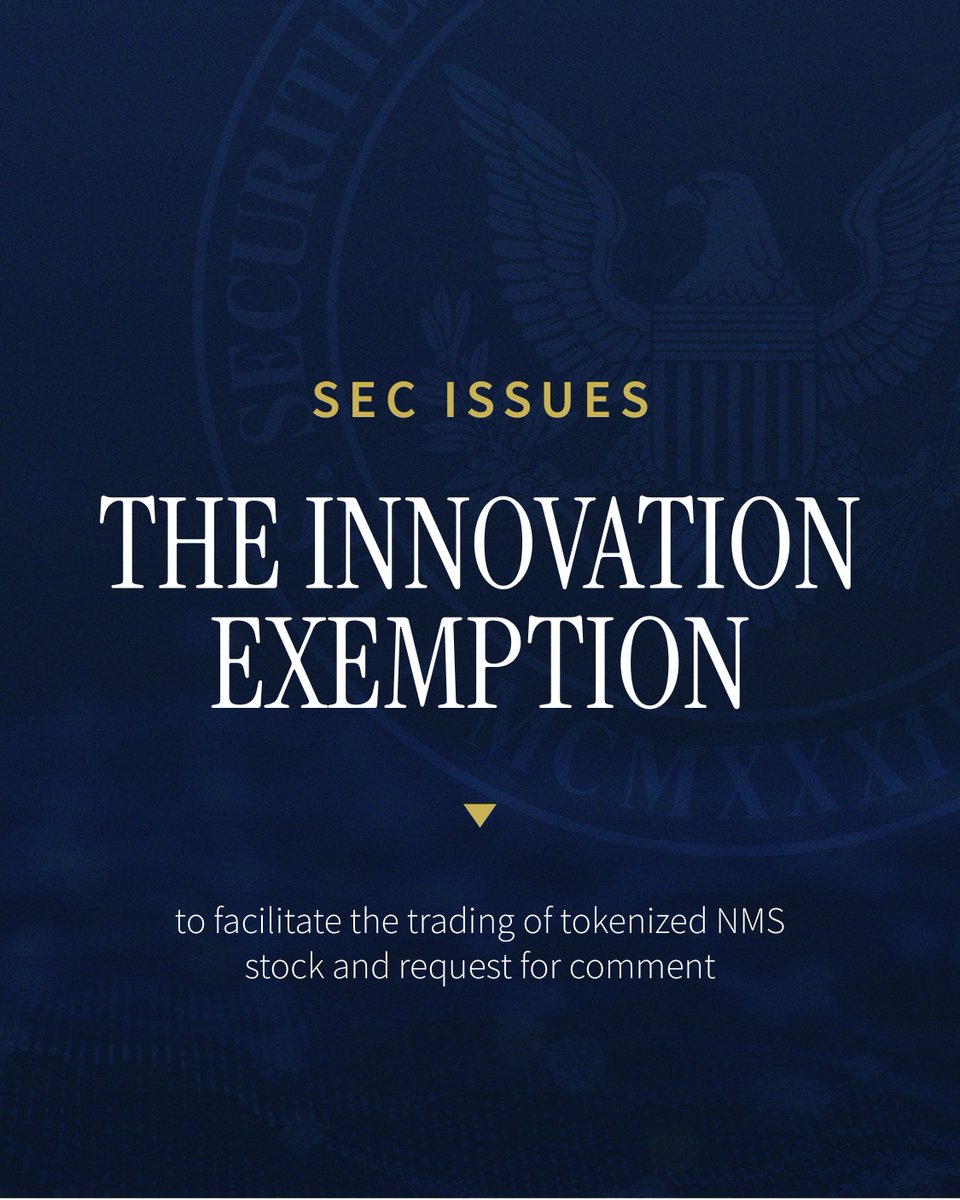
🚨 TODAY: The SEC issued an order granting temporary, conditional exemptive relief to Tokenized Securities Venues from the definition of “exchange” in the Exchange Act to trade tokenized NMS stock using innovative permissioned automated market makers and liquidity pools.
JUST IN: 🚨 Circle CEO Jeremy Allaire suggests the CLARITY Act could still make a comeback:
"If you remember like the GENIUS Act, it failed cloture vote too... & then weeks later it passed."
Everyone is keeping a close eye on the CLARITY Act, and I am certain it will be approved.
However, the timing of its approval depends on liquidity, and it is likely to come as a surprise.
Since this is major news, Bitcoin will surge significantly once the Act is approved.
The approval will likely happen at the very moment when everyone is skeptical and shorting Bitcoin
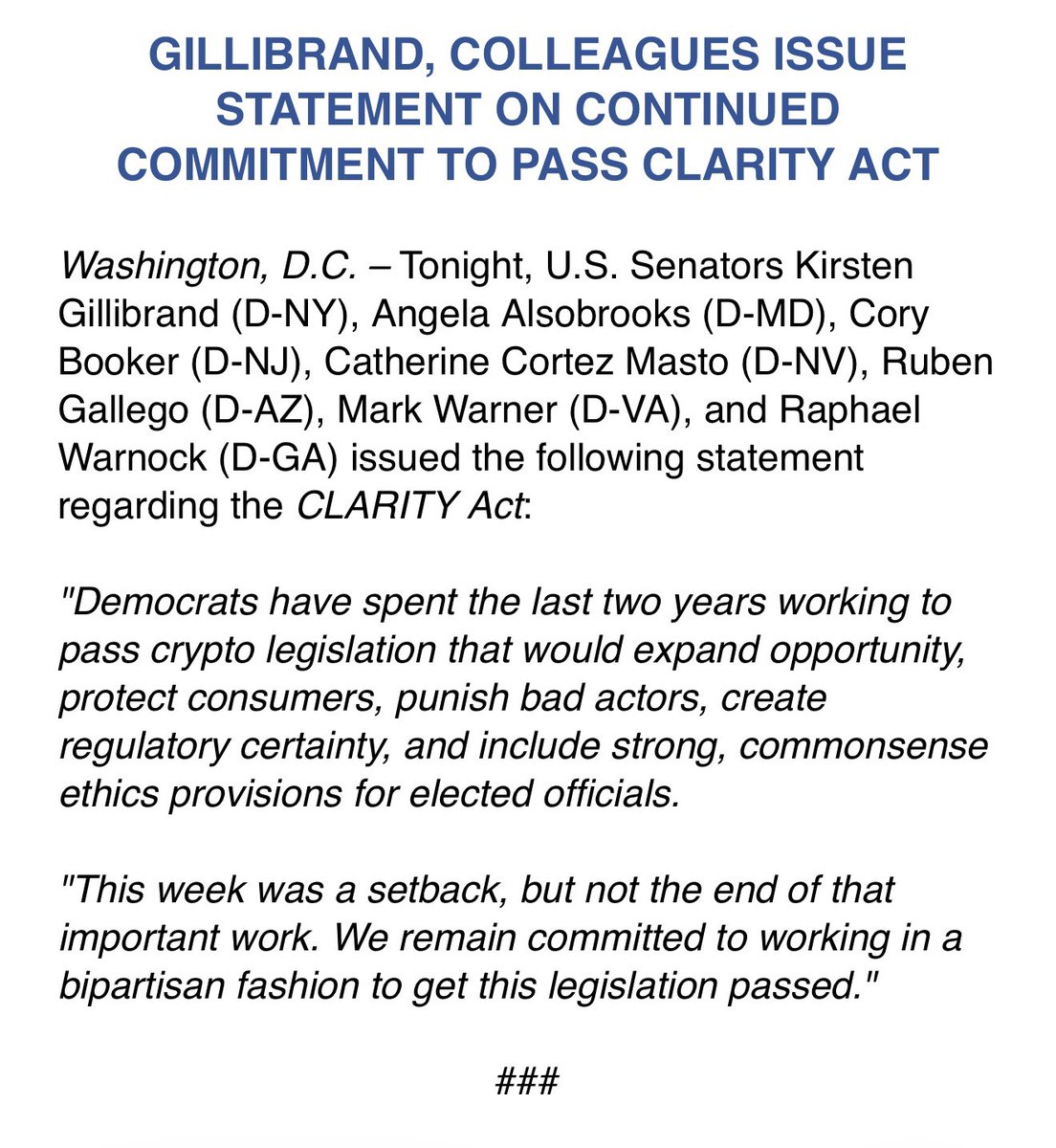
🚨NEW: A group of seven Senate Democrats, including @gillibrandny, @MarkWarner, @SenRubenGallego and @Sen_Alsobrooks, say they are “committed to working in a bipartisan fashion” to pass the Clarity Act.
The statement comes amid early efforts to restart bipartisan talks and gauge the appetite on both sides for returning to the table and getting the Clarity Act passed before the end of the year, according to three sources familiar with the discussions.